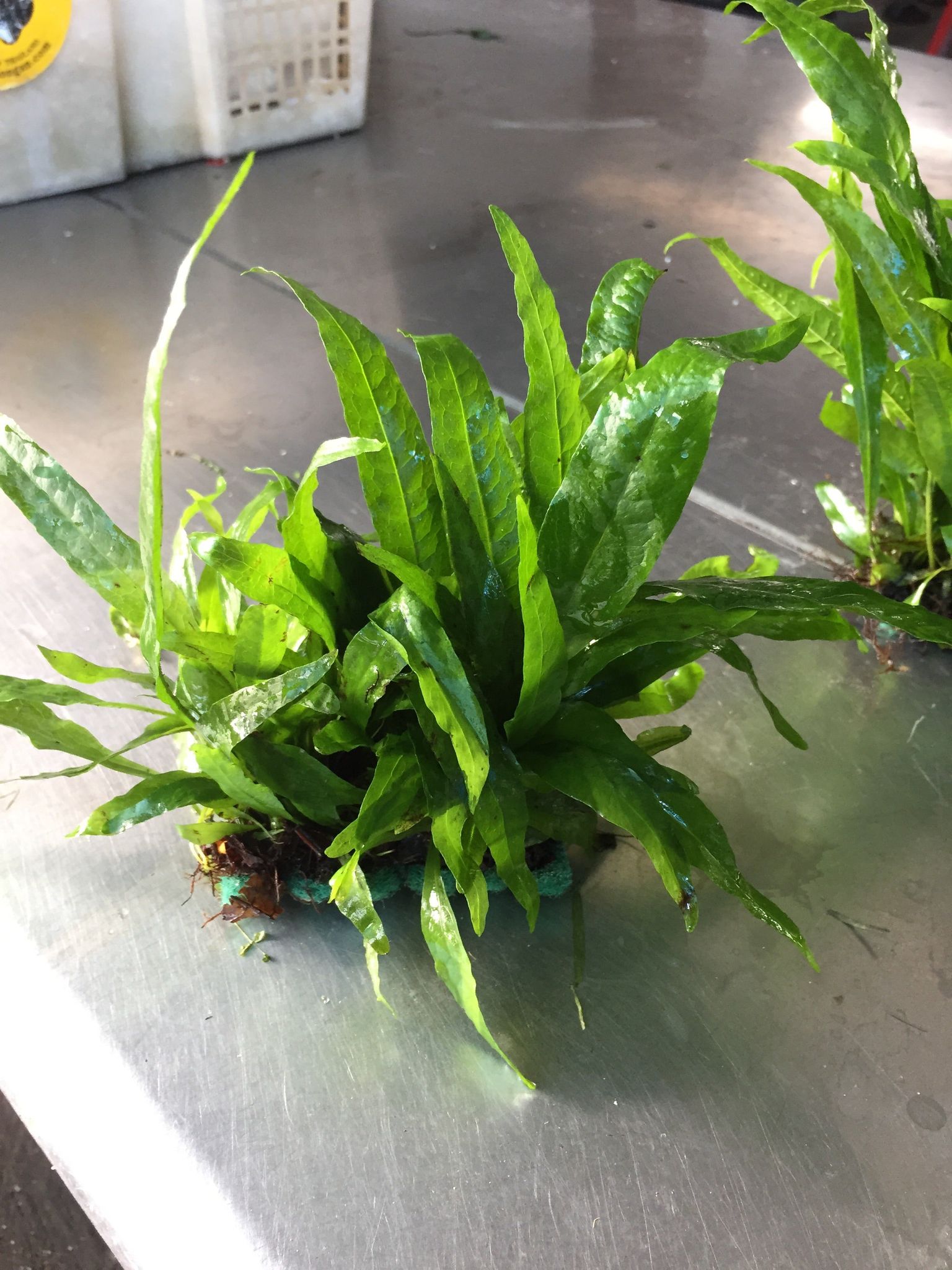
Java Fern Care Guide: Light, CO2, Substrate and Growth Tips
Java fern (Microsorum pteropus) is one of the most forgiving aquarium plants sold, but most of the questions hobbyists have about it come down to one rule: never bury the rhizome. This guide covers the light, water, and attachment specifics that actually matter, plus the fixes for melting, browning, and stalled growth.
What Java Fern Is, and Why That Explains Its Care
Java fern is native to Southeast Asia — Indonesia, Thailand, Malaysia, and the Philippines — where it grows on rocks and driftwood along stream banks and near waterfalls rather than rooted in soil. That habitat tells you almost everything about how to keep it.
Botanically, it's both an epiphyte and a rheophyte:
- Epiphyte — a plant that grows attached to another surface (wood, rock) without parasitizing it. It draws nutrients through its leaves and rhizome, not through a root system buried in soil.
- Rheophyte — a plant adapted to fast-moving water and splash zones, like the spray at the base of a waterfall.
Because Java fern isn't built to root in soil, its roots exist only to anchor it to hard surfaces — not to feed it. That's the entire reason burying the rhizome (the thick, horizontal stem the leaves grow from) causes it to rot and die. It's the single most common mistake beginners make with this plant, and it's covered in detail below.
Light Requirements
Java fern wants low to medium light, not bright light — this is where "easy plant" gets mistaken for "put it anywhere, as bright as you want."
- Intensity: roughly 10–20 PAR, or about 1.5–2 watts per gallon under older T5/T8 fluorescent tubes. If you're running a modern LED fixture, aim for the low end of its intensity dial or keep the plant lower in the water column, since LED PAR output varies a lot by fixture.
- Spectrum: a standard 6500–7500K daylight-spectrum bulb works well; no specialty spectrum is needed.
- Duration: 6–8 hours a day is plenty; don't run photoperiods much past 10–12 hours.
Java fern tolerates far more neglect than the numbers above suggest — it's been reported surviving for months under a failing or dead bulb. The real risk runs the other way: too much light causes leaf burn, browning, and a washed-out, translucent look, especially since the leaves grow slowly and can't outpace the damage. If you're choosing a fixture, browse LED aquarium lighting and err toward the dimmer or more shaded end of a tank rather than direct, high-intensity placement.
Does Java Fern Need CO2?
No. Java fern grows perfectly well in a low-tech tank with no supplemental CO2 — it's one of the better choices for hobbyists who don't want to run a pressurized or DIY CO2 system. Added CO2 isn't wasted; it can modestly speed up growth, but it's a bonus, not a requirement. Don't buy a CO2 setup specifically for this plant.
Substrate: Not Required, and Don't Bury the Rhizome
Java fern doesn't need substrate at all — it grows fine in a bare-bottom tank, attached only to hardscape. If your tank does have substrate, that's fine too, but the rhizome itself must stay above the surface. Roots can rest in gravel or sand; the rhizome cannot be covered by it.
| Substrate situation | Safe for Java fern? | Notes |
|---|---|---|
| Bare-bottom tank | Yes | Attach to driftwood, rock, or a decoration |
| Gravel or sand, rhizome above surface | Yes | Roots may rest in substrate; rhizome stays exposed |
| Rhizome buried in substrate | No | Rhizome rots; leaves yellow and detach |
| Aquasoil, planted-tank substrate | Yes (as anchor point only) | No feeding benefit — roots don't absorb nutrients |
Since Java fern feeds through the water column rather than its roots, there's no reason to use root tabs or a nutrient-rich substrate for its sake. If you're setting up a bare-bottom hospital or breeding tank and want easy-to-manage plant cover, substrate is optional here — Anubias and mosses share this same substrate-free habit, discussed more below.
Attaching Java Fern to Driftwood or Rock
Correct attachment is what actually determines whether this plant thrives.
- Choose porous, textured hardscape. Rough rock or driftwood with grooves gives the root hairs something to grip. Smooth, glassy stone works poorly.
- Cure new driftwood first. Soak it until it stops releasing tannins and stays waterlogged rather than floating — floating wood will pull your plant loose.
- Secure the rhizome, not the leaves. Use thread, fishing line, cotton string, or small rubber bands wrapped gently around the rhizome and the hardscape. Aquarium-safe cyanoacrylate ("super") gel glue also works well.
- If using glue, hold the rhizome in place for about 30 seconds, then let it cure a few minutes out of the water before returning the plant to the tank.
- Give it time. Java fern anchors itself with fine root hairs within a 3–6 week window in most tanks. A simple way to check: give the rhizome a very gentle tug — if it resists and doesn't shift, the ties or glue can be removed.
- Check ties periodically in the meantime. A loose tie lets the rhizome drift and settle into the substrate, undoing the whole point of tying it up in the first place.
Water Parameters
Java fern is adaptable across a wide range of freshwater chemistry, which is part of why it pairs with so many different fish.
| Parameter | Safe range | Notes |
|---|---|---|
| Temperature | 68–82°F (20–28°C) | Mid-70s°F is ideal |
| pH | 6.0–7.5 | Tolerates up to ~8.0 in harder, more alkaline water |
| General hardness | Soft to moderately hard | Don't chase an exact number — it adapts across a wide band |
| Salinity | Freshwater | Some low-level brackish tolerance is reported, but this is a fringe use case, not a recommendation for a brackish display |
Don't overthink hardness figures — sources disagree on exact GH/KH numbers, and Java fern's real-world tolerance is broader than any single figure implies.
Growth Rate, Size, and Fertilization
Java fern is a slow grower. Mature clumps typically reach 8–14 inches tall, depending on variety, spreading gradually via the rhizome and small plantlets rather than shooting up quickly.
Fertilization isn't required for survival, but since the plant absorbs nutrients through its leaves and rhizome rather than roots, a light liquid micronutrient fertilizer with iron — dosed once or twice a week at a light rate — noticeably improves leaf color and growth speed. Skip root tabs entirely; they're wasted on a plant that doesn't feed from substrate.
Algae Susceptibility
Because Java fern grows slowly, it doesn't compete well against algae for light and nutrients the way a fast-growing stem plant does. In an algae-prone tank, pair it with algae-grazing shrimp or a bottom-dwelling algae eater, or add a fast-growing stem plant nearby to soak up excess nutrients before algae does.
Propagation
Java fern reproduces two ways, and both are easy to use deliberately:
- Rhizome division: cut a mature rhizome into sections, making sure each piece keeps a few leaves and roots attached, then tie or glue each section to new hardscape.
- Plantlets from leaf spots: small black dots that appear on mature leaf tips are not disease — they're baby plantlets (a form of spore/reproductive structure). Once a plantlet grows a few small leaves and roots of its own, snip it free with sterile scissors and attach it to hardscape. A stressed or damaged leaf left floating can sometimes produce a dozen or more plantlets on its own.
Trimming and Maintenance
Java fern needs almost no regular pruning. Many keepers do a single major trim per year, cutting off dead, yellowed, or melted leaves at the base with sharp scissors. Beyond removing spent leaves for appearance, there's no maintenance requirement tied to the plant's health.
Java Fern Varieties
All varieties share identical care requirements — the differences are cosmetic and size-related only.
| Variety | Distinguishing feature |
|---|---|
| Common (broad leaf) | Standard wide leaf blade |
| Narrow / Needle leaf | Thin, narrow leaves |
| Windelov / Lace | Leaf tips split into a fork or lace pattern |
| Trident | Feathery, lobed leaves; slightly faster growth |
| Philippine | Broader, ruffled leaf form |
| Red | Reddish leaf tinting |
| Petite | Dwarf size, suited to nano tanks |
Tank Mates and Uses
Java fern's tough, leathery leaves are unappealing to most plant-nibbling fish, so it holds up better than soft-leaved plants around goldfish, cichlids, and other herbivorous species. It's a common choice for betta tanks, discus setups, nano aquariums, and coldwater tanks, and its dense growth gives fry and shrimp useful cover.
Best Beginner and Low-Light Plant Picks
Java fern sits alongside Anubias, java moss, and crypts as a top beginner plant, and the reasons overlap: none of them require CO2, none require substrate to survive, none need routine fertilizing, and all tolerate moderate light without the risk of melting that some fast-growing stem plants carry. If you're building a low-maintenance planted tank, these four cover most of what a first planted setup needs.
Bare-Bottom-Friendly Plants
If you're running a bare-bottom breeding or hospital tank, Java fern is one of several epiphytes that don't need substrate at all — Anubias and various mosses share the same attach-to-hardscape growth habit, making them easy to add or remove without disturbing a bare floor.
Mixing With Hardscape or Artificial Plants
Because Java fern attaches directly to wood or rock rather than needing a planted bed, it's easy to combine with hardscape-heavy layouts or tanks that mix live and artificial plants — glue or tie it wherever texture allows, without reworking the substrate.
Day and Night: Why Lighting Schedules Matter
Like all aquarium plants, Java fern photosynthesizes during light hours and respires — consuming oxygen rather than producing it — overnight. This is why photoperiods matter even for a low-light, no-CO2 plant: a consistent light schedule keeps oxygen and CO2 levels in the tank more stable day to day, which benefits both the plant and any fish or invertebrates sharing the tank.
Common Mistakes and Troubleshooting
Burying the rhizome. The number one cause of death. If leaves are yellowing and detaching near the base, dig up the rhizome, rinse it, and re-tie it to hardscape above the substrate line.
Too much light. Leads to leaf burn, browning, pinholes, and algae growth on the slow-growing leaves. Reduce intensity or duration, or shade the plant with floating cover.
"Java fern melt." Leaves develop dark, mushy patches and disintegrate, often after purchase and transport stress, a new-tank cycling period, or a change in light or CO2. This is usually not fatal — trim the affected leaves, keep water parameters stable, and new growth typically returns from a healthy rhizome within a few weeks.
Mistaking plantlets for disease. The small black spots on mature leaves are reproductive structures, not a problem. Only worry if a leaf browns and melts without ever producing new plantlets.
No acclimation period. Placing a newly purchased plant straight into strong flow or bright light can stress it before it's adjusted. Give it 4–8 weeks before judging whether it's thriving.
Loose attachment. If the rhizome isn't tied or glued firmly, it can drift and eventually settle into the substrate anyway — recheck ties every week or two until natural attachment takes hold.
Quarantine Before Adding to a Display Tank
Java fern is frequently sold bare-root or already mounted on driftwood, which makes it an easy way to introduce pest snails or algae hitchhikers. A short quarantine or dip before adding it to an established display tank is a cheap precaution worth taking, especially with wood-mounted specimens.
Frequently Asked Questions
Does Java fern need CO2?
No. It thrives in a low-tech tank without supplemental CO2. Adding CO2 can modestly speed up growth, but it's an optional bonus, not a requirement.
Does Java fern need substrate?
No. It grows fine bare-bottom or attached to driftwood and rock. If substrate is present, just make sure the rhizome stays above the surface — never bury it.
How much light does Java fern need?
Low to moderate light works best — roughly 1.5–2 watts per gallon (T5/T8 equivalent) or 10–20 PAR, run for 6–8 hours a day. Too much light causes leaf burn and browning rather than faster growth.
Why is my Java fern melting or turning brown?
This is usually transplant stress, excess light, or unstable water quality rather than a fatal disease. Trim the damaged leaves, stabilize conditions, and healthy new growth typically returns from the rhizome within a few weeks.
Can Java fern grow in gravel or sand?
Yes, as long as the rhizome itself stays above the substrate surface rather than buried in it. Roots are fine resting in gravel or sand.
How do you attach Java fern to driftwood or rocks?
Tie the rhizome to hardscape with thread, fishing line, or rubber bands, or use an aquarium-safe cyanoacrylate gel glue. It typically self-attaches with root hairs within 3–6 weeks, after which the ties can be removed.
How fast does Java fern grow, and how big does it get?
It's a slow grower, typically reaching 8–14 inches tall depending on variety.
Can Java fern live in a betta or goldfish tank?
Yes. Its tough leaves resist nibbling better than soft-leaved plants, and its low care requirements suit nano, betta, and coldwater setups alike.
Ready to build out a low-maintenance planted tank? Browse substrate options and hardscape-friendly livestock on FishyHub to pair with your Java fern setup.

