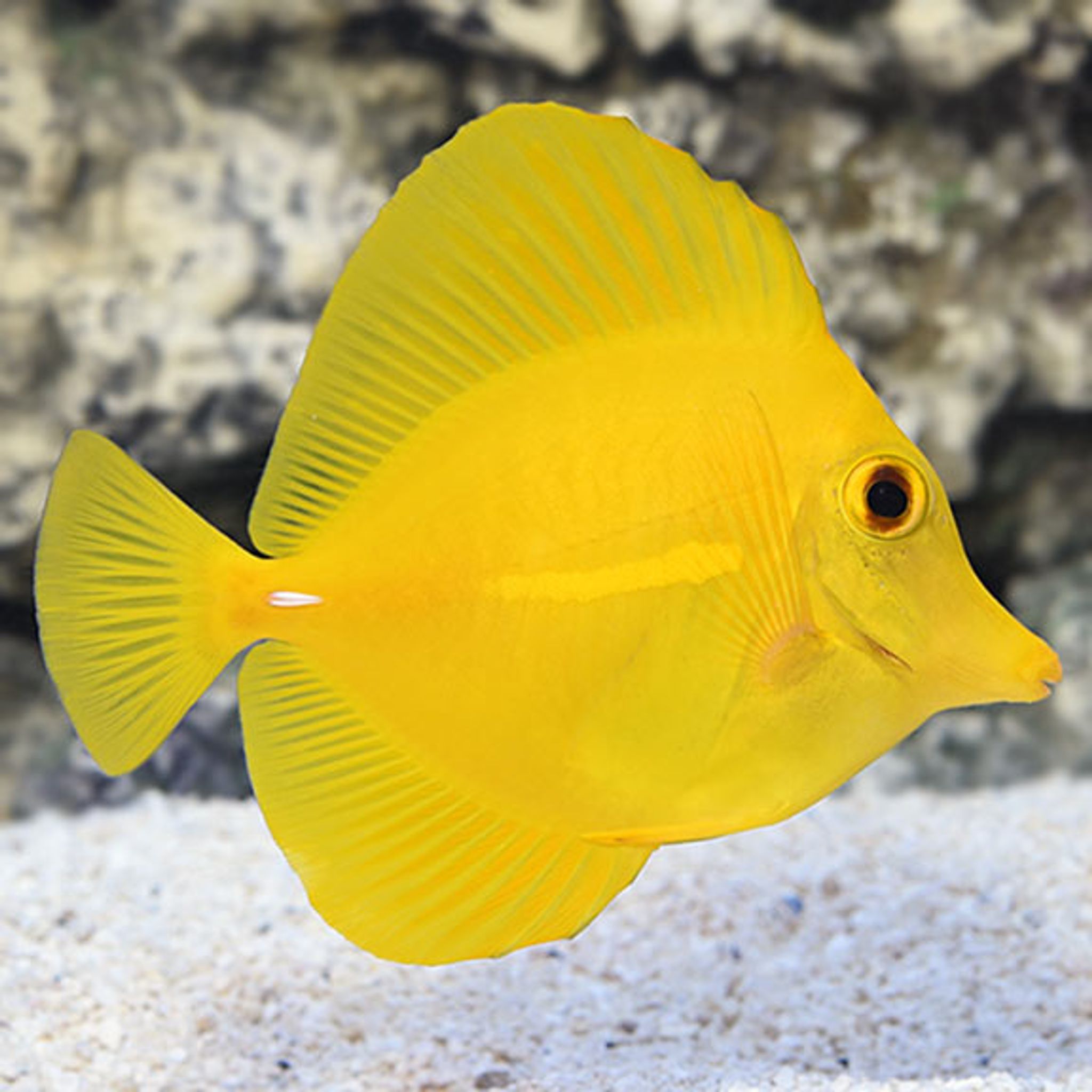
Is Yellow Tang Reef Safe? Coral and Invertebrate Compatibility Explained
Yes — the Yellow Tang (Zebrasoma flavescens) is reef safe. It's an herbivorous grazer that doesn't eat coral polyps, coral tissue, or the invertebrates typically kept in a reef tank. But "reef safe" is a narrower claim than most new keepers assume, and this guide walks through exactly what it covers, what it doesn't, and how to stock this fish responsibly.
What "Reef Safe" Actually Means
"Reef safe" is a term about diet, not temperament. It describes whether a species is likely to eat or damage corals and invertebrates — nothing more. It says nothing about how that fish behaves toward other fish.
This distinction matters because it's the single most common point of confusion in stocking decisions. A Yellow Tang can be 100% reef safe and still be a territorial, occasionally aggressive tankmate toward other fish, especially similarly shaped ones. Keeping these two questions separate — "will it harm my corals?" versus "will it harm my other fish?" — is the key to reading the rest of this guide correctly.
Coral Compatibility, Species by Species
Yellow Tangs graze algae, not coral flesh, and in a well-fed tank they generally leave every common coral type alone.
| Coral type | Compatibility | Notes |
|---|---|---|
| SPS corals | Reef safe | No documented predation |
| LPS corals | Reef safe, with one caveat | Underfed tangs may occasionally pick at fleshy, large-polyp species |
| Soft corals | Reef safe | No documented predation |
| Mushroom corals | Reef safe | No documented predation |
| Zoanthids | Reef safe | No documented predation |
| Leathers | Reef safe | No documented predation |
The one documented exception is worth stating clearly: an underfed or malnourished Yellow Tang may pick at fleshy LPS corals out of hunger. This is a husbandry issue, not a species trait. Most sources report no coral predation at all; a minority note occasional LPS nipping in specific, poorly fed setups. Treat it as rare and preventable, not as a default behavior to plan around.
Invertebrate Compatibility
Yellow Tangs ignore the invertebrate life typically found in a reef cleanup crew or as ornamental additions:
- Snails — reef safe
- Hermit crabs — reef safe
- Cleaner shrimp — reef safe
- Ornamental shrimp and crabs — reef safe, no predation
- Most cleanup-crew species — reef safe
If you're building out a cleanup crew or adding ornamental shrimp, you can browse marine invertebrates without worrying about Yellow Tang compatibility.
The One Real Risk: Hunger-Driven Nipping
The exception above deserves its own section because it's the single most preventable mistake keepers make with this species.
In the wild, Yellow Tangs graze almost constantly on filamentous turf algae. In captivity, they still browse rock surfaces throughout the day, but most tanks — especially newer ones — don't grow enough natural algae to meet that appetite. Without supplemental feeding, a tang can go hungry between meals, and a hungry tang is far more likely to sample a fleshy coral polyp.
The fix is straightforward:
- Offer dried seaweed (nori or algae sheets) clipped to the glass or a feeding clip.
- Feed daily, ideally split into 2–3 small feedings rather than one large one, to mimic constant grazing.
- Supplement with spirulina-based flakes or pellets for variety.
- Remove uneaten nori within a couple of hours — leftover sheets foul the water and spike nitrate, which stresses the tang and indirectly affects coral health too.
One overlooked factor: tank maturity. An established reef with mature live rock supports a visible film of natural algae growth, which reduces grazing pressure and nipping risk compared with a newly cycled tank that has little algae for a tang to browse between feedings. If your tank is young, lean more heavily on scheduled feeding until the rockwork matures.
Reef Safe Doesn't Mean Fish-Safe
This is the mistake that catches the most new keepers off guard: assuming reef safe also means fully peaceful. It doesn't.
Yellow Tangs are semi-aggressive and territorial, particularly toward other tangs and surgeonfish with a similar body shape or coloring. A tank stocked entirely with reef-safe corals and invertebrates can still have real fish-on-fish conflict if tang compatibility is ignored.
Practical guidelines for multi-tang stocking:
- Avoid keeping two tangs of the same or similarly shaped species unless the tank is large and both are added at the same time.
- Rearranging live rock right before introducing a new tang helps reset existing territory boundaries, since neither fish has "claimed" the reshuffled layout.
- In very large systems, groups of three or more of certain tang species can sometimes work, but this is an advanced stocking strategy, not a default plan.
Tank Size: What's Actually Enough
Minimum tank size recommendations for Yellow Tangs vary widely across sources, from 55 gallons (208 L) at the low end to 125 gallons (473 L) as an ideal. Here's a straightforward read of that range.
| Tank size | Verdict |
|---|---|
| 55–75 gallons (208–284 L) | Workable short-term or for very experienced keepers; not recommended for long-term welfare |
| 100 gallons (378 L) | Responsible real-world minimum |
| 125+ gallons (473+ L), ~6 ft (183 cm) of linear swimming space | Ideal |
The reason smaller tanks are a compromise rather than a recommendation comes down to adult size and swimming behavior. Yellow Tangs are active swimmers that can reach up to 8 inches (20 cm) at maturity — size at purchase is misleading, since a juvenile bought at 2 inches will eventually need the swimming room of a full-grown fish. Cramped conditions are linked to chronic stress, stunted growth, and increased disease susceptibility, which brings us to the next section.
Stocking a Beginner 75-Gallon Reef Tank
A 75-gallon (284 L) tank is a genuinely borderline case. Many hobbyists do keep a single Yellow Tang in this size successfully, but it's tight relative to the species' adult size and activity level. If you're stocking a 75-gallon reef and want dependable algae control without pushing the tank size envelope, a smaller bristletooth-type tang — such as a Kole Tang or other bristletooth variety — is a better-fit grazer. Reserve the Yellow Tang for 100-gallon-plus setups where it has real room to grow into. You can compare options in the Tangs & Surgeons category.
Why Tangs Are a Go-To Reef Fish Category
Beyond the Yellow Tang specifically, tangs as a group earn their popularity in reef tanks for a few consistent reasons:
- Efficient algae control — their constant grazing habit keeps nuisance algae in check on rock and glass.
- Coral- and invert-friendly by nature — as a group, tangs are generally peaceful toward sessile reef life.
- Hardiness across stable parameters — given consistent water quality, tangs tolerate the standard reef range well.
That combination makes tangs a "workhorse" category for reef maintenance, not just an ornamental centerpiece fish.
Water Quality, Ich, and Bioload
Yellow Tangs do best within standard reef parameters:
- Temperature: 72–78°F (22–26°C)
- pH: 8.1–8.4
- Specific gravity: 1.020–1.025
- Nitrate: under 10–20 ppm, with stable parameters overall
Two additional facts matter here. First, Yellow Tangs are notably prone to marine ich (Cryptocaryon irritans). Some sources frame this as inherent to the species; a better synthesis is that ich targets stressed fish, and tangs stress easily in small or aggressive setups — so susceptibility is largely stress-driven rather than fixed. Quarantine new tangs for 2–4 weeks before adding them to the display, watching for ich even when no spots are visible, since symptoms can lag behind infection.
Second, as a large, active grazer, a Yellow Tang produces meaningful bioload relative to its size. Strong filtration and skimming, regular water changes, and adequate live rock surface for grazing all support long-term health. This is also where water quality connects both goals of this article: stable, low-nitrate water supports coral health directly and supports the tang's immune resilience against ich — one water-quality standard, benefiting fish and reef inhabitants alike.
Common Mistakes to Avoid
- Undersized tanks: adding a Yellow Tang to a 40–55 gallon tank often shows up later as clamped fins, stress, or an ich outbreak.
- Skipping quarantine: this lets ich reach the main display, where it can affect other fish (ich doesn't harm corals or invertebrates directly, but some treatment methods, like copper, do — so treat only in a separate hospital tank).
- Underfeeding: relying solely on tank algae leads to weight loss and, occasionally, coral nipping.
- Sequential tang introductions: adding a second tang weeks after the first often triggers territorial fighting; introduce simultaneously with fresh rock arrangement instead.
- Confusing reef safe with fully peaceful: this assumption leads to unexpected fish aggression that has nothing to do with coral safety.
- Leaving uneaten nori in the tank: it fouls water and spikes nitrate, indirectly stressing both the tang and the coral around it.
Frequently Asked Questions
Will a Yellow Tang eat my coral polyps?
No. It's herbivorous and grazes algae, not coral tissue. Occasional nipping at fleshy LPS corals is rare and is almost always a sign of insufficient feeding rather than a species-typical behavior.
Is a Yellow Tang safe with cleaner shrimp and snails?
Yes. Yellow Tangs ignore ornamental and cleanup-crew invertebrates entirely, including cleaner shrimp, hermit crabs, and snails.
What's the real minimum tank size for a Yellow Tang?
Treat 100 gallons (378 L) as the responsible floor, with 125+ gallons (473+ L) as ideal for long-term swimming room. Smaller setups exist in the hobby but are compromises, not recommendations.
Can I keep a Yellow Tang in a 75-gallon reef tank?
It's workable for some keepers but tight given the species' adult size and activity level. A smaller bristletooth-type tang is a better algae-grazing fit at that tank size.
Can I keep two Yellow Tangs together?
Generally avoid pairs of the same or similarly shaped tang species unless the tank is large and both are introduced simultaneously. Groups of three or more can sometimes work in very large systems, but this is an advanced strategy.
Why do people say tangs get ich easily?
Tangs are stress-sensitive, and cramped or poorly acclimated fish are more prone to outbreaks. Proper quarantine and stable, low-nitrate water quality greatly reduce the risk.
What should I feed a Yellow Tang to keep it reef-friendly?
Offer daily dried seaweed or nori, clipped to the glass, split into 2–3 feedings, supplemented with spirulina-based flakes or pellets. Consistent feeding is the main defense against hunger-driven coral nipping.
Does "reef safe" mean it won't bother other fish too?
No. Reef safe refers only to corals and invertebrates. Fish-to-fish compatibility — aggression, territory, and tankmate selection — is a separate consideration that reef-safe status doesn't address.
Ready to plan your stocking list? Browse LPS hard corals and pair them confidently with a Yellow Tang, or explore the full marine fish selection to round out a 100-gallon-plus reef build.

