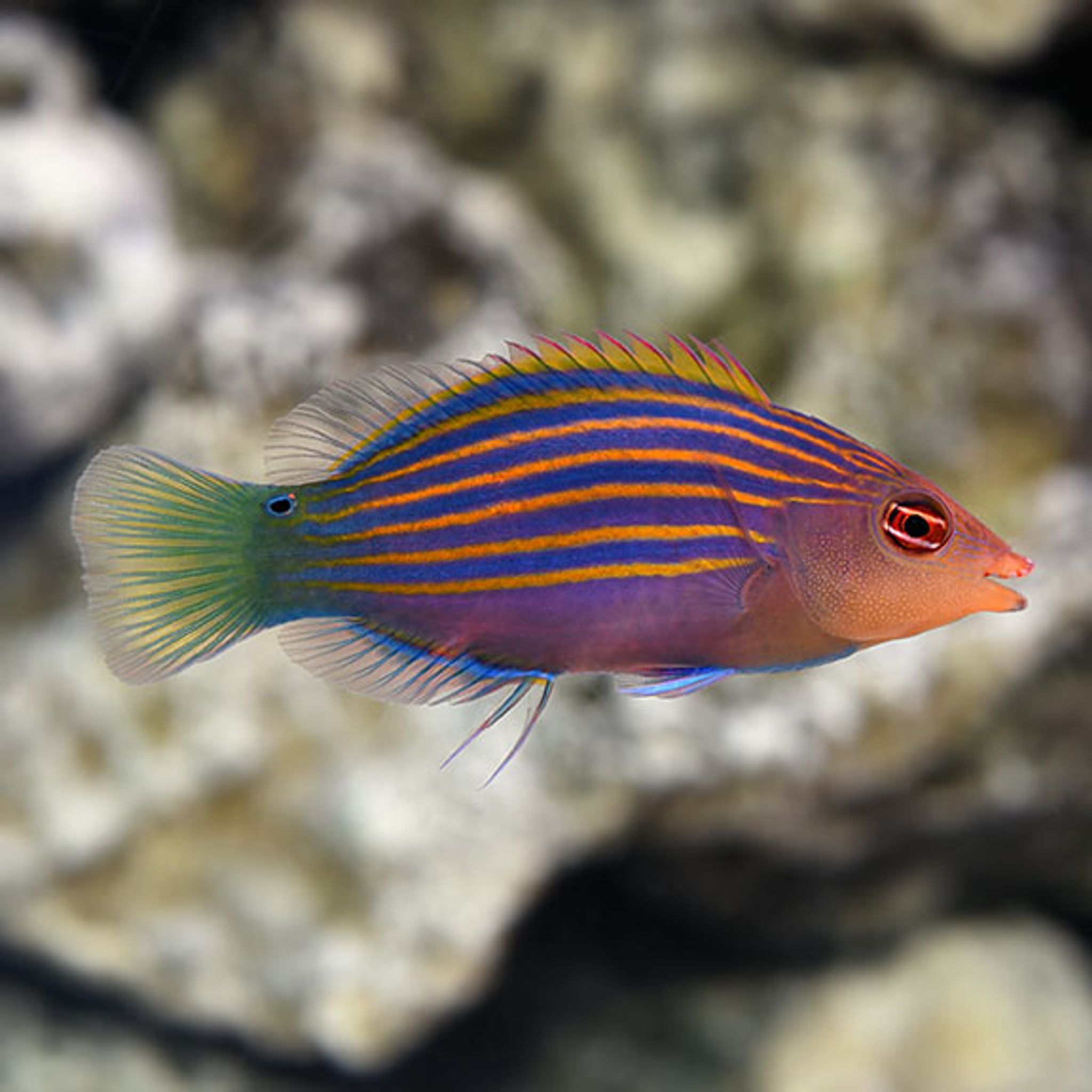
Is Six-Line Wrasse Reef Safe? Coral and Invertebrate Compatibility Explained
Yes — the six-line wrasse (Pseudocheilinus hexataenia) is reef safe toward coral tissue and won't nip at healthy stony, soft, or LPS/SPS corals. It is "reef safe with caution" toward small ornamental invertebrates, since a hungry or bored individual may pick at tiny shrimp, snails, and crustaceans. This guide breaks down exactly which tankmates are safe, which are at risk, and how to stock, feed, and house one so it earns its keep as a pest-control fish rather than a problem.
The Verdict: Coral Safe, Invertebrate-Cautious
"Reef safe" and "invertebrate safe" are two different claims, and conflating them is where most confusion starts. A six-line wrasse:
- Will not eat or nip coral tissue — stony corals, soft corals, LPS, and SPS are all safe from direct predation.
- May pick at small or juvenile ornamental invertebrates — this is a real, documented risk, not a myth, but it's manageable.
- Actively hunts nuisance pests — which makes it one of the more genuinely useful "utility" fish in the reef-keeping hobby.
So the honest answer isn't a flat yes or no — it's "coral safe always, invertebrate safe usually, provided you feed it enough and choose your cleanup crew with some care."
Which Invertebrates Are Safe, and Which Are at Risk
Sources disagree here: some describe six-lines as essentially harmless to all invertebrates, while others flag them as a genuine threat to small ornamental shrimp and snails. The realistic middle ground is that risk is concentrated in a specific group — small-bodied, juvenile, or delicate species — while adult, larger-bodied cleanup crew members are low risk with consistent feeding.
| Invertebrate group | Risk level | Notes |
|---|---|---|
| Adult turbo snails, nassarius snails | Low | Generally ignored once the wrasse is settled |
| Larger hermit crabs (adult) | Low | Shell and size make them unappealing targets |
| Adult peppermint or cleaner shrimp | Low | Safe once well established and the wrasse is well fed |
| Sexy shrimp, juvenile cleaner shrimp | Moderate–High | Small size and slow movement make them vulnerable, especially in underfed tanks |
| Small hermit crabs, tiny snails | Moderate | Occasional picking reported, more common when the tank is understocked with food |
| Copepods, amphipods | High | Actively hunted as a food source — a real consideration for refugium-fed systems |
| Feather dusters | Moderate | Exposed crowns can be nipped, particularly by newly introduced or hungry fish |
| Flatworms, pyramidellid snails, bristleworms, fireworms | N/A (target pests) | These are exactly what a six-line is valued for eliminating |
The main risk group is small ornamental shrimp under about an inch and any very small, exposed invertebrate. Everything else on a standard cleanup crew tends to do fine.
The Pest-Control Upside
This is the six-line wrasse's best-known reputation, and it's well earned. Reef keepers regularly stock this fish specifically because it hunts:
- Flatworms, including Acropora-eating flatworms and general planaria that can smother coral tissue
- Pyramidellid snails, which parasitize clams and some other snail species without being obvious until damage is done
- Bristleworms and fireworms, which can become overpopulated in a reef tank with heavy feeding
For a hobbyist dealing with a pest outbreak, a six-line wrasse is one of the few community-appropriate fish that will proactively patrol rockwork and substrate looking for these problem species, rather than requiring manual removal.
Tank Size and Aquascape Requirements
Recommendations for minimum tank size vary across the hobby, ranging from roughly 30 gallons (114 L) up to 55 gallons (208 L). The sensible approach: treat 30 gallons (114 L) as an absolute floor for a single specimen in a mature, heavily rocked reef, but plan for 40–55+ gallons (151–208+ L) if you intend to add other fish or want to minimize territorial aggression. Larger tanks give the fish more space to establish a territory without conflict.
Aquascape matters as much as volume:
- Provide dense live rock with caves, crevices, and loose rubble.
- Six-lines burrow into sand or tight rock crevices at night and when startled — without this cover, they're stressed, and stressed fish are more likely to turn to picking at invertebrates.
- A tightly packed rockscape also reduces line-of-sight aggression toward other fish.
Browsers assembling a reef aquascape and stocking list can find suitable specimens under marine fish alongside the live rock and rubble needed to build out hiding spots.
Feeding: The Single Biggest Lever for Invertebrate Safety
Hunger, not innate aggression, is the primary driver of invertebrate predation in six-line wrasses. This fish is a carnivore and needs:
- 2–4 feedings per day
- A varied diet: mysis shrimp, brine shrimp, krill, chopped seafood, and a quality marine pellet or flake
Consistent, frequent feeding does more to protect your shrimp and snails than any stocking decision. An underfed six-line in a tank with sparse natural food (copepods, amphipods, detritus) is far more likely to sample a small shrimp or snail out of opportunism than one being fed on a reliable schedule.
Temperament and Stocking Order
Six-line wrasses are semi-aggressive and territorial, particularly toward other wrasses or similarly shaped fish. Individual temperament is unusually variable for a reef fish — some stay mellow community members, others become persistent bullies — and there's no way to guarantee which you'll get before purchase.
Practical stocking guidance:
- Add the six-line wrasse last, or near-last, to an established tank. This prevents it from claiming territory before other fish and invertebrates have settled in.
- Conversely, a six-line added to a tank with already-established aggressive fish can itself be bullied — so the ideal order is after peaceful species have settled, but before other wrasses.
- Keep one six-line per tank in the vast majority of setups. Two individuals — especially two males — risk fighting to the death. Only very large tanks with heavy rockscaping and careful, simultaneous introduction occasionally support more than one.
- Compatibility with other wrasse species is generally poor. Six-lines often harass or kill fairy wrasses, flasher wrasses, or other six-lines introduced after them. If you want multiple wrasse species, add the six-line last, choose species with very different size and coloration, and monitor closely for weeks afterward.
- Six-lines are active jumpers. A tight-fitting lid or covered overflow is non-negotiable, especially during the settling-in period or when the fish is chasing another tankmate.
Community Consensus on Reef Safety
Across hobbyist experience, the general agreement is that six-line wrasses are excellent for coral safety and pest control — that part isn't controversial. The recurring warning theme is aggression toward other wrasses and new fish, plus the unpredictability of individual temperament. The consistent piece of practical advice is to make the six-line your only wrasse, or at minimum, the last one added to the tank.
How Six-Line Wrasses Compare to Other Reef Wrasses
If the six-line's temperament gives you pause, it helps to know where it sits relative to other commonly kept reef wrasses.
Fairy and Flasher Wrasses (Cirrhilabrus and Paracheilinus)
These genera are the classic reef-safe, peaceful, colorful alternative. They're generally less aggressive than six-lines and mix more easily in a community reef with multiple wrasse species — provided a six-line isn't already established and territorial in the same tank.
Other Reef-Safe Wrasse Options
- Halichoeres species (yellow coris, melanurus wrasse) are commonly stocked and reef safe, but some need more experienced care around feeding and sand-diving behavior.
- Leopard wrasses are reef safe but notoriously particular about live food and sand-sifting needs, making them a poorer choice for beginners.
- Mystery wrasse is a reef-safe option with more specialized care requirements as well.
Compared to these, the six-line is generally the hardier, easier option for a first reef wrasse — the tradeoff is its territorial streak.
Additional Considerations Often Left Out
A few practical points rarely get covered but matter for actually stocking one successfully:
- Quarantine first. Acclimate and quarantine a new six-line before adding it to the display; a smaller, simply furnished quarantine tank (with hiding spots) is sufficient and reduces the chance of introducing disease or added stress to your established reef.
- Picking a calmer individual. You can't determine sex or guarantee temperament before buying, but observing behavior in the store — watching whether a fish chases tankmates aggressively versus staying calm — and choosing a mid-sized rather than the largest available specimen can improve your odds of a mellower fish.
- Cleanup crew starter packages. For a common beginner combo — a cleaner shrimp, an emerald crab, and assorted snails — the six-line is generally compatible once everyone is adult-sized and the wrasse is fed regularly. The main watch-item is any very small snails in the mix.
- Typical size and lifespan. Six-line wrasses reach about 3 inches (7.6 cm) as adults and are a hardy, long-lived choice for a mixed reef under standard reef parameters: 72–78°F (22–26°C), pH 8.1–8.4, specific gravity 1.023–1.025.
- Refugium and copepod impact. Because six-lines actively eat copepods and amphipods, they can compete directly with a refugium-fed mandarin dragonet or pipefish sharing the same system. If you're running a refugium to support a pod-dependent fish, factor in that a six-line will also be drawing down that population.
Common Mistakes to Avoid
- Adding the wrasse too early — before other planned fish and invertebrates are settled — lets it claim territory and attack newcomers later.
- Underfeeding is the top cause of a six-line turning to snails, shrimp, or general picking behavior. Fix it with 2–4 feedings a day of varied meaty foods.
- Keeping two six-lines, or a six-line with a similarly shaped wrasse, in a small-to-medium tank usually ends in one fish being killed or chronically harassed.
- Adding delicate small shrimp (sexy shrimp, tiny cleaner shrimp) into a tank with a hungry or newly introduced six-line without observation first.
- Skimping on rockwork increases stress, which in turn increases aggressive and predatory behavior.
- No secure lid — six-lines are prone to jumping, especially when stressed or chasing another fish.
- Assuming "reef safe" covers all invertebrates — it specifically refers to coral tissue, not shrimp, snails, or other reef inverts.
Frequently Asked Questions
Will a six-line wrasse eat my cleaner shrimp?
Usually not once the shrimp is adult-sized and the wrasse is well fed. The risk is highest with very small or juvenile shrimp species and with underfed wrasses that are opportunistically hunting for extra food.
Can I keep a six-line wrasse with snails and hermit crabs?
Yes, for most adult snails and hermit crabs. Very small snails can occasionally be picked at, particularly in an underfed tank or one lacking enough natural food sources to keep the fish occupied.
Is a six-line wrasse safe with corals like zoanthids, LPS, and SPS?
Yes. Six-line wrasses don't target coral tissue and are considered coral-safe across all common coral types, from soft polyps to SPS.
Can I keep two six-line wrasses together?
It's not recommended in most home tanks. Same-species aggression, especially between two males, can escalate to fatal fighting. Only very large, heavily aquascaped tanks with simultaneous introduction have decent odds of success.
What size tank does a six-line wrasse need?
30 gallons (114 L) as a bare minimum with dense rockwork, and 40–55+ gallons (151–208+ L) recommended, especially if other wrasses or semi-aggressive fish are planned for the same system.
Do six-line wrasses help with pests like flatworms and bristleworms?
Yes. They're specifically valued for hunting flatworms, pyramidellid snails, fireworms, and bristleworms, making them a popular utility fish for reef pest control.
Why is my six-line wrasse attacking my other fish?
This is usually territorial aggression, most common when new fish or wrasses are added after the six-line is already established, or when the tank lacks enough hiding spots. Rearranging rockwork and introducing new fish can help diffuse the aggression.
What should I feed a six-line wrasse to keep it from bothering invertebrates?
Frequent meaty foods — mysis shrimp, brine shrimp, krill, and chopped seafood — fed 2–4 times a day, plus a quality pellet. Consistent feeding significantly reduces the odds of invertebrate predation.
Ready to build out a compatible reef community? Browse marine invertebrates and LPS hard corals on FishyHub to plan a stocking list around your six-line wrasse.

