Is Purple Tang Reef Safe? Coral and Invertebrate Compatibility Explained
Yes, the Purple Tang is reef safe in a properly set up reef tank, and it will not eat coral polyps, clam mantles, or ornamental invertebrates under normal conditions. The catch is that "reef safe" is conditional here, not absolute — a hungry or algae-starved individual can turn to nipping soft corals, which is the nuance most care sheets skip.
Species Snapshot: Zebrasoma xanthurum
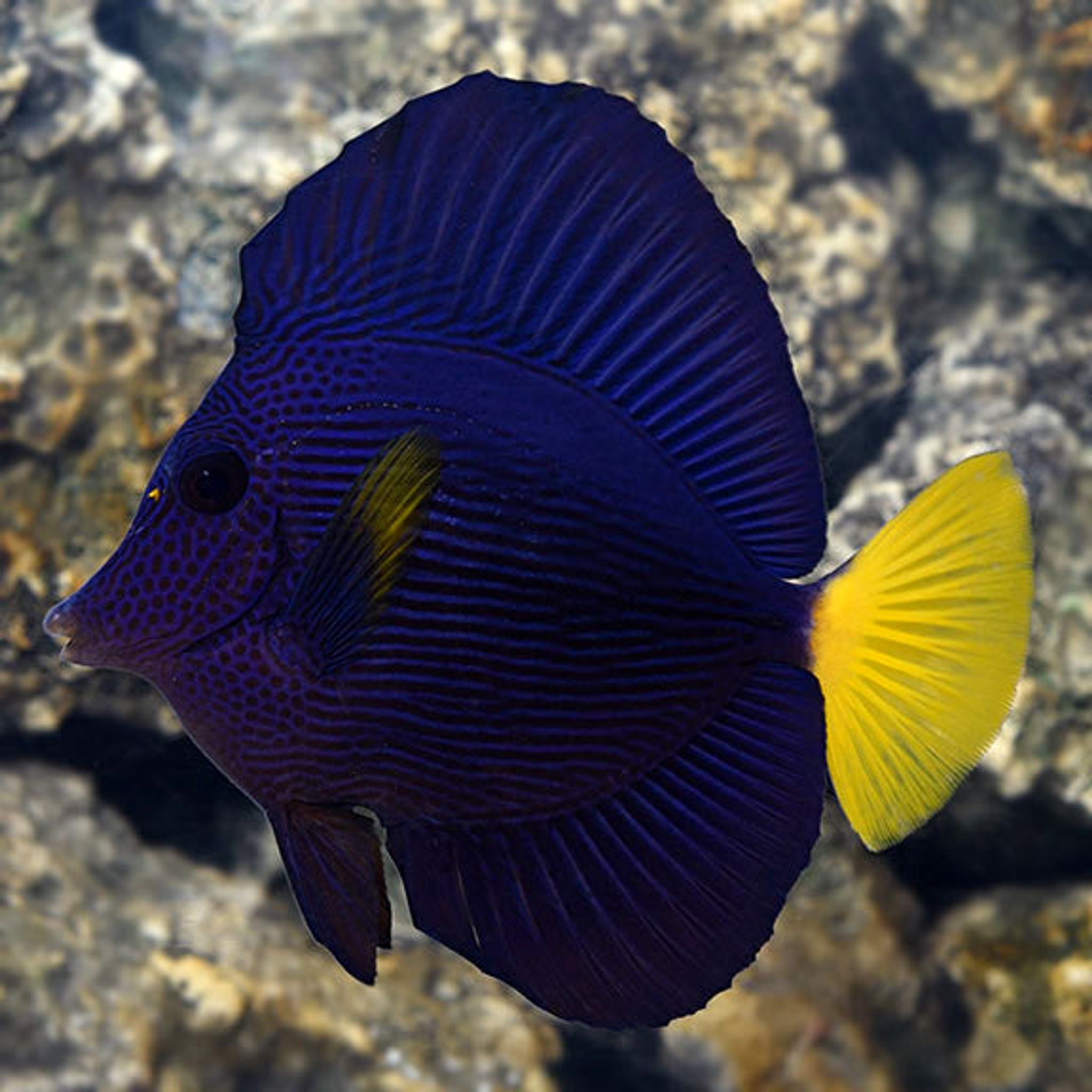
The Purple Tang (Zebrasoma xanthurum) is a Red Sea endemic surgeonfish known for its deep purple-violet body and a bright yellow tail. Like all tangs, it carries a sharp, retractable scalpel spine near the base of the tail (the caudal peduncle), used for defense rather than attacking tankmates. Adults grow to 8–10 inches, making them a mid-to-large-bodied addition that needs real swimming room, not just gallons.
The Verdict: Reef Safe, With Conditions
A Purple Tang does not target coral tissue, clam mantles, or the soft bodies of shrimp, crabs, and snails as food. Its natural diet is algae, and in a healthy reef tank it spends most of daylight hours grazing hair algae, film algae, and diatoms off live rock — including, carefully, the base of coral colonies. That grazing habit is actually a benefit: it helps keep nuisance algae from competing with coral for light and space.
The exception is nutritional, not behavioral. An underfed Purple Tang, or one placed in a tank with too little algae to graze, may peck at fleshy or soft corals — zoanthids, mushroom corals, and LPS species with an algae film on their surface are the most commonly reported targets. This isn't the fish being "aggressive toward coral" in the way a butterflyfish might be; it's a grazer running out of its preferred food source and sampling whatever textured surface is available. Keep it well fed with a steady algae supply and this risk drops close to zero.
Why Some Tangs Are Considered "More" Reef Safe
Not all tangs carry equal risk. Strictly herbivorous species that rarely wander from macroalgae and film algae are considered close to bulletproof around coral. The Purple Tang sits a step below that: it's overwhelmingly herbivorous but opportunistic enough that a food gap can push it toward LPS or zoanthid nipping. Species with a documented history of picking at coral tissue even when well-fed rank lower still. Framing it this way helps calibrate expectations — Purple Tang risk is diet-dependent, not fixed.
Tank Size and Aquascaping
The minimum tank size for a Purple Tang is 100 gallons (380 L), with a footprint of 6 feet or more in length preferred over a tall, narrow tank. Some older care sheets list 75 gallons as an absolute floor, but given the adult size (8–10 inches) and this fish's constant, active swimming pattern, 100 gallons is the sensible starting point, and 125+ gallons (470+ L) is better for long-term health.
Aquascaping matters as much as volume:
- Provide plenty of live rock with established algae growth for grazing.
- Leave open swimming lanes rather than one dense, maze-like rock pile.
- Overcrowded rockwork tends to increase territorial disputes rather than prevent them.
Temperament and Tank Mates
Purple Tangs are territorial and can be genuinely aggressive, particularly toward other tangs or any fish with a similar body shape or color. Best practice is one Purple Tang per tank in the vast majority of home setups.
Can you keep two Purple Tangs together? It's not recommended for typical home reefers. Some advanced keepers report success in 180+ gallon systems when multiple tangs — including dissimilar species — are introduced simultaneously as small juveniles, since a fully grown, established Purple Tang will rarely tolerate a newcomer of similar shape or color added later. Treat this as an advanced option with a large tank and a backup plan, not a default strategy.
Good tank mate strategy:
- Add assertive community fish — wrasses, anthias, clownfish, angelfish — at the same time as, or after, the tang.
- Avoid adding a Purple Tang into an already-established, shy community, since it can bully newcomers on its own turf.
Invertebrate and Coral Compatibility Table
| Tank inhabitant | Compatibility | Notes |
|---|---|---|
| Shrimp, crabs, snails, sea stars | Safe | Not preyed upon; common cleanup crew members |
| Clams | Generally safe | Rare reports of mantle nipping from bored/stressed individuals |
| Feather duster worms | Generally safe | Occasional crown nipping reported, uncommon |
| LPS corals, zoanthids, mushrooms | Conditional | Risk rises mainly when underfed or algae-starved |
| SPS corals | Safe | Not a typical grazing target |
| Soft corals (non-fleshy) | Safe | Occasional interest if no algae is available |
Feeding: The Real Key to Reef Safety
Because coral nipping is driven by hunger and boredom rather than predatory instinct, feeding is the single biggest lever a reefer has over Purple Tang behavior. A well-supplied tang has no reason to sample coral tissue.
A practical feeding routine includes:
- Dried seaweed or nori sheets, clipped in daily so the fish can graze at will
- Marine algae-based pellets as a staple
- Occasional meaty protein — mysis or brine shrimp — for balanced nutrition beyond pure herbivory
As a rough guide, one Purple Tang in a 100–125 gallon reef needs either a continuously replenished algae presence on the rockwork or a clipped nori sheet offered daily; in newer or heavily grazed tanks with little natural film algae, daily nori is not optional. If you notice bare, scraped-clean rock and a tang that still looks like it's hunting for food, that's a sign supplemental feeding needs to increase before it turns to coral.
You can browse live Purple Tangs and other surgeonfish alongside LPS corals to plan compatible stocking before you buy.
Disease Vulnerability: The Slime Coat Problem
Tangs, including the Purple Tang, lack the thick protective slime coat that many other reef fish have. This makes them especially prone to marine ich (Cryptocaryon) and marine velvet, both of which spread faster on stressed or unprotected fish.
Key precautions:
- Quarantine for a minimum of 4 weeks before adding to the display tank — longer than the standard 2-week protocol some hobbyists use for hardier species.
- Minimize net handling and rapid temperature or salinity swings during acclimation, since stress accelerates outbreaks in slime-coat-deficient fish.
- Keep water quality stable in the display tank long-term to reduce stress-triggered flare-ups.
- If white spots or scratching/flashing against rock appear, treat it as likely ich and begin a proper hospital-tank protocol early — don't wait for symptoms to spread tank-wide.
Reef Water Parameters for a Healthy Purple Tang
| Parameter | Target range |
|---|---|
| Temperature | 72–78°F (22–26°C) |
| Salinity | 1.023–1.025 SG |
| pH | 8.1–8.4 |
| Alkalinity | 8–12 dKH |
| Calcium | 380–450 ppm |
| Magnesium | 1250–1350 ppm |
| Ammonia / Nitrite | 0 ppm |
| Nitrate | Under 10–20 ppm |
Common Mistakes That Undermine Reef Safety
- Buying a Purple Tang for a tank under 100 gallons, leading to stunted growth, chronic stress, and higher disease risk.
- Skipping quarantine, which introduces ich or velvet that hits this slime-coat-deficient species hardest.
- Underfeeding dried algae or nori, causing the tang to graze on coral surfaces or become aggressive from hunger.
- Adding a second tang or similarly shaped/colored fish too soon, triggering territorial fights.
- Ignoring early ich symptoms — white spots or flashing against rock — instead of starting treatment immediately.
- Letting nitrate or phosphate run high, which fuels a nuisance algae bloom the tang temporarily can't keep up with, often followed by an algae crash that leaves nothing left to graze.
Filter Socks and Algae Supply: An Overlooked Connection
Most hobbyists treat mechanical filtration and fish feeding as unrelated topics, but they're linked. Aquarium filter socks capture debris before it breaks down into nutrients that fuel nuisance algae growth — which sounds like it would reduce the tang's food supply, but in practice it does the opposite. Uncontrolled nutrient loads tend to cause algae blooms followed by crashes, leaving bare rock with nothing to graze; steady, moderate nutrient export keeps a slower, more consistent film of algae growing that a tang can browse continuously.
Filter sock basics:
- Felt media filters finer particles but clogs and needs swapping more often.
- Mesh media is coarser, lasts longer between changes, but lets more fine debris through.
- Socks reduce the debris load reaching skimmers and other filtration, extending their effective run time.
- They are inexpensive and simple to install inline in a sump.
- Rinse or replace socks roughly every few days to a week — a sock left in too long becomes a nitrate factory instead of a filtration aid.
Common Saltwater Tank Problems That Put Reef Safety at Risk
Instability, more than any single trait of the fish, is what turns a normally reef-safe Purple Tang into a coral-nipping or disease-prone one. The usual culprits:
- Parameter swings — use an auto top-off system, RO/DI water, and keep alkalinity, calcium, and magnesium within the ranges above.
- Nuisance algae and cyanobacteria blooms — manage through nutrient export (including filter sock maintenance), adequate flow, a cleanup crew, and a limited photoperiod.
- Disease outbreaks — quarantine new arrivals 30+ days, avoid copper-based medications in the display tank, and observe a fallow period if ich appears.
- Compatibility and aggression mistakes — stock peaceful fish first, and research adult size and temperament before adding a tang.
- Equipment failures — maintain skimmers and heaters, and keep a backup temperature controller on hand.
Frequently Asked Questions
Will a Purple Tang eat my coral?
No, not under normal, well-fed conditions. The main risk arises when the fish is underfed or has too little algae available to graze, which can lead it to peck at fleshy soft corals or LPS.
Is Purple Tang safe with clams?
Generally yes. There are rare reports of bored or stressed individuals nipping at clam mantles, but this is uncommon and not the norm for a well-fed tang in a stable tank.
Can I keep two Purple Tangs together?
It's not recommended in typical home tanks. A reasonable chance of success generally requires a 180+ gallon tank with all tangs introduced simultaneously as juveniles, and even then it's an advanced strategy rather than a safe default.
What's the minimum tank size for a Purple Tang?
100 gallons (380 L) is the practical minimum, ideally with a footprint of 6 feet or more in length so the fish has lateral swimming room, not just water volume.
Why does my Purple Tang have white spots?
This is most likely marine ich. Tangs lack the thick protective slime coat other fish have, making them highly susceptible, so early detection and a proper quarantine/treatment protocol are essential before it spreads.
What should I feed a Purple Tang in a reef tank?
Offer nori or dried seaweed clipped in daily, a marine algae-based pellet as a staple, and occasional mysis or brine shrimp for protein. Consistent grazing material is what keeps the fish from turning to coral.
Are Purple Tangs reef safe with shrimp and crabs?
Yes. Purple Tangs don't prey on crustaceans, and they're compatible with typical cleanup crew invertebrates like marine shrimp and crabs.
Can Purple Tangs live with other tangs or surgeonfish species?
Only cautiously. They do best with dissimilar-shaped or dissimilar-colored tangs in a large tank, since same-shaped, same-colored tangs trigger the most aggression.
A Purple Tang earns its reef-safe reputation when it's kept in a large enough tank, fed a steady algae-based diet, and given time in quarantine before joining the display. Browse the current selection of marine livestock on FishyHub to plan a compatible stocking list before you bring one home.

