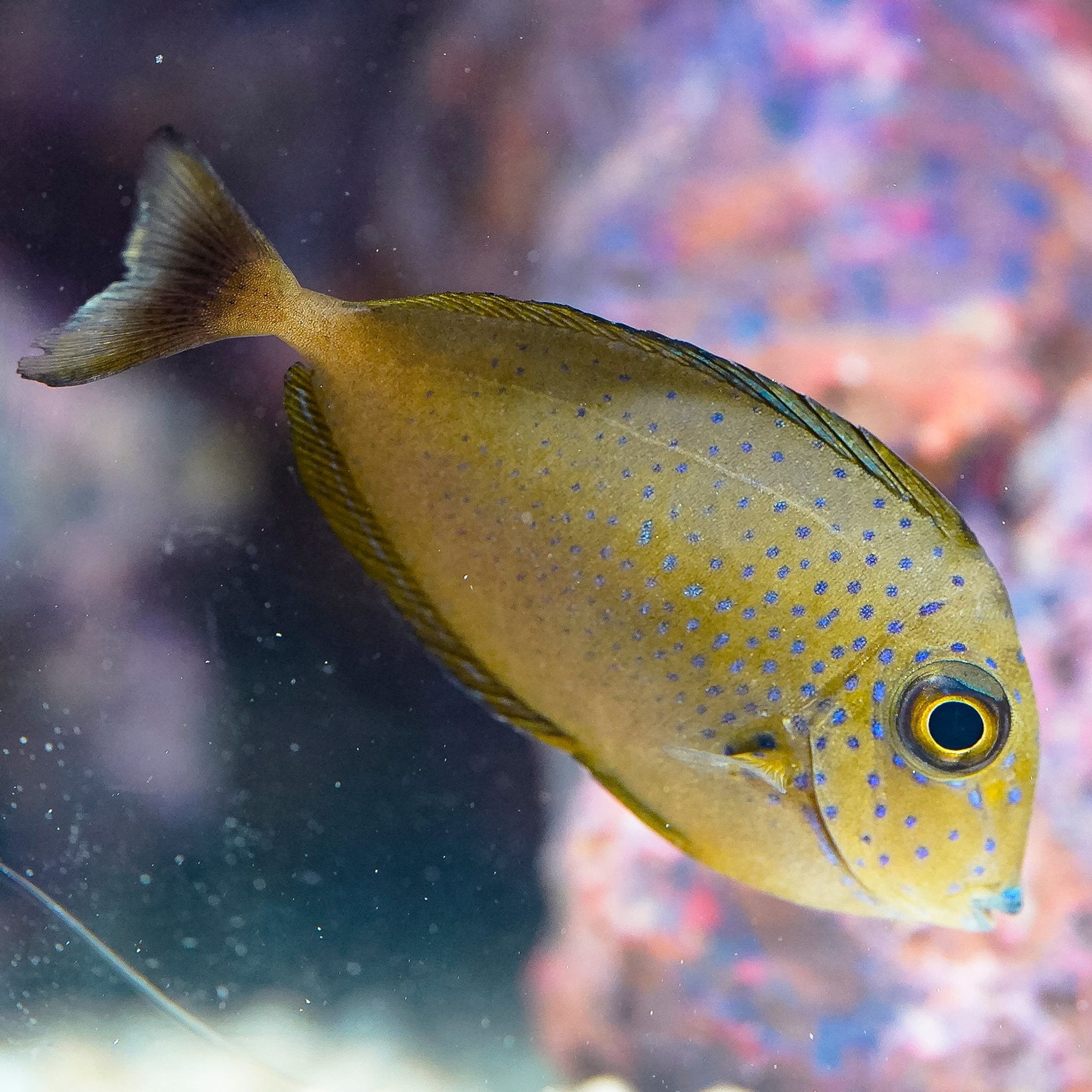
Is Kole Tang Reef Safe? Coral and Invertebrate Compatibility Explained
Yes, the Kole tang is reef safe and is widely regarded as one of the safest tang species for a mixed reef system. It grazes algae and detritus rather than coral tissue, but a few husbandry habits determine whether that reputation holds up in your own tank.
What Is a Kole Tang?
The Kole tang (Ctenochaetus strigosus) is a surgeonfish native to Hawaii and the wider Indo-Pacific. It goes by several common names in the aquarium trade:
- Kole tang
- Yellow-eye tang
- Bristletooth tang
- Bristle-tooth surgeonfish
Adults reach roughly 6–7 inches and, with consistent care, can live 10 or more years in captivity. Their body is olive-brown with fine gold striping and a bright yellow ring around the eye, which gives them their most common alternate name.
The Reef-Safe Verdict
For a mixed reef with corals, clams, and invertebrates, the Kole tang earns a confident "yes" — with monitoring. It is not a zero-risk fish in every possible scenario, but the risk is low enough, and controllable enough, that most reef keepers treat it as a staple algae-control species rather than a threat to their coral collection.
Why the Comb-Like Teeth Matter
The genus name Ctenochaetus translates roughly to "comb bristle," and that anatomy is the whole story. Unlike Zebrasoma (bristletail) or Acanthurus tangs, which have flattened, spatula-shaped teeth built for scraping and biting algae off hard surfaces, Kole tangs have fine, comb-like teeth designed to sweep film algae, diatoms, and organic detritus out of rock texture, sand, and glass film. That feeding mechanism simply is not built for tearing coral flesh or clam mantle tissue, which is why Ctenochaetus species are consistently rated safer around coral than many other surgeonfish genera.
When the Risk Appears
The caveat that keeps this from being an unconditional "zero risk" answer: a hungry Kole tang can peck at fleshy or soft coral polyps, or at clam mantle tissue, if its normal algae/detritus food supply runs short. This is opportunistic snacking, not predation — the fish isn't hunting coral as prey — but the damage to a polyp or mantle edge is real if it happens repeatedly. The practical takeaway is that reef safety with this species is less about the fish and more about whether you keep it fed.
Coral and Invertebrate Compatibility
Corals
| Coral type | Typical risk level | Notes |
|---|---|---|
| SPS corals | Very low | Little to no soft tissue for a tang to target; considered essentially risk-free |
| Zoanthids, mushrooms, polyps | Low | Generally ignored when the fish is well fed |
| Soft corals (leathers, etc.) | Low to moderate | Occasional nipping reported in underfed tanks |
| Large fleshy LPS | Low, with extra caution | Big, exposed polyp tissue (e.g., large open-brain types) is more tempting if grazing food is scarce |
An SPS-dominant system is about as close to zero risk as reef keeping gets with this fish. A tank leaning heavily toward large, fleshy LPS colonies calls for closer feeding vigilance, simply because there's more soft tissue surface area for an opportunistic peck.
Invertebrates and Clams
Under normal feeding, Kole tangs are compatible with:
- Cleaner shrimp and other reef shrimp
- Hermit crabs and most reef-safe crab species
- Snails and other sessile grazers
- Most clam species
Clam mantle nipping follows the same logic as coral nipping — it's an underfed-fish behavior, not a targeted threat. If you keep clams, watch mantle edges for retraction or nipping marks in the weeks after adding the fish, especially in a newer tank.
A Bonus for Coral Health
Because Kole tangs graze film algae and diatoms directly off rock and coral bases, they help keep algae from creeping up onto coral skeletons and frag plugs. Less competing algae around the base of a colony generally means less shading and less nutrient competition for the coral itself — a small but genuine side benefit of keeping one in a reef display.
Feeding: The Real Safety Lever
Since nipping behavior is driven almost entirely by hunger, feeding is the single most effective tool for keeping a Kole tang reef safe.
- Offer dried seaweed or nori, spirulina, and algae-based pellets at least a few times a week, ideally 2–3 times a day in tanks with limited natural algae growth.
- Soak food occasionally in a vitamin C or Selcon-type supplement to support immune health and color.
- In an established tank with visible film algae and diatoms on rock and glass, natural grazing can supplement — but shouldn't fully replace — prepared foods.
- Consider rotating in a piece of algae-covered live rock, or maintaining a dedicated grazing rock in a refugium, as a proactive natural food source between feedings.
Timing matters too: a brand-new reef tank with little established algae film is the highest-risk scenario for polyp or mantle nipping, because the fish has almost nothing else to graze on. It's worth holding off on adding a Kole tang until your rockwork has had time to develop a visible algae layer, or committing to more frequent supplemental feeding from day one if you add it early.
Tank Size and Water Parameters
Minimum Tank Size
Sources vary here. Some list 75 gallons as an acceptable minimum, while others recommend 90–125 gallons or more — occasionally up to 180–200 gallons — for the fish's full adult size and active swimming habit. The sensible middle ground: treat 75 gallons as an absolute floor for a single Kole tang, but aim for 90–125+ gallons if you can, particularly in a reef display where dense rockwork already eats into open swimming space.
Water Parameters
| Parameter | Target range |
|---|---|
| Temperature | 75–82°F (24–28°C) |
| pH | 8.1–8.4 |
| Specific gravity | 1.020–1.025 (reef target ~1.025–1.026) |
| Alkalinity (dKH) | 8–12 dKH |
Stable water chemistry matters as much as the numbers themselves — swings in salinity or pH stress tangs and corals alike, and stressed fish are more prone to disease and to opportunistic feeding behavior.
Temperament and Tankmates
Kole tangs are generally peaceful toward unrelated fish species but can become territorial or aggressive toward other Kole tangs or similarly shaped/colored tangs, especially in smaller systems. Avoid keeping multiple Ctenochaetus species together unless the tank is large and all individuals are introduced at the same time.
Good community tankmates typically include:
- Clownfish
- Cardinalfish
- Gobies and blennies
- Many angelfish species
- Other peaceful reef-community fish
You can browse compatible options in the Tangs & Surgeons category alongside other reef fish if you're planning a full stocking list.
Health and Disease Prevention
Like most tangs, Kole tangs are susceptible to:
- Marine ich
- Marine velvet
- "Hole in the head" / lateral line disease, often linked to poor water quality or a diet lacking vegetable matter
Reduce risk with a quarantine period for every new tang before it goes into the display, stable and low nutrient levels, and a genuinely varied diet that includes regular algae-based feeding rather than only flake or pellet food. Because tangs are relatively heavy waste producers, strong protein skimming and reliable filtration are also part of long-term disease prevention — poor water quality is one of the more common paths to both illness and increased nipping behavior.
Yellow and Algae-Grazing Alternatives
If you like the look or function of the Kole tang but want to diversify your stocking list, a few related options are worth knowing:
- Yellow tang (Zebrasoma flavescens): a true algae grazer with scraping teeth rather than comb teeth; generally reef safe but slightly more prone to browsing on soft tissue than Ctenochaetus species.
- Other bristletooth (Ctenochaetus) species: share the same comb-tooth, detritus-grazing biology and similar reef-safety profile as the Kole tang.
- Yellow-bodied butterflyfish: colorful and yellow, but most butterflyfish are not reliably reef safe and can pick at coral polyps directly — a different risk category entirely, not a drop-in substitute.
Nutrient Export: Where Biopellets Fit In
Keeping nutrients low benefits both corals and your tang, and biopellets are one common tool for that. Biopellets are a solid, carbon-source polymer media run through a small reactor; bacteria colonize the pellets and consume excess nitrate and phosphate as they feed on the slowly dissolving carbon source. Lower nutrient levels mean less nuisance algae competing with the film algae your tang would naturally graze, and generally cleaner, more coral-friendly water.
General dosing guidance:
- Start with a conservative dose sized to your system volume, per the media's instructions.
- Test nitrate and phosphate before increasing the dose.
- Increase gradually, watching for signs of a bacterial bloom or oxygen dip rather than jumping straight to a higher volume.
Preparing Saltwater Correctly
Sudden salinity swings are stressful for both tangs and corals, so how you mix replacement saltwater matters:
- Mix new saltwater in a separate mixing container, never directly in the display tank.
- Start with RO/DI water as your base.
- Add a quality marine salt mix following the label's dosing instructions.
- Let the batch aerate and circulate for about 24 hours so temperature and salinity stabilize fully.
- Measure with a calibrated refractometer, targeting roughly 1.025–1.026 SG (about 35 ppt) before using it for a water change.
Skipping the stabilization period is a common source of parameter swings that stress both fish and coral tissue.
Common Mistakes to Avoid
- Adding a Kole tang to a brand-new tank with little algae film, then not supplementing feeding.
- Undersizing the tank, leading to stress, stunted growth, and higher disease susceptibility.
- Housing two Kole tangs (or a Kole with a similarly shaped tang) in a tank too small for both.
- Skipping quarantine and introducing ich or velvet to the display.
- Feeding a diet with little vegetable matter, risking "hole in the head" symptoms over time.
- Letting nutrient levels run high from weak filtration or skimming, which raises stress and can indirectly push a fish toward more opportunistic feeding.
Frequently Asked Questions
Is the Kole tang reef safe?
Yes. It's considered one of the safest tang species for reef tanks because its comb-like teeth are adapted for grazing algae and detritus rather than biting coral tissue.
Will a Kole tang eat my coral?
Not typically. Occasional nipping at soft coral polyps or clam mantle tissue can occur, but almost always only when the fish is underfed and its usual algae food source is scarce.
What's the minimum tank size for a Kole tang?
75 gallons is commonly cited as an absolute minimum for one fish. Most reef keepers recommend 90–125 gallons or more for long-term health and adequate swimming room.
Can I keep a Kole tang with clams?
Generally yes, and the risk is low when the fish is well fed. Keep an eye on clam mantle edges after introducing the fish, particularly in a newer tank with limited natural algae.
What should I feed a Kole tang to keep it reef safe?
Offer nori or dried seaweed, spirulina, and algae-based pellets several times a week at minimum, ideally 2–3 times a day. Regular feeding is the main factor that prevents opportunistic nipping.
Can I keep more than one Kole tang together?
Only in larger systems, and ideally by introducing all individuals at the same time. Adding a second Kole tang (or a similar-looking tang) to an established, smaller tank usually triggers aggression.
What diseases are Kole tangs prone to?
Marine ich, marine velvet, and nutritional "hole in the head" disease are the main concerns. Quarantine every new tang and feed a varied, vegetable-inclusive diet to reduce risk.
Are Kole tangs good for beginners?
Yes, they're generally considered a solid beginner-to-intermediate reef fish thanks to their hardiness and algae-grazing habits, as long as tank size and water quality are adequate from the start.
If you're ready to add one to your system, you can browse live Kole tangs and other coral-safe species in FishyHub's Marine Fish category, along with compatible corals and invertebrates to round out a well-fed, low-risk reef community.

