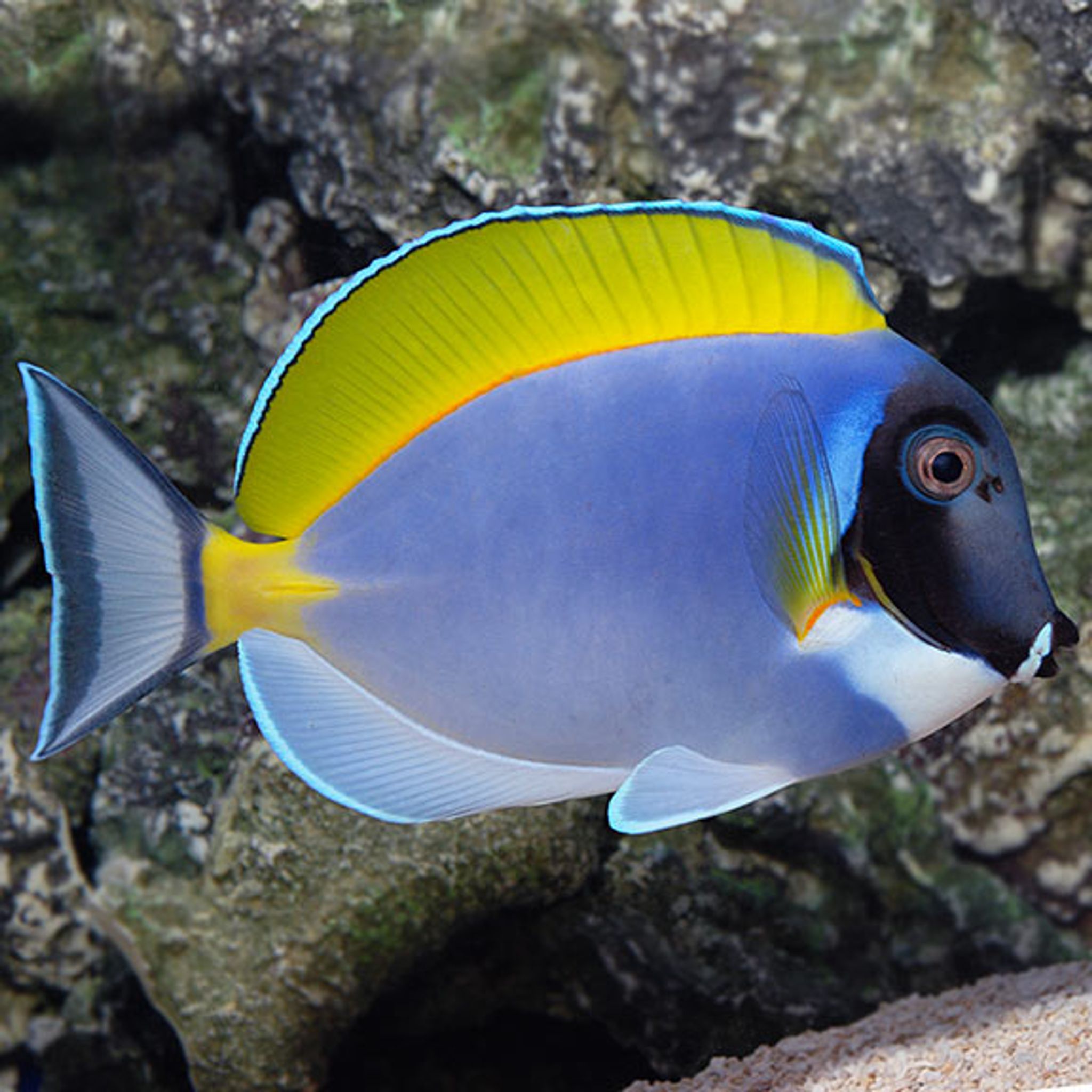
Is Blue Tang Reef Safe? Coral and Invertebrate Compatibility Explained
Yes, the blue tang is generally reef safe — it's an algae-grazing herbivore with no natural drive to bite coral flesh, unlike a coral-eating angelfish or butterflyfish. The more accurate label is "reef safe with caution", because a hungry or stressed individual can occasionally nip at soft coral polyps. Below is exactly what makes this fish coral-friendly, where the risk actually lies, and how to house it correctly from day one.
Why the Blue Tang Is Considered Reef Safe
The Regal Tang (also called Pacific Blue Tang or Blue Hippo Tang, Paracanthurus hepatus) is famous as the "Dory fish" from the Finding Nemo films. Biologically, it's an herbivore/omnivore — a grazer built to rasp algae film off rock and open water, not a predator equipped to hunt or tear at coral tissue.
That biology is the whole reason it's considered reef compatible:
- Its mouth and feeding behavior are adapted for scraping algae, not biting polyps.
- It has no interest in hunting motile invertebrates like shrimp, crabs, or snails.
- Unlike some large angelfish, it doesn't target coral flesh as a dietary staple.
The Caveat: "Reef Safe With Caution"
Isolated reports do exist of blue tangs nipping zoanthids or soft coral polyps. This isn't typical species behavior — it almost always traces back to two causes:
- Underfeeding — a tang without enough algae to graze will investigate other textured surfaces, including coral polyps.
- Boredom or stress — a fish with too little swimming room or too little live rock to forage on may pick at whatever's nearby.
The fix is straightforward: keep the tang genuinely well fed, and the nipping risk drops close to zero.
Diet: The Real Safeguard Against Coral Nipping
A properly fed blue tang almost never touches coral. Aim for roughly 80% plant matter to 20% meaty foods:
- Dried seaweed or nori clipped to a veggie clip, offered several times a week
- Spirulina or algae-based flakes and pellets as a daily base
- Occasional mysis or brine shrimp for protein variety
Skipping the plant-heavy side of that ratio — or feeding only meaty foods — is one of the most common mistakes owners make, and it's directly linked to grazing on coral or live rock algae out of nutritional need, plus color loss and other diet-related health issues over time.
Tank Size and Setup Requirements
Blue tangs are active, fast-swimming fish that need real open water, not just tall corners of rock.
| Requirement | Minimum | Preferred |
|---|---|---|
| Tank length | 6 feet | 6+ feet |
| Volume (juvenile, with upgrade plan) | ~100 gallons (378 L) | — |
| Volume (adult, long term) | 125 gallons (473 L) | 180+ gallons (681+ L) |
| Rockwork | Mature live rock for grazing and cover | Extensive aquascape with swim lanes |
| Tank maturity | Fully cycled, established reef | Established for months, stable parameters |
Sources disagree on the floor: some list 100 gallons as acceptable, others insist on 125–180 gallons for a full adult. The safest approach is to treat 6-foot length and 125+ gallons as the real baseline, and only accept 100 gallons for a juvenile with a firm plan to upgrade — because this fish does not stay small.
Growth Trajectory: Plan for the Adult, Not the Juvenile
Blue tangs are usually sold small, around 2–3 inches, which is exactly why the "starter tank" mistake happens so often. In a properly maintained aquarium, they grow to 10–12 inches. A fish bought for a 40-gallon tank on movie-inspired impulse will outgrow that space within its first year or two, leading to stress, stunted growth, aggression, and disease. Budget for the adult size before you buy.
This is not a beginner or new-tank fish — it should only go into a reef that's already established and fully cycled, with mature live rock already growing biofilm and algae for it to graze.
Coral Compatibility Breakdown
Not all corals carry equal risk. The nuance most guides skip is that coral type matters more than the fish's general temperament:
- SPS (small polyp stony) corals: Essentially immune to tang grazing — hard skeletons with minimal exposed tissue give a grazer nothing to work with. Browse SPS corals with confidence alongside a well-fed tang.
- LPS (large polyp stony) corals: Generally safe; most LPS skeletons are also unappealing to a grazing mouth. See the current selection of LPS hard corals.
- Soft corals: Generally safe overall.
- Zoanthids and mushroom corals: The occasional exception — fleshy, exposed polyp tissue is the closest thing to what an underfed or newly introduced tang might investigate. Watch these closely in the first few weeks after adding either the coral or the fish.
In short: the fish isn't indiscriminately risky to corals — the risk concentrates almost entirely on fleshy-polyped species, and mainly when the tang is hungry or newly settled in.
Invertebrate Compatibility
Blue tangs are safe with snails, hermit crabs, shrimp, and most standard clean-up-crew invertebrates. Since the species isn't a hunter of motile inverts, it has no behavioral reason to bother them. A cleanup crew from marine invertebrates or a dedicated group of marine shrimp can be added without concern.
Tank Mate and Aggression Considerations
Blue tangs get along well with peaceful reef community fish:
- Clownfish
- Gobies
- Blennies
- Cardinalfish
- Dwarf angelfish
The friction point is its own species and other tangs. Blue tangs are territorial and will fight other tangs, including their own kind, in anything but a very large system. Two practical strategies avoid this:
- Add the blue tang before other tangs, giving it time to settle without a rival present.
- If keeping multiple tangs is the goal, add several small juveniles at once so aggression gets diffused across the group rather than focused on one newcomer.
Adding a second tang later, after the first is established, is a near-guaranteed way to trigger territorial fights — this is one of the most common mistakes reef keepers make with this species.
Disease Susceptibility and Quarantine
Guides disagree on how hardy blue tangs are: some call the species relatively disease resistant, others emphasize high susceptibility to Ich (white spot disease) and marine velvet. Both are true in context — the fish isn't inherently fragile, but stress is what triggers outbreaks. Cramped swim space, poor diet, and rough acclimation all lower its resistance.
Practical prevention:
- Quarantine new arrivals for 2–4 weeks before adding to the display tank — skipping this step is the single biggest cause of Ich outbreaks in new tangs.
- Avoid overstocking or understocking swim space; either extreme adds stress.
- Keep parameters stable rather than swinging.
Sourcing Note
Blue tangs are still largely wild-caught rather than commercially bred at scale, which raises the acclimation stakes compared with a captive-bred clownfish. Choosing tank-conditioned, already-quarantined stock from a reputable supplier meaningfully lowers the risk of bringing disease into an established reef. Browse available stock under Tangs & Surgeons.
Water Parameters for a Blue Tang Reef
Tangs are notably parameter-sensitive, so stability matters as much as the exact numbers:
| Parameter | Target Range |
|---|---|
| Temperature | 75–80°F (24–27°C) |
| pH | 8.1–8.4 |
| Salinity | 1.023–1.025 SG |
Slow, gradual changes are far safer than fast corrections — a sudden swing stresses the fish and can shock coral tissue at the same time.
The Venomous Spine: Handle With Care
As a surgeonfish, the blue tang carries a scalpel-like spine near the base of its tail that can deliver a mildly venomous cut. It's used defensively, not offensively toward tank mates, but it matters during transfers, netting, or aquascaping work near the fish.
- Never grab or pin the fish by hand; use a container to move it instead of a net where possible.
- If stung, immerse the affected area in water as hot as can be safely tolerated (not scalding) for 30–90 minutes — heat helps denature the venom proteins and eases pain. Seek medical attention for a severe reaction.
- Color changes are normal: a stressed tang can pale noticeably, while an aggressive display or excitement can intensify its blue.
Why Filtration and Temperature Control Matter More in a Coral Tank
A fish-only tank can tolerate more swings than a reef can. In a tang-and-coral system, filtration quality and temperature stability affect coral survival directly, not just fish comfort.
Biological Filter Media: Bio Balls vs. Alternatives
Bio balls provide a large surface area for nitrifying bacteria to colonize, converting ammonia to nitrite to nitrate. They belong above the waterline in a wet-dry or trickle filter — not submerged — so the bacteria stay oxygenated.
The catch: bio balls only handle that one conversion step. They do not perform denitrification, so without a mechanical pre-filter catching debris and regular rinsing (in old tank water, never tap water, and never scrubbed), they can turn into a nitrate factory. Elevated nitrate stresses both the tang and any coral in the system, since corals are considerably more nitrate-sensitive than fish.
Ceramic rings or bio-noodles are a more nitrate-friendly alternative for smaller reef systems, generally producing less nitrate accumulation over time than a bio-ball-only setup. For a coral-and-tang display, pairing whichever biological media you choose with solid mechanical filtration matters more than the media choice itself. Compare options under filters.
Preventing Saltwater Tank Overheating
A large, heavily lit reef tank suited to a blue tang is also prone to heat buildup. The ideal range is 75–78°F (24–26°C); trouble tends to start above roughly 80°F (27°C) or with fast temperature swings — both stress fish and risk coral bleaching along with falling dissolved oxygen levels.
Common heat sources:
- Return pumps and powerheads
- Lighting — T5, metal halide, or even LED heatsinks
- Tight, poorly ventilated canopies
Fixes, roughly in order of cost:
- A clip-on fan for evaporative cooling — fast and inexpensive
- Improved canopy ventilation
- A dedicated aquarium chiller for consistently hot climates
Ignoring temperature swings is a common and costly mistake — a sudden heat spike from equipment failure or a summer heat wave can bleach coral even while the tang itself still looks fine, since fish tolerate short spikes better than coral tissue does.
The "Dory Fish" Behind the Movie
Dory, from Finding Nemo and Finding Dory, is a Regal/Blue Tang; Nemo and his father are clownfish, and several other characters in the films map to real species like hammerhead sharks and moorish idols. The movies drove enormous demand for blue tangs, but they also gloss over the realities: blue tangs are wild-caught, not easily bred in captivity, and outgrow small setups fast. A fish bought purely on movie appeal into an undersized tank is set up to struggle — the same growth trajectory and tank-size points covered above apply here directly.
Frequently Asked Questions
Is the blue tang (Dory fish) really reef safe?
Yes, with a diet caveat. It's not a coral predator by nature, but keeping it well fed with a plant-heavy diet is what keeps that true long term.
Will a blue tang eat my coral polyps?
Rarely. Reports of nipping are mostly tied to zoanthids and mostly involve underfed or newly introduced fish. A tang getting regular algae-based food has little reason to bother coral.
What size tank does a blue tang need?
A 6-foot-long tank with 125+ gallons (473+ L) is the safe baseline for an adult, built on established live rock. A 100-gallon tank can work for a juvenile only with a clear plan to upgrade as it grows toward its adult size of 10–12 inches.
Can I keep a blue tang with shrimp and snails?
Yes. It isn't a hunter of motile invertebrates, so it coexists well with typical clean-up crew members like snails, hermit crabs, and shrimp.
Can I keep two blue tangs together?
Only in very large tanks, or if multiple small juveniles are introduced simultaneously. Adding a second tang after the first is established almost always triggers territorial aggression.
Are blue tangs prone to disease?
They're susceptible to Ich and marine velvet, particularly under stress from cramped space or poor diet, but they aren't inherently fragile. Quarantining new arrivals for 2–4 weeks and keeping parameters stable prevents most outbreaks.
What do bio balls do, and are they good for a reef tank?
Bio balls handle biological filtration only — converting ammonia to nitrite to nitrate — and work well in a sump or wet-dry setup. They need to be paired with mechanical pre-filtration and rinsed regularly to avoid becoming a nitrate source that stresses coral.
How do I stop my saltwater tank from overheating in summer?
Add a clip-on fan for evaporative cooling, improve canopy ventilation, and consider a dedicated chiller in hot climates. The goal is a steady 75–78°F (24–26°C), since both fish and coral suffer from heat spikes and rapid swings.
A blue tang can be a striking, genuinely reef-safe centerpiece when its tank size, diet, and quarantine needs are respected. Explore current stock and compatible tank mates in Marine Fish to plan a stocking list around it.

