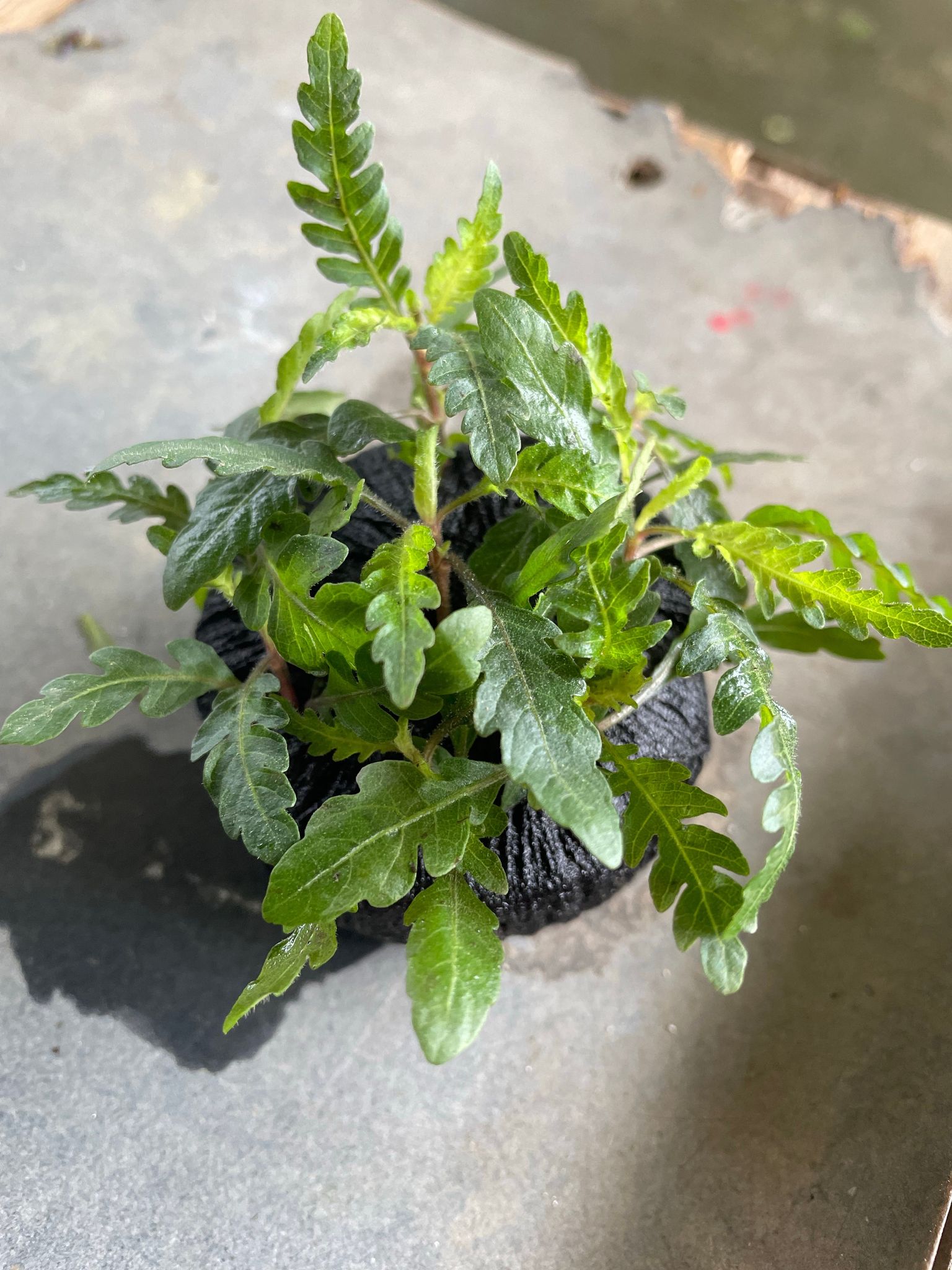
Hygrophila Pinnatifida Care Guide: Light, CO2, Substrate and Growth Tips
Hygrophila pinnatifida is the ruffled, bronze-red stem plant that usually shows up already tied to a stone or piece of driftwood rather than sitting in a pot. This guide covers exactly what it needs to survive versus what it needs to actually turn that deep bronze-red color, plus how to mount it, feed it, and keep it from melting after you bring it home.
What Is Hygrophila Pinnatifida?
Hygrophila pinnatifida is native to fast-flowing streams in India, which makes it a rheophyte — a plant adapted to grip rocks and wood in current rather than root loosely in soft riverbed mud. That background explains almost everything about how it behaves in a tank: it clings to hardscape naturally, tolerates moving water well, and doesn't strictly need substrate to thrive.
Its leaves are lobed and ruffled, ranging from bronze-green to olive on top with a purple-to-red underside that shows through as the plant matures. Growth habit shifts depending on how you plant it:
- Mounted on hardscape — creeps horizontally along the rock or wood surface, sending up short vertical shoots, similar to how an anubias or fern spreads.
- Planted in substrate — grows more upright and reaches taller than the mounted form, though it still spreads via runners.
Core Care Parameters
| Parameter | Range |
|---|---|
| Temperature | 68–82°F (20–28°C) |
| pH | 6.0–7.5 |
| Water hardness | Soft to moderately hard |
| Light | Low to medium-high (color depends on intensity) |
| CO2 | Optional, strongly recommended for color |
| Growth rate | Slow to moderate |
| Placement | Midground to foreground, or hardscape accent |
It's fairly forgiving on water chemistry once established, adapting to a decent parameter spread rather than demanding a narrow window — one advantage of being a hardy stream-dweller rather than a delicate specialty plant.
Light: How Much Does It Actually Need?
This is where most of the confusion around this plant comes from. Low light keeps Hygrophila pinnatifida alive, but it won't look like the photos that got you interested in it. Under low light, the plant survives, stays greener, and grows slowly. It's actually one of the more shade-tolerant colorful Hygrophila species — contrast that with H. corymbosa or H. costata, which sulk and stretch badly without stronger light.
Medium to medium-high light is what unlocks the bronze-red coloration and keeps the growth compact instead of leggy. If your goal is a showpiece centerpiece rather than just a background filler, budget for a fixture that can push moderate-to-strong output at your tank's depth, not just "some light."
A few practical light notes:
- Run a consistent 8–10 hour photoperiod — a timer removes the guesswork and keeps algae in check.
- A full-spectrum LED fixture with adjustable intensity lets you dial in the right PAR for your tank's depth instead of guessing with a fixed-output light.
- If your pinnatifida is pale green and stretched despite good fertilizing, upgrading the fixture (or lowering it closer to the substrate) is often the actual fix, not more fertilizer. You can browse LED lighting options sized for planted tanks on FishyHub.
CO2: Optional, but the Biggest Lever for Color
Injected CO2 is not required for Hygrophila pinnatifida to survive, but it's the single most effective upgrade for turning a green, slow-growing plant into a compact, bronze-red one. Without CO2, expect noticeably slower growth and leaves that stay smaller and greener even under decent light.
Think of it as a decision, not a requirement:
- Pure low-tech tank, chasing an easy green plant — skip CO2, keep expectations modest.
- Chasing the signature bronze-red color and denser growth — CO2 injection paired with medium-high light is the combination that gets you there fastest.
Substrate: Does It Need to Be Planted?
Here's where pinnatifida stands apart from most of its genus. Because it's a rheophyte, substrate is optional — you can tie or glue it directly to rock or driftwood and it will grow just fine without ever touching the substrate. This is different from root-feeding relatives like H. polysperma or H. angustifolia, which do best with a nutrient-rich substrate underneath them.
That said, giving it root access still helps:
- Mounted, no substrate contact: works fine, growth is slower but low-maintenance.
- Planted directly in substrate: use a nutrient-rich aqua soil, or a plain sand/gravel base supplemented with root tabs. Faster, showier growth is the payoff.
If you're setting up a new planted section of the tank, a nutrient-rich aquarium soil gives roots something to work with from day one, while a gravel and sand substrate paired with root tabs works well if you prefer a lighter-colored look.
Fertilization
Whether mounted or planted, Hygrophila pinnatifida responds to regular feeding:
- Liquid fertilizer (macro and micronutrients) dosed into the water column benefits both mounted and planted specimens, since mounted plants can only absorb through leaves and exposed roots.
- Root tabs matter specifically for plants rooted in substrate, feeding directly at the root zone.
- Iron and potassium are the two nutrients most closely tied to the red/bronze pigmentation — a common cause of a plant reverting to plain green is a shortfall in these micros combined with weak light.
Growth Habit, Trimming, and Propagation
As stems lengthen, older lower leaves drop off, leaving bare stem near the base with new growth up top. When that happens:
- Top the stem — cut just above a leaf node.
- Replant the cutting — either mount it nearby or push it into substrate.
- Let side shoots/runners develop — mature plants naturally send out plantlets you can separate and relocate.
Cuttings root readily within a few weeks. Growth overall is slower than most Hygrophila species, so don't expect the rapid stem-plant pace you might see from faster growers in the same genus.
How to Mount It on Hardscape
Since it's most often sold already attached to a rock or wood mat, here's how to work with (or redo) that mounting:
| Method | Best for | Time to establish |
|---|---|---|
| Cotton thread | Irregular rock surfaces, biodegrades naturally | 3–5 weeks |
| Fine fishing line | Smooth wood/rock, very low visibility | 3–5 weeks |
| Plant-safe superglue gel | Quick fix, works underwater, holds instantly | Roots grip within 2–4 weeks |
New roots grip the surface within a few weeks; once you see the plant holding on its own, ties or line can be removed. Check ties periodically in the meantime — as stems thicken, a tight tie can cut into the plant and damage tissue.
For scaping, pinnatifida works well as the accent plant on a stone-and-plant centerpiece, often paired with a low-growing buce or anubias mounted on the same rock or a different section of the same piece of wood for textural contrast.
Water Flow and Filter Placement
As a rheophyte, Hygrophila pinnatifida appreciates some current across its leaves — this isn't just cosmetic. Steady flow helps keep detritus and algae from settling into the ruffled, crinkled leaf texture, which traps debris more easily than smooth-leaved plants. Position it where an outflow from a filter or a powerhead creates gentle-to-moderate movement across the plant, rather than in a dead-flow corner of the tank.
Common Mistakes and Troubleshooting
| Problem | Likely Cause | Fix |
|---|---|---|
| Whole plant buried in substrate after arriving mounted | Misreading it as a substrate-rooted plant | Keep it tied to hardscape, or gently separate individual plantlets to plant |
| Leaves melting/yellowing after purchase | Normal transition from emersed nursery growth to submerged tank conditions | Trim melted leaves, be patient — new submerged growth looks different and better |
| "Not growing," so more fert/CO2 added | Overestimating its growth rate compared to other Hygrophila | Accept it's a slow-to-moderate grower; excess dosing just feeds algae |
| Green instead of bronze-red | Low light and/or iron/potassium deficiency | Increase light intensity, dose a comprehensive micronutrient fertilizer |
| Leggy stems, wide leaf spacing | Insufficient light | Raise the plant higher in the water column or boost fixture intensity |
| Algae on leaf surfaces | Crinkled texture trapping detritus; nutrients outpacing light usage | Improve flow across the plant, avoid overdosing relative to light |
| Ties cutting into stems | Mounting material not loosened as the plant grows | Check and adjust ties periodically once roots start gripping |
Hygrophila Genus 101
Hygrophila is a large genus of fast, adaptable stem and creeping plants with wide pH and temperature tolerance. Most species propagate easily from stem cuttings, and the genus spans a huge range of difficulty:
- Easiest: H. polysperma — extremely hardy, fast, beginner-proof.
- Moderate: H. pinnatifida — slower, more color-dependent on light/CO2, flexible on substrate.
- More demanding for color/form: H. corymbosa and H. costata — want stronger light to stay compact and colorful.
Hygrophila Polysperma
Widely considered the hardiest and fastest-growing Hygrophila, polysperma is nearly impossible to kill and needs regular trimming to stay in bounds. One important US-specific caution: some Hygrophila species, including polysperma, are classified as invasive or restricted in certain states. Always check your state's regulations before buying, and never dispose of aquarium plant trimmings in local waterways or storm drains, regardless of species.
Willow Hygro (Hygrophila Angustifolia)
A tall, narrow-leaf background plant that wants brighter light and heavier root feeding than pinnatifida. It's a fast grower that needs frequent pruning to avoid shading out everything behind it — a good pick if you want a background wall of green rather than a colorful accent piece.
Temple Plant (Hygrophila Corymbosa 'Compacta')
An upright grower valued for its rosette-like compact form, but that compact shape only holds up under more light than pinnatifida needs. Under weaker light, corymbosa 'Compacta' stretches and loses its tidy shape — useful context if you're comparing how much light budget different Hygrophila species actually require.
Hygrophila Sp. "Chai"
Often confused with pinnatifida in the trade because of its similarly ruffled leaf texture, Chai is a more compact relative that stays smaller overall — a good fit for nano tanks. Its light and CO2 requirements track closely with pinnatifida (low-medium light works, CO2 is optional but improves results), so the two make reasonable substitutes depending on how much horizontal or vertical space you have.
Low-Tech vs. High-Tech: Which Setup Fits Your Goals?
| Setup | Light | CO2 | Substrate | Expected Result |
|---|---|---|---|---|
| Low-tech, easiest | Low | None | Mounted, no substrate needed | Survives, stays greener, slow growth |
| Low-tech, better color | Low-medium | None | Root tabs under mounting point or light substrate | Slightly better color, still modest growth |
| High-tech, showpiece | Medium-high | Injected | Nutrient substrate or root tabs | Compact growth, strong bronze-red coloration |
General Planted Tank Fundamentals
A few universal habits make Hygrophila pinnatifida (and most other plants) easier to keep healthy:
- Keep light duration consistent at 8–10 hours daily.
- Dose CO2 and fertilizer on a steady schedule rather than sporadically — inconsistency is a bigger algae driver than the actual dose.
- Don't run intense light without matching nutrient/CO2 availability — that mismatch is the most common algae trigger in planted tanks.
- Expect a melt/adjustment period after planting, especially with nursery stock grown emersed (out of water). This is normal, not a sign of failure.
Frequently Asked Questions
Does Hygrophila pinnatifida need CO2?
No. It grows fine without injected CO2, but expect slower growth and a greener, less vibrant plant. Adding CO2 is the single biggest upgrade for pushing it toward compact growth and bronze-red color.
Can it be grown without substrate?
Yes. Tie or glue it to rock or driftwood like an epiphyte, and it will send roots into the surface over time, gripping firmly enough that ties can eventually be removed.
Why is my Hygrophila pinnatifida turning green instead of bronze/red?
Usually insufficient light intensity, low iron or potassium, or both. Increase light strength and dose a comprehensive fertilizer that includes micronutrients to restore color.
How much light does it need?
Low light is enough to keep it alive, but medium to medium-high light — ideally paired with CO2 — brings out the strongest bronze-red color and the most compact growth form.
Is Hygrophila pinnatifida easy for beginners?
It's moderately easy — more forgiving than showier stem plants on water parameters, but slower-growing and dependent on decent light for its signature look. Rate it low-intermediate rather than pure beginner-easy.
How do I propagate it?
Top the stem just past a leaf node and replant the cutting, or wait for natural side shoots and runners to develop and separate those from the main plant. Cuttings typically root within a few weeks.
Is it invasive or restricted in the US?
Hygrophila pinnatifida itself isn't commonly restricted, but the genus includes species like polysperma that are classified as invasive or regulated in some states. Check your local regulations before buying, and never release aquarium plants or trimmings into natural waterways.
What's the difference between Hygrophila pinnatifida and Hygrophila sp. "Chai"?
Chai is a related, more compact ruffled-leaf variety popular in nano aquascapes, staying noticeably smaller than pinnatifida. Care requirements are nearly identical — low to medium light and optional CO2 — making the choice mostly about available space.
Once you've settled on a light and CO2 setup, browse FishyHub's full range of aquarium substrate options to match your planting approach, mounted or rooted.

