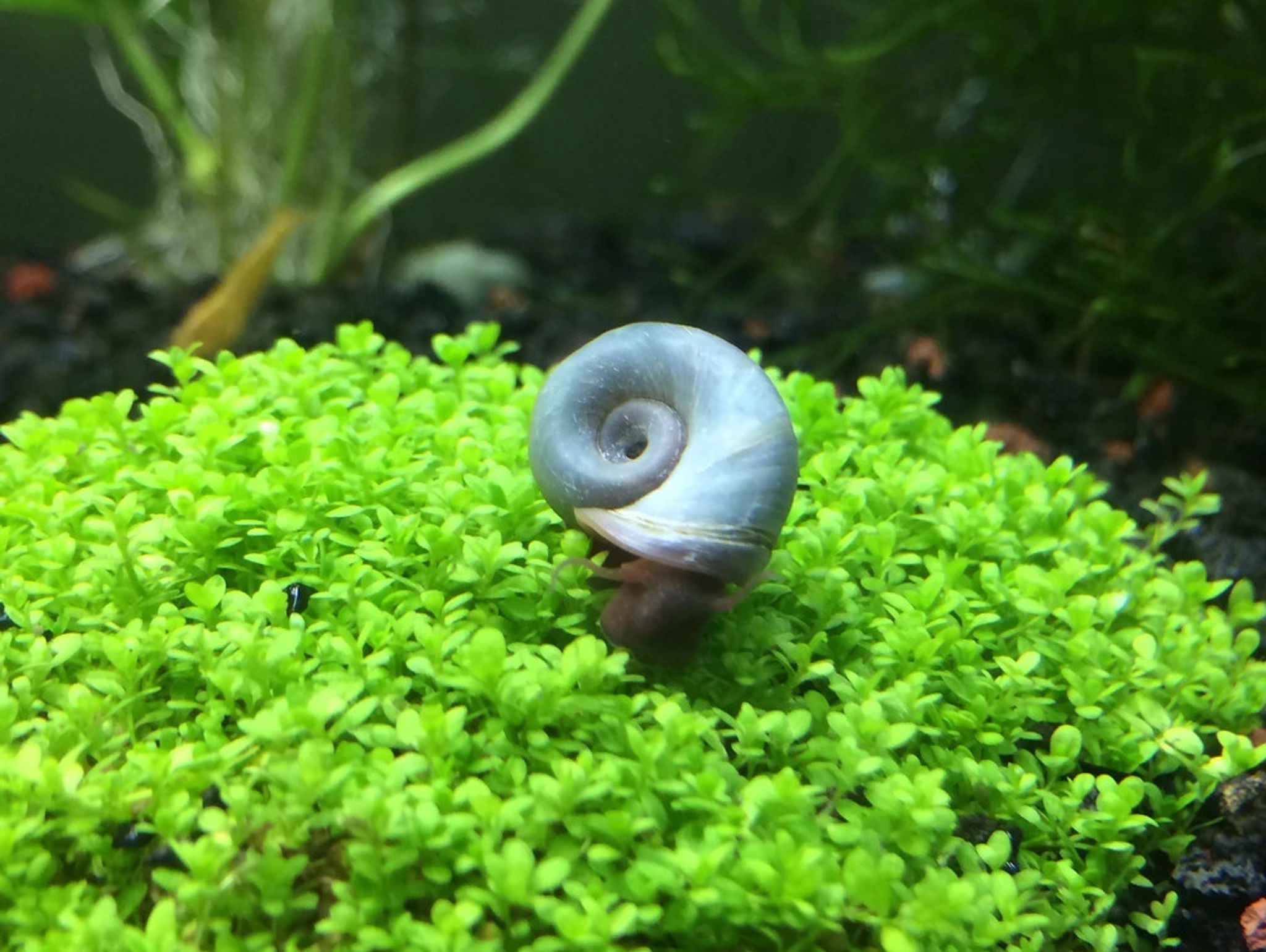
How to Set Up the Ideal Tank for Ramshorn Snail
Whether you bought ramshorn snails on purpose or found a few riding in on a plant shipment, they need the same stable, cycled tank as any other freshwater livestock. This guide covers tank size, water chemistry, feeding, and the maintenance routine that keeps a ramshorn colony thriving without taking over the aquarium.
Tank Size and Setup Basics
Ramshorn snails can technically survive in almost any volume of water, including nano tanks and even bowls, but that doesn't mean it's a good idea. Small volumes swing in temperature and chemistry far faster than larger ones, and snails are just as sensitive to those swings as fish.
- 5 gallons (19 L): reasonable floor for one or a few snails in a stable, well-monitored setup.
- 10 gallons (38 L): recommended if you're keeping a small colony or adding tankmates like shrimp or community fish.
- More surface area generally means more stable water — a bigger buffer against the mistakes that stress snails, like a missed water change or a temperature swing.
The tank must be fully cycled before snails go in. Ammonia and nitrite need to read 0 ppm; snails are just as vulnerable to a cycling spike as fish are, and adding them to a brand-new, uncycled tank is one of the most common ways new keepers lose their entire order.
Water Parameters Ramshorn Snails Need
Temperature
Ramshorns are comfortable across a wide range, roughly 65–80°F (18–27°C), with 70–78°F (21–26°C) being the sweet spot. They tolerate unheated, room-temperature tanks well, which makes a heater optional rather than mandatory in most US homes — just avoid letting the room swing into extremes.
pH and Hardness
Aim for pH 7.0–7.5 — neutral to slightly alkaline. Sources vary a bit on the exact acceptable range, but the consensus worth following is this: don't chase a precise decimal, just avoid consistently acidic, soft water. That's the real risk factor for shell health, not a tenth of a pH point either way.
General hardness (GH) and carbonate hardness (KH) matter more than most beginners expect. Moderate-to-hard water, roughly 5–15 dKH, gives snails the dissolved minerals they need to build strong shells. Very soft water is the leading cause of pitted, thin, or "melting" shells over time.
| Parameter | Target Range | Why It Matters |
|---|---|---|
| Temperature | 65–80°F (18–27°C) | Wide tolerance; 70–78°F is ideal |
| pH | 7.0–7.5 | Neutral to slightly alkaline; avoid acidic water |
| GH/KH | 5–15 dKH (moderate-hard) | Supports shell strength; soft water erodes shells |
| Ammonia/Nitrite | 0 ppm | Must be fully cycled before adding snails |
| Nitrate | Low, controlled by water changes | High nitrates fuel algae and stress snails long-term |
Filtration and Flow
A standard hang-on-back (HOB) or canister filter sized for the tank is enough — you can browse filters sized for freshwater setups to match your tank volume. The goal isn't heavy mechanical filtration for a big bioload; ramshorns produce very little waste. The real job of the filter is keeping nitrates low and providing gentle water movement.
Avoid strong flow. Ramshorns aren't strong swimmers, and a powerful current can stress them or physically sweep them off glass and plants. If your filter output feels forceful, a baffle or a lower flow setting is worth adjusting.
Substrate and Decor
No special substrate is required — sand or fine gravel both work fine for ramshorns, since they graze on surfaces rather than burrow. You can browse substrate options for either choice.
If your water runs soft, a calcium-rich substrate or a calcium supplement helps shell development. This isn't necessary in already-hard water, but it's cheap insurance in a soft-water setup.
For decor:
- Live plants give snails biofilm and algae to graze, and ramshorns are generally not destructive to sturdy species.
- They may nibble soft or delicate plants (anacharis is a common example) if they're underfed — another reason not to skip supplemental feeding.
- Caves, rocks, and driftwood add grazing surface area and enrichment beyond what bare glass provides.
Feeding Ramshorn Snails
Ramshorns are opportunistic grazers. In a mature tank, most of their diet comes free: algae, biofilm, and detritus on glass, decor, and plant leaves.
Supplement with:
- Blanched vegetables — zucchini, spinach, cucumber, or lettuce
- Algae wafers
- A quality sinking fish pellet
Feed only what's eaten in about 5 minutes. Overfeeding is the single biggest driver of population explosions — excess food means excess energy for breeding, and a ramshorn colony can outgrow a tank fast when food is abundant.
Calcium Supplementation
In soft-water setups, add a calcium source to prevent shell erosion: crushed coral or cuttlebone in the filter or substrate, or a liquid calcium additive dosed on a schedule. This is optional in already-hard water but recommended anywhere GH runs low.
How Ramshorn Snails Reproduce
This is usually the first surprise for new owners: ramshorn snails are hermaphroditic, meaning any single snail can lay fertile eggs without a mate. One snail arriving as a plant hitchhiker is enough to seed a full colony.
Eggs are laid in small gelatinous clusters of roughly a dozen eggs on glass, plant leaves, or decor, and hatch in 2–4 weeks depending on temperature — warmer water speeds this up.
Controlling Population Growth
Because a single snail can restart a colony, there's no way to "sterilize" a population without physically removing snails or eggs. Effective options, usually combined:
- Reduce feeding — the fastest lever, since overfeeding drives most booms.
- Manually remove egg clusters before they hatch, scraping them off glass or decor.
- Add a controlled predator — assassin snails, certain loaches, or some pufferfish will eat ramshorn eggs and juveniles.
Important caveat: those same predators will also eat or harm adult ramshorns. They're a population-control tool, not a "compatible tankmate" if you actually want to keep ramshorns long-term. If you'd rather not introduce a predator at all, rehoming excess snails to a local fish store, an aquarium club, or an online hobbyist group is a practical, humane alternative to destroying them.
Tankmates
Ramshorns do well with peaceful community fish and invertebrates:
- Tetras, rasboras, guppies, corydoras
- Freshwater shrimp — browse shrimp options if you're building a shrimp-and-snail cleanup crew
- Other peaceful snail species
Avoid known snail-eaters — assassin snails, loaches, pufferfish, some cichlids — and aggressive bettas, unless population control is specifically your goal. Some bettas coexist fine with snails, but it's a per-fish personality issue, so monitor closely if you attempt it.
Quarantine Before Adding Snails
Newly acquired snails, and any plants that might carry hitchhiking eggs, should sit in quarantine for roughly 2–4 weeks before joining a display or community tank. Ramshorns are generally low-risk and beneficial when sourced clean, but any new livestock can carry parasites or disease — quarantine first regardless of how "safe" the species seems.
Algae Management: The Bigger Picture
Ramshorns help with algae, but they're a supporting tool, not a substitute for good tank management. Algae itself is driven by:
- Excess light — too many hours per day or intensity that's too high
- Excess nutrients — overfeeding or infrequent water changes
- Nutrient/CO2 imbalance in planted tanks
Prevention means 6–8 hours of lighting per day, controlled feeding, regular water changes, and live plants competing for the same nutrients algae needs. Snails grazing biofilm off the glass are a nice bonus on top of that discipline, not a replacement for it.
One overlooked spot: the underside of the tank lid. Condensation plus light exposure breeds an algae film there that's easy to forget. Wipe it periodically — it's also a decent sign the tank has ample light and nutrients, which incidentally feeds your snails too.
Regular Maintenance Checklist
| Task | Frequency |
|---|---|
| Water testing (ammonia, nitrite, nitrate, pH, GH/KH) | Weekly |
| Partial water change | 10–25% weekly, or 25–50% biweekly depending on bioload |
| Gravel/substrate vacuum | With water changes, lighter touch than a fish-only tank |
| Filter media rinse | Every 2–4 weeks, in removed tank water |
| Visual snail health check | Weekly |
Water Changes
Match new water temperature to the tank and dechlorinate before adding it. Sudden large swings in parameters stress snails more than they stress most fish, so consistency matters more than exact percentages. On larger setups, an automatic top-off or water-change system can make this hands-off.
Gravel Cleaning
Siphon the substrate in sections during water changes rather than the whole tank at once. Go lighter than you would in a fish-only tank — over-vacuuming strips out the beneficial biofilm layer that snails actually feed on.
Filter Cleaning
Yes, rinse mechanical media on a schedule, but do it gently:
- Rinse in removed tank water, never tap water, to avoid killing beneficial bacteria with chlorine or chloramine.
- Never replace or rinse all media at once — stagger it so the bacterial colony isn't wiped out in a single afternoon.
Checking Snail Health
Beyond just counting shells, look for an active foot extended from the shell, a normal retraction response when touched, and shells free of excessive pitting or erosion. These are better indicators of colony health than population size alone.
Common Mistakes to Avoid
- Overfeeding — the single most common cause of population explosions; cut back and remove egg clusters manually.
- Adding snails to an uncycled tank — causes ammonia/nitrite stress or death; always cycle first.
- Keeping water too soft or acidic — leads to shell pitting, thinning, or melting; fix with crushed coral, cuttlebone, or a remineralizing product.
- Using copper-based medications in a tank containing snails — copper is lethal to invertebrates, so always check labels before treating a community tank. Browse medications carefully and confirm invertebrate safety before dosing.
- Treating snails as "free" algae control without fixing lighting or feeding — they help, but don't replace good habits.
- Panicking over a population boom instead of following a controlled reduction plan.
- Adding a predator without realizing it eats desirable snails too — assassin snails and pufferfish don't discriminate between "extra" and "keeper" ramshorns.
A Note on Tank Hardware
If your setup includes a sump, wave maker, or powerhead, match the flow rate (GPH) to your tank volume and keep intakes screened so snails and fry aren't pulled in. And regardless of species kept, a smart water-sensor placed under or near the stand is cheap insurance against a slow leak going unnoticed — general setup insurance for any aquarium, not just a snail tank. If a leak does happen, locate whether it's a seam or a crack, drain and fully dry the tank, then reseal with aquarium-safe silicone or replace the tank if the damage is structural. Aquarium gloves aren't essential for casual freshwater maintenance, but they do keep skin oils and lotions out of the water and protect your hands during gravel cleaning.
Lifespan
On average, ramshorn snails live about 1 year, though well-maintained, stable tanks can push that to 2–3 years. Consistent parameters — not dramatic interventions — are what extend it.
Frequently Asked Questions
Do I need a filter or heater for a ramshorn snail tank?
A filter is recommended for water quality even though ramshorns have a low bioload. A heater is optional since they tolerate typical room temperatures well, but avoid letting the tank swing into temperature extremes.
Are ramshorn snails good or bad for a planted tank?
Generally good — they graze biofilm and algae off leaves and rarely damage healthy, sturdy plants. They may nibble very soft or already-weakened leaves, especially if underfed.
How do I stop ramshorn snails from taking over my tank?
Reduce feeding, manually remove eggs and excess snails, or add a controlled predator like an assassin snail. Because they're hermaphroditic, there's no way to sterilize the population without physical removal.
Can ramshorn snails live with betta fish?
It's risky. Some bettas coexist fine, but many will harass or eat small snails, so monitor closely if you attempt this combination and be ready to separate them.
Do ramshorn snails need calcium supplements?
Not always, but they're helpful in soft-water setups to prevent shell erosion. Crushed coral or cuttlebone are simple, low-maintenance sources.
How can I tell if a ramshorn snail is dead?
A strong, persistent smell, an empty shell, or a body that doesn't retract when touched and stays limp are the main signs. Remove the snail promptly to protect water quality.
How often should I do water changes in a snail-heavy tank?
Weekly partial changes of roughly 10–25% are typical, adjusted upward if bioload or test results call for it rather than following a rigid schedule.
Ready to build out your setup? Browse freshwater livestock on FishyHub for ramshorn snails, tankmates, and everything else your tank needs.

