How to Set Up the Ideal Tank for Rabbit Snail
Rabbit snails need alkaline, mineral-rich water, a soft substrate, gentle filtration, and a tight-fitting lid to thrive long term. This guide walks through the full build — tank size, water chemistry, cycling, décor, feeding, and the everyday realities of travel, power outages, and pets — so you only have to set it up once.
What Exactly Is a Rabbit Snail?
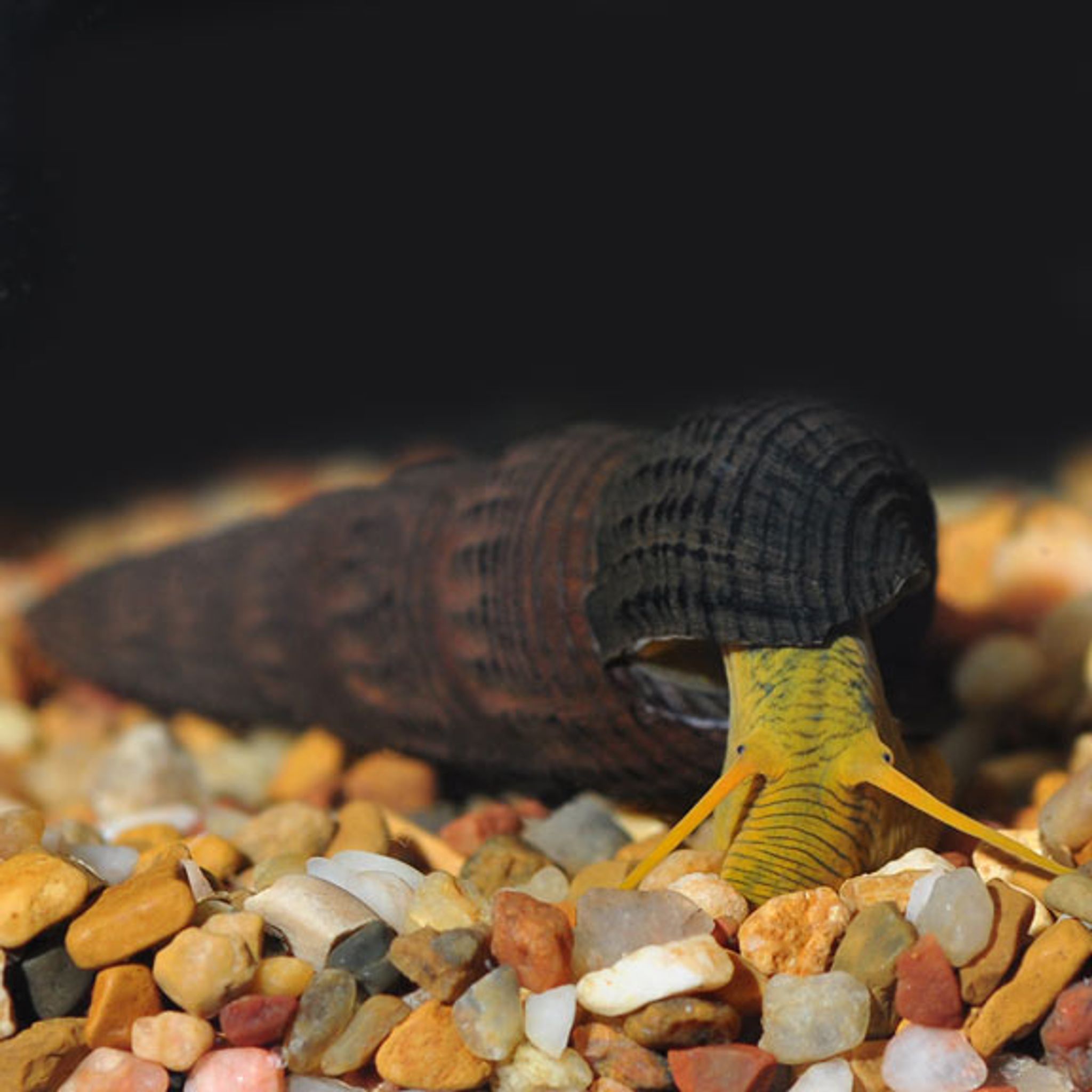
Rabbit snails (genus Tylomelania) come from freshwater lakes and rivers on the Indonesian island of Sulawesi. They are not related to mystery snails or nerite snails, even though all three are commonly sold as freshwater aquarium snails. Rabbit snails get their name from the rabbit-like tentacles on their heads.
They come in several color morphs — chocolate, gold, black, orange, and rabbit-spotted among them — but every morph shares the same care requirements: alkaline water, a soft substrate, and a peaceful, well-decorated tank.
Choosing the Right Tank Size
A single rabbit snail can survive in a 10-gallon (38 L) tank, and that is a workable bare minimum. In practice, most keepers settle on 20-30 gallons (75-115 L) as the real starting point, for two reasons:
- Rabbit snails are social and do best in small groups rather than as loners.
- A larger water volume dilutes ammonia and nitrate swings, giving you a wider margin for error.
As a practical stocking rule of thumb, plan on roughly one snail per 5 gallons (19 L) of water when building out a colony. That keeps bioload manageable without requiring you to guess.
| Setup goal | Recommended tank size | Notes |
|---|---|---|
| One rabbit snail | 10 gal (38 L) minimum | Workable but not ideal long term |
| Small colony (3-5 snails) | 20-30 gal (75-115 L) | Consensus recommendation |
| Snails + peaceful community fish | 30+ gal (115+ L) | Size up for the fish bioload, not just the snails |
Water Chemistry: The Part You Cannot Skip
Rabbit snail shells are calcium carbonate, and they erode in water that's too soft or too acidic. Getting the chemistry right up front prevents the most common long-term problem: shell pitting.
- Temperature: 68-86°F (20-30°C) is the survivable range, but 74-78°F (23-26°C) is the comfortable, breeding-friendly band. Treat the wider range as tolerable, not ideal.
- pH: 7.3-8.5. Alkaline water is essential — acidic water actively dissolves shell material over time.
- General hardness (GH) and carbonate hardness (KH): roughly 2-15 dKH, leaning toward the harder end. Mineral-rich water gives snails the raw material to build and repair shell.
- Ammonia and nitrite: must read 0 ppm at all times. Rabbit snails are sensitive to spikes.
- Nitrate: keep it low through regular water changes rather than letting it climb between services.
Fish Tank Water Basics Before You Buy Anything
Before you pick equipment, test your actual tap water for pH, hardness, and chlorine. Many municipal water supplies in the US run soft and only mildly alkaline, which is fine for many fish but marginal for rabbit snails. If your source water tests soft or acidic, plan on a buffer or a remineralizer product to bring GH/KH into range before livestock goes in — it's much easier to correct this at setup than to fight it after snails are already showing shell damage.
Substrate: Sand First, Smooth Gravel as a Backup
Rabbit snails burrow and plow through the substrate constantly, so grain shape matters more than it does for fish. Fine, soft sand is the top recommendation — it lets snails move without abrading the soft tissue of their foot or scraping the shell. Fine, rounded gravel is an acceptable secondary option only if the grains are genuinely smooth; sharp gravel or chunks of crushed coral (ironically, sometimes added for hardness) can cut into the foot and should be avoided in favor of a dedicated buffering substrate or additive instead.
Filtration and Flow
Rabbit snails do best with gentle water movement. Strong intakes on canister or power filters can pull small or juvenile snails against the intake, injuring or trapping them, and constant strong current stresses adults too. A sponge filter or a low-flow filter is the safer choice, and if you're running a stronger filter for fish tankmates, fit an intake guard or a foam pre-filter over it. You can browse gentle filtration options for a rabbit snail tank in FishyHub's filter selection.
Décor and a Secure Lid
Give snails plenty of grazing surface and cover:
- Driftwood and rocks for biofilm and algae grazing
- Caves or overhangs for daytime hiding
- Live or silk plants, which also double as grazing surfaces
The one non-negotiable: a tight-fitting lid. Rabbit snails climb — they will go up the glass, across the underside of a loose lid, and out through any gap large enough for their shell. A snail that gets out and dries on the floor overnight will not survive, so check for gaps at cord cutouts and filter openings, not just the main lid seam.
Water Conditioner and Ongoing Dechlorination
Tap water in the US almost always carries chlorine or chloramine, both of which kill the beneficial bacteria your filter depends on and irritate a snail's gills and mantle tissue. Every fill — initial setup, weekly water changes, and even small top-offs — needs a dechlorinator (typically a sodium thiosulfate-based product) dosed per the label, commonly around 1 mL per 10 gallons as a general ratio. Treating only the first fill and skipping it on subsequent water changes is a common and avoidable mistake.
Full Freshwater Setup Sequence
- Rinse substrate thoroughly until runoff water is clear.
- Aquascape with driftwood, rocks, and plants before adding water.
- Fill with dechlorinator-treated water.
- Install the filter and heater, and let temperature stabilize.
- Cycle the tank for 4-6 weeks (or use a fishless-cycling method to speed this up).
- Test ammonia, nitrite, and nitrate — you want 0 ppm ammonia, 0 ppm nitrite, and some nitrate present — before adding any snails.
Adding rabbit snails to an uncycled tank is one of the most common causes of early losses; they're notably sensitive to ammonia spikes, so patience here pays off.
A Note on Acclimation
Rabbit snails handle fast changes in water parameters poorly, more so than hardier snails like mystery or nerite snails. A slow drip acclimation over 30-60+ minutes when introducing new snails — rather than a quick float-and-dump — meaningfully reduces stress and post-move losses.
Diet and Shell Health
Rabbit snails are omnivorous scavengers. A varied diet keeps them healthy and supports shell growth:
- Algae wafers and sinking pellets
- Blanched vegetables — zucchini, spinach, cucumber
- A calcium source such as cuttlebone, crushed coral in a media bag, or a commercial calcium supplement, especially important in softer water
Avoid overfeeding — leftover food fouls the water and feeds algae and ammonia spikes, undermining the water chemistry you worked to establish.
Tank Mates and Breeding
Rabbit snails pair well with peaceful community fish such as tetras, guppies, rasboras, and gouramis, along with shrimp and other peaceful snail species. Avoid crayfish, aggressive cichlids, goldfish, loaches, and puffers — all of which will eat or crush snails. You can browse compatible peaceful community species among FishyHub's freshwater livestock.
Unlike pest snails, rabbit snails are livebearers that produce small gelatinous egg capsules, typically one to three at a time, and reproduce slowly. A population explosion simply isn't a realistic risk with this genus, which is part of why they're valued as an attractive, non-invasive addition rather than a nuisance species.
With good care, expect a lifespan of roughly 1-3 years.
Rabbit Snails in a Shrimp Tank
Rabbit snails and shrimp coexist well. Snails add cleanup capacity by eating leftover food and detritus, help aerate the substrate through burrowing, and contribute to overall bioload and cycling without competing aggressively for food or preying on shrimp or shrimp fry. If you're already running a shrimp colony, rabbit snails are a low-risk addition. Explore dedicated shrimp livestock on FishyHub if you're building a mixed invertebrate tank.
Algae Control: Snails Help, They Don't Solve It Alone
Rabbit snails graze soft algae films, but grazing alone won't fix an algae outbreak. Combine it with:
- A controlled light cycle of 6-8 hours per day
- Nutrient export through regular water changes and live plants
- Manual cleaning of glass and hardscape
Avoid chemical algaecides — they can harm invertebrates, including your snails.
Long-Term Tank Maintenance
- Weekly water changes of 10-20% keep nitrate low and chemistry stable.
- Vacuum lightly — snails burrow in the substrate, so use a gentle touch rather than digging deep with a gravel vacuum.
- Rinse filter media in tank water, never tap water, to preserve beneficial bacteria.
- Test regularly with a liquid test kit for pH, GH/KH, ammonia, nitrite, and nitrate rather than relying on visual cues alone.
Hazards to Know Before You Stock
- Copper is lethal. Copper-based medications, and copper leaching from old tap water pipes, kill snails outright. Never dose a copper-based treatment in a tank containing snails, and be aware that copper-based plant fertilizers used in planted tanks are a hidden risk worth checking labels for.
- Quarantine new arrivals. Imported snails and new plants can carry leeches or parasitic flatworms. Quarantine new stock, and use a brief saltwater dip as a common remedy for leeches before introducing anything to the main tank.
- Inactivity isn't automatically illness. Rabbit snails go through extended inactive or "sleep" periods that are entirely normal. Only treat it as a red flag if it's paired with a foul odor or the snail staying retracted and unresponsive for several days.
Preparing for Travel
Before a trip, do a water change a day or two ahead of leaving, set up an auto-feeder or use a feeding block dosed conservatively, and ask a sitter to check that the heater and filter are running rather than to feed on a fixed schedule. Avoid the temptation to overfeed right before you leave — it just fouls the water while you're away.
Power Outage and Storm Preparedness
For hurricane season or any extended outage:
- Keep a battery-powered air pump on hand as filtration backup.
- Insulate the tank (towels or a blanket around the sides) to slow heat loss during a heater outage.
- Avoid opening the lid unnecessarily — it lets heat escape faster.
Rabbit snails tolerate short outages notably better than fish, since they need far less dissolved oxygen. That's genuinely reassuring for a mixed shrimp-and-snail or snail-only setup during a multi-hour or overnight power loss — invertebrate tanks generally have more buffer than fish-only tanks in this situation.
Pet-Proofing the Aquarium
If cats or dogs share the house, secure the lid with clips or added weight so it can't be pushed aside, route cords and cables away from paws, and make sure the stand is sturdy and positioned outside any pet's typical jump zone.
Frequently Asked Questions
What size tank does a rabbit snail need?
A single rabbit snail can get by in a 10-gallon (38 L) tank as a bare minimum, but 20-30 gallons (75-115 L) is recommended if you want a small colony, since rabbit snails are social and do better in groups.
What pH and hardness do rabbit snails need?
Alkaline water in the 7.3-8.5 pH range, with GH/KH on the harder side, roughly 2-15 dKH. Harder, mineral-rich water helps protect against shell pitting and erosion.
Can rabbit snails live with shrimp?
Yes. They're peaceful, don't prey on shrimp or fry, and actually help by cleaning up detritus and aerating the substrate as they burrow.
Do rabbit snails multiply out of control like pest snails?
No. They're livebearers that produce only a few young at a time, so population explosions aren't a realistic concern the way they are with pond or bladder snails.
What do rabbit snails eat?
Algae, blanched vegetables like zucchini and spinach, and sinking pellets or wafers, plus a calcium supplement such as cuttlebone or crushed coral to support shell health.
Why is my rabbit snail's shell pitted or cracking?
This is usually caused by soft or acidic water that lacks sufficient calcium and carbonate hardness. Raise your KH/GH toward the recommended range and add a calcium source to help the shell recover.
Can rabbit snails escape the tank?
Yes — they climb glass and décor and can get out through surprisingly small gaps, so a secure, tight-fitting lid is required, not optional.
Is tap water safe for rabbit snails?
Only after treating it with a dechlorinator to neutralize chlorine and chloramine, and after confirming there's no copper contamination from old household pipes.
Once your water chemistry and equipment are dialed in, you can browse rabbit snails and other peaceful freshwater livestock on FishyHub's freshwater livestock page to start stocking your tank.

