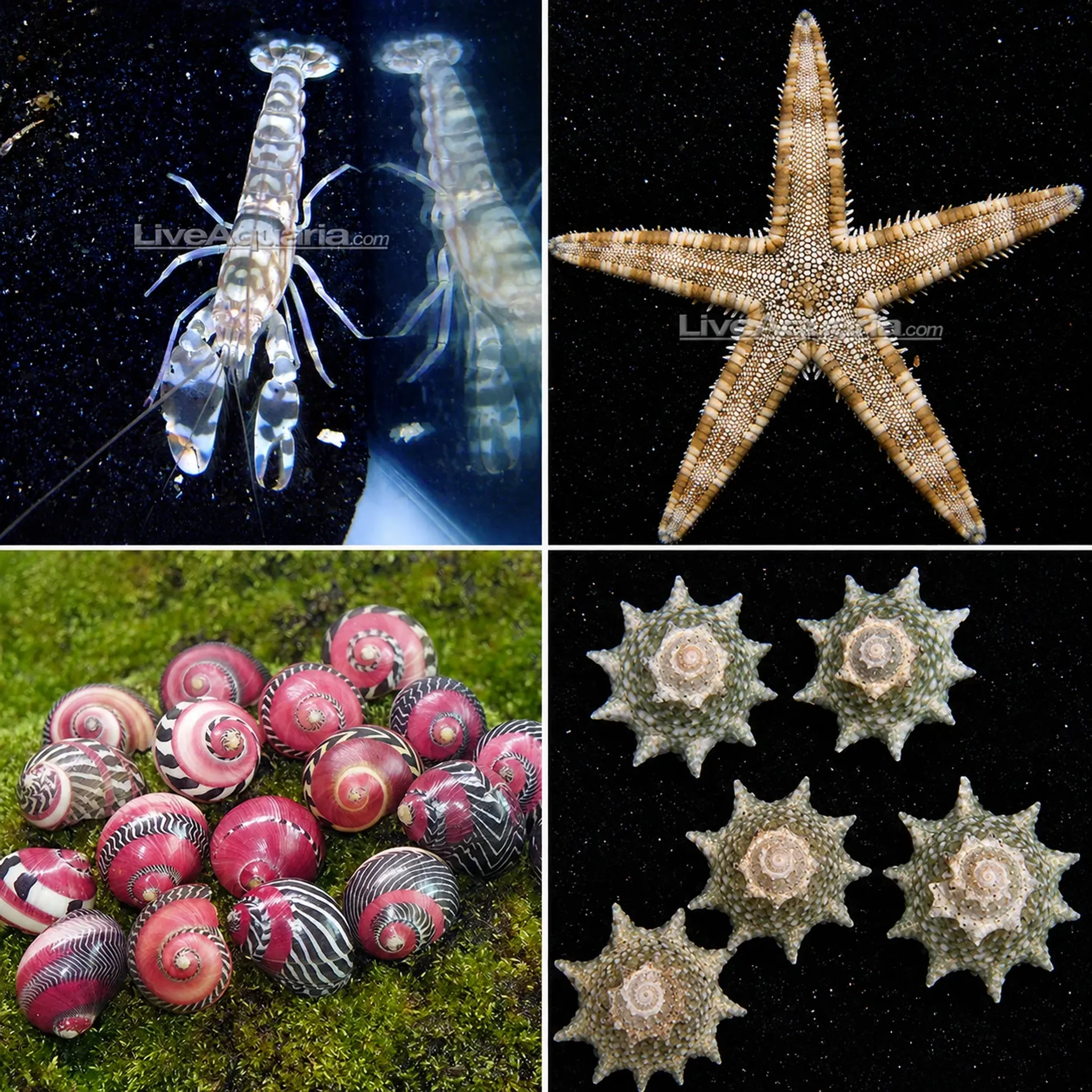
How to Set Up the Ideal Tank for Nerite Snail
Nerite snails are prized for eating algae most fish ignore, but they are not a plug-and-play cleanup crew — they need harder, mineral-rich water and a properly cycled tank to thrive. This guide walks through the exact tank size, water chemistry, substrate, and maintenance routine that keeps a nerite snail's shell healthy and its tank stable.
Tank Size and Setup Basics
A single nerite snail can survive in a 2–3 gallon (7.5–11 L) nano tank, but that small a volume leaves almost no margin for chemistry swings, which is exactly what nerites are sensitive to. For that reason, 5 gallons (19 L) is the safer general recommendation for one snail, and it becomes the practical minimum once you plan to keep more than one or pair the snail with tankmates.
Key equipment and conditions:
- Filtration: any filter sized for the tank works; nerites don't need special flow, but stable biological filtration is non-negotiable.
- Heater: only required if room temperature drifts outside the target range (see below); many community setups already run a heater for fish and that's sufficient.
- Lid: a tight-fitting cover with no gaps at the waterline. Nerites are notorious escape artists, especially when water chemistry drifts or they go searching for food or a mate — a loose lid is one of the most common reasons keepers find a dried-out snail on the floor.
Cycling Before You Add Snails
The tank must complete a full nitrogen cycle before any nerite snail goes in, exactly as you would for fish. Adding snails to an uncycled tank exposes them to ammonia and nitrite spikes, which invertebrates tolerate even worse than most fish do. Test the water and confirm ammonia and nitrite both read zero before introducing snails.
Water Parameters Nerite Snails Actually Need
Nerite snails originate from brackish coastal habitats, which is why they want harder, more alkaline water than many freshwater fish — a detail that gets lost when general "algae eater" advice treats them as an afterthought.
| Parameter | Nerite snail target | General freshwater community fish |
|---|---|---|
| Temperature | 72–78°F (22–26°C) | 72–78°F (22–26°C) |
| pH | 7.0–8.5 | 6.5–7.5 |
| General hardness (GH) | 8–18 dGH (moderate to high) | Varies, often softer |
| KH (carbonate hardness) | Buffered/stable | Moderate |
| Ammonia / nitrite | 0 ppm | 0 ppm |
| Nitrate | Under 20–40 ppm | Under 20–40 ppm |
Sources vary on the exact pH ceiling — some cap it at 8.0, others allow up to 8.5. Rather than chasing a precise number, aim for the 7.0–8.5 range and prioritize stability over hitting a specific decimal; sudden swings stress nerites far more than a slightly imperfect but steady reading.
Do You Need Crushed Coral?
Crushed coral, aragonite sand, or a mineral substrate additive buffers pH and slowly releases calcium — both of which support shell strength. It is not strictly mandatory if your tap water is already moderately hard. Test your GH first:
- Tap water already 8+ dGH: crushed coral is optional; treat it as insurance rather than a requirement.
- Soft tap water (below ~8 dGH): a mineral buffer is strongly recommended, since low mineral content is the leading cause of shell pitting and erosion.
Substrate and Decor
Substrate choice is flexible — sand, gravel, or even a bare-bottom tank all work for a nerite snail. What matters more is mineral content: mixing in crushed coral or aragonite (per the hardness guidance above) supports shell health, particularly in soft-water regions.
For decor:
- Driftwood, rocks, and live or silk plants are all safe additions.
- Leave some algae-covered surfaces — glass, decor, or slow-growing plant leaves — in place rather than scrubbing everything spotless. That biofilm is a primary food source.
Feeding a Nerite Snail
Nerites are primarily algae grazers, and they're especially effective against green spot and green film/dust algae. They generally won't touch cyanobacteria (blue-green algae), and results are mixed against hair or string algae.
In a very clean, low-algae tank, starvation is a genuine risk once every surface has been grazed bare. Supplement with:
- Blanched zucchini or cucumber
- Algae wafers
- Calcium-fortified snail food
A useful sign of trouble: if algae is depleted and the snail seems inactive or its shell looks thin, increase supplemental feeding rather than assuming it's simply resting.
Acclimation and Water Changes
Nerite snails react badly to sudden parameter swings, more so than many community fish, so a slow drip or float-and-add acclimation is worth the extra time — a rushed transfer is a common cause of early losses.
Ongoing maintenance:
- Weekly water changes: 10–25% of tank volume.
- Dechlorinate every batch of new tap water before it touches the tank (details below).
- Match temperature of the new water to the tank before adding it.
Making Tap Water Safe
Municipal tap water in the US commonly contains chlorine or chloramine, and sometimes trace heavy metals — all toxic to fish and invertebrates. Always treat new water with a dechlorinating conditioner before it goes into the tank, and match its temperature to the aquarium first.
Aged water is not a substitute. Letting tap water sit out, ideally aerated, for 24–48 hours will off-gas chlorine and let the temperature equalize, but it does not remove chloramine, which is standard in many US municipal supplies. Treat with a conditioner every time, and treat aging as a supplemental step at most.
Tank Placement
Where you put the tank affects both temperature stability and algae growth:
- Use a sturdy, level stand rated for the tank's filled weight, near a power outlet for equipment.
- Avoid direct sunlight through a window — it drives excess algae blooms and destabilizes temperature. Use curtains, blinds, or simply a different spot in the room.
- Keep photoperiod controlled at 6–8 hours using a timer instead of relying on ambient light.
- Avoid heating/AC vents, high-traffic areas, and anywhere prone to vibration or big temperature swings.
Algae, Cloudy Water, and Other Troubleshooting
Why Algae Shows Up
Algae blooms trace back to three causes: excess light, excess nutrients (nitrate/phosphate), and inconsistent maintenance. Common types include green spot, green film/dust, brown (diatom), hair/string, and blue-green (cyanobacteria) algae. As noted above, a nerite snail handles some of these far better than others, so don't count on it to solve every algae problem.
Keeping the Glass Clean
- Use an algae scraper or magnetic cleaner regularly.
- Reduce light duration if algae keeps returning.
- Let the nerite graze naturally between scrapings.
- Scrape just before a water change so loosened debris gets removed with the old water.
Cutting Nitrate
Routine partial water changes remain the primary method for nitrate control. Live plants, correct stocking and feeding levels, and nitrate-absorbing filter media are useful supplementary tools for persistently high readings, but they don't replace water changes.
Cloudy Water
| Likely cause | Typical fix |
|---|---|
| New-tank bacterial bloom | Usually clears on its own once the tank finishes cycling |
| Overfeeding | Reduce food amount and frequency |
| Substrate dust | Rinse substrate thoroughly before use; run mechanical filtration |
| Dying algae bloom | Water change, reduce light and nutrients |
Using Activated Carbon
Activated carbon in the filter can polish water and pull out tannins, odors, and discoloration. It's a useful finishing touch, not a substitute for adequate mechanical and biological filtration.
A Simple Diagnostic Habit
Test ammonia, nitrite, nitrate, and pH regularly — especially right after setup or whenever fish or snails show stress signs like gasping, lethargy, or shell changes. Match the specific symptom (cloudiness, odor, algae type, gasping) to a likely cause before treating, rather than guessing.
Compatibility, Breeding, and Lifespan
Nerite snails are peaceful and compatible with most community fish and shrimp. Avoid known snail predators, including some loaches, larger cichlids, pufferfish, and crayfish.
Nerites lay small, hard white egg capsules on hard surfaces throughout the tank. In freshwater, these eggs won't hatch — the larvae require brackish or salt water to develop — so a freshwater tank won't see a population explosion. The eggs can still be a cosmetic nuisance on glass and decor even though they never hatch.
Expect a lifespan of roughly 1–2 years, sometimes longer under stable, well-buffered conditions.
Common Setup Mistakes to Avoid
| Mistake | Consequence | Fix |
|---|---|---|
| Adding snails before cycling | Ammonia/nitrite spike kills invertebrates | Wait for a completed nitrogen cycle |
| Water too soft/acidic | Shell pitting, cracking, white erosion spots | Add crushed coral or mineral supplement; monitor GH |
| No secure lid | Snail climbs out and dries up | Use a tight-fitting lid, seal gaps |
| Algae fully depleted | Starvation | Supplement with vegetables, wafers, or fortified food |
| Overcleaning the tank | Removes the snail's food source | Leave some algae/biofilm surfaces |
| Sudden parameter changes | Stress, shell issues | Acclimate slowly, keep water changes consistent |
| Incompatible tankmates | Predation or harassment | Avoid known snail predators |
A Simple Maintenance Calendar
- Weekly: 10–25% water change with dechlorinated, temperature-matched water; scrape glass beforehand.
- Biweekly: check GH and KH, especially in the first few months, to catch drift before shells show damage.
- Monthly: test ammonia, nitrite, nitrate, and pH even if everything looks fine, to build a baseline for spotting problems early.
Once your tank is cycled and holding steady in the 7.0–8.5 pH and 8–18 dGH range, you can browse freshwater livestock on FishyHub for nerite snails and compatible tankmates, along with substrate options suited to harder-water setups.
Frequently Asked Questions
What size tank does one nerite snail need?
Five gallons (19 L) is the recommended minimum for a single nerite snail, though small nano tanks of 2–3 gallons are sometimes used short-term. Go larger if you're keeping more than one snail or adding tankmates.
Can nerite snails live in tap water?
Only after it's been treated with a dechlorinating conditioner. Raw tap water can contain chlorine or chloramine that's toxic to snails, and aging the water alone won't remove chloramine.
Do nerite snails need a heater?
Only if your room temperature falls outside roughly 72–78°F (22–26°C). Many community tanks already run a heater for fish, which covers the snail's needs too.
Why is my nerite snail's shell turning white or eroding?
This is usually caused by low general hardness or insufficient calcium in the water. Add a mineral supplement or a crushed coral/aragonite substrate mix and check your GH.
Will nerite snails multiply in my freshwater tank?
They will lay white egg capsules on hard surfaces, but those eggs need brackish or salt water to hatch, so a freshwater tank won't develop a snail population. The unhatched eggs can still be a cosmetic annoyance.
Why did my nerite snail escape or die outside the tank?
Poor water chemistry or a search for minerals often drives escape attempts. Make sure the lid fits tightly with no gaps and keep GH/pH in the recommended range.
What do nerite snails eat if there's no algae left?
Offer blanched zucchini or cucumber, algae wafers, or calcium-fortified snail food. This prevents starvation once glass and decor have been grazed clean.
Can nerite snails live with betta fish or shrimp?
Generally yes — nerites are peaceful and coexist well with bettas and shrimp. Just avoid known snail predators like some loaches, larger cichlids, pufferfish, and crayfish.

