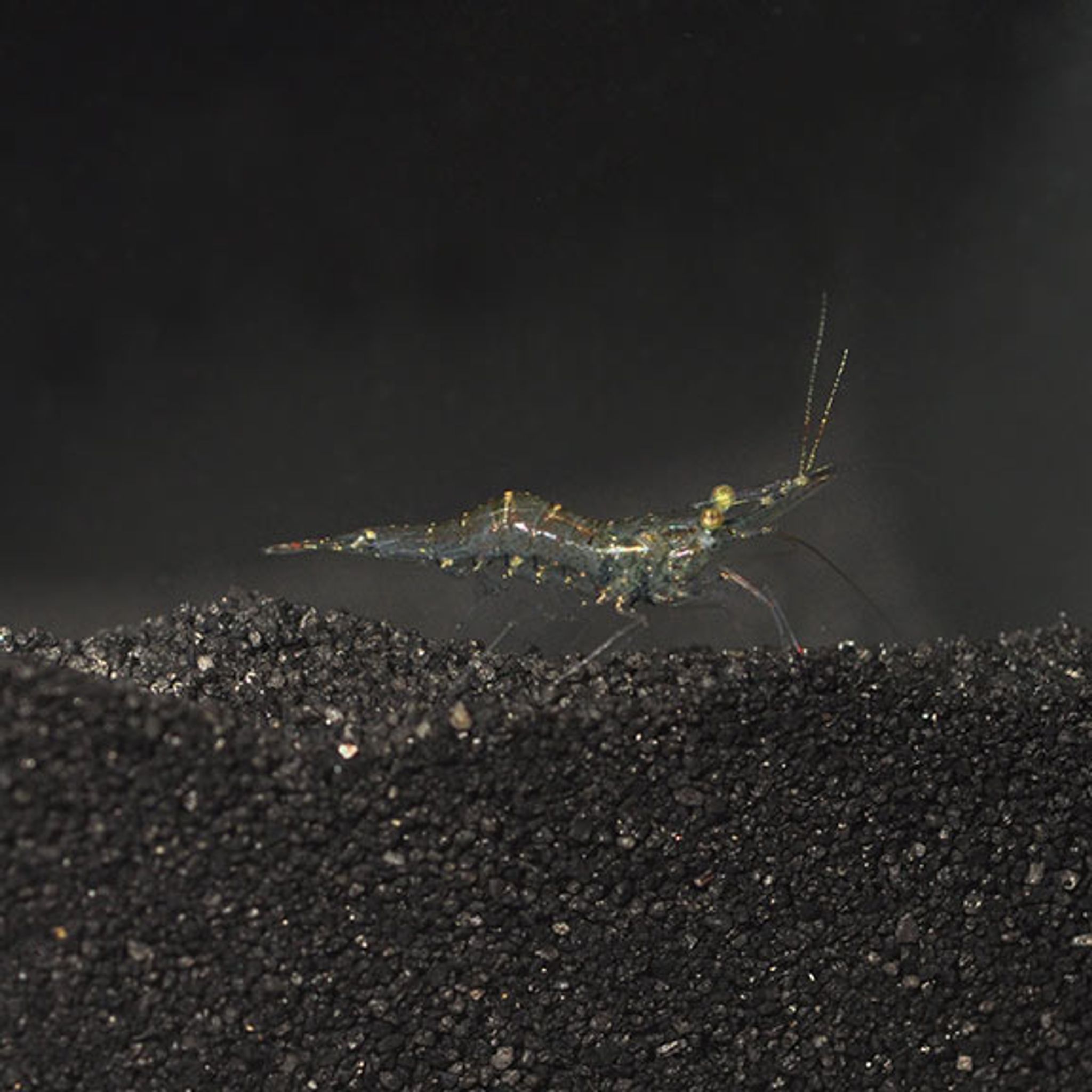
How to Set Up the Ideal Tank for Ghost Shrimp
Ghost shrimp are sold as cheap, disposable "feeder" stock, but that label is misleading — they are sensitive to ammonia, nitrite, and copper, and they need a properly cycled, stable tank just like any other livestock. This guide walks through the full setup order: tank size and gear, cycling, water preparation, décor, and the ongoing care that keeps a colony alive and breeding for the long term.
Tank size: how big does it need to be?
Ghost shrimp (Palaemonetes paludosus) are small, but a tiny footprint gives you almost no margin for error when parameters drift.
- 5 gallons (19 L) is an absolute floor for a small group of 6-10 shrimp.
- 10 gallons (38 L) is the practical starting point most keepers should aim for — it's far more forgiving, stays chemically stable, and gives a colony room to breed.
- Larger tanks buffer temperature and chemistry swings better than small ones, so bigger is always safer, not just more spacious.
Some general shrimp-keeping advice treats 5 gallons as fine for everyday use. It can work, but it leaves no cushion if you overfeed or forget a water change one week — 10 gallons is the more reliable choice for a beginner.
Weight and stand capacity
A fully stocked small tank is heavier than it looks once substrate, water, glass, and décor are added — roughly double the weight of the water alone.
| Tank size | Approximate loaded weight |
|---|---|
| 5-15 gallons | 30-200 lbs |
| 20-30 gallons | 250-370 lbs |
Confirm your stand or furniture is rated for that load before filling the tank, especially if it's sitting on a shelf or dresser rather than a dedicated aquarium stand.
Cycling the tank before adding shrimp
This is the step most feeder-shrimp buyers skip, and it's the single biggest cause of early deaths.
- Run a fishless cycle for 4-6 weeks before any shrimp go in.
- Ammonia and nitrite must both read 0 ppm on a liquid test kit before stocking.
- Never add shrimp to a brand-new, uncycled tank — even a "hardy" species can't survive an ammonia or nitrite spike.
Target water parameters
| Parameter | Acceptable range | Ideal |
|---|---|---|
| Temperature | 65-82°F (18-28°C) | 72-78°F (22-26°C) |
| pH | 7.0-8.0 | 7.2-7.6 |
| GH | 3-10 dGH | 4-8 dGH |
| KH | 3-10 dKH | 4-8 dKH |
| Ammonia / Nitrite | 0 ppm | 0 ppm |
| Nitrate | under 20-30 ppm | as low as practical |
Stable GH and KH matter more than hitting an exact number — swings in hardness during a molt are what actually cause trouble (more on that below).
Filtration, substrate, and décor
Filtration: A sponge filter is the strongly preferred choice — gentle flow with zero intake risk to shrimp or shrimplets. If you use a hang-on-back or canister filter instead, cover the intake with a pre-filter sponge or fine mesh; uncovered intakes pull shrimplets in.
Substrate: Plain fine gravel or sand is completely adequate. Ghost shrimp don't need the specialized, pH-buffering active substrates that ornamental species like crystal or bee shrimp require — that's a real need for tighter-parameter shrimp, not for ghost shrimp. A dark substrate does help shrimp coloring show and can reduce stress from feeling exposed.
Décor:
- Live or silk plants (java moss, hornwort, anacharis) are essential — cover, grazing surface, and molting security.
- Driftwood and leaf litter (Indian almond/catappa leaves) add biofilm to graze on and release tannins some keepers prefer.
- A tight-fitting lid or a lower water line near the rim prevents shrimp from climbing out through gaps — they escape more readily than most fish keepers expect.
Lighting: Keep it moderate. Ghost shrimp are light-shy and appreciate shaded zones, and moderate light still supports live plants without fueling excess algae.
You can browse suitable filters, substrate, and shrimp stock directly on FishyHub, including the freshwater shrimp category and gravel and sand substrate.
Choosing and conditioning aquarium water
Tap water is fine for ghost shrimp, but it must be treated every single time you add it to the tank — never straight from the faucet.
About chloramine
Most municipal utilities disinfect with either chlorine or chloramine, and the two behave very differently in a tank:
- Chlorine dissipates on its own if water sits out and is agitated for 24-48 hours.
- Chloramine — a more stable, longer-lasting combination of chlorine and ammonia that many utilities have switched to — does not dissipate on its own. It needs a conditioner that breaks the chlorine-ammonia bond and detoxifies the freed ammonia.
Since you usually won't know which one your utility uses without checking its local water quality report, treat every water change with a conditioner rather than relying on "letting it sit."
Water conditioners for aquariums
A standard aquarium water conditioner:
- Neutralizes both chlorine and chloramine.
- Detoxifies heavy metals present in tap water.
- Some formulas add a synthetic slime coat, which is more relevant for fish than shrimp but doesn't hurt.
Dose it per the label instructions on every new batch of water, including top-offs. A slight overdose is safer than under-dosing. FishyHub carries water conditioners and additives sized for small and mid-size tanks.
Ranking water sources for a shrimp tank
| Source | Notes |
|---|---|
| Dechlorinated tap water | Standard, most economical choice for most US homes |
| RO / RO-DI water | Purest option, but must be remineralized with a GH/KH booster before use — pure water lacks the minerals shrimp need for healthy molts |
| Well water | Usable, but test pH, hardness, and metals first — quality varies by property |
| Bottled "spring" water | Inconsistent mineral content; not recommended as a primary source |
How to dechlorinate water
Two approaches exist, but only one is fully reliable:
- Chemical conditioner — fast, reliable, and neutralizes chloramine as well as chlorine.
- Evaporation/aeration over 24-48 hours — removes chlorine only. It does nothing for chloramine, so it's a less dependable method for most modern US water supplies.
Always match the new water's temperature to the tank and pour it in slowly, especially if shrimp are mid-molt.
Water changes and molting
Do weekly 10-20% water changes, up to 25% if the tank is stocked more heavily. Every time:
- Match temperature to the tank before adding.
- Dose conditioner in the new water.
- Pour slowly to avoid sudden parameter or pressure shifts.
Ghost shrimp molt their exoskeleton regularly throughout life. Stable GH/KH and available calcium (from food or a mineral supplement) are what prevent molt death syndrome, where a shrimp gets stuck partway out of its shell or dies shortly after shedding. Don't remove a shed exoskeleton right away — the shrimp will eat it to recover minerals.
Feeding
Ghost shrimp are omnivorous scavengers that eat algae, biofilm, leftover fish food, blanched vegetables, and shrimp-specific pellets or wafers. Feed a small pinch every 1-2 days rather than daily — a small tank fouls fast if food is left to rot, and these shrimp graze constantly on biofilm between feedings anyway.
Tankmates and acclimation
Ghost shrimp are best kept alone in a dedicated tank, or at most with very small, peaceful fish like small tetras or nano rasboras. Most community fish — bettas, larger tetras, cichlids, gouramis — will hunt and eat them, especially juveniles. A species-only tank is the safest recommendation for anyone who wants a breeding colony rather than expensive fish food.
When adding new shrimp, drip-acclimate them over 30-60+ minutes. Despite the "hardy feeder" reputation, ghost shrimp are more sensitive to sudden parameter swings than most fish, and rushing acclimation is a common way new stock dies within a day of arrival.
Common setup mistakes
- Stocking an uncycled tank — always confirm 0 ppm ammonia and nitrite first.
- Assuming tap water is safe without a conditioner, or that "letting it sit" removes chloramine.
- Choosing tankmates that will eat the shrimp.
- Overfeeding in a small footprint, causing ammonia spikes and cloudy water.
- Using copper-based medications, fertilizers, or algaecides — copper is highly toxic to shrimp and one of the most common accidental killers.
- Large, sudden water changes or temperature swings near a molt.
- Skipping acclimation because shrimp are marketed as cheap or disposable.
- Filter intakes without a guard, pulling in shrimplets.
- No plants or hiding spots, leaving shrimp stressed and exposed during molts.
Spring cleaning an established tank
Even a stable, cycled shrimp tank benefits from periodic deep cleaning:
- Rinse decor and filter media in old tank water, never soap, to preserve beneficial bacteria.
- Gravel-vacuum the substrate to remove built-up waste.
- Trim or thin overgrown plants.
- Replace worn filter media gradually, never all at once, so you don't crash the biological cycle.
A gravel-vacuum siphon, manual or faucet-attached, makes routine changes faster and safer than bucket dosing, and models with adjustable flow reduce the risk of pulling shrimp into the hose.
Power outages and backup planning
Ghost shrimp tolerate brief power outages better than most fish thanks to low bioload and modest oxygen needs, but it still pays to be ready:
- Keep a battery-powered air pump on hand for extended outages.
- A sponge filter keeps some bacteria alive without power longer than mechanical media does.
- Avoid opening the lid repeatedly during an outage — it lets heat escape.
Aquarium safety checklist
- GFCI outlet and drip loops on all cords.
- A stand rated for the tank's fully loaded weight.
- A tight lid to prevent shrimp escape and reduce evaporation.
- A thermometer and a heater with a guard, if used.
- Quarantine new livestock before adding it to the main tank.
Where ghost shrimp fit among freshwater shrimp
| Species | Hardiness | Color | Notes |
|---|---|---|---|
| Ghost shrimp | Very hardy | Nearly clear/translucent | Cheapest entry point, strong algae/detritus cleaners |
| Cherry shrimp | Hardy | Red, more color variants | Popular for planted tanks |
| Amano shrimp | Hardy | Muted, speckled | Excellent algae control, larger size |
| Bamboo shrimp | Moderate | Tan/brown | Filter-feeders, need current |
| Crystal/bee shrimp | Sensitive | Bold red/black/white | Need tight pH and buffering substrate |
Ghost shrimp sit at the hardiest, least demanding, and least colorful end of that spectrum — a good first shrimp before moving on to more particular species.
Frequently Asked Questions
How many ghost shrimp can I put in a 5- or 10-gallon tank?
A loose rule of thumb is about 1 shrimp per gallon in a lightly stocked tank. That works out to a conservative 6-10 shrimp in 5 gallons, and up to 20 or more in 10 gallons if filtration and plant mass can support it.
Do ghost shrimp need a heater?
Not strictly — they tolerate 65-82°F room temperature well. A heater keeping the tank at a stable 72-78°F supports better activity and breeding, and is worth adding if room temperature fluctuates.
Can ghost shrimp live with fish?
Only with very small, peaceful species like nano rasboras or small tetras. Most community fish will eat them, so a species-only tank remains the safest setup for a breeding colony.
Why did my ghost shrimp turn white/cloudy or die suddenly?
This is usually molt death syndrome from unstable GH/KH or calcium shortage, copper exposure, or an ammonia/nitrite spike. Check water parameters immediately and rule out any copper-containing medication or fertilizer.
Do ghost shrimp need special substrate?
No. Plain gravel or sand works fine. Specialized buffering substrates are made for pH-sensitive ornamental shrimp like crystal or bee shrimp, not for ghost shrimp.
How do I dechlorinate water for a shrimp tank safely?
Use a standard aquarium water conditioner rated for both chlorine and chloramine on every water change, rather than relying on letting water sit out.
Will ghost shrimp breed in my tank?
Yes, readily in a stable, planted, uncrowded tank. Females carry visible eggs under the tail ("in berry") for roughly 3-4 weeks, and the young usually survive on their own among plants and biofilm without extra care.
What do ghost shrimp eat?
Algae, biofilm, leftover fish food, blanched vegetables, and shrimp-specific pellets or wafers — they're unfussy scavengers rather than picky eaters.
Once your tank is cycled and parameters are stable, you can browse live ghost shrimp and other freshwater shrimp on FishyHub to start or expand your colony.

