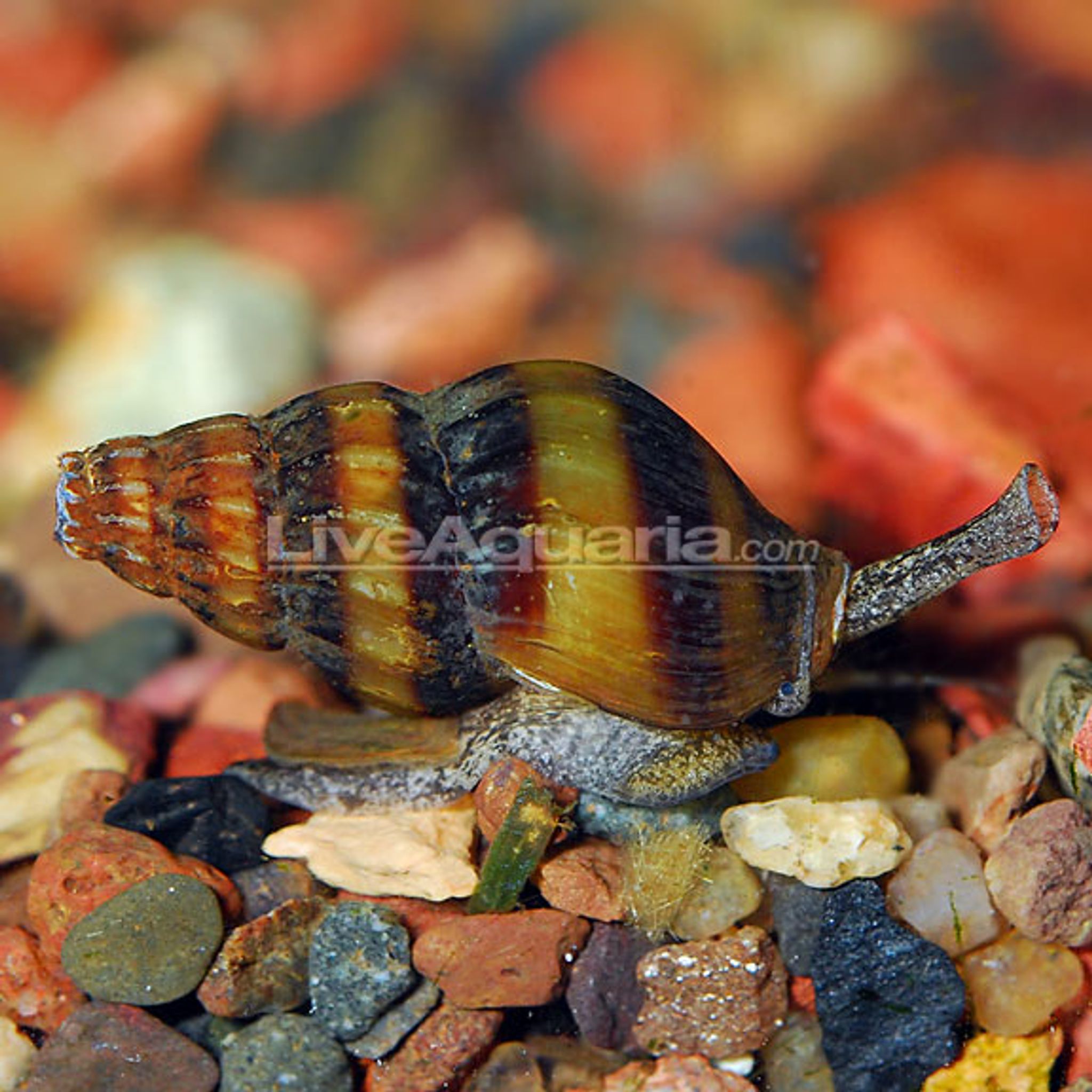
How to Set Up the Ideal Tank for Assassin Snail
Assassin snails (usually sold as Clea helena, sometimes labeled Anentome) are carnivorous, burrowing freshwater snails from Southeast Asia that hunt down pest snails like pond snails and ramshorns. Before you add any to your tank, you need the right size, substrate, water chemistry, and — critically — a plan for feeding them once the pest snails run out. This guide walks through the full setup so your assassin snails thrive long after the initial cleanup job is done.
Tank Size: How Big Does It Really Need to Be?
Hobbyist advice splits here. Some say a 10-gallon (38 L) tank is plenty; others insist 20-30 gallons (76-114 L) is the real minimum. Both are right in different contexts.
- 10 gallons (38 L) is a workable hard floor for a small group of 2-3 assassin snails living as part of a mixed community tank.
- 20-30 gallons (76-114 L) is the better call if you want a self-sustaining breeding colony, or if the snails are sharing space with fish that also need room to swim.
- As a rule of thumb, add roughly 5 gallons (19 L) per extra pair beyond the first group.
Footprint matters more than height: assassin snails forage across the substrate rather than climbing glass, so a wider, longer tank floor gives more hunting ground than a tall, narrow one of the same volume.
A Simple Stocking Ratio
Most sources stay vague on how many assassin snails to buy. A practical starting guideline: one assassin snail per 5-10 gallons (19-38 L) of water, adjusted upward for a heavy pest-snail infestation. Resist the urge to overbuy — population control takes weeks, not days, and any snails you don't strictly need still require long-term feeding.
Water Parameters
Assassin snails are sensitive invertebrates, so stable, cycled water matters as much as the numbers themselves.
| Parameter | Acceptable Range | Sweet Spot |
|---|---|---|
| Temperature | 68-80°F (20-27°C) | Mid-70s°F (23-25°C) |
| pH | 6.5-8.0 | 7.0-7.5 |
| General Hardness (GH) | 6-18 dGH | Moderate-to-hard |
| Carbonate Hardness (KH) | 2-10 dKH | Mid-range |
| Ammonia | 0 ppm | 0 ppm |
| Nitrite | 0 ppm | 0 ppm |
| Nitrate | Under 20-30 ppm | As low as practical |
The pH range you'll see quoted varies by source — some say 6.5-7.5, others 7.0-8.0. The full workable band is roughly 6.5-8.0, but 7.0-7.5 is the sweet spot, supporting both shell health and most community fish. Moderately hard water also helps prevent shell pitting over time.
Always finish a full nitrogen cycle before adding assassin snails. Like other freshwater invertebrates, they have little tolerance for ammonia or nitrite, and an uncycled tank is one of the fastest ways to lose them in the first week.
Substrate and Decor
Assassin snails burrow snout-first into the substrate during the day, so what's on the bottom matters more for them than for most fish.
- Best choice: fine sand or a soft aqua soil, which lets them bury comfortably without damaging the fleshy foot or siphon.
- Acceptable compromise: smooth, fine gravel if you'd rather not run sand.
- Avoid: sharp or coarse gravel, which can injure the foot and discourage burrowing.
For decor, driftwood, smooth rocks, caves, and live or artificial plants all work well. Since they're carnivorous, assassin snails won't touch healthy plant leaves, so a fully planted tank is fine.
Cleaning Rocks Before Adding Them
If you're reusing rocks or collecting your own, scrub them in a bleach-free solution — plain hot water and a stiff brush, or an aquarium-safe cleaner. Small rocks can be boiled instead. Skip soap, and rinse thoroughly before they go back in the tank.
Filtration and Flow
A gentle sponge filter or a canister/HOB filter with the flow baffled works well. Avoid strong, direct currents that constantly stir the substrate — it stresses burrowing snails and disturbs fine sand.
Why Filter Media Choice Matters Here Specifically
A typical filter runs three stages, and understanding them helps tune the setup for an invertebrate-heavy tank:
- Mechanical media (filter floss or sponge) — traps physical debris first; floss sits early in the flow path and gets rinsed or replaced roughly weekly, since a clogged pad reduces flow.
- Biological media (ceramic rings, bio-balls) — hosts the nitrifying bacteria that process ammonia and nitrite. Assassin snail tanks benefit most from strong capacity here, since a large pest-snail die-off adds a real bioload spike as decomposing shells break down.
- Chemical media (activated carbon, etc.) — optional; polishes water clarity and removes odors or discoloration.
Browsing filters built around this three-stage design makes it easier to size bio-media capacity to your bioload rather than chasing turnover rate.
Canister filter tips: rinse media in tank water (never tap water — chlorine and chloramine kill beneficial bacteria), always prime before starting, never let media run dry, and stagger media replacement so you're never cleaning all of it at once, which protects the bacteria colony from a total reset.
A standard adjustable heater is enough to hold a stable mid-70s°F temperature; swings are hard on snails, so consistency matters more than heater wattage.
Feeding: The Part Most Buyers Overlook
The single biggest myth about assassin snails is that buying a few solves your pest-snail problem permanently with zero further effort. In reality, they need an ongoing feeding plan.
- While pest snails last: they hunt pond snails, ramshorn snails, trumpet snails, and detritus worms on their own.
- Once the population crashes: supplement with sinking protein foods — bloodworms, blackworms, brine shrimp, shrimp pellets, algae wafers, or quality flake.
- Frequency: 2-3 times per week once pests are cleared. Since assassin snails are slow bottom foragers, make sure food reaches the substrate rather than getting eaten by faster fish first.
Skipping this transition plan is how well-meaning buyers accidentally starve their snails a few months after the initial "job" is done.
Watch for a Bioload Spike After a Big Cleanout
If your assassin snails clear a heavy infestation quickly, the sudden wave of decomposing shells and tissue can spike ammonia even in an established tank. Run extra water tests during and after a major population crash, and be ready for a small water change if numbers climb.
Tank Mates and Compatibility
Assassin snails generally get along with peaceful community fish — tetras, guppies, corydoras, rasboras — and tolerate larger semi-aggressive species like tiger barbs or angelfish.
- Shrimp: well-fed, healthy adult shrimp are usually left alone. Hungry assassins may target molting shrimp or shrimplets, so use caution in a dedicated shrimp-breeding tank. Check current shrimp stock if you're weighing that risk for a mixed invert setup.
- Other snail species: not compatible if you want to keep them — assassins will hunt any other snail species over time.
- Snail-eating fish: loaches, puffers, and some cichlids will eat the assassin snails themselves, so avoid pairing them together.
Behavior and Breeding
Assassin snails are mostly nocturnal or crepuscular — expect them to burrow out of sight during the day and become active at night or around feeding time. They're solitary hunters but do fine in small colonies.
Unlike most aquarium snails (hermaphroditic and quick to multiply), assassin snails have separate sexes and breed slowly: single eggs are laid on hard surfaces like glass, decor, or filter intakes, taking roughly 3-8 weeks to hatch, with juveniles needing another 2-3 months before they're large enough to recognize. Keeping a small group of 4-6 snails improves your odds of having both sexes present.
This slow reproduction is a feature, not a drawback: population growth stays naturally limited, which is why assassin snails don't become the next pest problem the way hermaphroditic species can.
Shell Health, Medication, and Acclimation
Shell health: pitting or white spotting usually signals poor water quality or insufficient hardness. Since shells are largely calcium carbonate, keeping GH toward the higher end of the range helps, and adding a calcium source — crushed coral, cuttlebone, or a mineral supplement — supports long-term shell integrity in softer water.
Medication: assassin snails are invertebrates, and copper-based medications and many general-cure fish treatments are lethal to them. Research snail-safe options first, or move a sick fish to a separate hospital tank instead of treating the whole display.
Acclimation: treat assassin snails like other sensitive invertebrates at introduction — drip acclimate them slowly rather than a quick bag-and-dump, since sudden shifts in temperature or chemistry can shock or kill them.
Routine Maintenance That Keeps the Tank Stable
A healthy assassin snail tank runs on consistency, not occasional deep cleans: partial water changes of 10-25% weekly or biweekly, regular water testing (not just when something looks wrong), trimming plants and cleaning glass on the same schedule, and checking equipment like filter flow and heater accuracy.
Maintenance Shortcuts to Avoid
- Don't skip substrate vacuuming — waste buildup spikes ammonia and can suffocate burrowing snails specifically.
- Don't lean on chemical "quick fix" additives instead of real water changes.
- Don't stretch water-change intervals to save time — consistency beats intensity.
- Don't rinse bio-media in tap water — chlorine or chloramine kills the beneficial bacteria you need.
Setting Up the Tank: A Practical Sequence
If you're building from scratch rather than adding snails to an existing tank, follow this order: choose a location away from direct sunlight and drafts, rinse substrate before adding it, arrange hardscape before filling with water, fill and add a dechlorinator, install the filter and heater, run a full nitrogen cycle, then add snails and fish gradually rather than all at once.
Common Beginner Mistakes in the First 30 Days
Most livestock losses in a new tank trace back to a short list of avoidable errors: skipping the nitrogen cycle entirely, overstocking too fast before the biological filter can keep up, overfeeding (which drives ammonia and nitrate up together), letting temperature swing instead of holding it steady, and not quarantining new snails, fish, or plants. That last one is ironic here — skipped quarantine is exactly how pest snails and parasites arrive in a tank in the first place, which is often why people end up needing assassin snails to begin with.
Filter Troubleshooting Basics
- A loud filter is usually debris caught in the impeller, a low water level, uneven placement, or a worn impeller/bearing. Clean the impeller housing, confirm water level, and replace worn parts.
- A filter that stops working — check the power connection first, then look for a clogged intake or media, an airlock in canister units, a worn impeller, or a kinked hose. A regular cleaning schedule prevents most of these issues.
If you're shopping for a unit sized to a smaller invert-friendly tank, browse substrate and filtration options together so flow rate and bottom composition are matched — moderate flow with strong biological capacity matters more here than raw turnover numbers.
Frequently Asked Questions
What size tank do assassin snails really need?
A 10-gallon (38 L) tank is a workable floor for a small group of 2-3 in a mixed community setup. For a self-sustaining breeding colony, or a tank that also houses fish needing more room, 20-30 gallons (76-114 L) is the better target.
Will assassin snails eat my shrimp?
Well-fed healthy adult shrimp are generally left alone. Hungry assassin snails may target molting shrimp or shrimplets, so use caution in a dedicated shrimp-breeding tank.
Do assassin snails eat plants?
No. They're carnivorous and won't touch healthy plant leaves, so they're safe in a fully planted tank.
What do assassin snails eat once pest snails are gone?
Sinking protein foods — bloodworms, blackworms, brine shrimp, shrimp pellets, algae wafers, or quality flake. Feed 2-3 times per week once the pest-snail population has been cleared.
Can assassin snails live with other snails I want to keep?
No. They will hunt and eat other snail species over time, which is exactly why they're used for pest control.
How do assassin snails breed, and can I control their population?
Unlike most aquarium snails, assassin snails have separate sexes and breed slowly, laying single eggs that take 3-8 weeks to hatch. That slow reproduction keeps their population naturally limited, unlike the hermaphroditic pest snails they're meant to control.
Ready to start building? Browse current stock in Freshwater Livestock on FishyHub before finalizing your tank plan.

