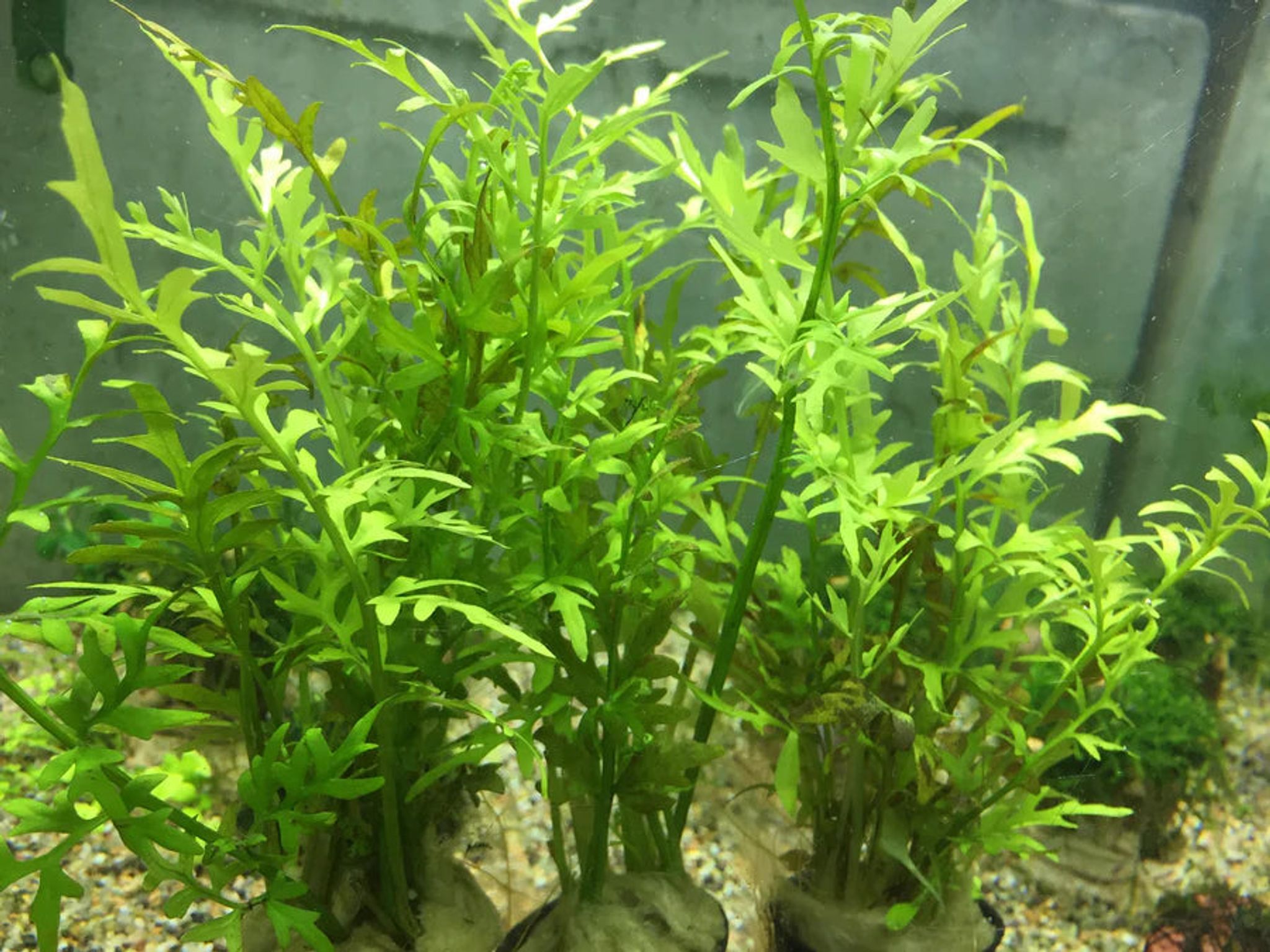
How to Plant and Propagate Water Sprite in a Freshwater Aquarium
Water sprite (Ceratopteris thalictroides) is one of the fastest, most forgiving plants a freshwater keeper can add to a tank, and it multiplies almost on its own once established. This guide covers both ways to grow it, how to propagate it for free, and how to fix the handful of problems that trip up new growers.
What Water Sprite Actually Is
Water sprite is a true aquatic fern, not a stem plant, sold botanically as Ceratopteris thalictroides and often labeled "Indian fern" or "water fern" in the trade. It's easy to confuse with water wisteria (Hygrophila difformis), a completely different stem plant with similar lacy, deeply lobed leaves. If a listing shows finely divided, feathery foliage and you're not sure which one you're looking at, check the scientific name before buying — the two have different growth habits and propagate in entirely different ways.
Ideal Water Parameters
Water sprite tolerates a wide range of conditions, which is exactly why it's recommended so often for new tanks.
| Parameter | Comfortable range | Notes |
|---|---|---|
| Temperature | 68–82°F (20–28°C) | Growth slows noticeably below ~68°F (20°C) |
| pH | 6.0–7.5 (core range) | Some specimens tolerate 5.5–8.0 |
| GH | 3–19 | Soft to moderately hard water |
| KH | 3–8 | — |
| Tank size | 10 gallons (38 L) and up ideal | Survives in nano tanks but outgrows them fast |
| Lighting | Medium to high, ~50–80 PAR | Tolerates low light but grows slower and leggier |
Because it draws most of its nutrition from the water column rather than the substrate, water sprite is not picky about what's under it — sand, fine gravel, or aquasoil all work. A nutrient-rich substrate or root tabs still benefit a rooted specimen, but they're a bonus, not a requirement. If you're setting up a nano tank and want a compact planted look, browse substrate options sized for smaller footprints before deciding whether to root or float your plant.
Two Ways to Plant Water Sprite
Rooted (Planted) Method
- Trim any dead or blackened roots from the base.
- Bury the base and lower 2–3 inches (5–7.5 cm) of stem into the substrate.
- Weigh it down with a small rock or plant weight if it keeps floating up — water sprite is naturally buoyant until roots anchor it.
- Expect thinner, more feathery, lace-like leaves when grown rooted, since submersed growth differs from the nursery form it was shipped in.
Floating Method
- Simply place the plant on the water's surface — no anchoring needed.
- Hanging roots typically appear within a few days.
- Floating leaves tend to be broader and flatter than rooted ones, since the plant gets more direct light exposure at the surface.
- A floating mat doubles as a nitrate sponge and shelter for fry and shy fish.
Both methods are valid and often used together in the same tank — a floating patch for filtration and cover, plus a few rooted stems for a lush midground or background look.
Feeding and Growth Support
Water sprite is a fast grower and a heavy feeder. CO2 injection isn't required, but if your tank already runs it, expect denser growth and larger leaves. A liquid all-in-one fertilizer or root tabs help significantly, especially ones supplying iron and potassium, since deficiencies in those two nutrients are the most common visible problems (more on that below).
Under good light and fertilization, expect fast growth — often visibly bigger within a week or two, needing trims every 1–2 weeks. Under low light or nutrient-poor water, growth can slow to a low-to-moderate pace instead, so set your expectations based on your own lighting setup rather than assuming every tank behaves the same way.
Mature plants can reach 12–20+ inches (30–50+ cm) depending on light, nutrients, and how often you trim — some exceptionally well-fed specimens have been reported pushing toward 23 inches (58 cm).
How to Propagate Water Sprite
Method 1: Plantlets (Easiest)
Water sprite regularly produces tiny adventitious plantlets along the margins of its mature leaves — a built-in propagation feature that costs nothing and requires no cutting technique.
- Watch for small bumps or baby leaflets forming along the edges of older, mature fronds.
- Let the plantlet develop a few small roots and leaves of its own.
- Snip it free from the parent leaf with clean scissors.
- Float the new plantlet or plant it directly into substrate.
Method 2: Stem or Frond Cuttings
- Choose a healthy, mature frond or stem section.
- Cut it cleanly away from the main plant.
- Either float the cutting or replant it in substrate.
- New growth emerges from the base of the cutting within one to two weeks.
Trimming and Maintenance
Water sprite's speed is a strength and a hazard — left unchecked, it will shade out slower plants and crowd the surface. Trim outer and older stems and leaves regularly, but never cut the main crown, the central point where new growth originates, or you'll stall the whole plant. Dispose of trimmed clippings rather than leaving them in the tank, since decaying leaf matter adds unnecessary organic waste and can spike ammonia in a small system.
Tankmate Compatibility
| Good tankmates | Avoid |
|---|---|
| Bettas, tetras, guppies, mollies, platies | Goldfish |
| Corydoras, glass catfish, killifish | Large cichlids |
| Shrimp, nerite/ramshorn/mystery snails | Silver dollars and other herbivorous fish/snails |
Also avoid placing water sprite directly in strong filter output or high-flow areas — the fronds are delicate and tear easily in heavy current. If flow is an issue, move the plant to a calmer corner or let it float away from the outflow. Anyone stocking a new planted community tank can check current Freshwater Livestock availability to match fish choices to a water-sprite-friendly setup.
Why Add an Easy Plant Like This at All
Beyond the aesthetics, live plants like water sprite do real functional work in a tank. During the day they absorb CO2 and release oxygen, they buffer against sudden swings in water chemistry, and they compete directly with algae for the same nutrients — often reducing algae growth simply by out-consuming it. A tank with fast-growing plants also tends to run more stably between water changes, with fewer ammonia and nitrate spikes, which translates into a calmer, lower-maintenance system and a genuinely more relaxing tank to look at.
Using Water Sprite for Fry Rearing
A dense floating mat of water sprite is one of the simplest tools for raising livebearer or betta fry. Set up a dedicated breeder or grow-out tank with a thick surface layer of water sprite left untrimmed — the tangled roots and leaves trap infusoria and micro-organisms fry can graze on, while the cover itself hides fry from adult fish and reduces stress-driven hiding behavior. Keep the mat dense but still allow some open water and gentle surface movement for gas exchange.
Water Sprite in Aquascape Design
Rooted water sprite works well as a background or mid-background plant thanks to its height and feathery texture, contrasting nicely against broad-leaf plants like swords or anubias in the foreground. As a floating layer, it diffuses light reaching lower plants, which can be useful for shade-loving species but should be thinned if it starts blocking too much light from a carpet or midground layer below.
Seasonal Notes for Unheated Tanks and Outdoor Tubs
In unheated indoor tanks, water sprite growth will slow as temperatures drop toward or below 68°F (20°C) in cooler months, then pick back up as the tank warms. Some US hobbyists move water sprite outdoors into ponds or tubs during warm summer months, where it can grow vigorously in full sun with ample nutrients — just bring it back inside or discard it before the first frost, since it won't tolerate near-freezing temperatures.
Quarantine and Dipping New Plants
Before adding any new water sprite to an established tank, rinse it thoroughly under clean water and inspect the leaves and roots for snail eggs (small clear or white clusters) or hitchhiking pest snails. A short quarantine period in a separate container, along with a plant-safe dip if you're concerned about pesticide residue from commercial growing, reduces the risk of introducing unwanted snails or contaminants into a display tank.
Common Mistakes and Troubleshooting
- Letting it grow unchecked until it shades out other plants — schedule trims every 1–2 weeks rather than waiting for it to become a problem.
- Placing it in high flow — this shreds the delicate fronds; move to calmer water or let it float.
- Assuming substrate quality is the main driver — water-column nutrients and light matter far more than what's under the plant.
- Pale or yellow new growth — usually an iron deficiency; add a liquid iron or micronutrient supplement.
- Small holes or thinning leaves — often potassium deficiency; use a potassium-inclusive fertilizer.
- Browning or melting leaves after planting — a normal transition period as the plant converts from its emersed (out-of-water) nursery form to submersed growth, or a sign of insufficient fertilization. New growth should appear within 1–2 weeks.
- Plant keeps popping out of the substrate — this is expected buoyancy; anchor it with a small rock or weight until roots take hold, or simply let it float instead.
- Mixing it with herbivorous fish or snails — goldfish, large cichlids, and similar species will shred it; choose tankmates from the compatibility list above.
- Algae on the leaves — typically a sign of excess light or nutrients relative to what the plants are using; once water sprite fills in and starts competing harder, algae pressure often drops.
Frequently Asked Questions
Does water sprite need to be planted, or can it just float?
Both work. Floating is easier and produces broader leaves with faster surface access to light, while planting anchors it in place and can create a lush, feathery background or midground look.
How fast does water sprite grow?
Under decent light and nutrients, it grows fast — often noticeably larger within a week or two — and needs regular trimming to keep it in check. Under low light or a nutrient-poor tank, growth is slower and more moderate.
Does water sprite need CO2 or special fertilizer?
No, CO2 is not required, though it does boost growth density and leaf size if your tank already has it. A liquid fertilizer with iron and potassium is recommended to support its fast growth and keep leaves from developing deficiency symptoms.
Will water sprite lower nitrates in my tank?
Yes. It's a fast nutrient consumer that pulls in nitrate, ammonia, and phosphate from the water column, and it's commonly used specifically to help control nitrates and outcompete algae.
Can water sprite live with betta fish?
Yes, it's a popular choice for betta tanks. Its soft leaves and floating cover suit bettas' preference for calm water and resting spots near the surface.
Why did my new water sprite turn brown or melt after I planted it?
This is usually transition shock, sometimes called melt, as the plant adjusts from its emersed nursery growth to life fully submersed underwater. It can also signal a nutrient deficiency. Either way, expect new, healthier growth to replace the old leaves within one to two weeks.
Water sprite rewards very little effort with fast coverage, cleaner water, and a steady supply of free plants to trade or fill out other tanks. Once you have a healthy patch established, browse Food & Supplements for liquid fertilizers to keep growth dense, or check FishyHub's live plant selection to start your first patch.

