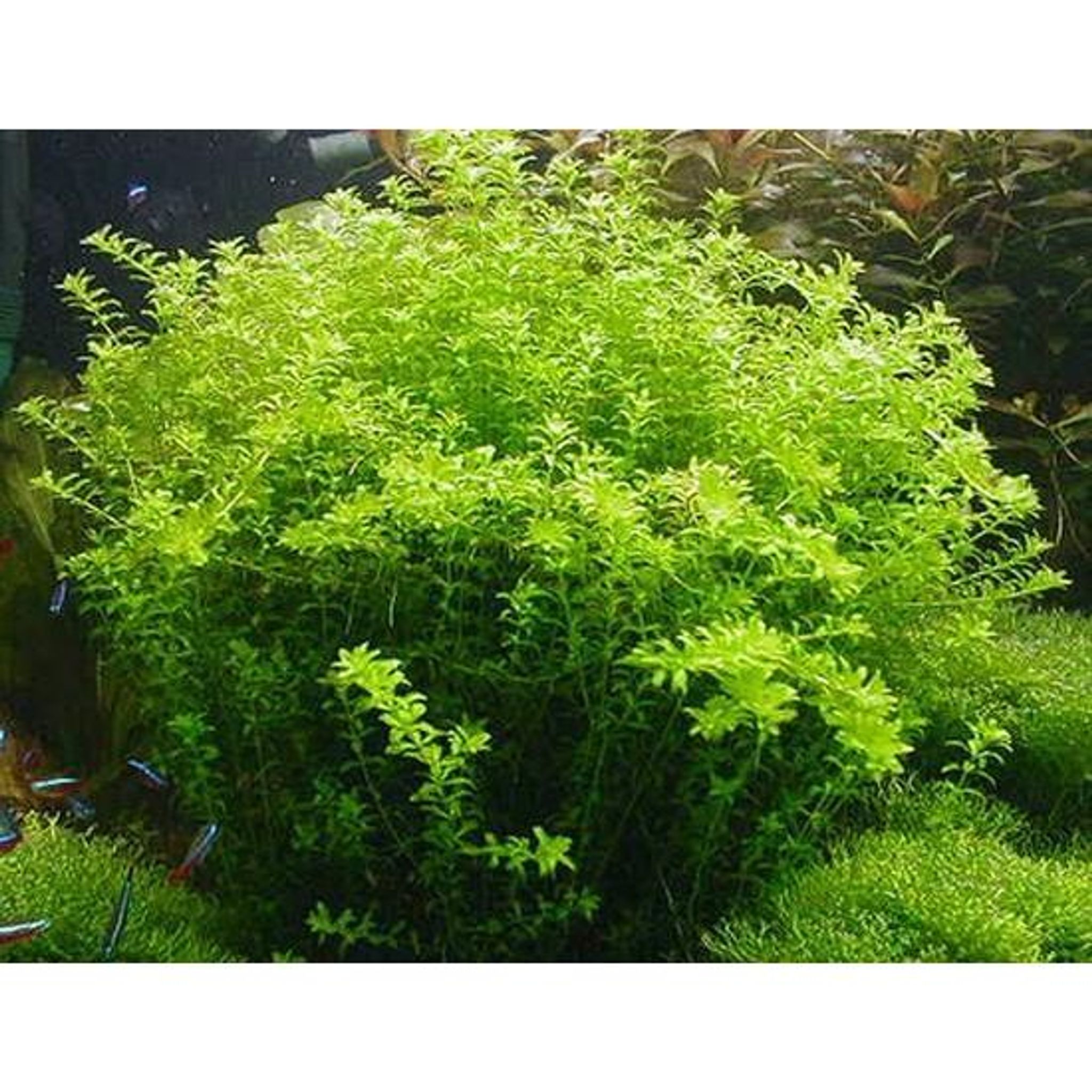
How to Plant and Propagate Pearl Weed in a Freshwater Aquarium
Pearl weed is one of the most forgiving stem plants for building a low carpet or a thick background hedge, but most of the frustration people run into comes down to planting it too deep or expecting a dwarf-baby-tears timeline. This guide walks through correct planting technique, realistic growth expectations, and a simple way to keep multiplying one starter bunch into a full carpet without buying more plants.
What Exactly Is Pearl Weed?
"Pearl weed" is the common name for Hemianthus micranthemoides (also sold under the older name Micranthemum micranthemoides, and often called "pearl grass"). It's frequently confused with two other things:
- Baby tears is sometimes used loosely as a synonym, but it more often refers to a different plant entirely (Soleirolia soleirolii, a terrestrial houseplant, or in aquarium contexts, a different aquatic species).
- Dwarf baby tears (Hemianthus callitrichoides, or "HC") is a distinct, much smaller and more demanding species. It has tiny, tightly packed leaves and needs stricter CO2 and light control to carpet well.
Pearl weed has noticeably larger round leaves, grows faster, and tolerates a wider range of conditions than true dwarf baby tears. If you're shopping for a beginner-friendly carpet plant, search specifically for "pearl weed" or the scientific name to avoid ending up with the pickier species by accident.
Water Parameters and Setup
Pearl weed is adaptable, which is part of why it works well in a lower-tech setup:
| Parameter | Range |
|---|---|
| Temperature | 68–82°F (20–28°C) |
| pH | 6.0–7.5 |
| Water hardness | Soft to moderately hard |
| Lighting | Low-moderate (loose growth) to medium-high (tight carpet) |
| CO2 | Not required; speeds growth and density when supplied (roughly 6–14 ppm) |
Lighting: How Much Do You Actually Need?
The honest answer depends on your goal. Low-to-moderate light keeps the plant alive and growing, but it stretches upward into a looser, taller mat. Medium-to-high light is what compresses growth into a dense, low carpet.
If your tank light was sold for a fish-only setup, it may lack the intensity or spectrum plants need even if it "looks bright." A full-spectrum, plant-rated fixture makes a measurable difference in how tightly pearl weed spreads. Browse aquarium lighting if you're upgrading from a basic hood light.
Do You Need CO2?
No — and that's worth stating plainly, since a lot of planted-tank advice implies dense carpets require gas injection. Without CO2, pearl weed survives and spreads fine as a background or loose ground cover, just at a slower pace. With CO2, growth speeds up and the carpet grows denser and shorter. Treat CO2 as an accelerator for the showcase-carpet look, not a requirement for keeping this plant alive or even reasonably full.
Substrate
Pearl weed can survive on liquid fertilizer and fish waste alone, but root access to nutrients produces the biggest visible improvement in growth rate and density. A nutrient-rich planted substrate (aqua soil, or plain sand/gravel with root tabs) is worth the upgrade if you're aiming for a full carpet — plain, unfertilized gravel is a common reason growth stalls out. Compare substrate options, including root-feeding aqua soil, if you're setting up a new tank.
How to Plant Pearl Weed Step by Step
- Cycle the tank first. Planting into an uncycled tank exposes new roots to ammonia and nitrite spikes that stress or kill fresh plantings. Confirm stable parameters before you plant.
- Separate the bunch into small clusters of 3–6 stems.
- Strip the lower inch of leaves. Remove leaves or side nodes from the bottom inch (2.5 cm) of each stem — this bare section goes into the substrate. Leaves left buried will rot and can take the whole stem down with them.
- Plant shallow, not deep. Using fine-tip planting tweezers, push each stem about 1–2 inches (2.5–5 cm) into the substrate — just deep enough to hold, no deeper. Visual check: the lowest leaves should sit right at the substrate line, with no bare stem showing above it.
- Space clusters based on your goal. For a carpet, place clusters about 0.5 inch (1.25 cm) apart. For a background or bushy look, plant single stems at normal stem-plant spacing instead of clustering tightly.
- Anchor firmly. Press the substrate gently around each cluster's base. If stems keep floating up, they're too shallow or weren't fully stripped. A thin mesh laid over the area temporarily, removed once roots take hold, can help in a tank with flow.
Carpet vs. Background: Decide Before You Plant
Pearl weed grows two different ways depending on how you treat it, and the spacing above only works if you commit to one look:
- Trimmed hard and often → stays low and dense, spreading horizontally into a true carpet.
- Left untrimmed → grows taller and bushier, useful as a midground accent or as background filler in a nano tank.
Deciding this upfront matters because carpet spacing (tight clusters) looks sparse and slow if you meant to grow it tall, and background spacing (single stems) never fills in as a carpet on its own.
A Realistic Week-by-Week Timeline
Most sources give a vague "a few weeks" estimate. Here's a more concrete breakdown:
| Timeframe | What to expect |
|---|---|
| Week 1 | Acclimation; some yellowing or melt on lower leaves is normal, not a sign of failure |
| Weeks 2–4 | New, healthier growth appears; lateral spreading and runner growth begins |
| Week 4+ | First trim, once stems reach a workable height — this is what kicks off real carpet thickening |
| ~3–4 weeks total | Filled-in carpet, with CO2 and medium-high light |
| ~6–10 weeks total | Filled-in carpet, without CO2, under moderate light |
The exact timeline shifts with starting density — planting more clusters closer together shortens the wait, since there's simply less bare substrate left to fill.
Trimming for a Denser Carpet
Trimming isn't just tidying up — it's the mechanism that thickens a carpet. Cutting a stem triggers lateral branching at the cut point, which is what turns a few vertical stems into a spreading mat.
- Once established, trim to about 1 inch (2.5 cm) tall every 1–2 weeks.
- Use sharp curved or straight aquascaping scissors for a clean cut — a ragged cut heals slower and is more prone to localized melt.
- Skipping trims is one of the most common reasons a "carpet" plant ends up tall and leggy instead: without cutting, the plant has no reason to branch sideways.
Propagating Pearl Weed From One Bunch
Pearl weed is genuinely easy to multiply, which makes a single starter portion enough to eventually cover a much larger footprint:
- Save your trimmings. Every time you trim, you're producing new planting material — don't discard the cut tops.
- Cut stem tops with a few nodes attached. A node is where leaves attach to the stem; cuttings need at least two or three to root reliably.
- Replant cuttings into bare or thin spots using the same shallow-planting method described above.
- Give it time. Cuttings typically root at the nodes within days to about a week under stable conditions.
- Let runners do some of the work. Side shoots that touch the substrate on their own will often root without any intervention — a useful shortcut once the plant is established and spreading.
Scaling Propagation for a Bigger Tank
If you're covering a larger footprint on a set timeline, plan cuttings by area rather than guessing. As a starting point, spacing clusters about 0.5–1 inch apart across the bare substrate gives reasonably fast, even coverage; spacing them further apart saves plant material but stretches the fill-in time since there's more bare ground for runners to cross.
Fertilization and Water Flow
- Root tabs placed under carpet clusters support root-level feeding, which pearl weed responds to well.
- A light dose of liquid all-in-one fertilizer (macro and micronutrients) supports both carpet and bush forms.
- Go easy right after planting — heavy dosing while roots are establishing feeds algae more than it feeds the plant.
- Keep gentle to moderate flow across the carpet to prevent detritus buildup and localized algae in stagnant pockets, especially while plant mass is still thin.
Common Mistakes and Troubleshooting
| Problem | Likely Cause | Fix |
|---|---|---|
| Stems rot or melt after planting | Buried too deep, or leaves left on the buried section | Replant shallow (1–2 in / 2.5–5 cm), strip leaves off the bottom inch first |
| New plants die within days | Tank wasn't cycled before planting | Confirm the nitrogen cycle is established before adding stems |
| Stems float up | Not anchored well, or too loose in substrate | Press firmly, strip more leaves off the base, or weigh down temporarily until roots form |
| Carpet growing very slowly | Low light, no fertilization, no CO2, and expecting a fast fill | Set realistic 6–10 week expectations, or add CO2/root tabs to speed it up |
| Algae overtaking a new carpet | Light or nutrients outpacing the still-thin plant mass | Reduce photoperiod, increase water changes, let plant mass build before raising light |
| Plant grows tall and leggy, never carpets | Not trimming | Trim to about 1 inch (2.5 cm) every 1–2 weeks to force lateral branching |
| Fish/tank looks worse after a big planting session | Overplanting all at once, or overstocking fish | Start with a moderate amount of plant material and let it fill in; keep new planted tanks lightly stocked while plants establish |
Compatibility With Shrimp and Bottom Dwellers
Grazing or digging species can disturb a young carpet before it roots in. Species that sift substrate — some loaches and larger bottom-feeders — are more likely to uproot loose clusters, while smaller grazers like shrimp are generally gentle on an established carpet and can help keep it free of film algae. If you're stocking active diggers, plant toward the deeper end of the 1–2 inch range, space clusters a bit closer, and give the carpet extra time to root before adding them.
Planted-Tank Misconceptions Worth Retiring
- "More plants means an instantly fuller tank." Overplanting all at once often leads to uprooted, melting stems — start moderate and let it spread.
- "Any bright light works for plants." Fish-only lighting often lacks the intensity and spectrum plants need, even at high brightness.
- "CO2 or an expensive substrate is mandatory." Many easy species, pearl weed included, do fine without CO2 — it's the dense, low showcase-carpet look that benefits most from it.
- "Plain gravel is fine for lush growth." Root-feeding plants grow noticeably better in a nutrient-rich substrate than in inert gravel alone.
Frequently Asked Questions
Is pearl weed the same as dwarf baby tears?
No. Pearl weed (Hemianthus/Micranthemum micranthemoides) has larger leaves, grows faster, and is generally hardier and easier than true dwarf baby tears (Hemianthus callitrichoides), which is a smaller, more demanding species.
Does pearl weed need CO2 to survive?
No, it survives without CO2. Supplemental CO2 mainly speeds up growth and produces a denser, lower carpet than you'd get without it.
How long does it take pearl weed to carpet?
Roughly 3–4 weeks with CO2 and medium-high light, or 6–10 weeks without CO2 under moderate light. Starting density and how consistently you trim also affect the timeline.
Why is my pearl weed floating or uprooting?
Usually it was planted too shallow or loosely, or leaves were left on the buried section and caused rot. Strip the lower leaves, anchor stems firmly at 1–2 inches deep, and weigh them down gently if needed until roots form.
Can I grow pearl weed without substrate or root tabs?
Yes, it can survive on liquid fertilizer and fish waste alone, but growth and density improve noticeably with a nutrient-rich substrate or root tabs.
How do I propagate pearl weed from one bunch?
Trim healthy stem tops with a couple of nodes attached and replant them into bare spots; cuttings typically root within days to about a week. Side runners that touch the substrate will also root on their own over time.
Will pearl weed grow as a background plant instead of a carpet?
Yes. Left untrimmed, it grows taller and bushier, making it a useful midground accent or background filler, especially in nano tanks.
Is melting after planting normal?
Some yellowing or melt in the first 1–2 weeks is a normal adjustment response, not a sign of failure. It should be followed by new, healthier growth once the plant settles in, as long as water parameters stay stable.
Ready to start your carpet? Browse substrate and root-feeding aqua soil on FishyHub to give your pearl weed the best possible start.

