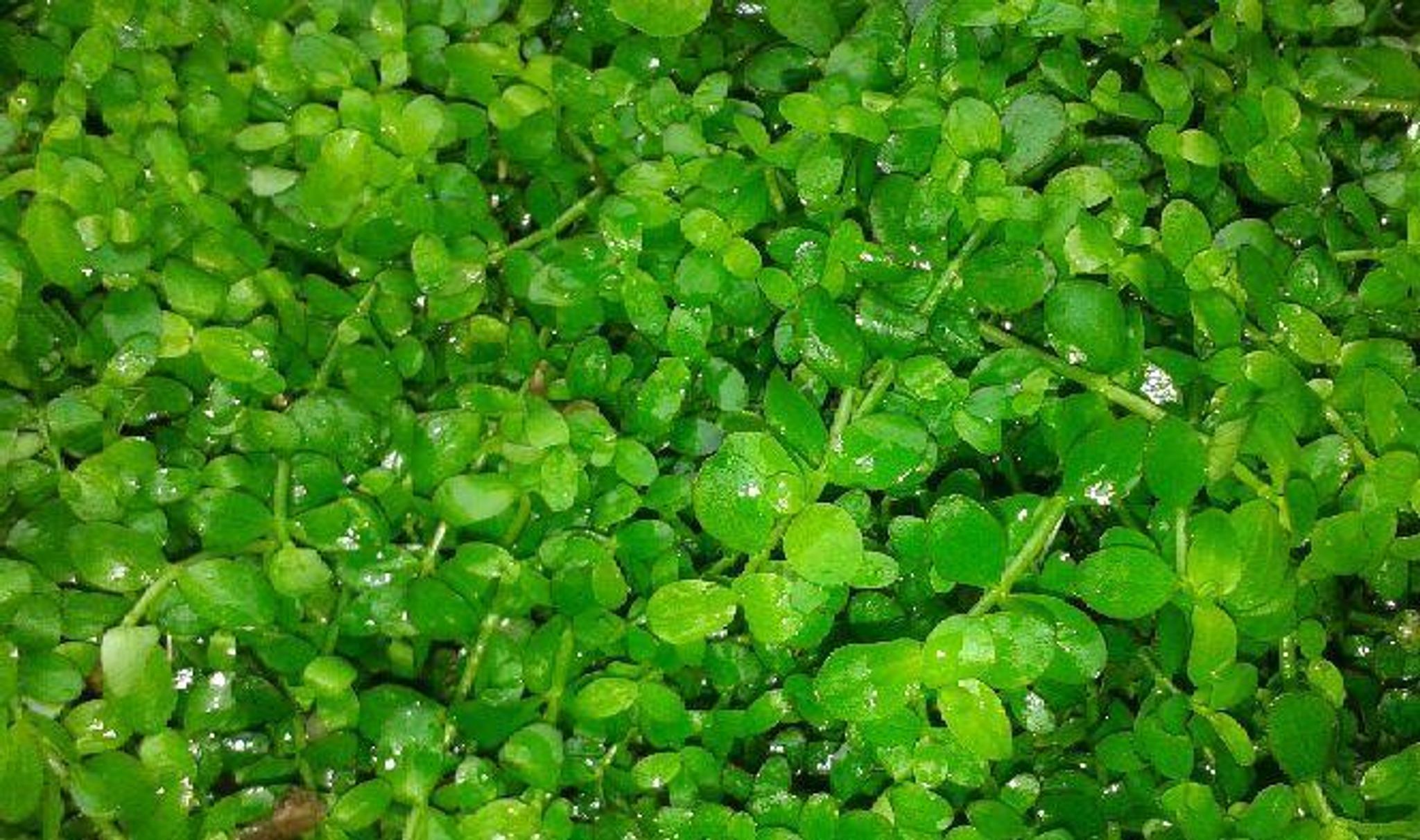
How to Plant and Propagate Monte Carlo in a Freshwater Aquarium
Monte Carlo (Micranthemum tweediei) is one of the most forgiving true carpet plants a freshwater hobbyist can grow, but planting it wrong or skipping CO2 and light basics is the fastest way to end up with a patchy, stringy mess instead of a thick green lawn. This guide walks through buying forms, planting method, water and lighting targets, propagation, and the most common reasons a Monte Carlo carpet fails to fill in.
What Is Monte Carlo and Why Hobbyists Choose It
Monte Carlo, sometimes still labeled Micranthemum "Monte Carlo," is a South American stem-rooting carpet plant native to Argentina. It produces round, bright-green leaves roughly 0.2–0.4 in (5–10 mm) across — noticeably larger than dwarf baby tears (HC), which makes it easier to handle, easier to keep clean, and more forgiving of swings in light or CO2.
A carpet-forming plant is any low, creeping species with lots of small leaves that spreads across the substrate via runners rather than growing upward. Monte Carlo fits that definition well and is widely considered one of the best beginner-friendly carpet options because it grows both submersed and emersed and tolerates a range of setups.
Difficulty and setup fit:
- Works in low-tech (no CO2, moderate light) and high-tech (CO2-injected, high light) tanks alike
- Carpets faster and denser with more light and CO2, but survives without either
- Generally ranked easier than dwarf baby tears, though a notch more demanding than dwarf sagittaria or Marsilea — a reasonable framing is "easy-to-moderate, easier than HC, slightly more work than dwarf sag or Marsilea"
Water Parameters and Substrate
Monte Carlo thrives in typical community tank conditions, so most established freshwater setups don't need major changes to accommodate it.
| Parameter | Ideal range |
|---|---|
| Temperature | 68–82°F (20–28°C) |
| pH | 6.0–7.5 |
| Water hardness | Soft to moderate |
| Lighting | Medium-to-high, 6–10 hrs/day |
| CO2 | Optional, strongly recommended |
Substrate matters more than water chemistry for this plant. A nutrient-rich aquasoil is strongly preferred: it buffers pH slightly acidic and feeds the root system directly, which speeds up rooting and lateral spread. Monte Carlo can also be grown over inert gravel or sand using root tabs, but expect noticeably slower rooting and carpet fill-in without an active substrate. You can browse aquasoil options in FishyHub's soil substrate category if you're setting up a new planted tank.
Buying Forms and How to Prepare Each One
Monte Carlo is commonly sold three ways, and preparation differs slightly for each:
- Potted or rockwool cups — gently squeeze out the rockwool and rinse roots to remove growing medium before planting.
- Bare-root portions — usually ready to divide and plant directly, with minimal rinsing needed.
- Tissue culture (in-vitro) cups — grown pest-, algae-, and snail-free in sterile gel, and typically the best value per plant mass since one cup yields many portions. Rinse the gel off thoroughly under lukewarm water, then separate the mass into small pea- to marble-sized clumps using clean fingers or fine-tip tweezers.
Whichever form you start with, don't skip the division step — planting whole, unseparated clumps is one of the most common reasons a carpet spreads slowly.
Planting Method
- Divide the plant mass into small clumps, roughly pea- to marble-sized.
- Using long fine-tip tweezers, bury just the root or rhizome portion of each clump into moistened substrate, leaving the leaves exposed above the surface. Sources vary on planting depth — from burying halfway to barely covering roots — but leaving the leaf blades uncovered while anchoring only the base gives the most reliable results.
- Space clumps about 1 inch (2.5 cm) apart in a grid pattern, so runners can bridge the gaps and fill in faster.
- Keep the water level low, or plant into a freshly filled and still tank, to prevent clumps from floating loose before roots take hold.
Two Setup Routes
Submersed planting means planting directly into a filled or filling tank, which is simpler and works fine for low-tech setups.
Dry Start Method (DSM) plants Monte Carlo into damp — not soaked — aquasoil with no standing water, then covers the tank with plastic wrap or a glass lid to hold humidity. Mist daily, provide 6–8+ hours of light per day, and let it run for 3–6 weeks until a solid mat forms before flooding. DSM produces a denser carpet faster because the plant never has to convert from emersed to submersed growth after the tank is flooded — it's already established as a mat.
Flooding a DSM tank without crashing it: fill slowly rather than all at once, ideally over several hours or in stages, so the transition to standing water isn't a shock. Keep leaves briefly above the waterline as long as practical during the fill, and avoid also changing the light intensity or photoperiod at the same time — introduce one variable change at a time so the plant isn't adjusting to flooding and a lighting shift simultaneously.
Lighting and CO2
Medium-to-high intensity light for 6–10 hours a day produces the densest carpet. Low light will keep Monte Carlo alive, but growth slows, thins out, and the plant may stretch upward instead of spreading laterally — a common giveaway that light (or CO2) is insufficient. Reasonable wattage and PAR benchmarks scale with tank size, but as a general rule, a fixture rated for "high light" plant growth on a 10–40 gallon (38–150 L) tank, mounted at the manufacturer's recommended height, is a solid starting point. FishyHub's LED lighting category is worth browsing when matching a fixture to tank size.
CO2 is not required for Monte Carlo to survive, but it's strongly recommended for a tight, plush carpet look:
- Pressurized CO2 or DIY yeast-based CO2 (a good entry point for small or low-tech tanks) both markedly speed up carpeting
- Aim for a drop checker reading in the lime-green range
- Add CO2 via a diffuser (ceramic disc) or inline atomizer/reactor for finer dissolution
- Run CO2 on a timer synced with the photoperiod: start 1–2 hours before lights on, and shut off about 1 hour before lights off
The honest middle ground: CO2 is optional for keeping the plant alive, but near-mandatory if the goal is a fast, dense, true carpet under higher light. Raising light without also raising CO2 and nutrients is one of the most reliable ways to invite algae.
Fertilization
Dose a balanced liquid all-in-one fertilizer (macro- and micronutrients, especially iron) on a regular schedule, and push root tabs into the root zone before the carpet closes in — once Monte Carlo covers the substrate, root tabs become much harder to place. Heavily planted, CO2-injected tanks need more frequent dosing; skipping this often shows up as pale new growth or leaf holes that get mistaken for a "bad plant" rather than a nutrient gap. Balance light, CO2, and nutrients together — pushing one variable without the others is what tips a tank toward algae, not the plant itself.
Trimming and Ongoing Maintenance
Once the carpet reaches roughly 0.5–1 in (1.3–2.5 cm) tall, trim it back every 1–2 weeks. Trimming low and often pushes lateral growth instead of vertical growth, which is what actually thickens a carpet over time.
- Remove loose floating trimmings promptly — they root wherever they land and can turn into a nuisance, or get pulled into a filter intake
- Siphon detritus that collects within the mat during routine water changes, since a dense carpet traps debris more than open substrate does
- For an overgrown, deeply rooted mat that needs thinning rather than just a top trim, slide a thin spatula or butter-knife-style tool horizontally just under the root layer to lift and separate sections, rather than trying to pull sections up by hand
How to Propagate Monte Carlo
Monte Carlo spreads naturally via runners (stolons) that root at each node as they creep across the substrate. To propagate it deliberately:
- Identify a healthy runner with a few nodes and visible roots attached.
- Cut a section that includes those roots and nodes.
- Replant the cutting the same way as new stock — bury just the base, leave leaves exposed, spaced about an inch from neighboring clumps.
This works whether you're filling in bare spots in the same tank or starting a carpet in a second tank. Letting runners creep naturally and periodically trimming and redistributing the cuttings is the lowest-effort way to expand coverage over time.
Common Mistakes and Troubleshooting
| Problem | Likely cause | Fix |
|---|---|---|
| Slow spread after planting | Clumps too large or planted too deep | Divide into smaller portions; bury only the base |
| Melting or browning after planting | Normal transition stress (emersed to submersed) | Don't replant; keep water stable for 2–3 weeks |
| Growing tall and stringy, not flat | Insufficient light and/or CO2 | Increase light intensity/duration or add CO2 |
| Pale new growth, stalled spread | Nutrient deficiency (often iron or nitrogen) | Dose liquid fertilizer consistently; use root tabs early |
| Algae forming on the carpet | Light too high relative to CO2/nutrients | Rebalance light, CO2, and fertilizer dosing |
| Debris rooting in odd spots | Trimmings not removed after cutting | Net or siphon out loose trimmings immediately |
Expect realistic timelines: a full carpet typically takes 4–8+ weeks or longer depending on light, CO2, and tank size — patience matters more than any single product choice.
Tank Mates and Compatibility
Monte Carlo is soft-leaved and non-toxic, making it a common choice for shrimp tanks, betta tanks, and general community setups. It pairs well with peaceful community fish and most snail and shrimp species — check FishyHub's freshwater shrimp category if you're stocking a shrimp-friendly planted tank alongside your carpet. Avoid heavy substrate-diggers or grazers such as large cichlids, goldfish, and some plecos, which can uproot a young carpet before it establishes.
Frequently Asked Questions
Does Monte Carlo need CO2 to survive?
No. It survives and even spreads slowly under moderate light without CO2, but a tight, plush "carpet" look and faster fill-in really benefit from supplemental CO2.
How long does it take Monte Carlo to carpet?
Typically 1–2 months for a small-to-medium tank under good light and CO2, and longer without CO2 or under low light.
Can Monte Carlo grow without substrate or soil, such as tied to hardscape?
It can be tied to rock or wood short-term, but it performs best rooted in nutrient-rich substrate since it's a true rooting plant, not an epiphyte like moss.
Is Monte Carlo better than dwarf baby tears (HC)?
For most beginners, yes. It offers a similar carpeted look with larger, more forgiving leaves, and it's more tolerant of light or CO2 swings and easier to plant and maintain.
Why is my Monte Carlo melting or turning brown after planting?
This is almost always transition stress from emersed nursery growth converting to submersed tank conditions. Keep water quality stable and wait 2–3 weeks before judging the plant a failure.
How do I propagate Monte Carlo into another tank?
Cut a section of an established runner that includes a few roots and nodes, then replant it the same way as new stock — bury the base and leave the leaves exposed.
Can I grow Monte Carlo emersed, such as in a paludarium or with the Dry Start Method?
Yes. It grows readily above water under high humidity, which is exactly the basis of the Dry Start Method used to pre-carpet a tank before flooding.
Ready to start your own carpet? Browse aquasoil, lighting, and other planted-tank essentials in FishyHub's substrate category to get your setup carpet-ready.

