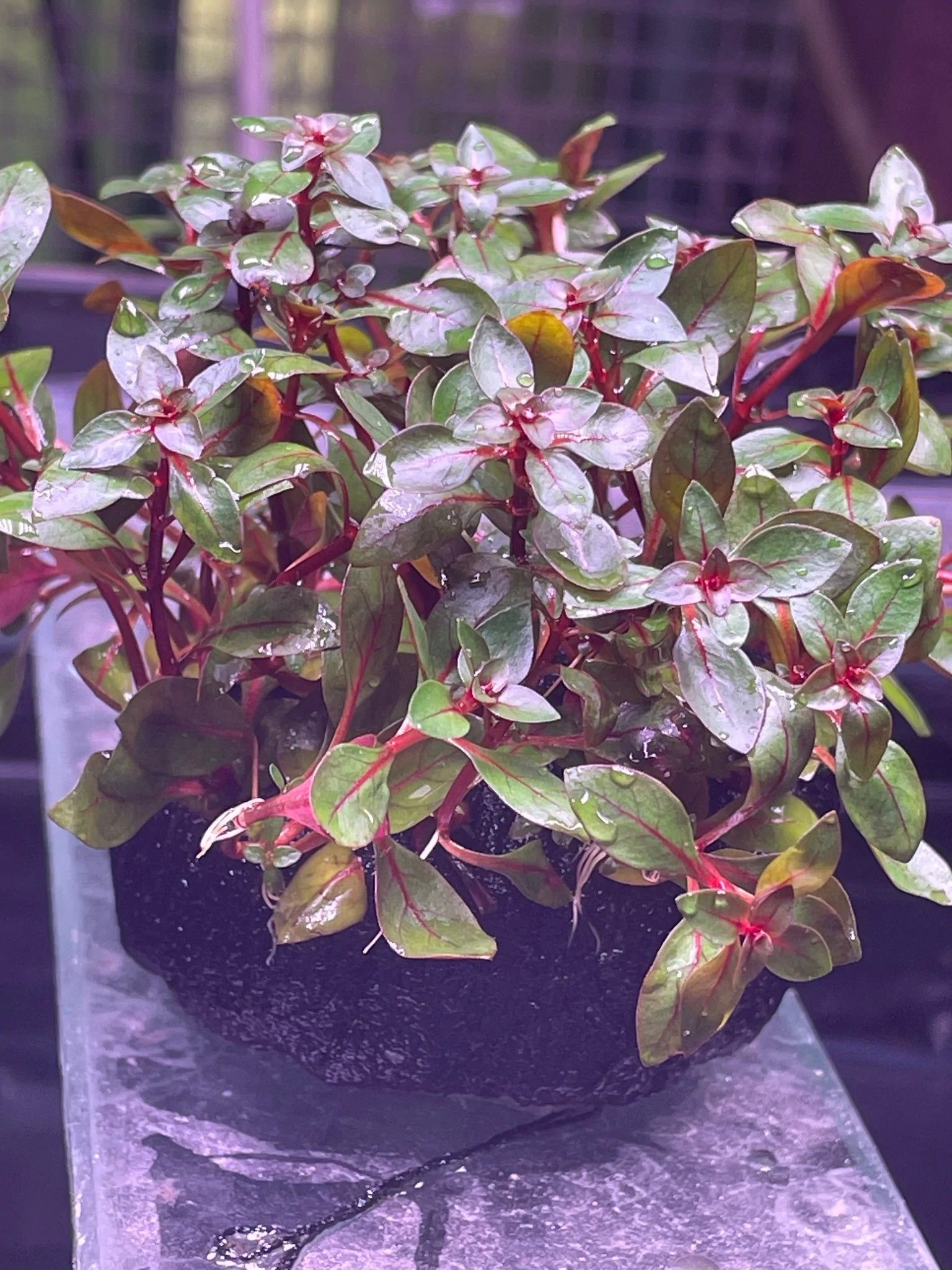
How to Plant and Propagate Ludwigia Super Red in a Freshwater Aquarium
Ludwigia Super Red is marketed as a "high color" stem plant, which leads many buyers to assume it needs pressurized CO2 and expert-level care. In reality, it's a beginner-to-intermediate plant that can turn a rich pink-to-crimson under the right light and iron routine, with or without gas injection. This guide covers correct planting, color-boosting conditions, and every propagation method that turns one bunch into a full background hedge.
What Is Ludwigia Super Red?
Ludwigia Super Red is a stem plant in the Ludwigia (Onagraceae) family, sold under several overlapping trade names — Super Red, Rubin, and Mini Super Red — and frequently confused with true Ludwigia glandulosa. Different vendors sometimes ship visibly different leaf shapes and sizes under these names because the naming isn't strictly standardized in the trade. For care purposes, treat "Super Red" as a specific high-color cultivar rather than getting lost in a taxonomy debate — the growing requirements below apply across the group.
Key traits:
- Leaf color ranges from reddish-pink to deep crimson-orange under good conditions
- Height of 6–16 inches (15–40 cm), so it needs vertical room
- Medium-to-fast growth rate under strong light, moderate under low-tech setups
- Difficulty: beginner-to-intermediate, adaptable to low-tech tanks
It can also produce small flowers if a stem grows emersed above the waterline, though this is rare in a fully submersed setup and mostly a curiosity rather than something to plan around.
Tank Setup and Water Parameters
Ludwigia Super Red works in tanks from 10 gallons (38 L) up, provided there's enough depth for its height. The table below summarizes the core parameters.
| Parameter | Range |
|---|---|
| Tank size | 10 gal (38 L) minimum |
| Temperature | 68–82°F (20–28°C) |
| pH | 6.0–7.5 |
| Water hardness | Soft to moderately hard |
| Placement | Midground to background (trim shorter for midground) |
| Lighting | Medium to high |
It prefers slightly acidic, nutrient-rich water. Very hard, alkaline water isn't fatal but tends to slow growth and mute the red coloration.
Lighting: The Biggest Color Driver
Under low light, Ludwigia Super Red reverts to a dull green or olive shade and grows leggy, with long gaps between leaf sets as it stretches toward the light source. For real red color, aim for:
- PAR at substrate: roughly 50+ PAR
- LED wattage rule of thumb: approximately 2–3+ watts per gallon of planted-tank-rated LED output
- Photoperiod: 6–8 hours per day
Color scales with light intensity up to a point, then plateaus — pushing intensity far beyond what your fertilizer and CO2 routine can support usually just invites algae rather than more red. A planted-tank LED fixture browsed on FishyHub's LED lighting selection is an easy way to hit these numbers in a standard rectangular tank.
Does It Need CO2?
No. Ludwigia Super Red can develop strong red color under medium-to-high light with adequate iron and micronutrients, without injected CO2. Supplemental CO2 isn't mandatory, but it does speed growth and deepens red tones, especially at the stem tips, so think of it as an accelerator rather than a requirement:
- Low-tech (no CO2): Decent, respectable red with strong light and consistent iron dosing
- High-tech (CO2 injected): Maximum red density and faster growth
Substrate and Fertilization
This plant feeds through both its roots and its leaves, so a two-pronged fertilizing approach works best.
Substrate: Use a nutrient-rich aquasoil, or a capped substrate with root tabs pushed in near the base of each stem. Because Ludwigia is a genuine root feeder as well as a column feeder, root tabs alone or liquid fertilizer alone will underperform compared to combining both.
Water column fertilization:
- Iron and micronutrients are the single biggest lever for red intensity after light — don't skip this dosing
- Keep some nitrate available; starving nitrogen causes pale, yellowing leaves and lower-leaf drop
- Avoid excess nitrate under weak light, since that combination pushes green growth instead of red
- Potassium and phosphorus support general vigor and stem strength
A simple beginner low-tech schedule: dose a nitrogen-inclusive all-in-one liquid fertilizer 2–3 times a week following the product's low-tech dosing line, and replace root tabs near the Ludwigia's base every 4–6 weeks. Products for both routines, along with substrate options, can be browsed in FishyHub's substrate category and soil substrate selection.
How to Plant Ludwigia Super Red Step by Step
- Separate the bunch. Store-bought Ludwigia often arrives banded together; gently pull the stems apart rather than planting the whole clump as one unit.
- Strip the bottom leaves. Remove any leaves from roughly the bottom inch (2.5 cm) of each stem — buried leaves rot and foul the substrate.
- Plant individually, spaced out. Insert stems one at a time, spaced about 1–2 inches (2.5–5 cm) apart. Planting in a dense clump blocks light to the base and causes lower-leaf rot.
- Bury only the bottom node. Push just the stripped node and a small length of stem into the substrate — burying too much of the stem, or planting it upside-down or at a steep angle, causes rot before it can root.
- Use tweezers for precision. Long aquascaping tweezers give much cleaner placement and less substrate disturbance than fingers, especially in a planted tank that's already filled with water.
- Expect some melt. Nursery-grown leaves are usually smaller and greener because they were grown emersed (above water). In the first 1–2 weeks, expect some yellowing or leaf drop on the original leaves as the plant converts to submersed growth — this is normal. Judge the plant's health by new growth, not the original leaves.
- Quarantine or dip new stems first. Before adding any new stem plant to an established tank, a quick rinse or dip and a visual check for snail eggs (small clear or beige clusters on leaf undersides) or hitchhiking algae helps avoid introducing pests — a step most care guides skip for stem plants specifically.
New, redder growth typically appears by week 2–3 after planting, with full color intensity developing over several more weeks of consistent light and fertilizer dosing.
Setting Up a New Planted Tank Around It
If you're building the tank from scratch rather than adding Ludwigia to an existing setup, the sequence matters:
- Lay down the nutrient-rich substrate layer first, capping with sand or gravel if desired for aesthetics
- Place hardscape (wood, rock) before adding plants
- Plant root and stem plants directly into the substrate before filling with water
- Fill slowly, pouring against a plate or bag to avoid disturbing the substrate layer
- Cycle the tank before or while stocking plants
- Turn on lighting and start a conservative fertilizer routine (and CO2, if used) once roots show signs of establishing — generally the first 2–4 weeks
- Add fish only after cycling completes and the plants show initial stabilization
Propagation Methods
Once established, Ludwigia Super Red multiplies through several methods, and combining them is how one bunch becomes a full hedge over a few months.
1. Top Cutting
Snip a healthy stem tip a few inches long, just above a node, once the stem has several sets of leaves. Strip the lower leaves from the cut piece and replant it directly in the substrate using the same planting method above.
2. Base Branching
The base left behind after a top cutting doesn't die off — it typically branches, sending out one or two new shoots below the cut point. Left alone, this single base can effectively double its own stem count over time without any extra cutting.
3. Side-Shoot Division
Mature stems often grow lateral branches along their length. Once a lateral branch has a few leaves of its own, it can be cut free at its base and replanted as an independent stem.
4. Node Rooting
Adventitious roots occasionally form at nodes along a mature stem, especially where it touches the substrate. These rooted sections can be separated from the parent stem and replanted once the new roots are established, though this is less common than in true creeping aquatic species.
Trimming Cadence
Top-trim the plant every 2–4 weeks once it's established. Regular trimming — rather than letting stems stretch unchecked — is what produces the dense, bushy red "thicket" look most aquascapers want, and it also prevents lower leaves from being shaded out. Never let cut tips drift loose in the tank; replant or discard them promptly, since a floating cutting shades whatever plant is beneath it.
Troubleshooting: Symptom to Fix
| Symptom | Likely Cause | Fix |
|---|---|---|
| Green instead of red | Insufficient light intensity or duration | Increase PAR/photoperiod; check iron dosing |
| Pale or yellowing leaves | Nitrogen starvation | Resume light nitrate dosing |
| Leggy stems, long gaps between leaves | Low light, "stretching" | Raise light closer to the canopy; trim and restart cuttings |
| Melting or dropping lower leaves | Normal transition shock (1–2 weeks) | Wait for new growth; keep parameters stable |
| Stems flopping or floating | Overgrown, not trimmed | Resume 2–4 week trimming cadence |
| Black spots on leaves | Often nutrient imbalance or poor flow | Check dosing consistency and circulation near the plant |
Frequently Asked Questions
Does Ludwigia Super Red need CO2 to turn red?
No. Medium-to-high light plus consistent iron and micronutrient dosing can produce good red color without injected CO2. Supplemental CO2 isn't required — it simply intensifies and speeds up the coloring process.
Why did my Ludwigia turn green after I planted it?
This is usually due to insufficient light intensity or duration, low iron dosing, or the plant reverting from the store's emersed-grown form while it acclimates to submersed growth. Check your PAR levels and iron routine before assuming anything else is wrong.
How do I propagate Ludwigia Super Red?
Cut a healthy stem tip a few inches long above a node, strip the lower leaves, and replant the cutting in the substrate. The remaining base left behind will typically branch into one or two new shoots on its own.
How often should I trim it?
Roughly every 2–4 weeks once the plant is established. Regular trimming keeps it bushy and prevents the legginess that comes from letting stems stretch unchecked toward the light.
What size tank does it need?
A minimum of around 10 gallons (38 L), with enough vertical room since it can grow past a foot tall (up to about 16 in / 40 cm) in good conditions.
Is Ludwigia Super Red the same as Ludwigia repens or glandulosa?
They're closely related and marketed under overlapping names in the trade. For everyday care purposes, treat Super Red as its own high-color cultivar rather than getting caught up in which exact species label a given vendor used.
Why are the lower leaves melting or falling off?
This is normal transition shock in the first 1–2 weeks after planting, especially with emersed-grown stock purchased from a store. As long as light and fertilizer conditions are adequate, new submersed growth should follow and replace the lost leaves.
Can it grow floating instead of planted?
It can survive floating for a short period, but it grows best rooted in substrate, since root feeding contributes directly to its stem sturdiness and color intensity. Planting it is strongly preferred over leaving it to float long-term.
Once your stems are settled and coloring up, browse FishyHub's full freshwater livestock selection to plan out tankmates that will show off a red Ludwigia hedge in the background.

