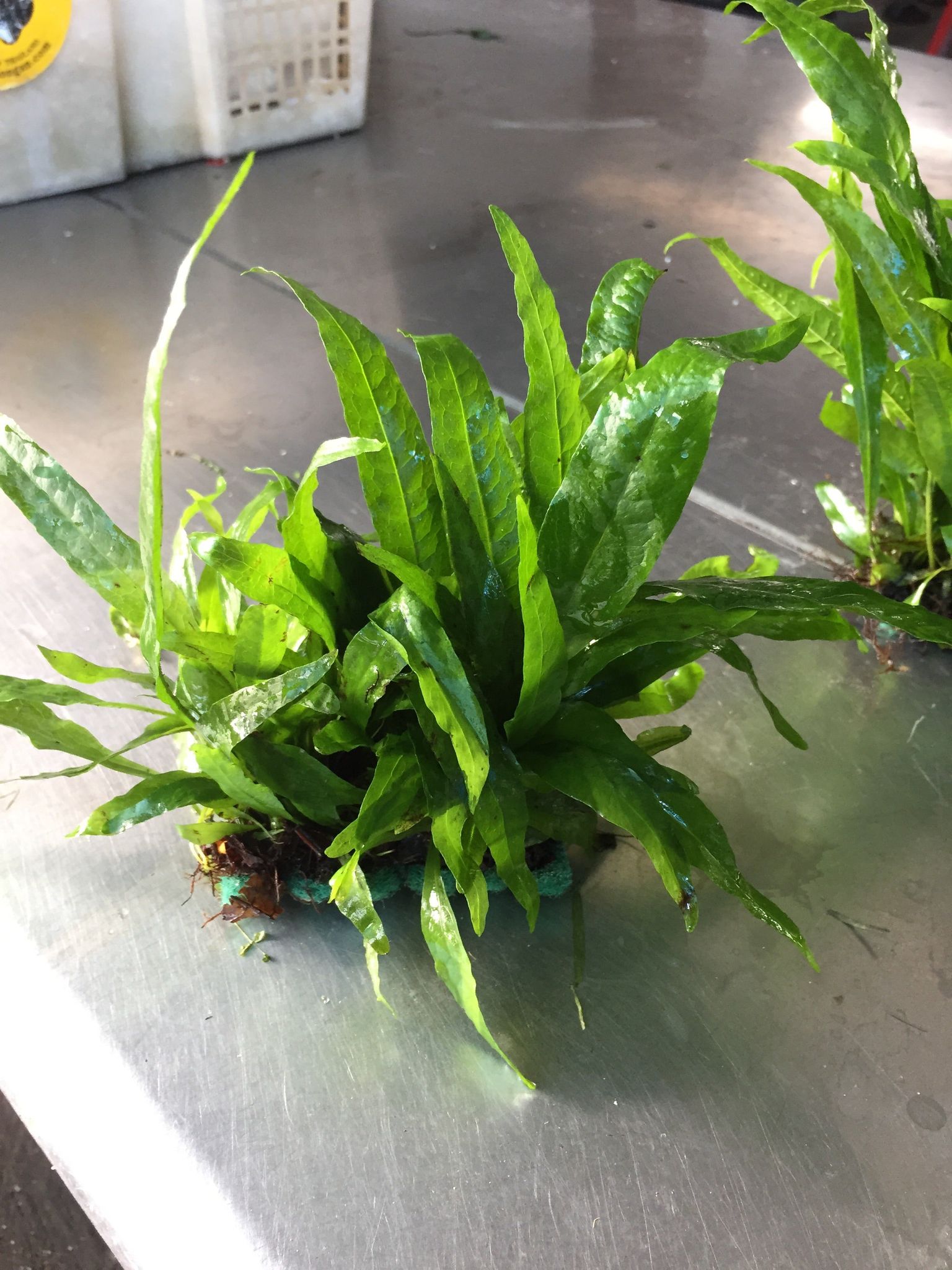
How to Plant and Propagate Java Fern in a Freshwater Aquarium
Java Fern is one of the most forgiving plants in the hobby, but most new growers kill it the same way: by planting it like a regular rooted plant. Java Fern is actually an epiphyte, meaning it needs to be attached to hardscape rather than buried in substrate. This guide covers correct attachment methods, ideal conditions, and both ways to propagate it once established.
Why Java Fern Isn't Planted Like a Normal Plant
Java Fern (Microsorum pteropus) grows in nature attached to rocks and driftwood near streams and waterfalls, not rooted in soil. Its thin root threads anchor to hard surfaces while absorbing nutrients from the water column, not from substrate.
This matters because of the plant's most important structural feature: the rhizome, a thick horizontal stem that all the leaves and roots grow from. If you bury the rhizome in gravel or soil the way you would a sword plant or crypt, it will rot and turn soft and blackish — a process hobbyists call "melting." Only the thin root threads should ever touch or be lightly covered by substrate; the rhizome itself must always stay exposed to the water.
Keep this one rule in mind through everything below: roots can go into or against a surface, the rhizome never gets buried.
How to Attach Java Fern to Hardscape
There are four common ways to secure Java Fern to driftwood, rock, or other hardscape while it grows in its own roots. None is objectively "best" — the right choice depends on tank size, plant size, and how much handling you want to do.
| Method | Best for | Pros | Cons |
|---|---|---|---|
| Cotton thread or fishing line | Larger rhizome sections, rough-textured wood | Cheap, reusable, easy to remove | Visible until roots take over; needs occasional retying |
| Plant-safe zip ties or yarn | Bigger plants, spiderwood with awkward angles | Strong hold, dark colors blend in and get overgrown | Slightly bulkier; trim tie ends |
| Cyanoacrylate ("aquarium-safe" super glue) | Small divisions and plantlets | Fast, nearly invisible once cured, no ties to remove later | Needs the plant held still 30–45 seconds; less ideal for large, heavy sections |
| Wedging into a crevice | Driftwood or lava rock with natural gaps | Most natural look, no materials needed | Only works if the hardscape has a suitable gap; can shift if bumped |
| Lead-free (magnesium-zinc) plant weights | Temporary anchoring while shopping for placement | Reusable, no glue or ties | Less secure long-term; mainly a placeholder |
A few practical notes:
- Small pieces (plantlets, single rhizome divisions): a dab of cyanoacrylate on the roots and rhizome base, held in place for 30–45 seconds, is the fastest option.
- Larger, established plants: thread, fishing line, or a zip tie gives a stronger hold while the plant establishes its own grip.
- Java Fern can also be left loose or lightly wedged for a few weeks while roots find their own attachment point — this works especially well on textured lava rock or spiderwood.
- Once true roots have gripped the surface, ties dissolve in appearance or get overgrown within a few weeks and can be removed.
Timeline: When Is It Safe to Remove Ties?
Most divisions and plantlets need 2 to 3 weeks undisturbed before their roots have visibly gripped the surface. Tug gently on the plant (not the tie) after that window — if it resists movement, the tie or thread can come off. Glued sections often anchor a bit faster since there's no shifting during the healing period. If a plant still wiggles freely at three weeks, leave the attachment in place another week or two rather than removing it early.
Ideal Water Parameters and Lighting
Java Fern is tolerant of a wide parameter range, which is part of why it's so beginner-friendly.
- Temperature: roughly 68–82°F (20–28°C), with the mid-70s°F being ideal for most community setups.
- pH: 6.0–7.5.
- Hardness: soft to moderately hard, roughly 2–15 dKH. It even tolerates slightly brackish water.
- Lighting: low to moderate — about 1.5–2 watts per gallon equivalent, or low-to-medium PAR under a modern LED fixture, at a 5,000–7,500K color temperature.
Too much light is more of a problem than too little: excessive intensity causes leaf burn, browning, and heavier algae buildup on the slow-growing leaves. Too little light simply slows growth further — it's rarely fatal.
CO2 and fertilizer are optional. Java Fern is a genuine low-tech, no-CO2 plant. Liquid fertilizer or root tabs can speed up growth, but the plant grows and propagates fine without either in a standard setup.
Growth Rate and What to Expect
Java Fern is slow — expect roughly 1 inch (2.5 cm) of new growth per month. A mature clump can eventually reach 8–14 inches tall, but getting there takes patience rather than intervention. Don't mistake slow growth for a struggling plant; this pace is normal even under good conditions.
How to Propagate Java Fern
There are two natural ways to multiply Java Fern, and neither requires special equipment.
Method 1: Rhizome Division
This is the main way to deliberately multiply a healthy plant.
- Select a mature, healthy rhizome — thick, green, and well-rooted.
- Using clean, sharp scissors or a blade, cut the rhizome into sections. Each section needs at least 2–3 leaves and some root mass attached to have a good chance of establishing.
- Reattach each new section to hardscape using any of the methods above.
- Leave undisturbed for 2–3 weeks while new roots take hold.
Cutting sections too small — fewer than 2 leaves or with no roots — is one of the most common reasons a division fails to establish. When in doubt, cut generously rather than trying to maximize the number of pieces.
Method 2: Plantlet Propagation
Mature or older leaves naturally sprout tiny "daughter" plantlets — small leaflets with their own root buds — along the leaf edges or underside. This is a completely normal self-propagation trait, not a sign of disease or stress.
To propagate from a plantlet:
- Wait until it has a few small leaves and visible roots of its own.
- Snip it free with a small bit of the parent leaf attached.
- Tie or glue it to new hardscape, keeping it fully submerged and moist.
- Give it 2–3 weeks before removing any tie, using the same tug test described above.
It's also common to see leaves growing roots directly along their length, not just at the tips. This is likewise a healthy sign of a thriving, mature plant and part of its self-propagation strategy — not something to correct.
Trimming Java Fern
Java Fern needs very little routine pruning given how slowly it grows. Rather than treating trimming as a scheduled task, treat it as spot-maintenance: remove damaged, yellowing, or melting leaves whenever you notice them, and otherwise leave the plant alone.
- Use clean scissors dedicated to plant trimming.
- Cut close to the rhizome without nicking or damaging the rhizome tissue itself.
- Melted or yellowing leaves can simply be cut off — this often triggers new plantlet growth from what's left of the leaf, so don't discard a melting leaf until it's fully gone.
Common Mistakes and Troubleshooting
| Problem | Likely Cause | Fix |
|---|---|---|
| Rhizome turns soft, mushy, or black ("melting") | Rhizome buried in substrate | Lift and reattach above substrate to hardscape |
| Leaf burn, holes, or brittle transparent patches | Too much light, or unacclimated to a high-tech CO2 tank | Reduce light intensity/duration or acclimate gradually |
| Algae coating the leaves | Excess light or nutrients relative to slow growth | Wipe leaves manually; reduce photoperiod or light intensity |
| New plantlet or division drifts away | Not secured firmly enough | Retie or reglue and leave undisturbed 2–3 weeks |
| Leaves melting shortly after purchase | Normal transport/acclimation stress | Trim affected leaves; new growth typically follows within weeks |
Introducing Plants and Fish Together
If you're setting up a new tank, plant your Java Fern before adding fish — even by a few minutes — so fish have cover from the moment they go in; fish don't need to wait for plants to "establish" first. That said, new plants can carry hitchhiking snails or parasites, so it's worth rinsing and visually inspecting Java Fern before it goes into a display tank, and quarantining it separately if you're cautious about existing livestock. A brief rinse under dechlorinated water and a close check of the leaf undersides for snail eggs covers most of the risk for a low-tech, hardy plant like this one.
Planted Tank Maintenance Basics
Once your Java Fern is established, upkeep is minimal:
- Spot-trim damaged or melting leaves as needed.
- Wipe algae off leaves during regular tank cleaning.
- Periodically check that ties or glue points haven't loosened, especially after moving hardscape.
- Dose liquid fertilizer occasionally if you want faster growth — it's optional, not required.
Java Fern for Beginners, Low-Light Tanks, and Specific Setups
A Top Starter Plant
Java Fern is one of the best plants to start with because it needs no substrate, no CO2, and tolerates a fair amount of neglect. It's a good gateway plant before moving on to stem plants or carpeting species that demand more precise conditions.
Benchmark Low-Light Plant
Java Fern is often used as the reference point for low-light tolerance. If you're building a low-light aquascape, it pairs well with other undemanding options like Anubias, Java Moss, and Cryptocoryne species, all of which share similarly modest light and CO2 requirements.
Good Choice for Cichlid Tanks
Digging and plant-eating cichlids make substrate-rooted plants a losing battle. Epiphytes like Java Fern, Anubias, and Bolbitis are the safer choice because they attach to hardscape rather than substrate — they can't be uprooted, and their tough leaves are unappealing to most fish that would otherwise chew on softer plants. If you're stocking a cichlid tank, tying Java Fern firmly to driftwood or rock makes it far more likely to survive.
A Strong Pick for Betta Tanks
Java Fern is a favorite for betta setups for good reason: its broad leaves give bettas a place to rest and hide, it tolerates the warmer, softer water bettas prefer, and its slow growth means very little ongoing upkeep in a smaller tank.
Java Fern Varieties
You may see cultivar names like Windelov (lace), Trident, Needle Leaf, Narrow, or Philippine Java Fern. These differ mainly in leaf shape and texture — planting, attachment, and propagation are essentially identical across all of them, so any technique in this guide applies regardless of variety.
Frequently Asked Questions
Can Java Fern be planted in substrate like a normal plant?
No. Only the thin root threads can go into or against substrate — the rhizome must stay exposed on top of the substrate or attached above it to hardscape. Burying the rhizome causes it to rot.
How fast does Java Fern grow?
Slowly — about 1 inch (2.5 cm) of new growth per month. A full, mature clump can take many months to fill in, so patience matters more than intervention.
Do I need CO2 or fertilizer for Java Fern?
No. It grows fine without either in a standard low-tech setup. Liquid fertilizer can speed up growth, but it isn't necessary.
Why are there little plants growing on my Java Fern leaves?
Those are natural plantlets, or daughter plants — a normal propagation mechanism, not a disease. They're safe to leave in place, or you can snip and replant them once they have a few leaves and visible roots.
Why is my Java Fern turning black or see-through ("melting")?
This is usually stress from transport, a lighting change, or a buried rhizome. Trim the affected leaves, check that the rhizome is still exposed, and give the plant time to recover.
Can Java Fern survive with aggressive or digging fish like cichlids or goldfish?
Yes, as long as it's tied or glued to hardscape rather than left loose in substrate. Because it can't be uprooted and its leaves are tough and unpalatable, it holds up well against fish that would destroy softer, substrate-rooted plants.
How do I attach Java Fern to driftwood without special tools?
Plain cotton thread, fishing line, or a small dab of cyanoacrylate super glue on the roots works well — no specialty products are required. Choose thread or line for larger sections and glue for small plantlets or divisions.
Is Java Fern good for a betta or nano tank?
Yes. Its low light requirements, slow growth, and shelter-providing leaves make it well suited to small, low-tech betta and nano setups.
Ready to build out your low-tech planted tank? Browse freshwater livestock on FishyHub to find tankmates that pair well with a Java Fern-anchored aquascape.

