How to Plant and Propagate Christmas Moss in a Freshwater Aquarium
Christmas moss is one of the most versatile aquatic plants a freshwater hobbyist can add to a tank, but it grows nothing like a rooted stem plant. This guide covers exactly how to prep, attach, and multiply it into carpets, walls, or trees, plus how to keep it dense and algae-free once established.
What Is Christmas Moss, and How Is It Different From Java Moss?
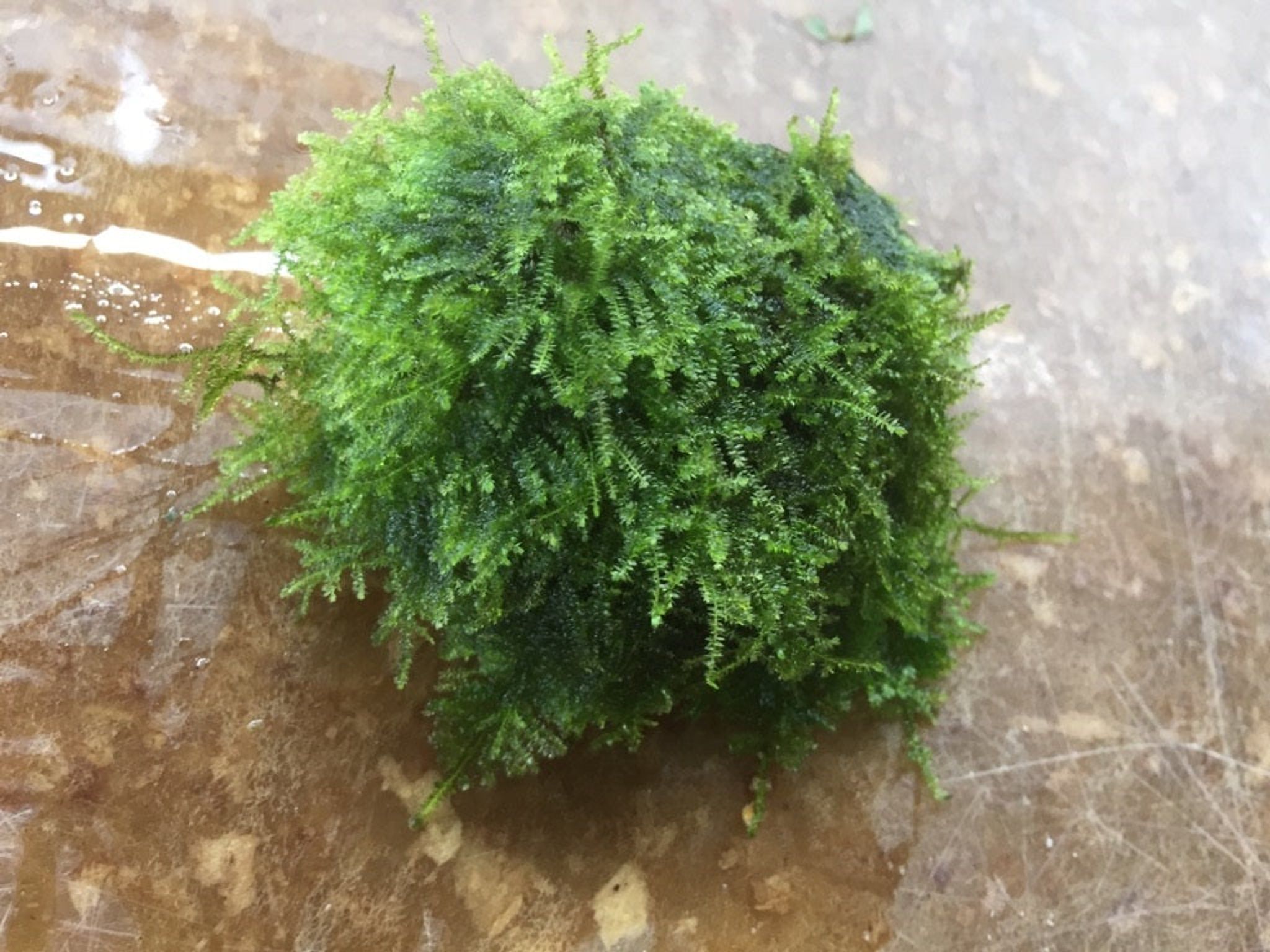
Christmas moss (Vesicularia montagnei, sometimes sold as V. dubyana or under the genus Taxiphyllum) is a Brazilian aquatic moss named for its fronds, which branch out in a triangular, fir-branch pattern reminiscent of a small evergreen tree. This regular, layered branching is what separates it visually from Java moss, whose growth is more irregular and stringy.
In terms of care, the two are close cousins but not identical:
- Christmas moss is easy to moderate in difficulty — hardier than the vast majority of aquarium plants, but somewhat slower-growing and a bit more particular about stable conditions than Java moss.
- Java moss tends to fill in faster and tolerate neglect better, while Christmas moss rewards a bit more consistency with a noticeably neater, denser look.
Either way, Christmas moss is still considered beginner-friendly — it just isn't the absolute fastest or most forgiving moss on the market.
Ideal Tank Conditions
Christmas moss tolerates a fairly wide range once it's established, but it grows best within these targets:
| Parameter | Ideal Range |
|---|---|
| Temperature | 65–82°F (18–28°C), mid-70s°F preferred |
| pH | 6.0–7.5 |
| Water hardness | Soft to moderately hard |
| Lighting | Low to moderate, roughly 10–20 PAR at the moss |
| CO2 | Not required, but speeds growth |
| Fertilizer | Optional; liquid carbon and micronutrients boost density and color |
Light intensity is one area where sources differ — some describe Christmas moss as strictly low-light, while others cite specific PAR figures and note that CO2 improves coloration. The safest framing: treat it as a low-to-medium light plant, and treat CO2 and liquid fertilizer as optional boosters rather than requirements. Too much light combined with weak water flow is a common trigger for algae growing directly on the moss fronds, so if you're running a brighter fixture, make sure circulation keeps pace.
Buying Formats You'll Encounter
Christmas moss is sold in several forms, each needing slightly different prep:
- Potted, packed in rockwool ("plant wool")
- On mesh or mats, pre-attached and ready to trim to size
- Attached to hardscape, such as driftwood, lava rock, or clay ornaments
- Floating balls or loose clumps
- Tissue culture cups, grown in a sterile gel medium
Prepping Moss (and Other New Plants) Before Adding It to the Tank
As a general rule for any new arrival, before it ever touches display water:
- Potted moss: Gently peel away every layer of rockwool or cotton wrapping — don't leave fragments tangled in the moss — then rinse thoroughly and pick out any embedded fertilizer beads.
- Tissue culture: Rinse the gel medium off carefully under a light stream; the moss fragments easily, so avoid aggressive scrubbing. Once clean, divide it into workable portions.
- Loose or bare moss: Rinse to remove debris and inspect closely for snails, snail eggs, or algae. If the moss comes from an unverified or hobbyist-to-hobbyist source, consider a brief quarantine or a bleach dip (roughly a 1:20 bleach-to-water ratio, dipped for only a few seconds, followed by full dechlorination) before it goes anywhere near an established tank. Tissue culture, grown sterile, generally doesn't need this step.
This same logic — full wrapping removal, a rinse, and a look for pests — applies to potted or bunched stem and rosette plants too, just with root trimming added for those species.
How to Plant Christmas Moss
The single most important rule: never bury Christmas moss in substrate. It isn't a root feeder — it has no true roots — and anchors itself to hard surfaces using thin structures called rhizoids. Buried moss simply rots instead of taking hold.
Instead, attach it using one of these methods:
- Direct tie: Take a small portion of moss and tie it onto driftwood, rock, or a mesh panel using cotton thread, fine fishing line, or a plant-safe cyanoacrylate (superglue gel) formulated for aquarium use.
- Moss carpet: Sandwich a thin, even layer of moss between two pieces of plastic or stainless steel mesh. Secure the edges with thread or small clips, then weigh the panel down or pin it directly to the substrate.
- Moss wall or tree: Build a frame from mesh, driftwood branches, or plastic canvas, then tie small clumps of moss onto it, leaving gaps between clumps so there's room to fill in as it grows.
Only ever use cotton thread, fishing line, or aquarium-safe cyanoacrylate glue for attachment. Metal wire or non-aquarium-safe thread can leach and harm fish or shrimp — it's a small detail that's easy to overlook but worth avoiding entirely.
A Simple DIY Mesh Frame
You don't need pre-made mats to build a moss carpet or wall. A cheap plastic canvas sheet (the kind used for craft projects) cut to size, paired with cotton thread, makes a serviceable homemade jig. It costs a fraction of a pre-made mesh mat and works just as well for tying moss clumps in place.
What to Expect: A Realistic Timeline
Christmas moss doesn't attach or fill in overnight. Here's a general expectation-setting timeline under moderate light with stable parameters:
| Timeframe | What's Happening |
|---|---|
| Weeks 1–2 | Moss settles in; some browning of damaged fronds from handling is normal |
| Weeks 2–4 | Rhizoids begin gripping the surface; ties can usually be trimmed away once anchored |
| Month 2 | Visible new growth fills gaps between tied clumps |
| Months 2–4 | Full carpet or wall coverage, depending on light, CO2, and fertilizer dosing |
Growth speed varies a lot by tank — a low-tech setup with no CO2 will sit at the slower end of that range, while a dosed, higher-light tank fills in faster.
Propagating Christmas Moss
Propagation is simply division. Once a clump is healthy and established:
- Cut a section away with clean scissors.
- Reattach the cutting to new hardscape, mesh, or substrate using the same tying methods described above.
- Save any trimmings from routine maintenance — they don't need to be discarded and can be replanted just like a deliberate cutting.
Trim the moss lightly every 2–4 weeks once it's established. Regular light trims encourage denser, bushier growth instead of long, straggly strands, and they prevent the overcrowding problem described below.
As a bonus batching tip: loose moss clumps or floating moss balls can serve as a temporary nursery while you accumulate enough material for a larger carpet or wall project, rather than tying every fragment down immediately.
Common Mistakes and Troubleshooting
| Problem | Cause | Fix |
|---|---|---|
| Moss rots instead of anchoring | Buried in substrate | Always attach to a hard surface, never bury |
| Brown, mushy interior of a clump | Overcrowded, thick clumping blocks light/flow | Keep clumps thin; trim regularly |
| Melting or browning | Sudden swings in temperature, pH, or dosing | Acclimate slowly; keep changes gradual |
| Detritus or planaria buildup | Poor flow, dirty moss | Increase circulation; rinse gently during water changes |
| Algae growing on the moss | Excess light without enough flow/nutrients | See algae section below |
| Fish or shrimp irritation | Metal wire or unsafe glue/thread used | Switch to cotton thread, fishing line, or aquarium-safe cyanoacrylate |
| Snails or algae hitchhikers | Moss added without inspection/quarantine | Rinse, inspect, and quarantine or bleach-dip wild/traded moss |
Dealing With Algae on Moss Specifically
Algae — often black beard algae or hair algae — growing directly on moss fronds is notoriously hard to remove once established, since it tangles through the same fine structure as the moss itself. Address it with a combination of approaches:
- Manually remove badly affected sections rather than trying to scrub them clean.
- Reduce light intensity or duration and improve flow across the moss.
- Add algae-grazing tankmates such as shrimp or otocinclus to help keep new growth in check.
Christmas Moss in Shrimp Tanks
Christmas moss is a favorite in dedicated shrimp breeding tanks. Its dense frond structure offers shelter for shrimp, a steady supply of biofilm and microorganisms for grazing, and safe cover for babies and molting adults, who are especially vulnerable right after shedding. If you keep or plan to keep a shrimp colony, a moss wall or a few tied clumps is one of the simplest ways to boost survival rates without adding equipment. You can browse a range of shrimp suited to a moss-furnished setup.
Seasonal and Creative Moss Projects
Because Christmas moss is trained onto a frame rather than planted in soil, it lends itself naturally to shaped display pieces — trees, wreaths, walls, and flat mats — not just as a literal holiday decoration but as a year-round aquascaping technique. The same mesh-and-tie method used for a simple carpet scales up easily into a sculptural centerpiece.
Building a DIY Planted Background Wall
A living background wall is one of the more popular moss projects:
- Use a filter-pad-style mat (aquarium-safe polyester or foam) as the base structure.
- Stitch plants onto it with non-metal thread — nylon or acrylic, not natural fibers that may rot or metal that may corrode.
- Orient plants and moss clumps to grow outward, away from the panel, rather than flat against it.
One pitfall specific to pure moss walls: top growth shades out the sections below it, so the bottom of the wall can thin out or die back over time. Two fixes work well — mix in slower-growing, hardier epiphytes like anubias or java fern alongside the moss, or simply trim the top growth on a regular schedule so light keeps reaching lower sections. The same shading issue applies to thick moss carpets, not just vertical walls.
Natural-Looking Backgrounds as an Alternative
If a living wall isn't practical, a painted or textured background panel — color-matched to a real biotope and textured to resemble rock or foam substrate — can complement or stand in for a living moss wall, giving a natural-looking backdrop without the ongoing trimming.
Paludarium and Riparium Use
Christmas moss adapts well to emersed conditions — grown partly or fully out of water in high humidity — which makes it a common choice for paludariums and terrariums. It pairs naturally with other low-fuss, humidity-tolerant plants like anubias, java fern, and emergent riparium species, all of which tolerate the same partly-submerged, high-humidity environment without demanding much beyond stable moisture and modest light.
Choosing a Light for a Planted Tank
If you're setting up a tank specifically to grow moss and other plants well, look for:
- A full-spectrum LED fixture rated for plant growth, not just fish viewing.
- Adjustable intensity and spectrum, so you can dial in low-to-medium PAR at moss height without overshooting into algae-prone territory.
- A built-in or add-on timer to keep the photoperiod consistent — 8–10 hours per day is a common target for planted tanks.
You can compare options among FishyHub's LED lighting selection when shopping for a fixture suited to a moss or planted setup.
Frequently Asked Questions
Is Christmas moss the same as Java moss?
No. They're related but distinct species — Christmas moss has a more defined, triangular, tree-like branching pattern and grows somewhat slower than Java moss.
Do I need CO2 to grow Christmas moss?
No, it grows fine without CO2. Adding CO2 and liquid fertilizer simply speeds up growth and improves color and frond density.
How long does it take Christmas moss to attach to driftwood or rock?
Rhizoids typically grip a surface within 2–4 weeks. Once you see attachment, any ties or thread can usually be trimmed away.
Can Christmas moss grow in low light or a betta/nano tank?
Yes. It's one of the more shade-tolerant aquatic plants and does well in small, low-tech setups, including betta and nano tanks.
Why is my Christmas moss turning brown or falling apart?
Usually it's parameter swings, poor water flow, or old growth dying off in the interior of a thick clump. Trim the affected sections and stabilize your tank's conditions going forward.
How do I make a Christmas moss carpet?
Sandwich a thin layer of moss between two pieces of mesh, secure it to the substrate, and be patient — light, flow, and regular trims determine how fast it fills in, typically over 2–4 months.
Can Christmas moss live emersed for a paludarium or moss wall project?
Yes. It adapts well to high-humidity, out-of-water conditions and is a common choice for paludariums, terrariums, and vertical moss walls.
How often should I trim Christmas moss?
Every 2–4 weeks once it's established. Regular light trims keep growth dense and bushy while preventing shading and rot in the interior of the clump.
Ready to start a moss project of your own? Browse FishyHub's full range of freshwater livestock to pair your new moss wall or carpet with tankmates suited to a heavily planted setup.

