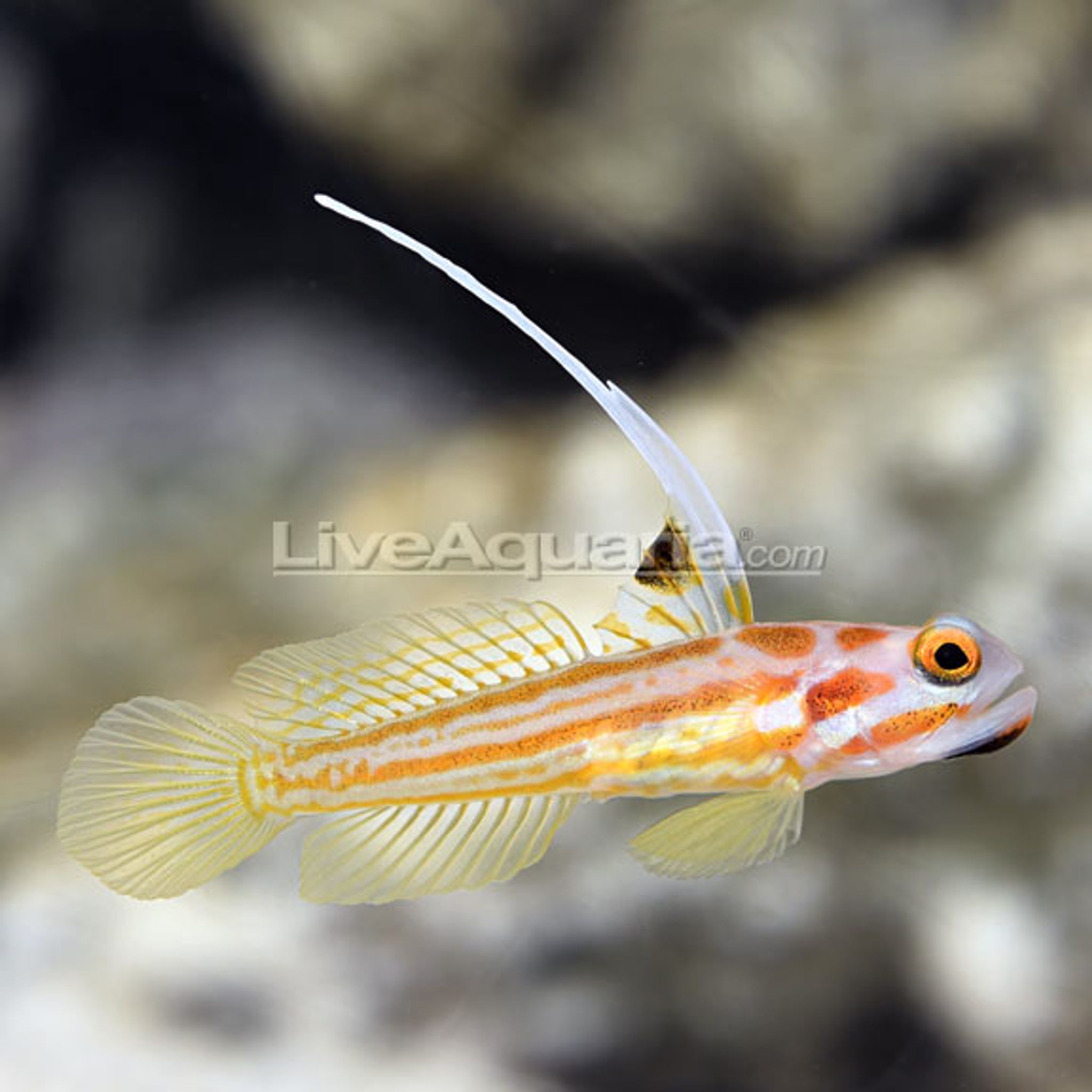
How to Feed Yellow Watchman Goby: Foods, Frequency and Common Feeding Problems
The Yellow Watchman Goby (Cryptocentrus cinctus) is one of the easiest saltwater fish to feed once it settles in, but its burrow-guarding lifestyle means food has to reach it in the right way. This guide covers exactly what to feed, how often, correct portion sizes, and how to troubleshoot a goby that refuses to eat or seems to be losing weight.
Species Snapshot
The Yellow Watchman Goby reaches about 3–4 inches (7.5–10 cm) and is a reef-safe, sand-dwelling micropredator. In the wild it perches at the mouth of a burrow rather than swimming freely through open water, scanning the sand and water column just above it for anything edible that drifts by. That single behavior — staying low and close to a fixed burrow — shapes almost every feeding decision covered below.
It's also famous for pairing up with a pistol shrimp (commonly an Alpheus species) in a mutualistic burrow-sharing relationship: the shrimp digs and maintains the tunnel while the goby stands guard against predators, using its body as an early-warning system the nearly blind shrimp can't provide for itself.
What Does a Yellow Watchman Goby Eat?
Natural Diet
In the wild, this goby is strictly carnivorous, feeding on small crustaceans, zooplankton, copepods, amphipods, and bits of detritus stirred up in the sand near its burrow entrance. It's an opportunistic picker, not an active hunter — it waits for food to come within range rather than chasing it.
Core Aquarium Diet
Replicating that diet in a home aquarium is straightforward. Build the diet around these staples:
| Food type | Role in diet | Notes |
|---|---|---|
| Frozen mysis shrimp | Primary staple | Thaw and rinse before feeding |
| Frozen brine shrimp | Secondary staple | Choose enriched/gut-loaded when possible |
| Sinking marine carnivore pellets | Convenient supplement | Not a full replacement for frozen food |
| Minced seafood (shrimp, silverside, clam) | Occasional variety | Cut small enough to be swallowed whole |
| Live or frozen copepods/amphipods | Enrichment, especially for shy eaters | A refugium or dosing product sustains supply |
Frozen mysis and brine shrimp should form the backbone of the diet, with pellets treated as a convenient add-on rather than the sole food source — an all-pellet or all-brine-shrimp diet fed long-term can lead to nutritional gaps that show up as faded color or a weaker immune response. Rotating between two or three food types avoids this.
You can browse frozen and freeze-dried options, along with sinking pellets, in FishyHub's food and supplements category, including a dedicated freeze-dried food selection that works well as an occasional rotation item.
Will a Watchman Goby Eat Pellets?
Most individuals adapt readily to high-quality sinking pellets. That said, frozen foods are generally more nutritionally complete and better accepted overall, so pellets work best as a supplement for days when frozen food isn't convenient, not as the everyday default.
Feeding Style: Why Sinking Food Matters
The single most common feeding mistake is offering floating foods. Because the goby hovers near or perches right at its burrow entrance and picks food directly off the substrate, anything that stays at the surface simply never reaches it. Always use foods that sink, or physically push the food down toward the substrate near the burrow so it settles within the goby's reach.
How Often and How Much to Feed
Frequency
1–2 small feedings per day is the workable range for most adult Watchman Gobies. Small, frequent portions beat one large feeding, since anything that isn't eaten quickly tends to sink out of reach into sand or rockwork rather than staying available.
A few adjustments worth making:
- Adults in a mature reef with an active copepod population: 1–2 feedings/day is plenty, since natural grazing fills in the gaps.
- Juveniles, thin fish, or tanks without a refugium/pod population: lean toward 2x/day in small portions.
- Note that broader goby-family advice sometimes suggests 2–3 feedings/day for meaty-diet species in general — for the Watchman specifically, 1–2x/day is the better default, reserving the higher end for young or underweight fish.
Portion Size
Feed only what the goby can consume within 2–3 minutes. As a concrete starting point, a pinch of pellets or a cube-corner of thawed, rinsed frozen mysis per goby is a reasonable single feeding — adjust based on how quickly it disappears. Overfeeding is a real problem here: excess food buried in the sand bed near the burrow rots and can spike ammonia or nitrate right where the goby lives.
Tank Maturity Changes the Math
A tank running 6 months or longer with an established sand bed and infauna population typically supports meaningful natural grazing between feedings, so the goby is rarely relying on you alone. A newly cycled tank has little to no natural pod population yet, so feeding needs to be more consistent and slightly more generous until the substrate matures.
Tank Size and Feeding Practicality
The Yellow Watchman Goby is commonly kept successfully in 10–20 gallon (38–76 L) tanks, and this matters for feeding, not just space: a smaller footprint means sinking food has less area to disperse into, so it's easier for the goby to actually locate it before it gets lost in rockwork or claimed by tankmates.
Feeding the Pistol Shrimp Partnership
The pistol shrimp doesn't change what you feed — the same sinking mysis, brine shrimp, and pellets work for both animals. Drop meaty sinking food near the shared burrow entrance and both partners can access it, since the shrimp also needs meaty foods and typically forages nearby, even if it rarely fully emerges. If you notice the shrimp seems thin or isn't coming out to feed at all, it can indicate the goby is monopolizing food dropped at the burrow, or that the shrimp simply feels unsafe emerging — worth checking rock stability and hiding options around the burrow mouth.
Target-Feeding in a Community Tank
More assertive tankmates often grab sinking food mid-water before it ever reaches the substrate, leaving a subordinate goby chronically underfed. The fix is target-feeding: use a turkey baster or feeding tube to deliver a small amount of food directly at or near the burrow entrance, ideally after faster fish have already been fed elsewhere in the tank. This ensures the goby gets a fair share without a wholesale rework of your feeding routine.
Copepods and Refugiums as an Enrichment Tool
Copepods and amphipods are a nutrient-dense natural food source that many reef tanks simply lack in useful numbers, because they need a refugium or similarly protected space to reproduce faster than fish can eat them. Running a refugium or periodically dosing live copepods gives a Watchman Goby ongoing grazing opportunities beyond scheduled feedings — particularly valuable for shy or newly acclimated individuals that aren't yet reliably taking prepared foods. If you're timing a copepod-dosing product alongside a hungry goby, dose in the evening or right after a regular feeding so the goby isn't immediately hunting down every pod before the population has a chance to establish.
Signs of a Well-Fed vs. Underfed Goby
A quick visual check is more reliable than guessing at portion sizes:
- Well-fed: rounded, gently convex belly; active, alert posture near the burrow; consistent burrow maintenance.
- Underfed: visibly sunken or pinched abdomen behind the head, reduced activity, or a goby that stays deep in the burrow rather than perching at the entrance.
Check body shape periodically, especially in a community tank where competition for food is more likely.
Common Feeding Mistakes
- Feeding only floating foods — it never reaches a fish that stays low near the substrate.
- Overfeeding — buried, rotting food fouls the local sand bed and water quality.
- Giving up too early — a newly introduced goby often refuses food for the first 2–4 days while settling in and digging a burrow; this is a normal stress response, not necessarily illness, unless paired with labored breathing, clamped fins, or visible disease signs.
- Ignoring tankmate competition — faster fish intercepting food mid-water is a common, fixable cause of an underfed goby.
- Assuming the shrimp is automatically fed — usually true, but worth double-checking if it seems thin or won't emerge.
- Skipping variety — a long-term single-food diet can cause nutritional deficiencies that show up as faded color or weaker immunity.
- Mistaking stress for feeding refusal — a goby that hides constantly and won't eat may be reacting to aggressive tankmates or a lack of stable digging substrate (a mix of sand and rubble is needed to hold a burrow), not refusing food outright.
Wild-Caught vs. Captive-Bred: Does It Affect Feeding?
Captive-bred Watchman Gobies typically accept prepared frozen foods and pellets faster than wild-caught individuals, since they're already used to aquarium feeding routines from an early age. For a beginner concerned about feeding difficulty, a captive-bred individual is generally the easier starting point, though wild-caught fish still adapt well with the acclimation patience described above.
Not All Gobies Feed the Same Way
The Watchman Goby's feeding ease isn't universal across the goby family, and it helps to know why:
- Green Clown Gobies (genus Gobiodon, unrelated to the Watchman) are notoriously difficult feeders. New arrivals frequently refuse pellets, flakes, and even frozen foods for days, and often need live foods like baby brine shrimp or live copepods/rotifers just to trigger a first feeding response.
- Dragon-type gobies (such as Gobioides broussonnetii, often kept in brackish or freshwater setups and a different species entirely from the marine Watchman) are filter-feeding, sand-sifting fish that are famously hard to feed — nearly blind, poor competitors for food, and dependent on small foods like blackworms, bloodworms, or minced seafood delivered directly to them.
Against that backdrop, the Yellow Watchman Goby is a comparatively easy eater once acclimated. If one is slow to start, the same patience-and-live-food approach used for clown gobies — a few days of adjustment plus live copepods or brine shrimp as an incentive — usually works just as well.
Is the Yellow Watchman Goby a Good Beginner Fish?
Feeding difficulty is a major reason some marine fish are unsuitable for new reefers, and on that measure, the Watchman Goby compares favorably. It's generally grouped with hardy, easy-to-satisfy beginner choices such as clownfish, six-line wrasse, and green chromis. That's a useful contrast to species that are riskier for beginners specifically because of feeding — aggressive damsels that outcompete tankmates, or certain groupers and grunts that are prone to starving in captivity because they refuse prepared foods. If you're assembling a beginner-friendly stocking list, the Watchman Goby pairs well with other easy feeders; browse the full range in FishyHub's gobies category or check compatible burrow partners in the marine shrimp category.
Frequently Asked Questions
What is the best food for a Yellow Watchman Goby?
Frozen mysis shrimp as the staple, rounded out with enriched frozen brine shrimp, sinking marine pellets, and occasional minced seafood or live copepods for variety and enrichment.
How often should I feed a Yellow Watchman Goby?
1–2 small feedings per day works for most adults, only offering as much as the fish can eat within a couple of minutes. Juveniles or thin fish, or tanks without an established pod population, can move toward the higher end.
Will my Yellow Watchman Goby eat pellets?
Yes, most adapt to high-quality sinking pellets, though frozen foods are usually preferred and more nutritionally complete, so pellets work best as a supplement rather than the main diet.
Why is my Yellow Watchman Goby not eating?
The most common causes are recent acclimation stress (give it 2–4 days), food not reaching the substrate, more assertive tankmates outcompeting it, or a lack of a stable burrow that leaves it feeling unsafe.
Do Yellow Watchman Gobies need live food?
Not required, but live copepods or brine shrimp help during acclimation or with picky individuals and add valuable dietary enrichment on top of frozen staples.
Can I feed my Yellow Watchman Goby the same food as my pistol shrimp?
Yes — sinking meaty foods placed near the shared burrow entrance feed both symbiotic partners without any need for separate feeding routines.
How do I feed a goby in a community tank without it losing out to faster fish?
Target-feed using a turkey baster or feeding tube directly at or near the burrow entrance, ideally after more active fish have already been fed elsewhere in the tank.
Is the Yellow Watchman Goby a good beginner fish in terms of feeding difficulty?
Yes, it's considered one of the easier marine fish to feed compared to fussier gobies like clown gobies or specialist sand-sifting species that require live foods and direct feeding.
Ready to add one to your reef? Explore available Yellow Watchman Gobies and other easy-feeding marine fish in FishyHub's gobies category.

