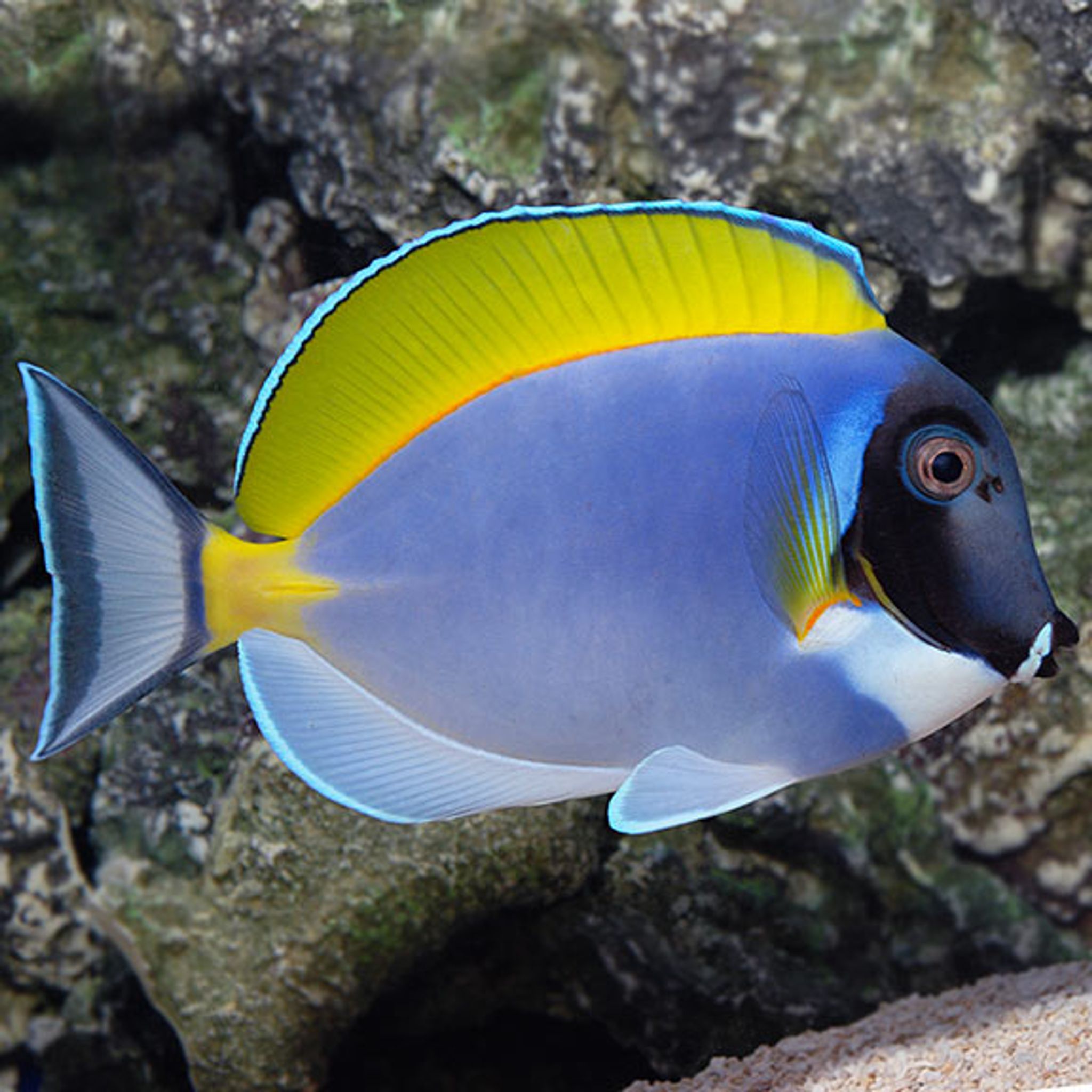
How to Feed Powder Blue Tang: Foods, Frequency and Common Feeding Problems
The Powder Blue Tang (Acanthurus leucosternon) is a constant grazer with a reputation for disease and stress-related feeding failures, so getting its diet right is the single biggest thing keeping it alive long-term. This guide covers what to feed, how often, and how to troubleshoot the appetite and health problems this species is famous for.
Why Feeding This Species Is Different
In the wild, Powder Blue Tangs live on reef-crest zones with strong current, where they nibble filamentous algae off rock almost continuously throughout the day. Their jaw has evolved a distinct rotating downward motion (rather than the sideways flick seen in many fish) that lets them graze while holding position against surge.
That biology has two direct consequences for aquarium feeding:
- Small, frequent meals beat one large feeding. A tang's gut is built for near-constant, low-volume intake, not a single big feed.
- Feed near moderate-to-high flow. Placing food where water movement mimics a reef crest encourages more natural feeding behavior and better acceptance, especially in newly introduced fish.
Core Diet: What to Feed
Powder Blue Tangs are herbivore-leaning omnivores. The staple of their diet should always be algae-based, with occasional meaty foods as a supplement rather than a substitute.
- Dried nori/seaweed sheets — the backbone of the diet. Clip to a veggie clip or wedge into rockwork.
- Herbivore-formula frozen foods — blends built around marine algae, spirulina, and mysis.
- Herbivore pellets or flakes with spirulina — useful for supplemental feeding and vitamin delivery.
- Live rock grazing — turf algae and cultured pods on mature live rock supplement everything else.
Vary the Algae, Don't Repeat One Type
Feeding the same brand or color of nori every day is one of the most common mistakes. Green, red, and brown algae sheets differ in nutrient profile, and rotating them:
- Broadens nutrient intake (including vitamin A, which matters for eye health — more on this below)
- Prevents picky feeding, since a tang fixated on one product may refuse everything else
- Reduces the odds of a nutritional gap showing up later as weight loss or skin/fin issues
Feeding Frequency and Portions
Sources disagree on exact frequency — some recommend a flat 2x daily, others argue for as many small feedings as practical since tangs graze almost continuously in nature. Both are addressing the same underlying need, so the practical answer is to combine them.
| Feeding element | Recommendation | Why |
|---|---|---|
| Formal feedings | 2–3x per day | Matches metabolic demand without one large dump of food |
| Standing algae clip/sheet | Left in tank for extended grazing (not just 5 minutes) | Mimics all-day reef grazing behavior |
| Frozen/pellet portions | Small enough to be gone in a few minutes | Prevents waste and ammonia spikes |
| Uneaten frozen/pellet food | Remove within a few minutes | Nori/algae clips can stay longer since they're grazed slowly |
A standing nori sheet or algae clip left in the tank lets the fish pick at it throughout the day the way it would on a reef, which satisfies the "graze constantly" camp without you needing to be present for every bite.
Vitamin and Immune Support
Given how disease-prone this species is, vitamin support isn't optional extra credit — it's part of the core protocol. Periodically soak frozen and dry foods in a vitamin or garlic supplement before feeding.
A workable weekly cadence:
- 3–4 feedings per week: soak frozen or pellet food in a vitamin supplement for a few minutes before feeding
- 1–2 feedings per week: use a garlic-based soak instead, particularly useful for stimulating appetite in stressed or newly introduced fish
- Remaining feedings: plain algae sheets and frozen foods, unsupplemented
This rotation avoids over-reliance on any single additive while still delivering regular immune support. You can browse vitamin-soak-friendly frozen and dried foods, along with garlic-based appetite stimulants, in FishyHub's Food & Supplements selection.
Tank Prerequisites That Affect Feeding Success
Feeding advice only works if the system underneath it is ready. Powder Blue Tangs need:
- A mature, established system — at minimum several months old, ideally 6+ months, with a stable nitrogen cycle
- Ample live rock for supplemental grazing
- A large tank — recommendations range from 100 to 125+ gallons; given this species' adult size (around 9 inches / 23 cm), activity level, and territorial behavior, it's safer to plan for 125 gallons (about 475 liters) or more rather than the lower end of that range
- Strong water circulation for oxygenation, matching the high-flow habitat it evolved in
- Robust skimming and frequent water changes to manage the bioload created by a heavy, constant grazer
Keeping a Powder Blue Tang in an immature or undersized system stresses the fish and suppresses both appetite and immune function — which, for a species this susceptible to disease, tends to compound quickly. If you're still evaluating whether this fish fits your setup, it's worth browsing the Tangs & Surgeons category to compare size and care requirements against tankmates you're already keeping.
Quarantine and Feeding Trials
Feeding strategy starts before the fish ever reaches the display tank. New Powder Blue Tangs should go through:
- A freshwater dip before quarantine, often recommended to reduce initial parasite load
- Quarantine for 3–4 weeks minimum, with the fish observed actively eating before it's considered ready
- Feeding trials during quarantine — offer nori and frozen foods daily and confirm consistent acceptance, not just occasional picking
Skipping quarantine and introducing a stressed or already-infected fish directly to the display is one of the most common reasons new tangs stop eating and decline rapidly.
Common Feeding Mistakes and How to Fix Them
A newly introduced tang won't eat prepared foods
This is close to universal with this species and usually stress-driven rather than a sign of a "bad" fish. Try, in order:
- Let it graze live rock first — this is often accepted before any prepared food
- Offer garlic-soaked nori or frozen food to stimulate appetite
- Dim tank lights and reduce disturbance/foot traffic near the tank
- Add or rely on established tankmates that already feed readily — a tang often starts eating faster when it sees others doing it
Weight loss despite eating
A visibly pinched or sunken belly profile in a fish that appears to be eating is a red flag, especially after an ich treatment (copper or hyposalinity often suppresses appetite during and after treatment). Address it by increasing feeding frequency, using vitamin-soaked foods to aid recovery, and checking whether faster or more aggressive tankmates are outcompeting it at feeding time.
Overfeeding and water fouling
Uneaten frozen food or pellets that sit in the tank drive ammonia spikes. Remove anything uneaten within a few minutes of a formal feeding — the exception is algae clips and nori sheets, which can be left longer since they're grazed slowly over hours rather than dumped and ignored.
HLLE (head and lateral line erosion)
Head and lateral line erosion is a broader tang-family risk, not unique to Powder Blue Tangs, but worth flagging because it's commonly linked in the hobby to poor diet, declining water quality, and activated carbon overuse. A varied, vitamin-enriched diet and consistent water changes are the main preventive levers.
Eye Health and Diet
Cloudy or hazy eyes, and pop-eye, show up periodically in aquarium fish including tangs, and diet plays a real role. Common causes include:
- Poor water quality — the first thing to check when eye symptoms appear
- Physical injury — tangs are fast, darting swimmers and are prone to scraping against sharp rockwork in tanks with tight aquascaping
- Bacterial or parasitic infection
- Nutritional deficiency — specifically a lack of vitamin A and other micronutrients from an unvaried diet
The feeding connection is direct: rotating algae types and periodically vitamin-soaking foods (as outlined above) supports eye and immune health as a preventive measure, not just a reactive one. If you notice sudden cloudy eyes combined with appetite loss, check water parameters immediately and consider quarantine and treatment rather than waiting to see if it resolves on its own. Water treatment and medication options for exactly this kind of situation are available in FishyHub's Treatment category.
Frequently Asked Questions
How often should I feed a Powder Blue Tang?
Aim for 2–3 formal feedings per day plus a standing algae clip or nori sheet left in the tank for continuous grazing. This combination matches the fish's near-constant natural feeding behavior while keeping formal feedings manageable.
What is the best staple food?
Dried nori or seaweed sheets, varied across green, red, and brown algae types, form the core staple. Supplement with herbivore-formula frozen foods and spirulina-based pellets or flakes.
Why won't my Powder Blue Tang eat?
Usually stress from a new environment, an ich or parasite infection, or an immature tank system. Try live rock grazing, a garlic-soaked food to stimulate appetite, and check water quality and quarantine status before assuming the worst.
Can Powder Blue Tangs eat meaty foods?
They're primarily herbivorous grazers, so meaty foods should stay occasional rather than staple. Enriched frozen mysis blends a few times a week are fine as a supplement but shouldn't replace algae-based feeding.
Why is my Powder Blue Tang losing weight even though it eats?
This is a common issue after ich treatment, since copper or hyposalinity regimens often suppress appetite during recovery. Increase feeding frequency, use vitamin-soaked foods, and confirm the tang isn't being outcompeted by faster or more aggressive tankmates.
Do Powder Blue Tangs need live rock to graze on?
Yes. Ample mature live rock supplements prepared foods, gives the fish something to pick at throughout the day, and matches the natural grazing behavior it would show on a reef.
What causes cloudy or injured eyes in my tang, and does diet play a role?
Cloudy or injured eyes usually trace back to poor water quality, physical injury from fast swimming near sharp rockwork, or infection — but nutritional deficiency (especially vitamin A) is also a contributing factor. A varied, vitamin-enriched diet alongside good water quality lowers the risk on both fronts.
How long should I quarantine before feeding trials in the display tank?
Roughly 3–4 weeks minimum, during which the fish should be observed eating consistently and confirmed free of visible parasites before it goes into the display tank.
Powder Blue Tangs reward a consistent, varied feeding routine with strong color and better disease resistance, but they don't forgive shortcuts on tank maturity or quarantine. Browse current stock in FishyHub's Marine Fish category when you're ready to plan your next addition.

