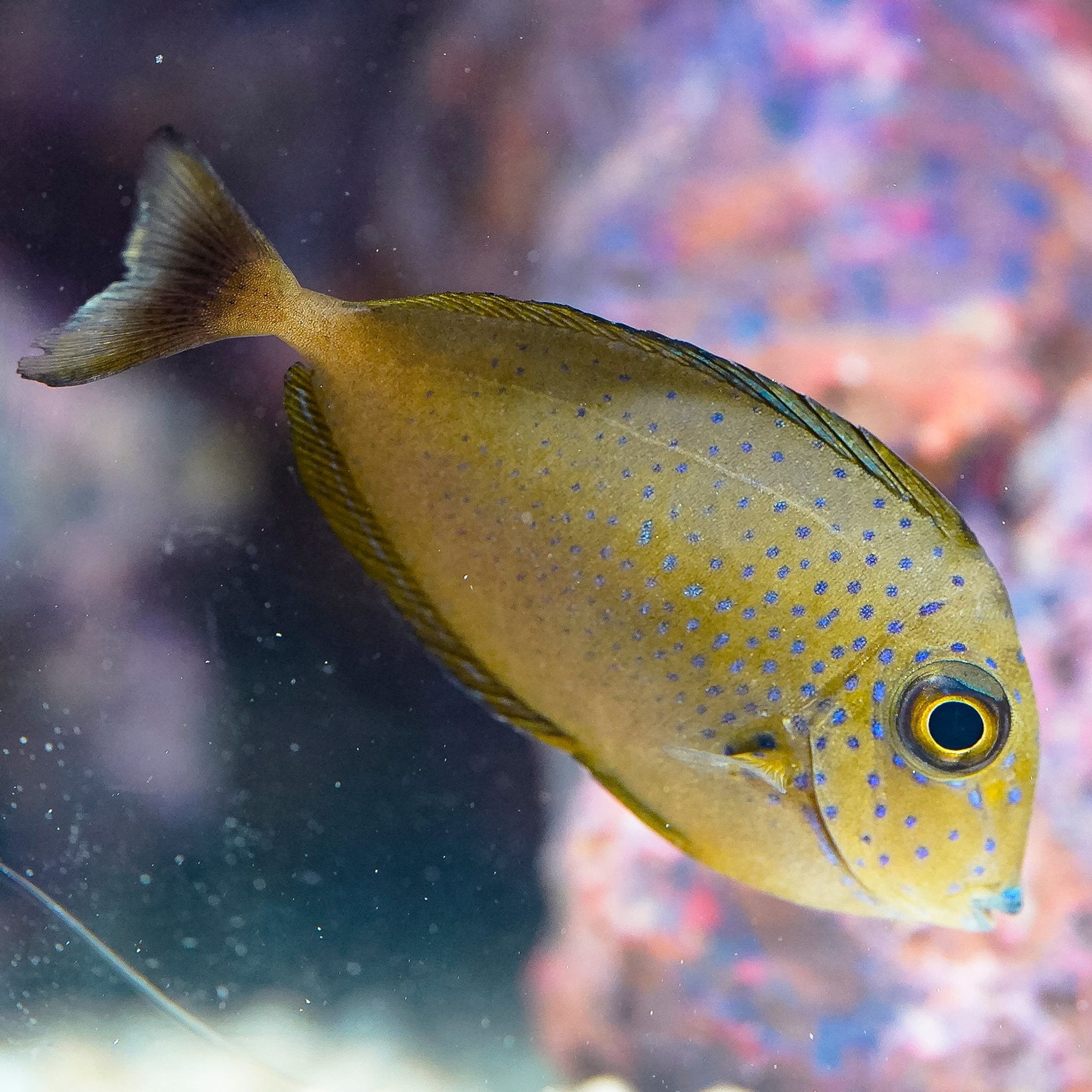
How to Feed Kole Tang: Foods, Frequency and Common Feeding Problems
The Kole tang (Ctenochaetus strigosus) is a grazer first and a "fed" fish second — its job in the wild is to pick at algae film almost all day long. This guide covers exactly what to offer, how often, and how to fix the most common feeding problems: refusal to eat, fading color, and a pinched belly.
Why Kole Tangs Feed Differently Than Other Tangs
Kole tangs belong to the bristletooth (or bristlemouth) group of tangs, distinguished by fine, comb-like teeth built for combing diatoms, film algae, and detritus off rock and sand. This is different from the broader, blunter teeth of Zebrasoma tangs (like the yellow tang), which are built to tear and rip macroalgae.
In the wild, and in mature reef tanks, Kole tangs graze almost continuously through the day, picking at biofilm in short bites rather than eating a couple of large meals. That constant grazing — not any prepared food — is their primary calorie source. This matters for how you should think about feeding: your job is mostly to supplement what the tank itself should be growing, not to replace it entirely.
The Core Problem: A Tank That's "Too Clean"
A brand-new aquarium, or one that's aggressively scrubbed and over-filtered, simply doesn't have enough film algae and diatoms to sustain a Kole tang. This is the single most common reason healthy-looking Kole tangs slowly decline: the keeper assumes supplemental feeding is "enough," while the fish's main food source — background algae film — has been removed or never developed.
This is especially critical in the first several months of a new aquarium, before diatom films and microfauna populations have matured on the rock and sand.
Ways to keep a food-friendly tank:
- Let some algae film develop on back and side glass panels and less-visible rock.
- Use mature or "seasoned" live rock rather than freshly cured, bare rock whenever possible.
- Consider a refugium or algae/turf scrubber — these grow algae deliberately in a separate section of the system, exporting nutrients while also acting as a live food source that reduces how much supplemental feeding a grazer needs.
What to Feed a Kole Tang
Rotate several food types rather than relying on one staple. A varied diet supports both nutrition and reduces the risk of your tang getting bored with a single offering.
| Food type | Role in the diet | How to offer it |
|---|---|---|
| Dried seaweed / nori sheets | Bulk of plant-based nutrition | Clip to the glass or a rock with a veggie clip or magnet feeder |
| Herbivore pellets/flakes (spirulina, kelp-based) | Small daily baseline | Broadcast a small pinch across the tank |
| Frozen herbivore/marine algae blends | Variety and enrichment | Thaw and offer in a feeding dish or turkey baster |
| Mysis or brine shrimp (spirulina-enriched) | Occasional protein variety | Small amounts, 1-2x weekly |
| Blanched vegetables (zucchini, spinach) | Occasional variety | Clip on, remove after a few hours |
| Live rock diatom/algae film | Continuous background grazing | No action needed beyond maintaining mature rock |
You can find dried seaweed, herbivore pellets, and frozen algae blends across FishyHub's Food & Supplements selection when building out a rotation.
Feeding Frequency: A Weekly Schedule
Sources vary on exact frequency — some recommend nori daily, others 2-3 times a week. A sensible default is every other day (3-4x weekly), adjusted by how much natural algae is visible in the tank: reduce nori if the rock has a healthy diatom film, increase it if the rock looks picked clean.
Pellets and flakes work well as a small daily baseline rather than a full meal, with nori and frozen foods providing the bulk of nutrition and variety. Feed small portions multiple times rather than one large feeding, matching the tang's natural near-continuous grazing pattern — and remove any uneaten food within a few minutes to protect water quality.
A simple weekly rotation:
| Day | Nori/seaweed | Pellets/flakes | Frozen food |
|---|---|---|---|
| Mon | Yes | Small pinch | — |
| Tue | — | Small pinch | Yes |
| Wed | Yes | Small pinch | — |
| Thu | — | Small pinch | — |
| Fri | Yes | Small pinch | Yes |
| Sat | — | Small pinch | — |
| Sun | Yes | Small pinch | — |
Adjust up or down based on your tank's algae supply and the fish's body condition.
Tank Size and Feeding Success
Minimum tank size guidance ranges from 75 gallons (284 L) to 100+ gallons (378+ L) cited elsewhere. Since adult Kole tangs reach roughly 6-7 inches (15-18 cm) and are active swimmers with territorial tendencies, erring toward the larger end — 100+ gallons with a long, wide footprint — supports more natural grazing behavior and reduces stress-related feeding problems. A cramped tang grazes less and is more prone to the appetite and color issues covered below.
Kole tangs are commonly stocked in the Tangs & Surgeons category alongside other grazing surgeonfish that share similar dietary needs.
Signs of a Well-Fed vs. Malnourished Kole Tang
Healthy:
- Consistent chocolate-brown body with yellow/orange tail and eye-ring markings
- Active swimming and grazing throughout the day
- Rounded belly profile
Malnourished:
- Pinched or concave belly
- Faded or blotchy coloration
- Lethargy and clamped fins
- Noticeably reduced grazing activity
Vitamin Boosting and Disease Resistance
Like most tangs, Kole tangs are prone to marine ich (Cryptocaryon) and velvet (Amyloodinium), especially under stress or a poor diet. A diverse, algae-based diet supports immune resistance, and quarantining new fish before adding them to a display tank is recommended.
Soaking dried or frozen foods in a vitamin supplement containing vitamin C and other immune-supporting nutrients, once or twice weekly, can help combat head-and-lateral-line erosion (HLLE) and improve disease resistance. HLLE in tangs is frequently linked to poor diet, overuse of activated carbon, or stray voltage — diverse algae-based feeding is one of the key preventive measures. Water conditioners and additives to support this routine are available under Water Condition & Additives.
Getting a New Kole Tang Eating (Quarantine Feeding)
New arrivals often refuse standard foods at first, particularly if they weren't pre-conditioned to eat nori, pellets, and frozen food before being offered for sale. If your new Kole tang won't eat during quarantine:
- Offer a piece of live rock rubble with natural film algae — this is often the fastest way to get a stressed tang grazing again.
- Try different nori or seaweed types; some individuals strongly prefer green nori over purple, or vice versa.
- Dim or turn off tank lights briefly to reduce stress during initial feeding attempts.
- Soak frozen mysis or brine shrimp in a garlic or vitamin additive to stimulate a feeding response.
- Be patient across several days rather than switching foods every few hours — give each new offering a fair try before moving to the next.
Common Feeding Mistakes
- Keeping the tank too clean. Scrubbing all algae off rock or over-filtering removes the tang's primary food source — this can lead to starvation even when supplemental feeding looks adequate on paper.
- Flakes/pellets only, no fresh algae. Relying solely on dry food without nori or algae variety leads to nutritional deficiency and increases HLLE risk over time.
- Letting nori float loose. Unsecured seaweed gets pulled into filtration, wasting food and adding to bioload. Always use a veggie clip or magnet feeder.
- Overfeeding meaty frozen foods. Too much protein-heavy frozen food can cause bloating and doesn't match an herbivore-leaning fish's digestive needs.
- Feeding-time aggression. Established tangs or wrasses can intimidate a shy Kole tang away from food. Spread food across multiple points in the tank to reduce competition and give it a fair chance to eat.
- Ignoring parasite outbreaks. A fish that stops eating and shows white spots needs a treatment plan, not just a diet change — appetite loss often coincides with ich or velvet outbreaks.
Why RO/RODI Water Matters for Feeding
Tap water often carries phosphate, nitrate, silicate, and heavy metals that fuel nuisance algae and stress fish — indirectly suppressing the beneficial film algae that Kole tangs depend on for background grazing. Reverse osmosis or RO/DI-purified water mixed with a marine salt mix is the standard for reef-safe water quality; total dissolved solids (TDS) should read near 0 ppm before mixing in salt.
Clean source water helps the "right" kind of algae film establish on rock rather than nuisance blooms, and it reduces the disease stress that so often suppresses a tang's appetite in the first place.
Frequently Asked Questions
How often should I feed my Kole tang?
Offer small amounts most days to mimic its natural near-continuous grazing pattern. A practical routine is nori every other day (3-4x weekly), a small pinch of herbivore pellets daily, and frozen herbivore foods 2-3 times a week.
What is the best food for Kole tangs?
A rotation works better than any single food: dried nori/seaweed, herbivore pellets or flakes with spirulina, and frozen herbivore or marine algae blends, all supported by natural algae growth on live rock.
Why won't my Kole tang eat?
Common causes are stress from a new environment, unfamiliar food types, competition from tankmates, illness, or poor water quality. Try varied foods, reduce competition at feeding time, and check your water parameters.
Do Kole tangs need live rock or algae to survive?
Not strictly, but mature rock with a diatom or film algae layer strongly supports their natural feeding behavior. In a mixed reef tank, that background algae film should be considered part of the diet, not just decoration.
Can I overfeed a Kole tang?
Yes. Too much meaty frozen food, or heavy pellet feeding without algae variety, can cause water quality issues and doesn't match this fish's grazing herbivore biology.
What's causing my Kole tang's color to fade or belly to look sunken?
This is typically malnutrition or ongoing stress. Increase feeding frequency and variety, verify water parameters are stable, and check for tankmate aggression or overcrowding.
Does RO/RODI water matter for feeding a Kole tang?
Indirectly, yes. Clean source water reduces nuisance algae and nutrient swings that affect the beneficial film algae tangs graze on, and it lowers disease stress that can suppress appetite.
How long can a Kole tang go without eating?
A day or two of reduced eating from stress usually isn't an emergency if the fish is still grazing on rock. Prolonged refusal of three or more days combined with visible weight loss warrants checking water quality, tankmates, and signs of illness.
Ready to start or expand a reef-safe grazing crew? Browse available Kole tangs and other bristletooth species in FishyHub's Tangs & Surgeons category.

