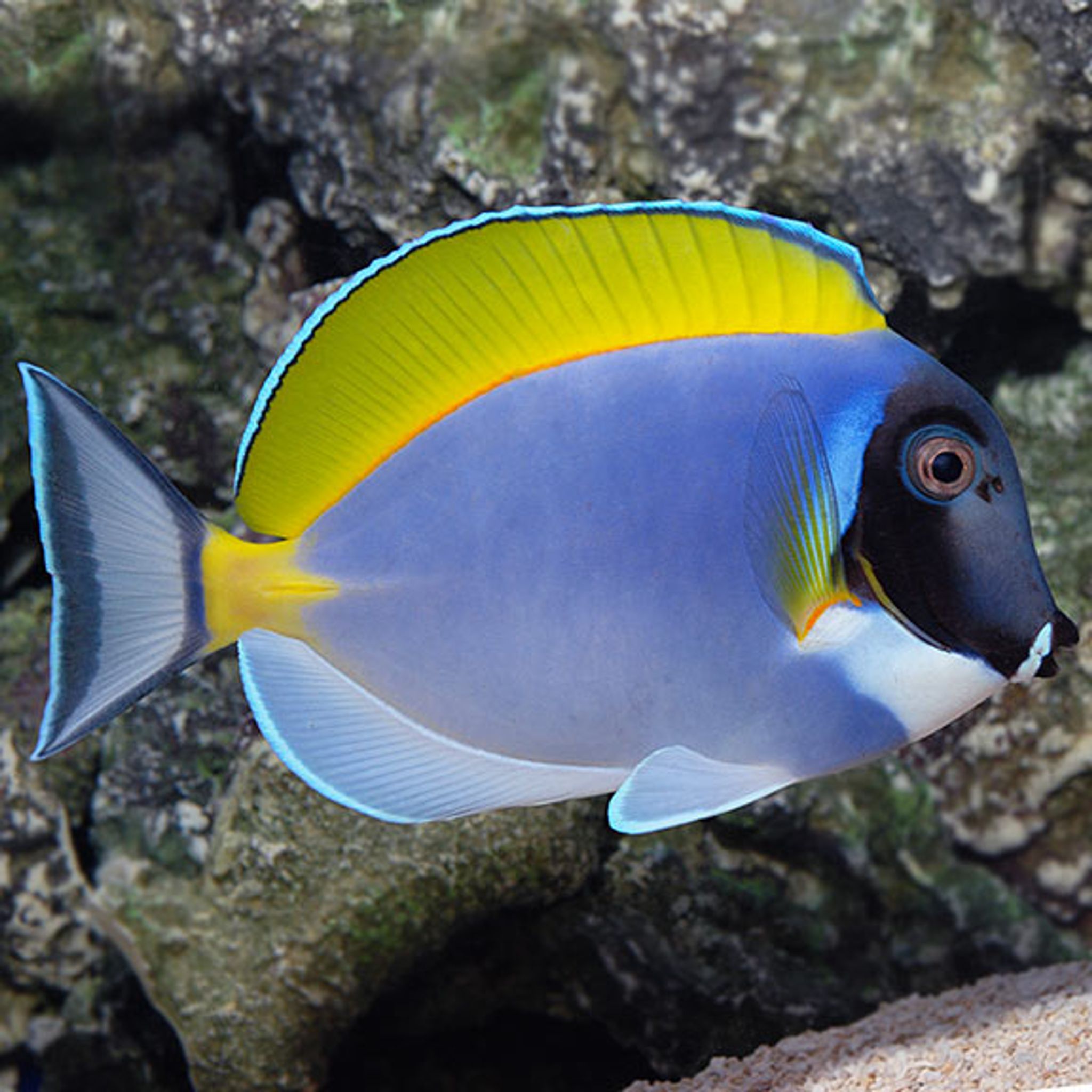
How to Feed Blue Tang: Foods, Frequency and Common Feeding Problems
A blue tang (Paracanthurus hepatus) needs frequent grazing on plant matter with regular protein add-ins, not a once-a-day flake feeding. This guide lays out exactly what to feed, how often, how much per meal, and how to solve the two most common feeding problems: a new tang that refuses to eat and diet-linked skin erosion.
What Blue Tangs Eat in the Wild
Blue tangs are grazing omnivores with a strong plant-based bias. In reef habitats they spend most daylight hours picking algae off rock and coral rubble, supplementing that grazing with small amounts of plankton and other meaty matter drifting by. A workable target for the home aquarium is:
- 70-80% marine algae and vegetable matter
- 20-30% meaty protein
Some care sheets describe blue tangs as near-pure algae grazers, while others emphasize their planktivorous side. Both are partly right — treat them as omnivores with a heavy plant-matter requirement rather than picking one label, and feed both food groups every week.
Core Foods for a Blue Tang
Plant-Based Staples
- Dried seaweed/nori sheets — plain, unseasoned nori is the staple. Grocery-store sushi nori works fine and costs far less than packaged "sea veggie" products.
- Romaine lettuce and spinach — useful rotation items, offered fresh or lightly blanched.
- Blanched broccoli — an occasional addition for variety.
- Spirulina-based flakes or pellets — a convenient daily plant-matter source between clipped feedings.
- Frozen algae-based herbivore preparations — pre-made blends designed for grazing fish.
Protein Add-Ins
- Frozen mysis shrimp
- Frozen brine shrimp, ideally enriched
- High-quality pellets or frozen omnivore blends, used occasionally rather than as the main diet
A protein-heavy or pellet-only diet is a well-documented driver of malnutrition and faded color in tangs, so keep meaty foods as the smaller share of the weekly menu. You can browse live stock and compare feeding needs across species in the Tangs & Surgeons category, and source a rotating supply of dried and frozen foods from the Food & Supplements section.
Feeding Method and Portion Sizes
Clip nori or lettuce to a rock, or use a dedicated feeding clip, so the fish can graze naturally instead of chasing a floating sheet. Loose greens shred, foul the water, and can get pulled into pump intakes.
- Algae sheets: leave clipped for several hours, or even overnight, since grazing is slow and continuous. Remove any soggy scraps the next day.
- Meaty foods: offer only what's fully consumed in 2-3 minutes. Anything left after that is excess and should be siphoned out.
- Rule of thumb for portioning: for a single 4-6 inch tang, a quarter to a half sheet of nori per feeding session is a reasonable starting point, adjusted up or down based on how quickly it disappears and whether other grazers share the tank.
Weekly Feeding Schedule
Daily feeding with 2-3 small meals is closer to natural grazing behavior and is the practical standard to aim for. Three feedings of nori per week is an absolute floor, not a goal.
| Day | Morning | Midday/Evening |
|---|---|---|
| Monday | Clipped nori | Frozen mysis or brine shrimp |
| Tuesday | Spirulina flakes/pellets | Clipped romaine or spinach |
| Wednesday | Clipped nori (vitamin-soaked) | Frozen algae-based blend |
| Thursday | Spirulina flakes/pellets | Frozen mysis shrimp |
| Friday | Clipped nori | Blanched broccoli or lettuce |
| Saturday | Clipped nori (vitamin-soaked) | Frozen brine shrimp |
| Sunday | Spirulina flakes/pellets | Clipped nori, light day |
A mature tank with established live rock and some algae growth also lets the fish graze between scheduled feedings, which helps close the gap on days when only one formal feeding happens.
Tank Prerequisites Before Adding a Blue Tang
Blue tangs are established-tank fish. Most keepers recommend a system that has been running at least 3-6 months before a tang goes in, for two reasons:
- They're sensitive to poor water quality and swings in parameters.
- They benefit from biofilm and algae already growing on rock, which supplements formal feedings.
Blue tangs are also highly active swimmers that can live 20-30 years in captivity, so nutrition decisions made in the first weeks set the pattern for a very long-term relationship with this fish.
Feeding a Blue Tang in a Reef Tank
Blue tangs generally leave coral polyps and clam mantles alone when they're well-fed on algae and greens, but a hungry or under-fed tang may pick at soft coral tissue or clam mantles out of opportunistic grazing. To keep a tang and reef inhabitants compatible:
- Never let algae supply run out — keep clipped nori or lettuce available on a near-daily basis.
- Feed meaty foods away from prized coral colonies so the tang isn't hunting nearby when frozen food hits the water.
- Watch new coral additions closely in the first week, since an unfamiliar frag is more likely to get an exploratory nip.
Quarantine-Period Feeding
Tangs are especially prone to marine ich, so most are quarantined before joining the display tank. Keeping a stressed fish eating in a small QT tank takes a lighter touch:
- Offer small, frequent portions rather than large meals — a small quarantine volume fouls quickly.
- Favor easy-to-eat items like frozen mysis or brine shrimp and small nori pieces over large clipped sheets.
- Remove uneaten food promptly since QT tanks typically lack the biological filtration capacity of a mature display.
- If the fish is picking at rock or the tank walls but not visibly eating offered food, that's still a good sign — continue offering variety rather than assuming it's starving.
Common Feeding Mistakes
- Feeding pellets or flakes only. This leads to malnutrition, dull color, weakened immunity, and higher disease susceptibility.
- Overfeeding meaty protein relative to plant matter. Linked to poor digestion and a possible contributing factor in head and lateral line erosion.
- Letting nori or lettuce float loose instead of clipping it. Fouls the water, gets pulled into pumps, and prevents natural grazing.
- Adding a tang to an immature or unstable tank. Raises stress and disease risk, which compounds any feeding problem.
Why Won't My New Blue Tang Eat?
Refusal to eat right after introduction is common and usually tied to transport and acclimation stress. It can take several days to a week before a newly added tang eats visibly in front of you — in the meantime it may already be picking at rock or biofilm, which is a good sign even without a dramatic feeding response.
Ways to encourage a shy or stressed tang:
- Acclimate slowly and minimize disturbance around the tank for the first few days.
- Make sure aggressive tankmates aren't out-competing it for food or chasing it away from the feeding area.
- Offer a rotating variety: nori, spinach, and live or frozen brine shrimp or blackworms.
- Try garlic-soaked food, which many keepers find stimulates appetite in reluctant eaters.
- Use a turkey baster to target-feed a subordinate or shy fish directly, away from more assertive tankmates.
Don't confuse "won't eat from a clip or hand" with starvation. Watch for continued grazing on rock, normal swimming activity, and a rounded belly before assuming a crisis. Real red flags are a sunken belly, clamped fins, rapid breathing, or visible scratching against rock (a possible sign of ich or other parasites) combined with a genuine refusal to eat anything.
Head and Lateral Line Erosion (HLLE)
HLLE is a progressive pitting or erosion of the head and lateral line — not an infection. Its exact cause isn't scientifically settled, but the leading hobbyist consensus links it to a combination of factors:
- Nutritional deficiency, especially shortfalls in vitamin C and HUFAs (highly unsaturated fatty acids) from algae-poor diets.
- Stray voltage in the water.
- Overuse of activated carbon as a long-term filtration crutch.
- General stress and poor water quality.
Prevention Steps
- Feed a genuinely varied diet rich in vegetable matter, rotating nori, lettuce, spinach, and algae-based frozen foods.
- Soak food in a fish vitamin supplement periodically as a distinct, deliberate HLLE-prevention step, not just "more veggies in general."
- Check for stray voltage using a grounding probe if HLLE symptoms appear.
- Avoid running activated carbon continuously for extended periods; use it in short courses when needed instead.
- Minimize other stressors — stable water parameters, appropriate tankmates, and adequate swimming space all matter.
Because it's tied to husbandry rather than infection, mild cases can halt or even reverse once diet and environment improve.
Adjusting pH in a Saltwater Tank
Unstable pH and alkalinity stress fish and can suppress appetite, so it's worth ruling this out before troubleshooting diet further, especially if a normally healthy tang suddenly goes off food.
Low pH is usually caused by low alkalinity or a buildup of CO2 around the tank, often from poor room ventilation raising carbonic acid in the water. Fixes:
- Raise and stabilize alkalinity using buffer dosing, kalkwasser, or a two-part or calcium reactor system.
- Improve fresh-air exchange around the tank and protein skimmer.
- Run a refugium with macroalgae to help consume excess CO2.
High pH is less common and usually comes from over-dosing buffers or excessive aeration and algae photosynthesis. Fixes:
- Increase or adjust aeration and gas exchange.
- In rare emergencies, a tiny, well-diluted acid dose can help, though this is a niche need for most home tanks.
Always test alkalinity first. A CO2-driven pH problem should be solved with ventilation, not more buffer, since piling on buffer when alkalinity is already fine can push pH the wrong direction. Reliable buffers and test kits are available in the Water Condition & Additives category.
Frequently Asked Questions
How often should I feed a blue tang?
Daily feeding with small meals, alternating algae-based and protein-based foods, is the practical standard. Three times a week with nori is the bare minimum, not a target to aim for long-term.
What is the best staple food for a blue tang?
Plain, unseasoned nori or seaweed sheets on a feeding clip, supplemented with spirulina-based pellets or flakes and occasional fresh greens like romaine or spinach.
Can blue tangs eat flake food only?
No. A pellet- or flake-only diet causes malnutrition and color loss over time. Always add algae-based foods and some meaty protein alongside any flake or pellet feeding.
Why won't my new blue tang eat?
It's almost always acclimation stress. Give it several days to a week, reduce competition from other fish at feeding time, and try varied or enticing foods like garlic-soaked nori or live brine shrimp and blackworms.
What causes HLLE (holes or pits on the head) in tangs?
The leading hobbyist consensus points to nutritional gaps, particularly vitamin C and fatty acid shortfalls, along with possible stray voltage, activated-carbon overuse, and general stress. Diet variety and an environment check are the standard fixes.
Do blue tangs need meaty food or just algae?
Both. They're omnivores with a strong plant-based bias, so most of the diet should be algae and vegetable matter, with mysis or brine shrimp added regularly rather than as an occasional treat.
How much should I feed at each meal?
Enough meaty food to be fully eaten in 2-3 minutes. Algae sheets can stay in the tank for several hours, or overnight, since grazing on them is slow and continuous.
Is my blue tang's eating problem related to pH?
It can be. Unstable pH or alkalinity stresses fish and can suppress appetite on its own, separate from any diet issue. Test and stabilize alkalinity first before assuming the problem is purely nutritional.
A consistent mix of clipped algae, rotating greens, and enriched frozen protein — fed daily rather than occasionally — is what keeps a blue tang's color, immune system, and long lifespan on track. You can browse live blue tangs and other grazing marine fish in the Tangs & Surgeons category on FishyHub.

