
How Big Do Betta Fish Get? Growth Rate, Adult Size and Tank Planning
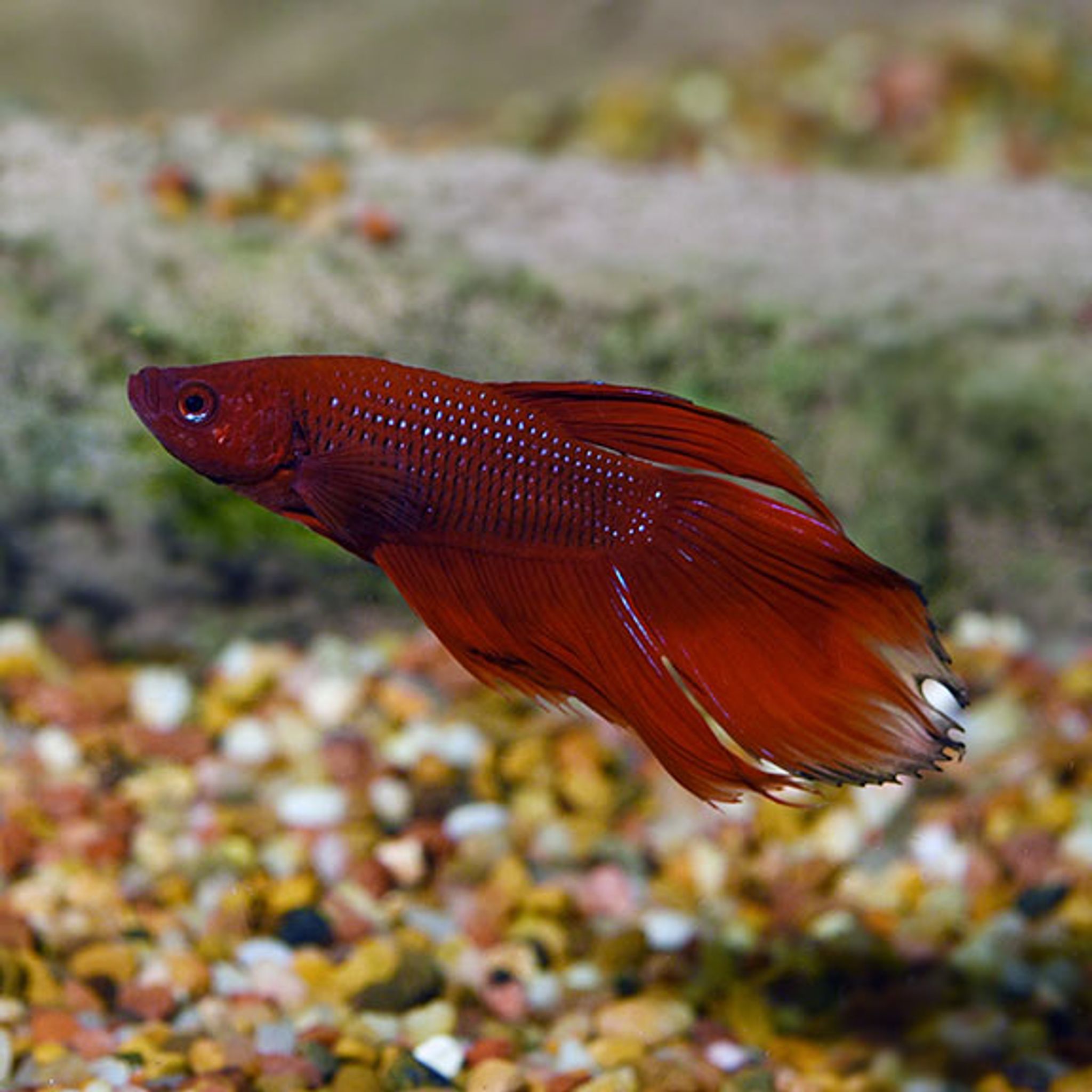
A full-grown betta fish reaches about 2.25 to 3 inches of body length, though flowing-finned strains can look 3 to 5 inches long once their fins are counted. Most bettas hit that size somewhere between 4 and 12 months of age, depending on genetics, diet and water conditions. This guide breaks down the growth timeline, explains why some bettas look small or "stunted," and turns those numbers into a practical tank-planning checklist.
How Big Does a Betta Fish Actually Get?
Betta owners often get confused because two different numbers get thrown around: body length and total length with fins. Both are correct, but they answer different questions.
- Body length (snout to base of tail): roughly 2.25–3 inches for a standard adult betta.
- Total visual length (including fins): often 3–5 inches in long-finned strains like halfmoons or veiltails, since the tail and dorsal/anal fins can add significantly to how large the fish looks.
- Weight: typically 2–5 grams as an adult. Weight isn't something most hobbyists track, since body condition (a round but not swollen belly) matters more than grams.
If you're trying to gauge whether your own betta is "normal," measure the body only — from the tip of the mouth to where the tail fin begins — rather than snout-to-tail-tip. A ruler or a piece of tape marked in half-inch increments held against the outside of the tank works fine for a rough check; you don't need to net the fish.
Do Males and Females Grow to Different Sizes?
Males generally look bigger, but that's almost entirely due to their larger, more elaborate fins rather than a longer body. Body length between males and females is similar, with females sometimes running slightly smaller. A female betta with a full body and short fins can easily out-mass a lean, long-finned male.
Betta Growth Timeline: Week by Week
Growth speed varies with genetics, water temperature, and feeding, but this is the general pattern hobbyists can expect:
| Age | Approximate size | What's happening |
|---|---|---|
| 0–4 weeks (fry) | Near-microscopic to a few millimeters | Free-swimming, feeding on infusoria or fry-specific foods |
| 4–8 weeks | About 0.5 inch | Fins and early color start to show |
| 3–4 months | 1–1.5 inches | Recognizable betta body shape and finnage |
| 4–6 months | Near-full adult body size | Body length maxes out for most bettas |
| 6–12 months | Full maturity | Fin length and coloration finish developing; growth effectively stops |
Two milestones are worth separating: body length usually maxes out around 4–6 months, but fin and color development can keep refining until 6–12 months. That's why a 5-month-old betta may already be full body-size but still growing into its finnage and full color.
Do bettas keep growing after that? Not meaningfully. Growth essentially stops once a betta reaches maturity; any further size increase is negligible and not something to plan a tank around.
Why Some Bettas Look Small or "Stunted"
If your betta seems undersized for its age, the cause is usually environmental rather than a mystery illness. The main factors that determine final adult size are:
- Genetics/strain — some breeding lines simply run smaller or larger.
- Water temperature — bettas need to be kept in the mid-to-upper 70s°F; consistently cold water slows metabolism and growth.
- Water quality — ammonia and nitrite spikes stress fish and divert energy away from growth.
- Tank size — cramped quarters create a feedback loop: waste builds up faster in a small volume, water quality drops, stress rises, and growth slows.
- Diet quality — a low-protein or inconsistent diet limits how much a young betta can grow.
- Stress levels — from aggressive tankmates, constant flow, or frequent handling.
In practice, undersized or "stunted" bettas are most often the result of being kept too cold, in dirty water, or in very small containers early in life — not a genetic ceiling. This is also why tank size and lifespan tend to move together: a larger, well-maintained tank keeps water more stable, which supports both fuller growth and a longer life, while a cramped, poorly maintained one tends to shortchange both.
The Giant Betta: A Different Size Class
The giant betta is a selectively bred line, not a separate species, developed specifically to grow larger than standard bettas — roughly 3–5 inches in body length, nearly double the standard size. Because of that, giant bettas need a bigger home: at least 10 gallons, versus the 5-gallon minimum for a standard betta.
Water requirements are otherwise the same as for standard bettas:
- Temperature: roughly 76–80°F
- pH: approximately 6.5–7.5
- Flow: low current, since bettas of any size dislike being pushed around by strong filter output
If you're shopping for stock, you can browse betta varieties to compare standard and specialty lines before deciding on tank size.
Betta Lifespan: How Long Will You Actually Have This Fish?
Average captive lifespan is 2–4 years, with around 3 years the most commonly cited figure. With excellent care — stable warm water, good diet, low stress — some bettas reach 5 or more years. Wild bettas likely live shorter lives due to predation and competition for resources.
One detail catches a lot of new owners off guard: bettas sold at fish stores are typically already 6–12 months old by the time they're purchased. That means your realistic time with the fish is often shorter than the "2–4 years" figure suggests — closer to 1.5–3.5 years of ownership rather than a full lifespan starting from hatching.
Tank Size and Setup for Full, Healthy Growth
What's the Minimum Tank Size for a Betta?
5 gallons is the practical, widely recommended minimum for a single betta. It's large enough to hold a stable temperature and dilute waste between water changes, both of which matter directly for growth and long-term health.
You'll still see 2.5 gallons cited as an absolute floor in some places. It's possible to keep a betta in 2.5 gallons only with a heater, a filter, and very disciplined, frequent water changes — but it leaves no margin for error and isn't a setup to aim for. For anyone setting up their first betta tank, 5 gallons removes most of the day-to-day stress of water management. Going to 10 gallons or more buys even more stability, plus room for live plants or compatible tankmates.
Does a Betta Need a Heater?
Yes, in nearly every home environment. Bettas are tropical fish and need a heater to hold a consistent 76–82°F. Room temperature alone rarely stays in that range year-round, and temperature swings stress fish, suppress the immune system, and can slow or stunt growth. A heater with a built-in thermostat is worth the small added cost over a basic non-adjustable one.
Why Bowls Are a Bad Idea
Small, unheated, unfiltered bowls are discouraged for good reason: they can't hold a stable temperature, and waste builds up quickly in such a small volume. That combination — temperature swings plus fast-fouling water — is a primary driver of stunted growth, lethargy, and shortened lifespan. It isn't only about oxygen (bettas can gulp surface air), it's about giving the fish stable water and enough room for normal adult activity.
Choosing a Betta Tank
Look for:
- 5–10+ gallons with a secure lid — bettas are strong jumpers.
- A gentle, low-flow filter, since bettas have large fins and dislike being pushed around by strong current. You can find low-flow-friendly options among filters sized for smaller tanks.
- A heater with a thermostat to hold 76–82°F.
- Silk or fine live plants and smooth décor rather than rough plastic plants, which can tear fins.
A Note on "Self-Cleaning" Betta Tanks
Marketed all-in-one or "self-cleaning" betta tanks are worth understanding correctly: the "self-cleaning" claim usually refers to a built-in filtration loop, not a tank that never needs your attention. These tanks still require manual partial water changes and gravel or substrate vacuuming on a regular schedule, the same as any other setup.
Feeding for Healthy Growth
How Much and How Often Should a Betta Eat?
Feed 1–2 small meals a day, roughly the equivalent of 2–4 pellets per feeding (adjust for the specific food's size and density). Skipping a day of feeding once a week helps prevent overfeeding-related bloating and gives the digestive system a break. A gel food or occasional frozen/live treat can add variety alongside a staple pellet.
Why Won't My Betta Eat?
Common causes of appetite loss, roughly in order of likelihood:
- Stress from a new environment, aggressive tankmates, or recent handling
- Poor water quality (ammonia, nitrite, or old water)
- Water temperature too low — slows metabolism and appetite
- Overfeeding — the fish is simply full
- Illness — often accompanied by other symptoms like clamped fins or lethargy
How Long Can a Betta Go Without Food?
A healthy adult betta can safely go roughly 10–14 days without food in an emergency (such as being left during travel), though this isn't a recommended routine. Fry and juveniles cannot go nearly that long — they need frequent small feedings to support their much faster growth rate and have far smaller energy reserves.
Can Bettas Eat Snails or Goldfish Food?
Bettas are carnivores and typically won't treat live snails as prey — snails are more commonly kept as tankmates and cleanup crew than as a food source. Goldfish food is not an appropriate staple diet either: it's lower in protein and higher in carbohydrates, formulated for a mostly herbivorous fish with very different nutritional needs than a betta.
Betta Health Issues Tied to Size and Growth
Betta Constipation and Bloating
Signs include a bloated belly, stringy or clear waste, lethargy, and loss of appetite. Treat with a 2–3 day fast, then offer a small piece of skinned, cooked pea. An Epsom salt bath (roughly 1 teaspoon per gallon, or per the product's dosing instructions) can help if bloating persists. Distinguish this from dropsy, a more serious condition marked by raised, pinecone-like scales, which needs prompter attention.
Other Common Betta Diseases
The most frequently reported issues are fin rot, ich, velvet, dropsy, and swim bladder disorder. Most trace back to poor water quality or temperature stress — another reason the tank size, heater, and filter recommendations above matter well beyond just "how big will my fish get."
Betta Anatomy and Behavior Basics
Bettas have a labyrinth organ, which lets them breathe atmospheric air at the surface. This is why they can survive in lower-oxygen water than most fish — but it doesn't mean they thrive in dirty or stagnant water; they still need clean, temperature-stable conditions for full growth and a normal lifespan.
The long, flowing fins seen in most ornamental strains (halfmoon, veiltail, and similar) are a product of selective breeding, not a wild trait. Those fins can slow swimming and make the fish more prone to fin-nipping or fin rot, especially in poor water quality or when housed with fin-nipping tankmates.
Male vs. Female Betta Size and Housing
- Males have longer, more elaborate fins and brighter coloration, are territorial, and generally need to be housed alone, away from other bettas.
- Females have shorter fins, tend to be somewhat less aggressive, and can sometimes be kept in a "sorority" of 4–5 or more females in a larger tank (20 gallons or up), with close monitoring for aggression.
Where Bettas Come From
Bettas are native to shallow rice paddies, ponds, and slow-moving waters across Southeast Asia, particularly Thailand and neighboring regions. They were historically bred for fighting, which is the origin of both their territorial temperament and their common name, "Siamese fighting fish."
Common Sizing and Care Mistakes to Avoid
- Keeping a betta in an unheated bowl or vase — a leading cause of stunted growth, lethargy, and a shortened lifespan.
- Overfeeding, which leads to bloating or constipation that's often mistaken for illness.
- Assuming a small tank is fine because bettas can breathe surface air — they still need filtered, temperature-stable water to reach full size and a normal lifespan.
- Judging size by fin length instead of body length, leading to overestimating how big the fish really is.
- Buying a betta already 6–12 months old and expecting a much longer remaining lifespan than is realistic.
- Housing two male bettas together, or a male with fin-nipping tankmates, which causes stress, injury, and can stunt growth.
Frequently Asked Questions
How big does a betta fish get in inches?
Body length is roughly 2.25–3 inches. With fins included, finnage-heavy strains can visually appear 3–5 inches long, which is where a lot of the size confusion comes from.
How long does it take a betta to reach full size?
Body length typically maxes out by about 4–6 months. Full fin length and color development continue until around 6–12 months of age.
Do bettas keep growing their whole life?
No. Growth largely stops once a betta reaches maturity. Any further size increase afterward is minor and not significant enough to plan a tank around.
What is the biggest betta variety?
The giant betta, a selectively bred line, is the largest common variety, reaching roughly 3–5 inches in body length and requiring at least a 10-gallon tank.
Why is my betta not growing or looks small?
The most likely causes are cold water, poor water quality, an undersized tank, a low-protein diet, or genetics. Reviewing temperature, water changes, and tank size first usually identifies the issue.
How long can a betta go without food?
A healthy adult can typically go about 10–14 days without food in an emergency, though daily feeding is recommended. Fry and juveniles need frequent feeding and cannot skip meals for anywhere near that long.
Does a betta need a heater?
Yes, in almost every home setting. Bettas need a stable tropical range of roughly 76–82°F, which most rooms cannot maintain reliably without one.
What's the minimum tank size for a betta?
Five gallons is the recommended practical minimum, paired with a heater and filter. A 2.5-gallon tank is workable only with very disciplined maintenance and isn't the ideal starting point.
Ready to set up a tank sized for real betta growth? Browse tanks and stands on FishyHub to find a 5-gallon-and-up option that gives your betta room to reach full size.


