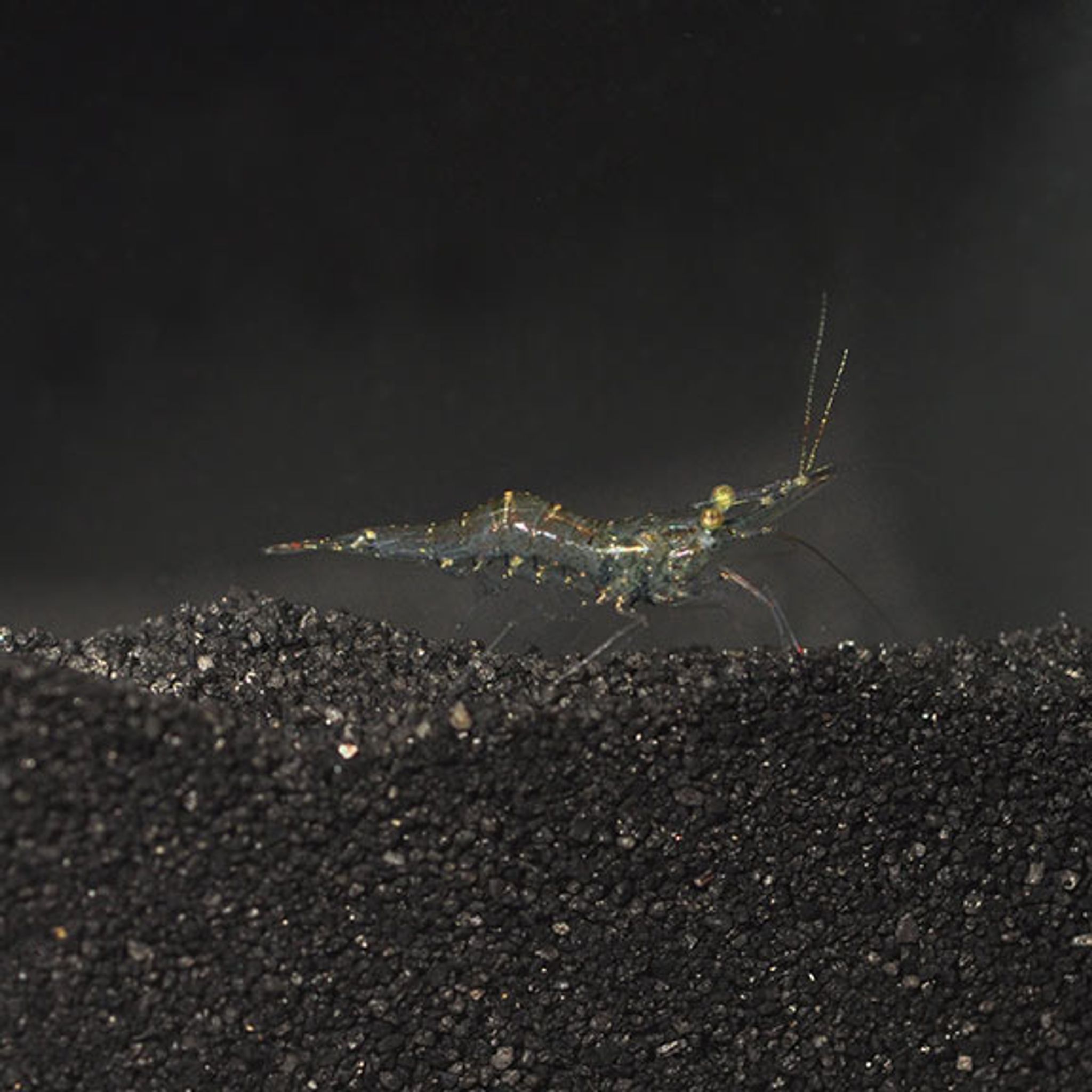
Ghost Shrimp Care Guide: Setup, Feeding, Water Parameters and Breeding
Ghost shrimp are inexpensive, hardy, and often bought on impulse, but they still have real requirements around water quality, tank mates, and molting that new owners frequently miss. This guide covers setup, feeding, water parameters, and what breeding actually involves so you know what to expect before your shrimp arrive.
What Is a Ghost Shrimp, Exactly?
The name "ghost shrimp" causes more confusion than almost any other term in the freshwater trade. Most shrimp sold under this name in US pet shops are glass shrimp (Palaemonetes paludosus), also called grass shrimp — a small, nearly transparent North American native species. However, the same tank at a store may also contain whisker shrimp (a Macrobrachium species, sometimes labeled "Indian whisker shrimp"), which look similar as juveniles but grow larger and behave differently as adults.
This matters because a shrimp sold as a cheap "feeder" is not always the same animal as one sold for a planted community tank, and the care and compatibility advice differs between them.
Ghost Shrimp vs. Similar Species
| Type | Typical adult size | Temperament | Breeding notes |
|---|---|---|---|
| Ghost/glass shrimp (Palaemonetes) | ~1.5 in (4 cm) | Peaceful scavenger | Planktonic larvae; hard to raise in a community tank |
| Whisker shrimp (Macrobrachium spp.) | Up to 3 in (7.5 cm) | Can turn predatory toward small fish/fry as adults | Larvae often need brackish water |
| Red claw shrimp | Similar to ghost shrimp | Peaceful, kept for looks | Similar easy-care profile; males show red-tipped claws |
| Cherry shrimp | ~1.5 in (4 cm) | Peaceful, colorful | Direct-developing young (no larval stage) — much easier to breed |
| Freshwater prawns (e.g., Macrobrachium rosenbergii types) | 6 in (15 cm) or more | Aggressive/predatory as adults | Not suitable for community tanks |
Shrimp vs. Prawn: Is There a Real Difference?
In casual use, "shrimp" and "prawn" are largely interchangeable regional terms rather than a strict biological split. In the aquarium trade specifically, "prawn" usually flags a much larger, often more aggressive Macrobrachium species, while "shrimp" refers to smaller, peaceful species like ghost or cherry shrimp. When in doubt, check the adult size and temperament listed for the specific species rather than relying on the common name alone.
Tank Setup
Tank Size and Stocking
A 5-gallon (19 L) tank is commonly cited as the minimum for a small group of ghost shrimp, but 10 gallons (38 L) or more gives a more stable environment and is the safer choice if you want a self-sustaining colony. Larger volumes buffer ammonia swings better and give shrimp more surface area and plant cover to spread across.
For stocking density, 3 to 5 shrimp per gallon is a workable guideline for a shrimp-only setup. If the tank also houses fish, scale that down, since the fish add to the bioload the same water volume has to handle.
Filtration, Substrate, and Décor
- Filtration: Gentle flow matters more than raw power. A sponge filter is the standard recommendation because it won't pull small shrimp or newly hatched larvae into an intake.
- Substrate: A fine-grained substrate lets shrimp forage and burrow naturally.
- Plants and hiding spots: Dense live or silk plants — java moss and hornwort are popular choices — give shrimp cover, grazing surface for biofilm, and critically, places to hide right after molting when their new shell is still soft.
You can browse tank-appropriate freshwater shrimp options, sponge and other filters, and substrate to put a setup like this together.
Water Parameters
| Parameter | Acceptable range | Target/sweet spot |
|---|---|---|
| Temperature | 65–82°F (18–28°C) | 75–78°F (24–26°C); 78–80°F (26–27°C) for breeding activity |
| pH | 7.0–8.0 | 7.0–7.5 |
| Hardness | Moderate to hard | Not a strict number — avoid soft, acidic water |
| Ammonia | 0 ppm | 0 ppm |
| Nitrite | 0 ppm | 0 ppm |
| Nitrate | Under 20 ppm | As low as practical |
Sources vary slightly on the exact pH ceiling and on hardness units (some quote dGH, others dKH or raw ppm), which is part of why ghost shrimp have a reputation for being forgiving. The practical takeaway: aim for neutral to slightly alkaline, moderately hard water, and avoid soft or acidic conditions rather than chasing an exact hardness figure.
One sensitivity that isn't optional: never use copper-based medications in a shrimp tank. Copper is fatal to shrimp and other invertebrates even at doses meant to treat fish. Also acclimate new shrimp slowly by drip method — sudden pH or temperature shifts are a common cause of shrimp dying within a day or two of purchase.
Feeding
Ghost shrimp are omnivorous scavengers. In a tank with some biofilm and algae already established, they'll eat:
- Algae and biofilm growing on surfaces
- Leftover fish food
- Sinking pellets or algae wafers
- Blanched vegetables (zucchini, spinach)
- Occasional protein, such as frozen brine shrimp or bloodworm, which helps condition females for breeding
They will also pick at dead or dying tankmates and eat their own shed exoskeletons — both are normal scavenging behavior, not signs of a problem.
How Often to Feed
Rather than following a fixed schedule, tie feeding frequency to what you actually see in the tank. If algae and biofilm are visible and leftover food rarely accumulates, feeding every 1 to 2 days with a small pinch of flake or a piece of algae wafer is plenty for a group. In an older, more established tank with heavier biofilm growth, you can feed less often. Overfeeding is one of the fastest ways to crash water quality in a shrimp tank, since uneaten food and waste from molting both add to the bioload.
Molting
Molting is a normal, recurring part of shrimp growth, happening roughly every few weeks depending on age and growth rate. Before and after a molt, shrimp often look pale, inactive, or hide more than usual — this is normal, not illness. Finding an empty, shrimp-shaped shell in the tank is a molt, not a dead shrimp; look for the shrimp itself nearby, usually looking fine.
Leave the shed exoskeleton in the tank. Shrimp eat it to recover calcium and other minerals needed for the next shell. If molts are noticeably infrequent, incomplete, or shrimp die shortly after molting (sometimes appearing white or opaque), check ammonia and nitrite first, since poor water quality is a common cause of bad molts. Adequate mineral content in the water also supports successful molting — this is often the missing piece when otherwise healthy-looking shrimp keep dying after shedding.
Tank Mates
Ghost shrimp do best with small, peaceful community fish and other calm invertebrates:
- Small tetras, rasboras, and guppies
- Corydoras and other peaceful bottom dwellers
- Other peaceful shrimp species and snails
Avoid:
- Bettas — they frequently hunt and kill shrimp
- Cichlids and larger barbs
- Crayfish
- Any fish large enough to view a shrimp as a meal
This last point matters because ghost shrimp are commonly sold as live feeders, and many predatory or semi-predatory fish will treat them exactly that way regardless of your intentions.
Breeding: Why It's Harder Than It Looks
Female ghost shrimp carry eggs — often called being "berried" — visibly attached under the abdomen, and a single clutch can hold dozens of eggs. Eggs typically hatch in about 2 to 3 weeks.
The real obstacle is what happens next. Unlike cherry shrimp, whose young hatch as tiny, fully-formed versions of the adults, ghost shrimp eggs hatch into free-swimming planktonic larvae. These larvae drift in the water column, need very fine food such as infusoria or powdered algae (sometimes "green water"), and are easily lost to filter intakes or eaten by tankmates. This larval stage — not the egg-laying itself — is the actual mechanical reason ghost shrimp breeding has a reputation for being difficult in a community setup.
If you want to raise a batch, a separate breeder or rearing tank with no fish, gentle sponge filtration, and appropriate larval food dramatically improves survival odds. Left in a mixed community tank, most larvae simply won't make it, even though adults may berry up repeatedly.
Telling Males from Females
Females are typically larger and, when carrying eggs, show a visible "saddle" under the tail. Males tend to be slimmer and smaller overall.
Common Mistakes
- Overfeeding: leads to ammonia spikes that are often mistaken for a disease outbreak.
- Housing with bettas or larger fish: a shrinking shrimp population is usually predation, not a water problem.
- Panicking over molts: an empty shell doesn't mean a dead shrimp.
- Using copper-based medications or fertilizers: these can wipe out an entire shrimp population.
- Skipping slow acclimation: sudden parameter swings after purchase are a leading cause of early die-offs.
- Expecting easy breeding without a rearing tank: the planktonic larval stage needs dedicated setup to survive in numbers.
- Not enough plant cover: soft, freshly molted shrimp need places to hide from tankmates.
Sourcing Quality Shrimp
Not all ghost shrimp are sold the same way. Shrimp pulled from a bulk feeder tank are often kept in crowded, lower-quality conditions and tend to arrive weaker, with higher mortality in the days after purchase, compared to shrimp maintained as dedicated pet stock. If you're planning to keep shrimp long-term rather than as feeders, it's worth choosing stock that's been kept and handled as livestock rather than as bait.
Preparing a Shrimp Tank for Vacation
For trips of a week or longer:
- Do a partial water change and a light gravel/glass clean a day or two before you leave.
- Portion out algae wafers or blanched vegetable pieces for each day rather than leaving a large amount at once.
- Double-check that the filter and heater are reliable and won't fail while you're away.
- A sitter isn't usually necessary just to feed — shrimp graze on biofilm and can go several days on light rations. Only ask someone to check in if you're concerned about equipment failure.
- Avoid the temptation to overfeed "just in case" before leaving — this is more likely to foul the water than help the shrimp.
Frequently Asked Questions
How long do ghost shrimp live?
About 1 to 1.5 years in a typical home aquarium, though this varies with water quality and how well molting and nutrition needs are met.
Do ghost shrimp need a heater?
Not strictly, if your room stays within the 65–82°F range, but a heater keeps temperature stable, which matters more for successful molting and any breeding attempt.
Can ghost shrimp live with betta fish?
Generally not recommended. Bettas often hunt and kill ghost shrimp, especially smaller or freshly molted individuals.
Why did my ghost shrimp turn white/opaque and die?
This is usually linked to a bad molt or a water quality issue. Check ammonia and nitrite immediately, and consider whether mineral availability for molting is adequate.
How do you tell a male from a female ghost shrimp?
Females are typically larger and show a visible saddle (eggs) under the tail when gravid; males are slimmer and generally smaller.
Will ghost shrimp breed in a community tank?
Adults can and do carry eggs in a community tank, but the free-swimming larvae rarely survive without a dedicated rearing tank, since they're easily lost to filters and predation.
Are ghost shrimp good for cleaning algae?
They help by grazing on biofilm and detritus, but they aren't a substitute for a dedicated algae-eating snail or otocinclus if you're dealing with heavier algae growth.
If you're setting up a tank for ghost shrimp or looking to add compatible tank mates, you can browse current stock in Freshwater Livestock on FishyHub.

