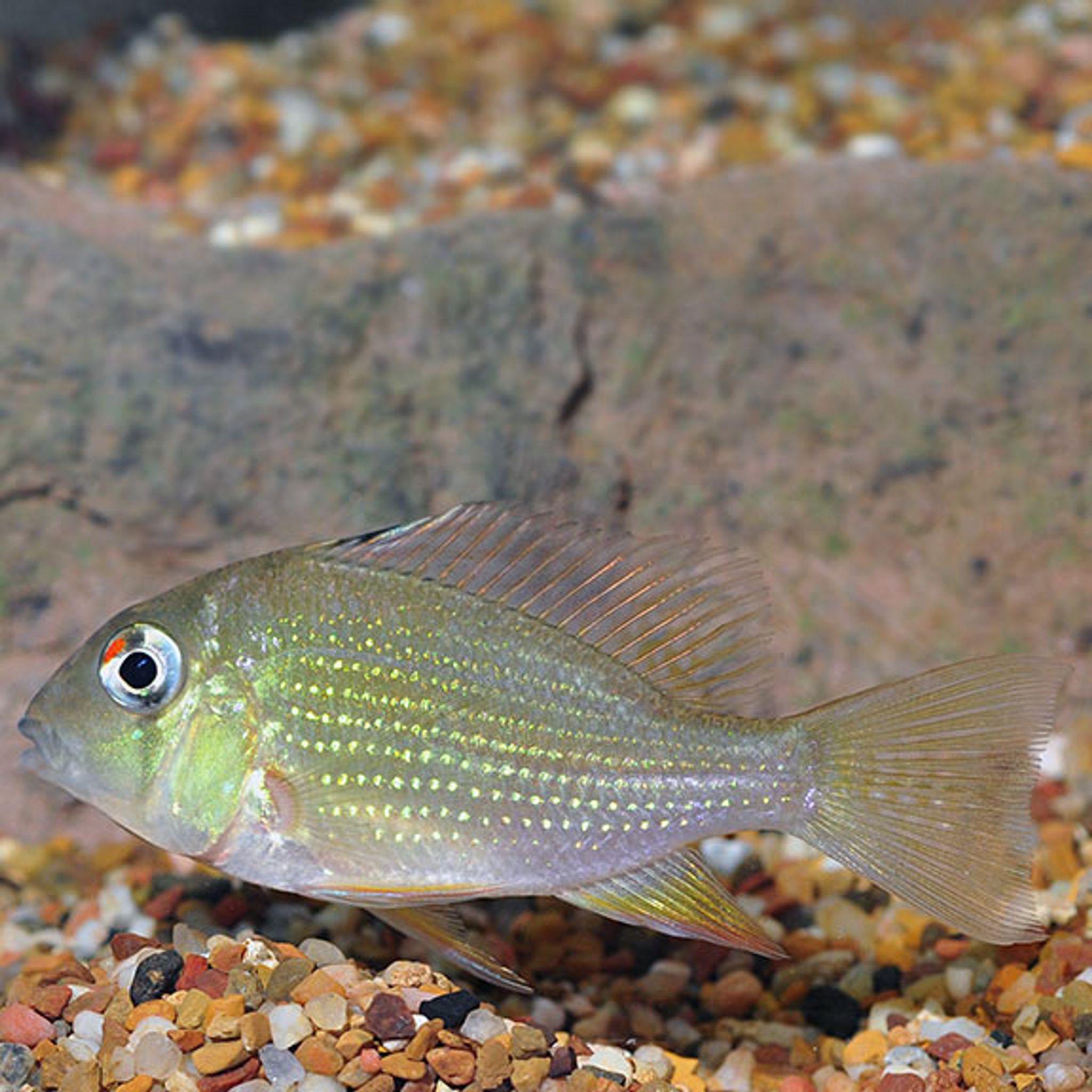
Geophagus Care Guide: Tank Size, Diet, Water Parameters and Temperament
Geophagus, the South American "eartheater" cichlids, need a long, sand-bottomed tank, a protein-rich omnivore diet, and stable soft-to-moderate water to thrive. This guide covers the exact tank size ranges, feeding schedule, water chemistry targets, and temperament notes you need before buying one, plus how to avoid confusing a true Geophagus with a related but different-care lookalike.
What Is a Geophagus, Exactly?
Geophagus belongs to the eartheater group (subfamily Geophaginae), a collection of South American cichlids known for constantly scooping mouthfuls of substrate and sifting it through their gills to extract edible particles. This sifting behavior isn't occasional — it's a near-constant activity during waking hours, and it drives almost every other care decision, from substrate choice to tank footprint.
Hobbyists often use "Geophagus" loosely to describe many genera in this group. Within the true genus alone, you'll find quite a range:
- Redhead types (such as redhead Tapajos-type fish) — moderate size, vivid head coloration, popular centerpiece choice.
- Threespot / red-striped types — hardier, often recommended as a first eartheater.
- Giant species — some Geophagus grow well past 10 inches and need proportionally larger housing.
Because the size, color, and temperament vary this much within one loosely-used name, always confirm the specific species or regional form before sizing a tank.
Tank Size: Plan for the Adult, Not the Juvenile
A common mistake is buying a 2-inch juvenile and housing it long-term in a tank sized for that juvenile. Most Geophagus species reach roughly 6–12 inches as adults, and undersized housing is a leading cause of stunted growth and rising aggression.
| Life stage / grouping | Minimum tank size |
|---|---|
| Single juvenile or smaller species | 40 gallons (151 L) — starter minimum only |
| One adult of a typical Geophagus (e.g., red-striped, redhead types) | 75 gallons (284 L) realistic long-term minimum |
| Larger eartheaters, established pairs, or small groups | 75–125+ gallons (284–473+ L) |
Footprint matters more than height. These fish patrol along the substrate rather than swimming vertically, so a long, wide tank supports natural behavior far better than a tall one with the same volume. When comparing two tanks of similar gallon capacity, choose the one with the larger floor area.
Substrate: Sand Is Non-Negotiable
Because Geophagus sift mouthfuls of substrate all day, fine, smooth sand is essential rather than optional. Sharp or coarse gravel abrades the mouth, lips, and gill tissue over time, leading to chronic irritation and secondary infection risk.
Practical substrate tips:
- Use a sand layer deep enough to sift comfortably (a couple of inches is typical) without trapping excessive detritus at the bottom.
- Keep some open, decor-free zones specifically for sifting — don't cover the entire floor with rockwork or dense planting.
- Avoid decor with sharp edges (broken ceramic, rough lava rock) near the substrate line, since fish will brush against it while feeding.
You can browse suitable fine sand and other substrate options for your setup in FishyHub's substrate section.
Diet: Omnivore, With an Emphasis on Protein
True Geophagus are omnivorous and need real protein content — not a pure vegetable diet. Skimping on protein for these species (a mistake more appropriate for herbivore-leaning relatives, covered below) tends to show up as poor color and general poor condition.
A solid feeding approach:
- Base diet: high-quality sinking cichlid pellets or granules, sized appropriately for the fish's mouth.
- Protein supplements: live or frozen bloodworms, brine shrimp, and daphnia offered several times a week.
- Plant matter: occasional blanched vegetables such as spinach or zucchini, as a supplement rather than the main course.
- Feeding schedule: 2–3 small feedings daily, offering only what's cleared within 1–3 minutes to limit waste.
Sinking foods are strongly preferred since Geophagus feed near or on the substrate rather than at the surface.
Water Parameters and Maintenance
Geophagus are more sensitive to poor water quality and nitrate buildup than many hardier cichlids, so stability matters more than hitting one exact number.
| Parameter | Target range |
|---|---|
| Temperature | 75–84°F (24–29°C), species-dependent |
| pH | 6.0–7.2 (slightly acidic to neutral) |
| General hardness | Roughly 1–12 dGH (soft to moderately hard) |
| Water changes | 20–30% weekly recommended |
A note on temperature: some references cite 75–82°F while others push toward 79–86°F, particularly for related, warmer-water eartheaters. For true Geophagus, 75–84°F is a reliable working range — closely related fish like Uaru and the chocolate cichlid tend to prefer it warmer, toward 82–86°F, so confirm species identity before locking in a heater setpoint.
On water-change frequency, some experienced keepers get away with larger monthly changes paired with rigorous weekly testing. For most home aquarists, though, smaller weekly changes (20–30%) are the more forgiving default — they prevent the parameter swings that stress these fish, and they don't rely on perfect testing discipline to catch a problem before it snowballs.
Filtration and flow: because Geophagus are messy eaters and constant diggers, they stir waste into the water column more than typical community fish. Strong biological filtration is important, and moderate-to-good water movement — mimicking the flowing rivers many species come from — supports both oxygenation and natural behavior. A capable filter is one of the more important equipment purchases for this group; FishyHub's filter selection covers options suited to larger, heavily-stocked cichlid tanks.
Temperament and Tankmates
Geophagus are generally peaceful to moderately territorial — noticeably calmer than large Central American cichlids, but still cichlids, meaning hierarchy disputes and territory defense do happen, especially in adults, during breeding, or in a cramped tank.
Good tankmate candidates:
- Other peaceful-to-moderate South American cichlids: severums, angelfish, other eartheaters
- Larger, robust tetras: congo tetra, bleeding heart tetra
- Gouramis
- Corydoras and plecos
- Livebearers
Avoid pairing Geophagus with:
- Fin-nippers, which will harass a slower-moving eartheater
- Aggressive Central American cichlids, which can outcompete or injure a calmer Geophagus
- Very small fish or fry, which may be seen as food
- Shrimp, which risk being eaten or constantly disturbed by digging activity
Building a South American Cichlid Community
Geophagus fit naturally into a broader South American biotope-style tank alongside severums, angelfish, and appropriately-sized tetras and catfish. The group shares overlapping needs — soft, slightly acidic water, sand substrate, and at least moderate flow — which makes them easier to combine into one cohesive setup than mixing fish with conflicting parameter needs. If you're stocking this kind of community, browse FishyHub's Angelfish, Discus, Rams & Cichlids category for compatible species, or check the American Cichlids subcategory specifically.
Related and Lookalike Eartheaters
Several substrate-sifting South American cichlids get lumped in with Geophagus in casual conversation and search results, but they're distinct genera with somewhat different care needs:
- Uaru ("chocolate/panda" cichlid) — related substrate feeder, but leans herbivorous and wants a larger tank plus more plant matter in the diet than typical Geophagus.
- Hypselecara (true "chocolate cichlid") — a separate genus entirely; also herbivore-leaning and appreciates larger housing.
- Gymnogeophagus — a distinct genus of eartheaters, generally smaller-bodied, with their own species-specific temperature and hardness preferences.
- Satanoperca — true eartheaters with fine sifting behavior similar to Geophagus, often more demanding regarding water quality.
- Retroculus ("pike" cichlids) — rheophilic (current-loving) species that need noticeably stronger water flow than a standard Geophagus setup, closer to a river-simulation filter arrangement with added powerheads.
Applying one blanket diet or temperature rule to this entire group is a common error — split your planning by whether the species leans omnivorous (most true Geophagus) or herbivore-leaning (Uaru, chocolate cichlid), and check whether it's rheophilic before finalizing filtration.
It's also worth knowing this group isn't static: new Geophagus-group species continue to be scientifically described, and regional color-form imports (like redhead Tapajos-type fish) keep showing up, alongside newly described Gymnogeophagus and other eartheater species. If you're researching a specific fish, confirm you're looking at current species information rather than assuming the group is fully settled.
Breeding and Sexing Notes
Geophagus and their relatives are substrate spawners — pairs lay eggs on flat rocks, slate, or broad leaves, with egg counts ranging widely from around 100 to 300 or more depending on species and size. Reproductive strategy varies across the group: some species are biparental mouthbrooders that pick up eggs or fry for protection, while others are substrate guarders that defend a fixed spawning site without mouthbrooding. Don't assume one strategy applies to every species in the group — check the specific fish.
Fry require very small starter foods, typically infusoria followed by baby brine shrimp once large enough to take them.
Sexing is often difficult, particularly in juveniles. Mature males in some species show longer fin extensions, slightly larger body size, or more intense coloration, but many species show little to no reliable external dimorphism, and confirmed pairs are often identified only through behavior over time.
Common Mistakes to Avoid
- Coarse gravel instead of sand — causes mouth and barbel damage from constant sifting.
- Undersized tanks — leads to stunted growth and increased aggression.
- Treating Geophagus as pure herbivores — skipping protein causes poor color and poor condition.
- Ignoring water quality — cloudy eye, appetite loss, and clamped fins often trace back to nitrate buildup or unstable parameters.
- Mixing with fin-nippers or aggressive Central American cichlids that outcompete the calmer Geophagus.
- Buying juveniles without planning for adult size — a 2-inch store fish can become an 8–12 inch adult.
- Weak or stagnant water flow for naturally river-dwelling species, which can cause lethargy and higher disease susceptibility.
New arrivals — especially wild-caught or farm-raised imports, which are common in this group — benefit from a proper quarantine period and gradual acclimation, since eartheaters can be more prone to parasites and bloat when stressed by a rushed introduction.
Frequently Asked Questions
How big of a tank does a Geophagus need?
Plan for a minimum of 40 gallons (151 L) only as a temporary starter for a single juvenile. For an adult, 75 gallons (284 L) is the realistic long-term minimum, with more space needed for pairs, groups, or larger species.
What do Geophagus eat?
They're omnivores that need quality sinking pellets or granules as a base, supplemented with live or frozen bloodworms and brine shrimp, plus occasional blanched vegetables. Feed 2–3 times daily, offering only what's cleared in a few minutes.
Are Geophagus aggressive?
Generally peaceful to moderately territorial — calmer than most Central American cichlids, but they can still spar over territory, especially as adults, during breeding, or in a small tank.
What water parameters do Geophagus need?
Roughly 75–84°F (24–29°C), pH 6.0–7.2, and soft-to-moderately hard water (about 1–12 dGH). Stable, clean water with regular partial water changes matters more than hitting an exact number.
Can Geophagus live with other cichlids?
Yes — with other peaceful-to-moderate South American cichlids such as severums, angelfish, and other eartheaters, provided the tank is large enough. Avoid aggressive or much smaller species.
Do Geophagus need sand?
Yes. Fine, smooth sand is strongly recommended over gravel because these fish constantly sift substrate through their mouths to find food, and sharp gravel can damage their mouths and gills over time.
Is a "chocolate cichlid" or Uaru the same as Geophagus?
No. They're related substrate-feeding South American cichlids often discussed alongside Geophagus, but they're distinct genera with somewhat different care needs — notably a more herbivorous diet lean and a preference for warmer water and larger tanks.
Ready to add a Geophagus or a compatible tankmate to your setup? Browse current stock in FishyHub's Angelfish, Discus, Rams & Cichlids category.

