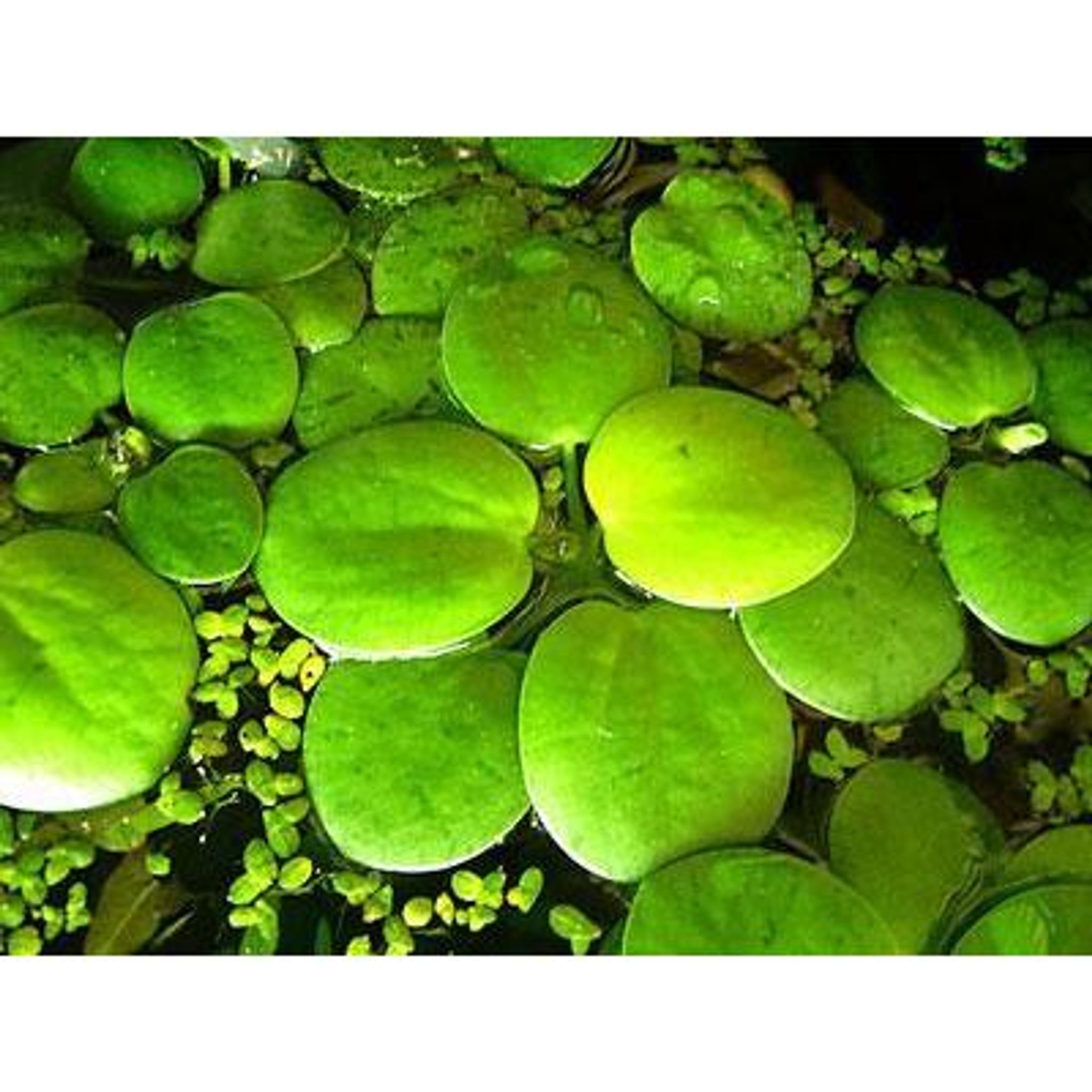
Frogbit Care Guide: Light, CO2, Substrate and Growth Tips
Amazon frogbit is one of the few aquarium plants that genuinely thrives on neglect, provided you get two details right: how much light hits its leaves and how dry those leaves stay. This guide breaks down the exact light, temperature, water, and nutrient ranges frogbit needs, clears up where common advice disagrees, and covers the mistakes that actually kill it.
What Is Amazon Frogbit?
Amazon frogbit (Limnobium laevigatum) is a rosette-forming floating plant with round, waxy, light-green leaves and long trailing roots that hang freely in the water column. Unlike stem or carpet plants, it never touches the substrate — the entire plant lives on the surface, using its roots to pull nutrients and ammonia directly from the water.
It's become a go-to for US hobbyists because it does three jobs at once: it exports excess nutrients, softens the light hitting the tank below, and gives fish, shrimp, and fry a dense root network to hide in.
Light Requirements
Frogbit needs medium-to-high light intensity for 8–12 hours a day. Under low light, expect stunted rosettes, small pale leaves, and little to no new plantlet production — the plant survives but doesn't thrive.
- A standard LED fixture rated for low-tech to medium-tech planted tanks is usually enough, since frogbit sits right at the surface and gets more light exposure than submerged plants.
- Very intense light positioned close to the water line (common in high-output reef or high-tech planted setups) can scorch the leaf tops. If you run powerful lighting, raise the fixture, dim it, or float a light diffuser over part of the surface.
- You'll find some sources describe the requirement as "moderate to high" and others as "medium to high" — these are the same recommendation. Read it as: more light than a low-tech stem plant needs, but not intense reef-level light aimed directly at the surface.
Browse LED lighting options sized for your tank if you're currently running a low-output fixture and seeing weak frogbit growth.
Does Frogbit Need CO2?
No. Frogbit pulls carbon dioxide from the air above the waterline through its emergent leaf surfaces, not from dissolved CO2 in the water. That makes it one of the easiest plants for non-CO2 and low-tech tanks, where it grows just as well as in a pressurized CO2 setup.
If you already inject CO2 for other plants, it won't harm frogbit as long as pH and temperature stay within its comfort range — it just won't get any extra growth benefit from it.
Substrate Requirements
Frogbit needs no substrate at all. As a true floating plant, its roots dangle in open water rather than anchoring into gravel, sand, or soil, so it works in bare-bottom tanks, gravel setups, or aquascapes with rich planted substrate equally well. Root tabs are unnecessary since the roots never reach the substrate layer — all nutrient uptake happens through the water column.
That's part of why frogbit is a favorite in low-tech, Walstad-style natural tanks, discussed below.
Water Parameters at a Glance
| Parameter | Range | Notes |
|---|---|---|
| Temperature | 64–82°F (18–28°C) | Ideal ~72–80°F (22–27°C); growth slows below ~65°F |
| pH | 6.0–7.5 | Tolerates typical community tank pH without issue |
| General hardness | 0–15 dGH | Soft to moderately hard water |
| Water movement | Still to gentle | Strong surface agitation flips or submerges plants |
| Light duration | 8–12 hours/day | Medium-to-high intensity |
On temperature, sources disagree on the upper limit — some cap it at 80°F, others push to 84–86°F. The safer, more consistent range for a home aquarium is 64–82°F: frogbit can tolerate brief warmer spikes, but sustained heat above the mid-80s stresses the plant, and cold below roughly 65°F slows growth noticeably.
Fertilizer and Nutrient Needs
Frogbit is a fast, moderate-to-heavy feeder, but whether you need to dose fertilizer depends entirely on your tank's bioload:
- Heavily stocked tank: fish waste alone usually supplies enough nitrogen and micronutrients. Skip extra fertilizer.
- Lightly stocked or newly set-up tank: dose a liquid fertilizer, especially one supplying iron and potassium, to support lush leaf color and steady propagation.
- Shrimp-only tanks: avoid copper-based fertilizers or medications — copper is toxic to shrimp and also damages frogbit's fine root system. Always check labels before dosing anything in a shrimp setup.
Root tabs offer no benefit here since frogbit's roots never enter substrate.
Growth Rate and Propagation
Under good light, frogbit grows quickly and reproduces asexually through stolons — small runners that sprout daughter plantlets. Each plantlet develops its own root system and eventually detaches to become an independent plant. Under strong light, mature frogbit can also produce small white flowers, but propagation by division of established plantlets is the practical method for hobbyists rather than seed growing.
Maintenance Routine
- Thin the mat weekly. Left unchecked, one layer of frogbit shades out and eventually kills plants underneath it. A weekly pass with a net keeps the colony healthy.
- Keep leaves dry. Splash from filter returns or sponge filters, misting, or condensation dripping off a tight lid causes black, rotting patches on the leaf tops. Adjust water level, redirect flow, or wipe condensation before it accumulates.
- Handle roots gently when trimming. Frogbit roots are brittle and snap easily; trim tangled sections carefully rather than pulling.
- Give it airspace. Frogbit does best under an open top. If you run a canopy, prop it slightly to prevent condensation from settling on the leaves.
- Leave 30–50% open water. Full surface coverage blocks gas exchange and starves light-hungry plants or corals below. Skim excess growth regularly rather than letting the whole surface fill in.
Tank Mates and Compatibility
Frogbit is safe with community fish, shrimp, and most snails, and it pairs especially well with low-tech and no-CO2 shrimp tanks since it needs no substrate fertilization to thrive. A colony of shrimp will readily use the dangling root mass as grazing and hiding territory.
A few compatibility notes:
- Goldfish and larger cichlids often eat or uproot frogbit, so it's a better fit for smaller, calmer community setups or a dedicated betta tank.
- Pond and apple snails can shred the leaves, though most smaller nuisance-control snails leave it alone.
- Strong filter flow is one of frogbit's real weak points — it flips plants, tangles roots in intake slots, and pushes the whole colony to one side of the tank. A pre-filter sponge, a spray bar aimed away from the surface, or a simple floating ring or airline-tubing frame to corral the plants all solve this without changing your filtration.
Floating Plants 101: How Frogbit Compares
Floating plants sit on the surface rather than rooting in substrate, and hobbyists use them for four main reasons: rapid nutrient export (they outcompete algae for nitrates and ammonia), oxygenation, shade for light-sensitive fish and plants, and dense cover for fry and shrimp.
Frogbit is consistently ranked among the top beginner floating plants, alongside water lettuce, salvinia, and duckweed. What sets it apart is control: frogbit and water lettuce are easy to hand-remove in whole rosettes, while duckweed's tiny, fast-spreading fronds are notoriously difficult to fully eradicate once established.
Dwarf Water Lettuce vs. Frogbit
Dwarf water lettuce prefers dimmer, shadier light than frogbit — under strong lighting its leaves yellow or brown. It shares frogbit's preference for soft, slightly acidic water and needs no CO2, but it forms mats faster and needs weekly thinning even more aggressively than frogbit does.
Water Lettuce vs. Frogbit
Standard water lettuce has larger leaves and similar care requirements to its dwarf cousin, but its fronds are more prone to rot from wetting and it typically needs more headroom under lights to avoid leaf burn than the lower-profile frogbit.
Pros and Cons of Floating Plants
Pros: fast nutrient export, natural algae suppression through competition, shelter for fry and shrimp, and very low maintenance effort compared with rooted carpet or stem plants.
Cons: an uncontrolled mat blocks light to plants or corals below, loose fronds can clog filter intakes, some species (duckweed especially) are hard to remove once established, and all floating plants require regular thinning to stay manageable.
Self-Sustaining, Low-Tech Ecosystem Tanks
Frogbit is a favorite in low-tech, natural-style ("Walstad-style") setups because it asks for nothing a bare-bottom or lightly planted tank can't already provide. It needs no substrate fertilization, thrives on fish waste as its main nutrient source, and helps stabilize nutrient swings in the water column — making it a strong low-maintenance alternative to a fully injected-CO2, high-tech planted tank.
It's worth noting frogbit is strictly an aquatic floater, not an emersed houseplant grown with roots dangled into water — if you're comparing it to pothos-in-a-vase setups, frogbit only fits the conversation as the true floating-plant option.
Common Mistakes and Troubleshooting
| Problem | Likely Cause | Fix |
|---|---|---|
| Black or rotting patches on leaves | Wet leaf tops from splash or condensation | Lower water level slightly, redirect flow, wipe lid condensation |
| Full surface coverage, fish gasping | Mat left unthinned | Remove excess weekly, keep 30–50% open water |
| Thin, pale, or shriveled leaves | Too little light | Move to a brighter spot or extend photoperiod |
| Plants flipped or roots tangled | Strong filter flow | Add a pre-filter sponge, redirect flow, or use a floating ring/airline-tubing corral |
| Sudden yellowing | Nutrient deficiency, not disease | Dose a balanced liquid fertilizer before assuming a pest or illness problem |
| Wilting after a water change or shipping | Root breakage from handling | New roots typically regrow within 1–2 weeks under stable conditions |
Two additional safety notes worth flagging: liquid CO2 or algaecide products containing glutaraldehyde can bleach or kill frogbit even though the plant itself has no CO2 requirement — read labels carefully before dosing any algaecide in a tank with floating plants. And when adding new frogbit to your tank, give it a rinse and a quick visual check first, since it's a common carrier for snail eggs, hydra, or duckweed hitchhikers.
If you're stocking a new planted or shrimp tank and want a low-tech substrate base to pair with frogbit's surface coverage, a simple gravel or soil layer works fine — frogbit won't interact with it either way.
Frequently Asked Questions
Does Amazon frogbit need CO2?
No. Frogbit draws carbon dioxide from the air through its leaves rather than from the water, so it thrives in non-CO2 and low-tech tanks. Injected CO2 won't harm it but offers little to no extra growth benefit.
Does frogbit need substrate or root tabs?
No. It's a true floating plant with roots that absorb nutrients directly from the water column, so substrate type — or the absence of one — doesn't affect it.
How much light does frogbit need?
Medium-to-high intensity for roughly 8–12 hours a day. Too little light causes stunted, pale growth and poor propagation; very intense light positioned close to the surface can scorch the leaves.
Why are my frogbit leaves turning brown or black?
Usually it's wet leaf tops from filter splash or lid condensation causing rot, or a combination of low light and nutrient deficiency causing browning at the leaf edges. Check water contact on the leaves first before assuming a nutrient problem.
How fast does frogbit grow, and how do I control it?
Under good light it grows quickly via stolons that produce daughter plantlets. Control it by manually removing excess growth weekly and keeping 30–50% of the surface open.
Can frogbit live with a filter or strong flow?
It prefers still to gentle surface movement. Strong flow flips the rosettes and tangles roots in intakes, so use a pre-filter sponge, redirect outflow away from the surface, or corral the plants with a floating ring or airline-tubing frame.
Is frogbit safe for shrimp and fry?
Yes — its root mass provides shelter and grazing surface for shrimp, fry, and microfauna. Avoid copper-based medications or fertilizers, since copper harms both shrimp and frogbit's roots.
Can frogbit survive outdoors or in a pond during summer?
Yes, it does well in warm months and tolerates temperatures into the mid-80s°F, but it isn't cold-hardy and typically dies below roughly 50–60°F. Treat it as seasonal in temperate climates or bring it indoors before the first cold snap.
Ready to start a low-maintenance floating plant colony or round out a shrimp tank's cover? Browse freshwater shrimp on FishyHub to pair with your next frogbit setup.

