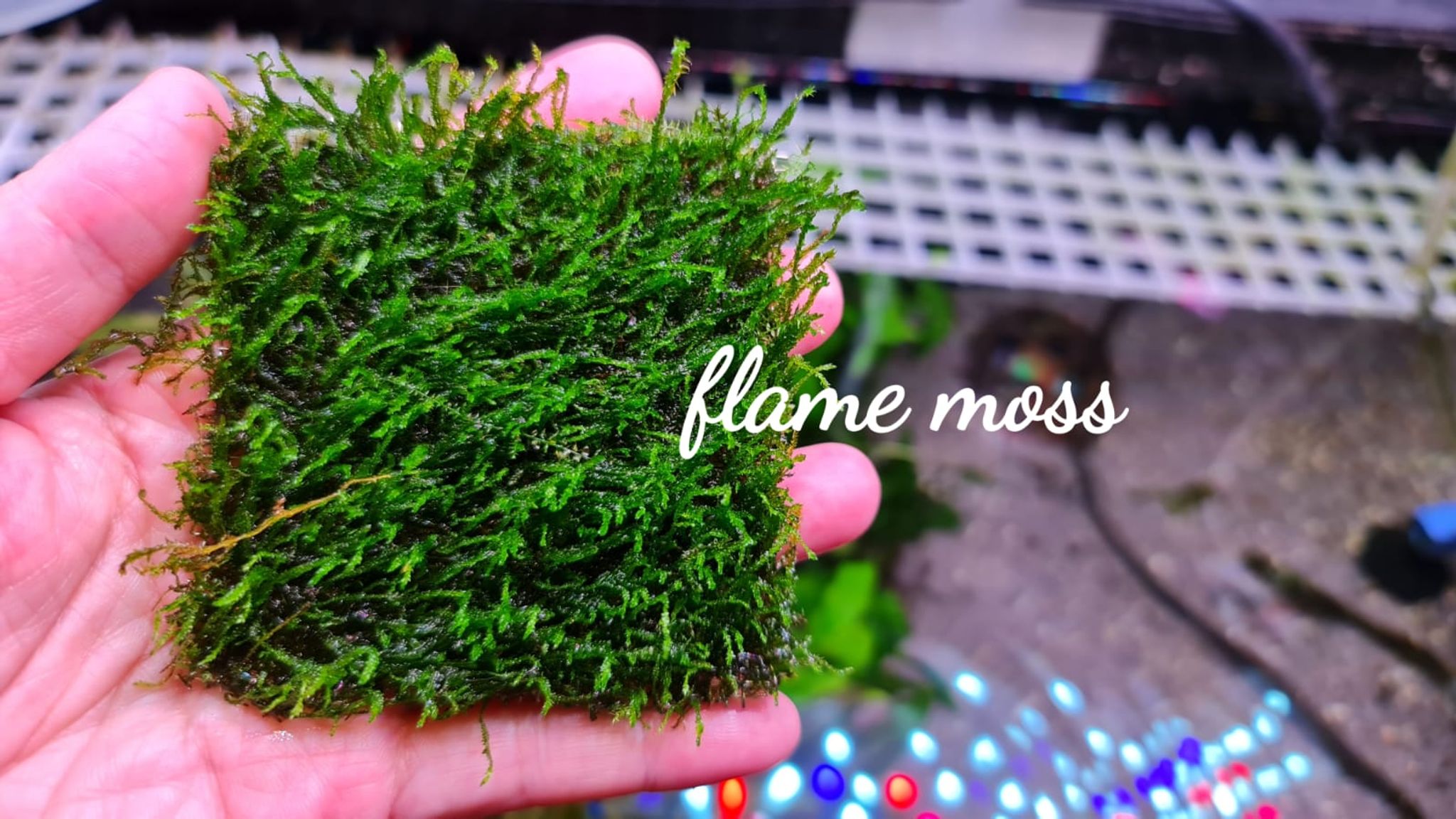
Flame Moss Care Guide: Light, CO2, Substrate and Growth Tips
Flame moss is one of the easiest aquarium mosses to keep, but product listings rarely agree on how much light or CO2 it actually needs. This guide separates the bare minimum for survival from the exact conditions that produce the tight, upright "flame" columns the moss is named for, plus how to attach it, trim it, and fix the melting or browning that trips up new owners.
What Is Flame Moss?
Flame moss (Taxiphyllum sp. "Flame") is a freshwater moss in the same family as Java moss. Like other aquarium mosses, it has no true roots — instead, thread-like structures called rhizoids grip onto hardscape, and the plant absorbs nutrients directly from the water column rather than from substrate.
Its defining trait is growth habit. Where Java moss forms messy, random tufts and Christmas moss lays out in flat, triangular fronds, flame moss grows in narrow, twisted, upright columns that resemble small green flames when maintained correctly. Left untrimmed, though, it will eventually collapse into the same shapeless mat as any other moss — the flame look is a maintenance result, not a guarantee.
Ideal Water Parameters
The table below separates what flame moss will merely tolerate from the tighter range that produces its best color and shape.
| Parameter | Survival range | Best-appearance range |
|---|---|---|
| Temperature | 68–84°F (20–29°C) | 72–78°F (22–26°C), stable |
| pH | 5.0–8.0 | 5.5–7.5 |
| Light | Low to bright | Low to medium, 6–8 hrs/day |
| Flow | Still to strong | Gentle to moderate |
Temperature matters for shape as well as survival: cooler water within the ideal range tends to produce tighter, more compact flame columns, while warmer water produces looser, more elongated fronds. Flame moss also reacts more to sudden swings than to the absolute number, so a stable heater setting beats chasing an exact degree.
pH tolerance is unusually broad, making flame moss one of the more forgiving mosses for mixed community setups, from soft blackwater tanks to harder, alkaline water.
Does Flame Moss Need CO2?
No. Flame moss survives and grows without supplemental CO2 — it's a genuine low-tech, beginner-friendly plant. Where sources disagree is on how much CO2 helps: a few grower-focused guides describe it as needed for "good growth," but the more accurate framing is that CO2 is an accelerant, not a requirement. Injected or liquid carbon can speed growth, deepen the green color, and produce a denser mat, but skipping it just means slower, still-healthy growth.
Light Requirements (And Why More Isn't Better)
Most sources recommend low to medium light for 6–8 hours a day, though a minority list medium-to-high as required. The safer default is low-medium, for one specific reason: flame moss grows slowly, and bright light without matching CO2 and fertilizer dosing just feeds algae that colonizes the moss itself faster than the moss can outcompete it.
Higher light only makes sense once CO2, liquid fertilizer, and a regular trimming schedule are already in place together — light intensity should always match your overall growth-rate commitment, not be maxed out on its own.
Choosing a Light for a Flame Moss Tank
You don't need a high-PAR fixture just to grow flame moss well. Practical buying guidance:
- Look for a full-spectrum LED with adjustable intensity and a built-in timer, so you can start on a low setting and dial up gradually if you add other plants later.
- A basic full-spectrum planted-tank LED run on low-to-medium intensity for 6–8 hours a day is enough for flame moss specifically.
- Save the high-intensity, high-PAR fixtures for tanks growing demanding carpet or stem plants alongside the moss — overspending on light for flame moss alone just raises your algae risk.
FishyHub carries full-spectrum LED lamps sized for nano tanks up through standard community setups if you need to browse options.
Substrate: Not Required, But Not a Problem Either
Flame moss is an epiphyte — it attaches to hardscape rather than rooting into substrate, so it draws no nutrients from the tank floor at all. That means:
- Root tabs do nothing for it; skip them for this plant specifically.
- Any standard substrate works underneath it — bare-bottom, gravel, sand, or aquasoil — because the moss never touches or needs it.
- Substrate choice only matters if you're growing rooted plants in the same aquascape; pick that substrate based on those species, not the moss.
If you're stocking a planted community tank and need substrate for co-planted species, FishyHub's substrate selection covers sand, gravel, and soil options.
How to Attach Flame Moss to Hardscape
Because flame moss has no roots, it needs to be physically secured to driftwood, lava rock, or a mesh mat while its rhizoids take hold.
| Method | Pros | Cons |
|---|---|---|
| Cotton thread | Cheap, biodegrades on its own, easy to remove | Can loosen before rhizoids grip; visible at first |
| Fishing line | Nearly invisible, very secure | Doesn't biodegrade; must be cut away eventually |
| Cyanoacrylate ("super") glue gel | Instant hold, no waiting or removal | Harder to reposition once set; needs a dry surface |
Whichever method you use, spread the moss into thin, flat portions rather than thick clumps — this is what allows individual flame columns to show once it fills in, instead of growing into one solid green blob.
Give it time before judging results: rhizoids typically start anchoring within 2–4 weeks, and full colonization of the hardscape surface can take about 2 months. Many owners assume a lack of visible change in the first few weeks means failure and re-tie or disturb the moss too early — that resets the clock. Leave it alone and check back at the one-month mark.
Trimming for the Flame Shape
This is the step most guides skip or reduce to a single line, and it's the actual difference between a flame-shaped moss wall and a green carpet.
- Trim the tips, not the sides. Cutting the top of each column with fine scissors encourages new upright shoots to branch off that cut point, which is what keeps growth columnar.
- Avoid side-shearing. Cutting inward from the sides (the way you'd shape a hedge) removes the vertical growth points and pushes the moss toward a flat, shapeless mat instead.
- Trim lightly, every few weeks rather than doing one heavy prune. Flame moss is a slow-to-moderate grower submerged (and much slower emersed in a paludarium setup), so frequent light tip-trims maintain density without shocking the plant.
- Save healthy clippings for propagation — cut sections with clean scissors and re-tie or re-glue them onto new hardscape or a mesh mat exactly as you did the original planting; they establish the same way.
Flow and Fertilization
Flame moss tolerates gentle to moderate flow well and actually benefits from some circulation, which prevents debris from settling into the fronds. Strong, direct flow from a powerhead or filter outlet, however, can tear or fray the delicate growth — if you notice wispy, torn fronds, redirect the outlet or relocate the moss out of the direct stream. A modest filter sized to the tank, positioned so its output doesn't blast the moss directly, is usually all that's needed.
For fertilization, remember that root tabs are wasted on this plant. Liquid or water-column fertilizers supplying nitrogen, potassium, and micronutrients like iron will support denser, greener growth, but they're optional rather than mandatory for a healthy specimen.
Common Mistakes and Troubleshooting
- Melting or browning right after purchase or a water change: Usually a reaction to sudden parameter swings rather than disease. Acclimate slowly, keep parameters stable afterward, and trim away the dead or brown sections — healthy tissue typically recovers on its own.
- Gradual browning or blackening in an otherwise stable tank: Often caused by low flow letting debris and detritus settle into the moss, or by old growth naturally dying back under newer layers. Gently rinse or swish the moss during maintenance and trim the old sections out.
- Algae growing on the moss itself: A sign of too much light relative to CO2 and nutrients, or of growth too slow to outcompete the algae. Cut back photoperiod or intensity, improve flow, and consider a cleanup crew such as shrimp, otocinclus, or nerite snails.
- Moss floating loose instead of staying attached: It wasn't left tied down long enough. Keep thread or glue in place for at least 2–4 weeks and avoid disturbing the hardscape during that window.
- Shapeless clump instead of flame columns: Caused by letting growth go unchecked or by side-shearing. Switch to regular tip-trims to restore the upright look over the following weeks.
- Torn, wispy fronds: Usually excess direct flow from a powerhead or filter outlet — redirect the flow or move the moss.
Is Flame Moss Good for a Shrimp Tank?
Flame moss is a strong choice for shrimp and fry setups. Its dense structure gives shrimplets and fry places to hide from adult tankmates, and it grows a natural film of biofilm and infusoria that supplements their diet. It's compatible with shrimp, snails, and most peaceful community fish. If you're building out a shrimp tank around it, FishyHub's shrimp selection is worth browsing alongside your moss order.
Frequently Asked Questions
Does flame moss need CO2?
No — it survives fine without it. Supplemental CO2 is optional and mainly useful for speeding up growth, thickening the moss, and deepening its green color.
What temperature is best for flame moss?
A stable range in the low-to-mid 70s°F (around 22–26°C) gives the best appearance. It tolerates roughly 68–84°F overall, but sudden swings cause more stress than a slightly off but steady number.
Does flame moss need substrate, or can it go in any tank?
It doesn't need substrate at all. It's tied or glued to hardscape and feeds from the water column, so it works equally well in bare-bottom, sand, gravel, or planted-soil tanks.
How do I attach flame moss to driftwood or rock?
Spread thin portions across the surface and secure them with cotton thread, fishing line, or an aquarium-safe super glue gel. Leave it tied down for at least 2–4 weeks, undisturbed, until the rhizoids grip on their own.
Why isn't my flame moss growing upright like the pictures?
It needs tip-trimming rather than side-shearing, moderate rather than bright light, thin/spread placement on the hardscape, and time. The flame shape develops gradually over weeks of maintenance, not automatically.
How fast does flame moss grow, and how often should I trim it?
It's a slow-to-moderate grower submerged, and slower still if kept emersed. Light tip-trims every few weeks are enough to maintain density and shape without the heavy pruning faster-growing plants need.
Ready to start your own hardscape project? Browse FishyHub's full range of aquarium lighting and substrate to build the setup flame moss will thrive in.

