Engineer Goby Care Guide: Tank Size, Diet, Compatibility and Reef Safety
The engineer goby is a striking, eel-bodied burrower that confuses new keepers with conflicting advice on tank size and reef safety. This guide sorts out the real minimums, feeding routine, tankmate rules, and the medication caution every owner of a scaleless fish needs to know before adding one to a reef system.
What Is an Engineer Goby?
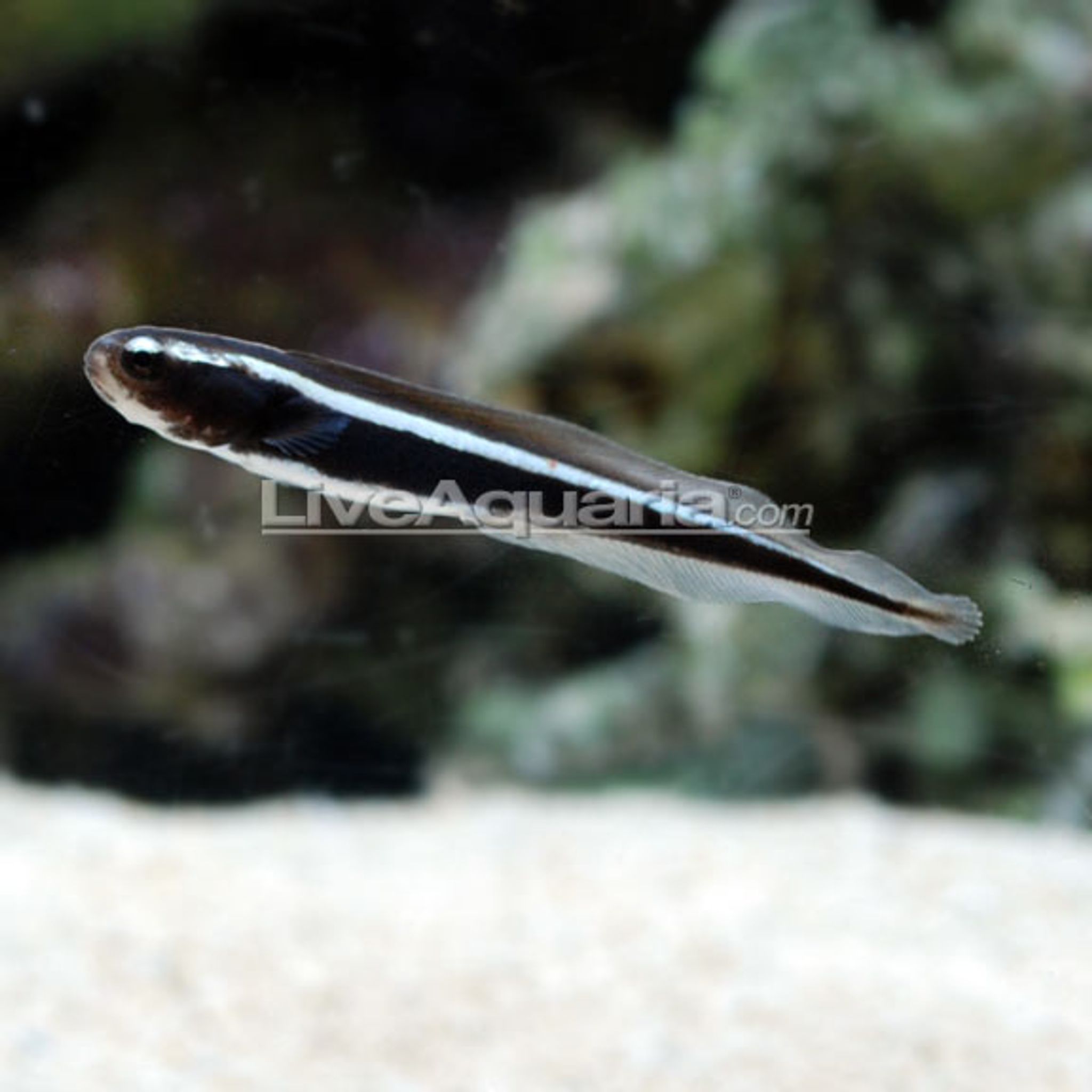
Despite the common name, the engineer goby (Pholidichthys leucotaenia) is neither a true goby nor a blenny. It belongs to its own family, Pholidichthyidae, and is also sold as the convict blenny or convict goby. The nicknames come from its appearance: a long, eel-like body that is black to dark brown with one or two cream or white stripes running from head to tail.
In the wild, juveniles school tightly in dense groups that mimic a school of catfish, a defense strategy that fools predators into overlooking individual fish. That schooling instinct fades with age — adults become more solitary and territorial toward their own kind, even though they stay peaceful toward other species.
Adults commonly reach 10 to 12 inches in home aquariums, occasionally more, and they grow slowly, so keepers usually have a year or more to plan for their eventual size.
Tank Size: Resolving the Confusion
Advice on minimum tank size varies widely, and much of that variation comes from mixing juvenile and adult requirements. Here is the practical breakdown:
| Life stage | Minimum tank size | Notes |
|---|---|---|
| Juvenile (under ~4 in) | 20-30 gallons (76-114 L) | Acceptable only short-term, with a firm upgrade plan |
| Single adult | 55 gallons (208 L) | Standard safe baseline for a 10-12 in fish |
| Pair or small group | 55 gallons + 20 gallons per additional fish | Add together as juveniles to avoid fighting |
A 55-gallon tank should be treated as the real minimum for a full-grown engineer goby. Some sources cite 30 gallons for a "peaceful community" fish, but that figure ignores the adult's length and its heavy, constant digging, which needs floor space to sustain long-term. If you start with a juvenile in a smaller tank, plan the upgrade before the fish outgrows it rather than after.
Substrate and Aquascaping
This species is a compulsive burrower, and its housing needs to be built around that behavior from day one.
Sand Bed Depth
Provide a deep sand bed of at least 3-4 inches (7.5-10 cm) of fine, soft sand. Engineer gobies dig extensive tunnel networks and will move several pounds of sand per day. Crushed coral or coarse gravel frustrates burrowing and can injure the fish's skin, so stick to fine sand grades.
Securing Rockwork
Because the goby tunnels beneath structures it doesn't build around, loose or stacked rock is a collapse risk. Best practice:
- Anchor rock directly to the tank bottom or glass with aquarium-safe epoxy or reef-safe putty rather than stacking it loosely on sand.
- Build rock into pillars or bonded structures that stay stable even when sand is excavated from underneath.
- As a rough guide, plan for 1 to 1.5 lbs of live rock per gallon, using less if you're working with lightweight, high-porosity aquacultured rock instead of older, dense wild rock.
Skipping this step is one of the most common mistakes with this species — unsecured rock that looked stable on day one can shift or collapse once tunnels open up beneath it.
A Tight-Fitting Lid
Engineer gobies are notorious jumpers, especially as juveniles. A gap in the canopy or an open overflow cutout is often all it takes for an otherwise well-cared-for fish to end up on the floor. Use a tight-fitting lid across the entire top of the tank, not just over the main opening.
Water Parameters
| Parameter | Target range |
|---|---|
| Temperature | 75-82°F (24-28°C) |
| pH | 8.1-8.4 |
| Specific gravity (salinity) | 1.023-1.025 |
| Ammonia / Nitrite | 0 ppm |
| Nitrate | Under 20 ppm, lower in reef systems |
Note that a pH range as low as 6.0-8.0 sometimes appears in generic care listings — that figure is a freshwater-style value and is not appropriate for a marine species. Stick to the standard reef pH range of 8.1-8.4.
Because this fish stirs the sand bed constantly, uneaten food and waste get worked deeper into the substrate than in tanks without active diggers. Vacuum around burrow entrances more frequently than you would otherwise, and size your protein skimmer generously to handle the extra bioload.
Diet and Feeding
Engineer gobies are carnivores that eat meaty foods and will scavenge through the sand for scraps. Offer:
- Frozen mysis shrimp
- Frozen brine shrimp
- Bloodworms
- Krill
- Chopped fresh fish or shrimp
- A quality sinking carnivore pellet
Either feeding schedule works: one heavier feeding per day, or two lighter feedings split across the day. The better choice depends on your tank's nutrient load — reef systems with sensitive corals do better with smaller, more frequent portions to avoid excess food settling and decaying in the sand bed. Overfeeding is a leading cause of nitrate and phosphate spikes in tanks that house this species, since anything missed gets buried rather than eaten.
Behavior and Temperament
New keepers sometimes assume an eel-shaped fish must be aggressive. Engineer gobies are the opposite: shy and peaceful, particularly when first introduced. Expect:
- Mostly nocturnal or crepuscular activity early on, shifting toward more daytime feeding activity once settled.
- Long stretches spent inside tunnels, with only the head or tail visible.
- Increasing boldness over weeks to months as the fish builds confidence in its territory.
If your engineer goby seems to hide constantly, that's typically normal behavior rather than a sign of a problem — give it time and adequate tunnel space before assuming something is wrong.
Social Structure: Keeping One or Several
Engineer gobies do best either singly or as a group introduced together while young. Juveniles retain some schooling instinct and settle into a shared burrow system without much conflict. Adults are a different story — introducing unfamiliar adult engineer gobies to each other, or to an existing resident, often triggers fighting. If you want more than one, buy them small and add them to the tank at the same time.
Reef Safety and Tankmates
Is It Reef Safe?
Yes, with a caveat. Engineer gobies do not eat or nip coral tissue and are considered reef-safe for corals, anemones, and other sessile invertebrates. The risk to a reef tank is physical, not dietary: constant burrowing can shift live rock, uproot loosely placed frags, or bury low-lying corals and inverts under displaced sand. Mount corals on secured rock structure well above the sand line rather than resting frags directly on the substrate.
Good and Poor Tankmates
Compatible:
- Clownfish (browse clownfish for stock)
- Tangs and larger surgeonfish
- Angelfish
- Wrasses and other gobies of similar size
Avoid:
- Very small fish, tiny ornamental shrimp, and small crabs or snails — an opportunistic carnivore may view them as food.
- Aggressive burrowers or diggers competing for the same substrate niche, including some wrasses and eels.
- Overly aggressive species that could injure a shy, slow-to-settle fish.
Because engineer gobies are shy, add them to a display before more assertive tankmates arrive, letting them establish burrows and confidence ahead of any competition. This stocking-order principle applies broadly to reef tanks, not just to this species.
Adding a New Reef Fish: Stocking Practice
A few general stocking habits reduce stress and disease risk for any new marine fish, including an engineer goby:
- Quarantine first. Hold new arrivals in a separate quarantine tank for 2-4 weeks before adding them to the display, especially given this species' sensitivity to skin damage and infection.
- Drip acclimate. Slow, drip-style acclimation reduces osmotic shock from differences in salinity and temperature between the bag and the tank.
- Check compatibility before buying, not after — confirm tank size, reef safety, and tankmate needs against your existing stock list.
- Stock in order, adding peaceful or shy species before territorial or aggressive ones.
- Go slowly. Space out additions to avoid ammonia spikes and to let biological filtration keep pace with each new fish's bioload.
Health, Medication and the Scaleless-Fish Caution
Engineer gobies lack scales and rely on a thin mucus coat for protection, which makes them more prone to skin damage and infection than scaled fish — and more sensitive to certain medications.
- Copper-based treatments are commonly dosed for scaled marine fish but can be harmful at standard strength to a scaleless species. Use reduced doses or a copper-free, reef-safe treatment protocol instead.
- Ciprofloxacin, a broad-spectrum antibiotic, is sometimes used off-label for bacterial infections such as fin or tail rot, or secondary infections from wounds. It is typically dosed in a separate hospital tank rather than the display, and dosing strength and duration should be handled cautiously for a scaleless fish.
- Treat in a hospital tank whenever possible, keeping the display's biological filter and inverts protected from medication exposure.
Overmedicating — applying doses calibrated for hardier, scaled fish — is a common and avoidable mistake with this species.
Lifespan and Breeding
With stable water quality and appropriate housing, engineer gobies commonly live 4 to 10 years in captivity, with some sources reporting 5-plus years as typical and longer lifespans achievable with excellent care.
Breeding has occurred in captivity: the female lays eggs on a flat rock or surface, and the male guards the nest for several days to about two weeks until hatching. The resulting larvae are pelagic and notoriously difficult to rear, so successful home breeding through to juveniles remains rare and isn't a realistic expectation for most hobbyists.
A Similar Sand-Sifting Fish: Goatfish
Goatfish are sometimes mentioned alongside engineer gobies as another sand-sifting marine fish, though they aren't closely related. Goatfish use a pair of chin barbels to probe sand for food rather than tunneling into it, and they also need large, established tanks with a soft substrate. Like the engineer goby, they're generally considered reef-safe, but they do best in mature systems with plenty of open sand to forage across.
Frequently Asked Questions
Is the engineer goby reef safe?
Yes for corals and invertebrates — it doesn't eat or nip coral tissue. The main risk is physical: its digging can disturb rockwork and bury or dislodge low, unanchored frags, so secure your aquascape accordingly.
How big do engineer gobies get?
Most reach roughly 10 to 12 inches in home aquariums, occasionally larger, and growth is slow. Plan tank size around the adult length rather than the size the fish arrives at.
Can I keep more than one engineer goby together?
Yes, best as juveniles raised together or as an already-bonded pair. Adding unfamiliar adults to each other tends to trigger fighting, so match introductions to the fish's age and social history.
What do engineer gobies eat?
Meaty carnivore foods: frozen mysis shrimp, brine shrimp, bloodworms, krill, chopped fish or shrimp, and quality sinking pellets. They also scavenge leftover food from the sand bed.
Why is my engineer goby hiding all the time?
This is normal, especially for a recently added fish. Engineer gobies are secretive burrowers that gradually become bolder once they've settled in and have enough tunnel and hiding space.
Are engineer gobies hard to keep or good for beginners?
They're a moderate-difficulty fish — hardy with respect to typical water parameter swings, but they require a large enough tank, a deep sand bed, and securely anchored rockwork. They aren't a good fit for very small or newly established reef tanks.
Final Thoughts
An engineer goby rewards keepers who plan for its adult size, deep sand needs, and secure rockwork from the start, rather than trying to retrofit a tank later. Get the substrate depth, tank size, and aquascape right, and this shy, reef-compatible burrower settles in as a low-maintenance, long-lived addition. Browse available stock in Gobies on FishyHub, along with sand substrate and medication options for treating scaleless fish safely.

