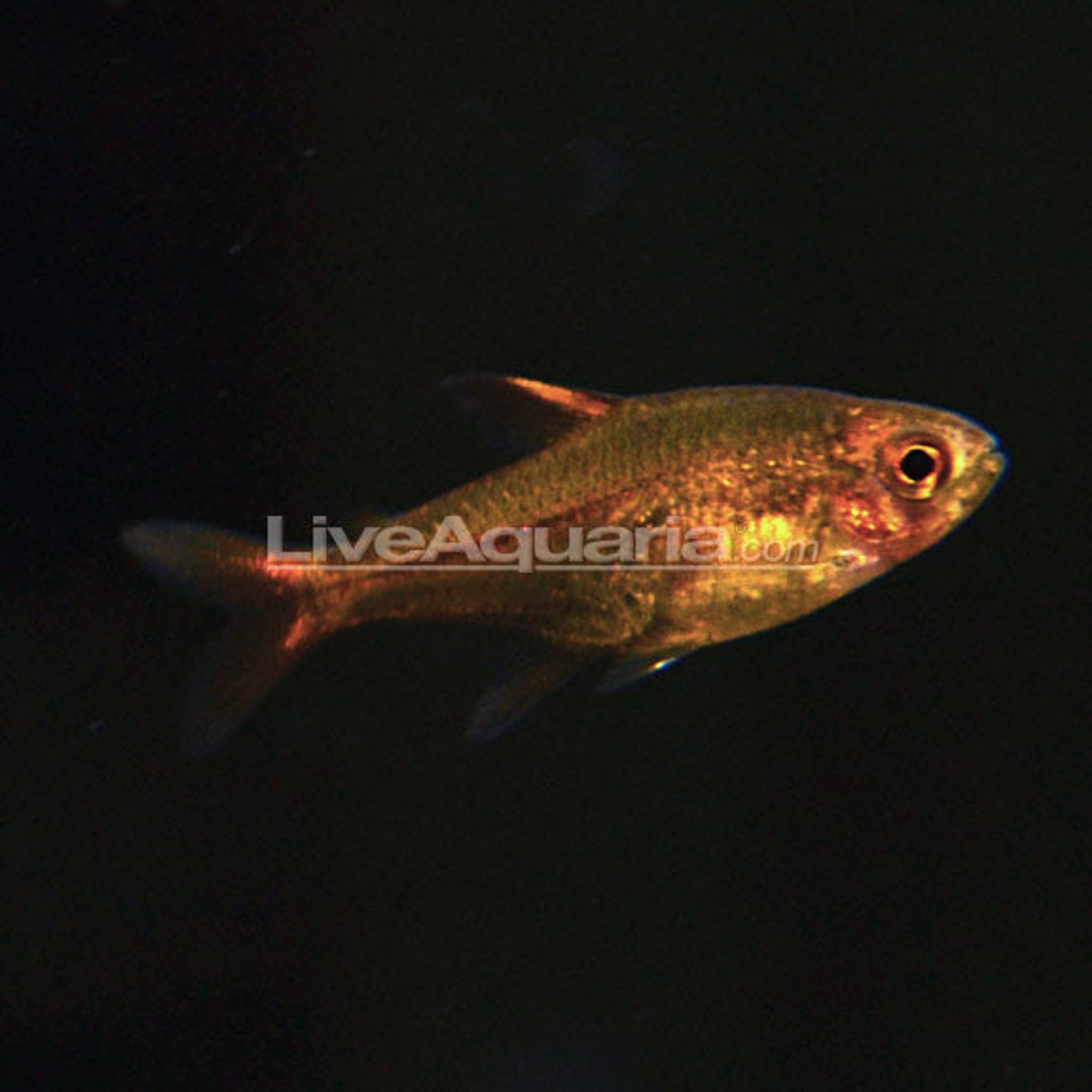
Ember Tetra Care Guide: Tank Size, Diet, Water Parameters and Temperament
Ember tetras do best in a heated, mature, planted tank of 10 gallons (38 L) or more, kept in a group of at least 8 fish, ideally 10–15, at 72–82°F (22–28°C) with a pH of 6.0–7.0. They are peaceful, shrimp-friendly micro fish that eat tiny foods, and the two things that decide whether they thrive are group size and a stable, cycled tank.
Ember Tetra Quick Facts
| Trait | Recommendation |
|---|---|
| Scientific name | Hyphessobrycon amandae (also sold as fire tetra or dwarf red tetra) |
| Adult size | 0.6–0.8 in (15–20 mm) |
| Lifespan | 2–4 years, sometimes longer |
| Minimum tank | 10 gal (38 L); 20 gal long (76 L) for 15–25 fish |
| Group size | 8 minimum, 10–15+ ideal |
| Temperature | 72–82°F (22–28°C); 76–78°F in a community tank |
| pH | 5.5–7.5 tolerated, 6.0–7.0 ideal |
| Hardness | GH 2–12 dGH, KH 3–8 dKH |
| Ammonia / nitrite / nitrate | 0 / 0 / under 20 ppm (40 max) |
| Temperament | Very peaceful, shy in small groups |
| Diet | Omnivorous micropredator |
Origin and Appearance
Embers are small characins from the Araguaia River basin in central-west Brazil, around the Mato Grosso and Goiás region. They live in slow, heavily vegetated backwaters stained brown with tannins. That habitat explains almost every care recommendation below: gentle flow, soft light, lots of plants and plenty of company.
At well under an inch, they are one of the smallest tetras commonly sold. Their glowing orange-red color is modest in a bright, bare store tank and deepens considerably in a dim, planted aquarium.
Tropical, Not Coldwater
Embers are tropical freshwater fish. Unlike goldfish, which are coldwater fish kept unheated, embers need a heater in nearly every US home.
Tank Size and Setup
How Big a Tank Do Ember Tetras Need?
A 10-gallon (38 L) tank is the practical minimum for a proper school. Advice online ranges from 5 to 10 gallons, and some keepers add about one extra gallon per fish past eight. A 5-gallon (19 L) can technically hold a few embers, but that is best left to experienced keepers running a mature nano with around 8 fish; the group is simply too small for them to relax. A long footprint beats height, because embers use horizontal swimming space. A 20-gallon long (76 L) comfortably holds 15–25.
Stocking Plans for 10 and 20 Gallon Tanks
| Tank | Example stocking |
|---|---|
| 10 gal (38 L) species tank | 10–12 embers, a few nerite snails, a colony of neocaridina shrimp |
| 10 gal (38 L) community | 8 embers, 5–6 pygmy corydoras, shrimp or snails |
| 20 gal long (76 L) community | 15–20 embers, 6–8 small corydoras, 3–4 otocinclus, one honey gourami or a small group of pencilfish |
Reduce ember numbers if you add another schooling species to a 10-gallon.
Filtration, Flow and Decor
- Gentle flow: a sponge filter, or a hang-on-back filter with a pre-filter sponge over the intake. The sponge also protects shrimp and fry.
- Dense live plants: stem plants, mosses and floating plants for cover and shade.
- Driftwood and leaf litter to recreate tannin-stained water.
- Dark substrate or background and subdued lighting, which bring out the red.
Keeping Temperature Stable
Nano tanks swing temperature fastest. Use a heater with a thermostat sized at roughly 3–5 watts per gallon, confirm with a separate thermometer, and keep the tank away from windows and AC vents.
Water Parameters
Aim for 72–82°F (22–28°C), ideally 76–78°F with community fish. Reserve 80–82°F for spawning. Sources list lows from 68°F to 73°F and highs from 80°F to 84°F, but the middle band is the safe target.
For pH, 7.5 is tolerated and below 7.0 is preferred. Hardness advice varies from strictly soft water to about 17–18 dGH. The practical point is that stability beats precision: the "tolerated" range is where they survive; the "ideal" range is where they color up and spawn.
US Tap Water
Captive-bred embers adapt to most US municipal water as long as it is stable and dechlorinated. There is no need to chase soft water for a display tank. If you want to breed them, blend in RO water or add botanicals such as leaf litter to soften and acidify gradually.
Water Quality
Ammonia and nitrite must read 0 ppm and nitrate should stay under 20 ppm (40 ppm max). Add embers only to a fully cycled tank, and change 20–30% of the water weekly, matching temperature and dechlorinating every time.
Diet and Feeding
Embers are omnivorous micropredators with tiny mouths. Build the diet around:
- Staples: micro-pellets, crushed flakes and nano granules.
- Live or frozen foods several times a week: baby brine shrimp, daphnia, cyclops, microworms, grindal worms and finely chopped bloodworms.
Feed small portions 2–3 times a day, only what they finish in about a minute. Slow-sinking foods suit these mid-water feeders, and crushing food helps them compete with faster tank mates. A dry-only diet can cause constipation and duller color.
Temperament and Behavior
Embers are very peaceful and shy at first. In a large group with calm dither fish they become much bolder. They shoal loosely rather than schooling tightly and mostly hold mid-water, sometimes rising higher.
Recommendations for minimum group size range from 6 to 15; aim for 8 or more, with 10–15 ideal. Fin nipping is uncommon and is best read as a stress sign, usually from an undersized group.
Males vs. Females
Males are slimmer and more intensely red, especially when displaying. Females are rounder and paler.
Tank Mates
Good companions:
- Other nano tetras and rasboras
- Pygmy, habrosus and other small corydoras
- Otocinclus and hatchetfish
- Pencilfish
- Honey and sparkling gouramis
- Small peaceful dwarf cichlids, such as apistogrammas in larger tanks
- Nerite snails and neocaridina shrimp
Embers rarely bother adult shrimp, though they will pick off shrimplets and baby snails now and then. Heavy moss gives cherry shrimp colonies enough cover to keep growing. For the bottom layer, small corydoras are a natural fit.
Avoid: anything with a mouth large enough to swallow them (adult angelfish, larger cichlids, goldfish), plus fin nippers and boisterous fish such as tiger barbs and large danios.
Pencilfish as Companions
Pencilfish are slender top-to-mid dwellers with the same soft, acidic, planted-tank preferences, which makes them an excellent match. They have tiny mouths, need fine foods and are shy. Coral red pencilfish males are territorial, so keep them in groups. Three-lined pencilfish reach about 2 in (5 cm) and suit 20 gallons and up.
Embers With Bettas
Embers can share a tank with a betta if the tank is 10 gallons or larger, densely planted and the betta is mellow. Long-finned and dragon-scale bettas are slower and less predatory. Wild betta species prefer similarly soft water. If the betta chases the embers, separate them.
Ember Tetra vs. Ruby Tetra and Other Micro Tetras
The ruby tetra (Axelrodia riesei) is the most common look-alike. It grows to 0.8–1.2 in (2–3 cm), comes from Rio Meta/Orinoco blackwater, wants softer water (GH 1–8, pH 6–7, 75–82°F) and swims in a stop-and-dart style.
| Species | Adult size | Water hardness | Availability |
|---|---|---|---|
| Ember tetra | 0.6–0.8 in (15–20 mm) | Soft to moderate (GH 2–12) | Widely available, captive-bred |
| Ruby tetra | 0.8–1.2 in (2–3 cm) | Soft (GH 1–8) | Less common |
| Glassy nano tetras | Similar tiny size | Generally soft | Occasional |
| Green neon tetra | Slightly larger than embers | Soft | Moderate |
Compared with the neon tetra, embers are smaller, calmer and tolerate a wider pH range, while neons are longer and more prone to disease when stock quality is poor.
Buying and Acclimating Embers
Healthy embers have rounded bellies, shoal actively and show no clamped fins. Captive-bred fish are hardier in tap water, and color varies with origin and conditions, so pale store fish often color up at home.
Acclimate by drip or slow-float over 30–60 minutes and keep lights dim for the first day. Expect pale color for a week or two. Winter and summer shipping across the US raises ich risk, so match temperatures carefully during acclimation.
Common Diseases and Treatment
Embers are hardy in stable conditions. The usual problems are:
- Ich (white spots), typically after shipping stress or temperature swings
- Fin and body rot and fungus, linked to poor water quality
- Constipation from dry-only diets
Quarantine new fish for 2–4 weeks. For ich, raise the temperature gradually to about 82–84°F and use a medication at the label dose. Tiny fish are sensitive, so consider a half-dose trial or a product labeled safe for scaleless fish and shrimp. Keep feeding lightly during treatment and remove activated carbon so it doesn't absorb the medication.
Hygiene When Cleaning the Tank
Wash your hands after tank work, cover cuts or wear gloves, and never start a siphon by mouth. Aquarium bacteria such as Mycobacterium marinum can infect skin wounds.
Breeding Ember Tetras
Embers are continuous egg scatterers with no parental care, and they eat their eggs. In a mature planted tank, a few fry often survive in the moss.
For deliberate breeding:
- Set up a separate 5–10 gal (19–38 L) tank with mesh, marbles or java moss.
- Keep light dim, water around 80–82°F and pH nudged toward 7.
- Condition a group, let them spawn, then remove the adults.
- Eggs hatch in 1–3 days. Feed infusoria or paramecium first, then baby brine shrimp or microworms after about a week.
Fry reach sexual maturity at 4–6 months.
Common Mistakes and Troubleshooting
- Uncycled tank: the leading cause of losses. Cycle first.
- Buying 3–5 fish: leads to hiding, paleness and nipping. Add more embers.
- Bright, bare tank with strong current: washes out color. Add floaters and plants and baffle the outflow.
- Food too large or eaten by faster fish: crush it and feed at mid-water.
- Pale fish: new arrival, stress, poor diet or water quality. Test the water and add frozen foods.
- Hiding: too few fish, no dither fish or a bullying tank mate.
- Swings during water changes: match temperature and dechlorinate.
Embers in a Classroom Aquarium
A heated, planted 10–20 gallon tank with a school of embers and a few corydoras makes a low-risk, eye-catching classroom tank. Plan ahead for weekend and holiday feeding and for regular water changes.
Frequently Asked Questions
How many ember tetras can go in a 10 gallon tank?
About 8–12 in a species-focused tank. If another schooling fish shares the tank, keep fewer embers so the bioload stays manageable.
Can ember tetras live in a 5 gallon tank?
An experienced keeper can run a mature 5-gallon nano with a small group of around 8. For most people, a 10-gallon gives a better group and more stable water.
Can ember tetras live with cherry shrimp?
Yes. Adult shrimp are safe, though embers will eat a few shrimplets, so plenty of moss helps the colony grow.
Why is my ember tetra losing color?
Common causes are stress, recent transport, bright lighting, a poor diet or water quality problems. Test your water, dim the lights, add plants and offer frozen foods.
Do ember tetras need a heater?
Yes, in most US homes. Room temperatures swing too much, so use a thermostat heater set around 76–78°F.
How long do ember tetras live?
Typically 2–4 years, and well-kept fish can live longer.
Bring Home a School of Embers
Embers reward patience: give them a cycled, planted tank, a proper group and fine foods, and they turn into a glowing orange shoal. Browse the tetra selection on FishyHub to plan your nano community.

