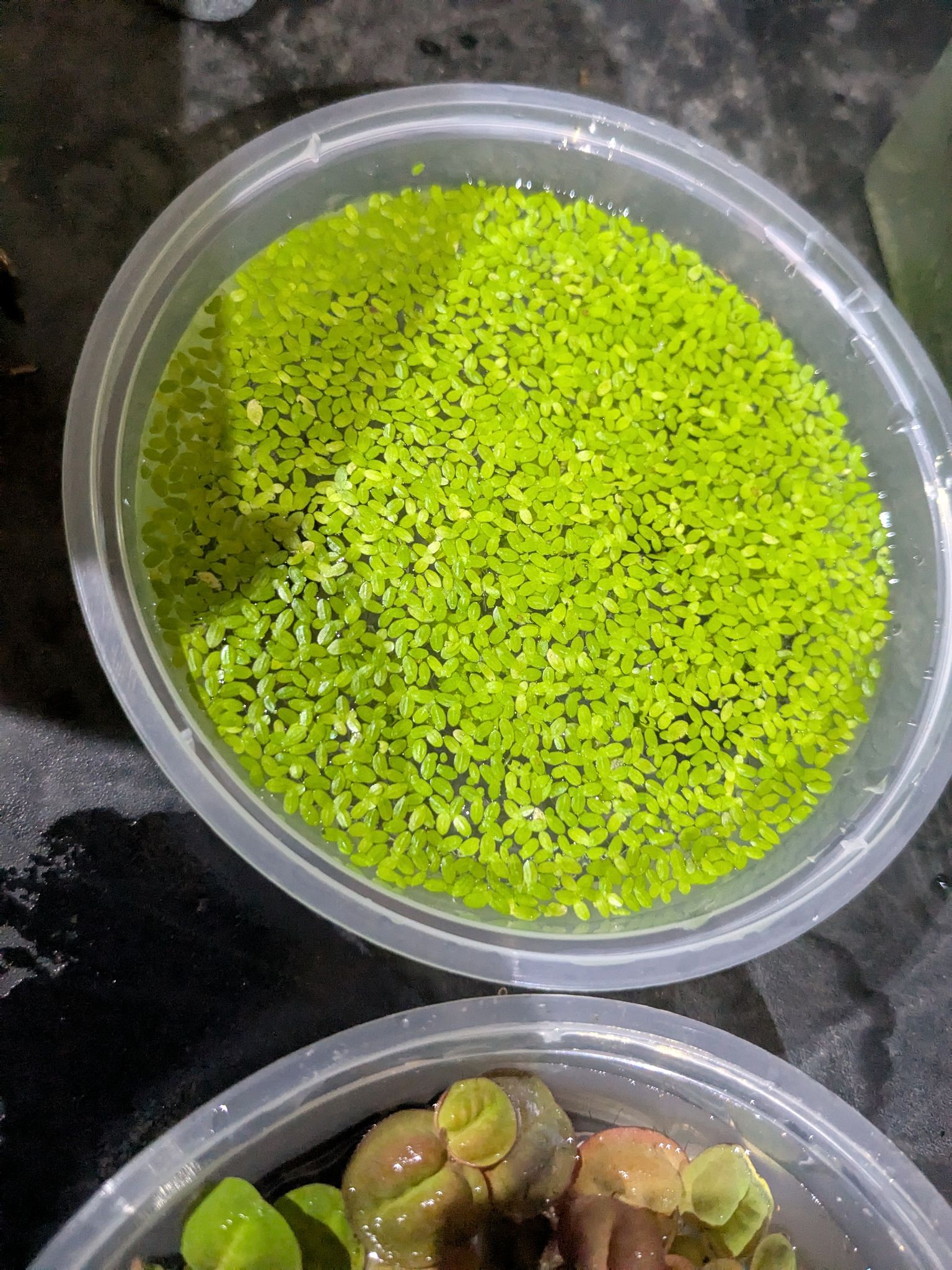
Duckweed Care Guide: Light, CO2, Substrate and Growth Tips
Duckweed is one of the easiest floating plants to grow and, for many hobbyists, one of the hardest to stop growing. This guide covers everything needed to keep duckweed healthy and useful in an aquarium — light, water parameters, propagation, and nutrient uptake — plus the control and disposal steps that most care guides skip.
What Is Duckweed?
Duckweed refers to a group of tiny floating plants in the Lemnoideae family, which includes several genera such as Lemna (common duckweed) and Spirodela (giant duckweed). Each plant, called a frond, is little more than a single flat leaf with one trailing root hanging beneath it. Duckweed is considered one of the smallest flowering plants on Earth, even though it rarely produces visible flowers in home aquariums.
Common duckweed (Lemna minor) has fronds around 1/16–1/8 inch (2–3 mm) across, while giant duckweed (Spirodela polyrhiza) grows noticeably larger fronds, sometimes over 1/4 inch (6+ mm). Most care guides treat duckweed as one plant, but the size difference matters practically: giant duckweed is far easier to net out by hand, making it a good pick for anyone who wants duckweed's benefits without fighting a fine, hard-to-catch mat.
Light Requirements
Duckweed tolerates a wide light range, which is part of why it turns up uninvited in so many tanks. Treat light less as a strict requirement and more as a growth-rate dial:
- Low light: duckweed survives but multiplies slowly, making it easier to manage.
- Medium to high light (roughly 6+ hours a day): growth accelerates significantly; a standard full-spectrum LED fixture is more than sufficient.
- No supplemental lighting: fine for maintenance, but expect thin, pale fronds over time.
If the goal is fast nutrient export or a steady food supply, run brighter light. If the goal is a light shade layer without explosive growth, dial the photoperiod back.
Does Duckweed Need CO2 or Fertilizer?
No. Duckweed floats directly on the surface and pulls CO2 straight from the air, not from the water column, so CO2 injection does nothing for it. It also doesn't need root fertilization, since it has no real root system to speak of — its single trailing root is mainly for stability and nutrient absorption from the water itself.
In an established, lightly stocked tank, duckweed usually finds enough nitrate, phosphate, and trace nutrients from fish waste and existing bioload. Adding liquid fertilizer to a tank that already grows duckweed well tends to just speed up an already fast plant rather than fix a deficiency.
Substrate Needs
Duckweed needs no substrate at all. As a free-floating plant, it grows equally well over bare-bottom tanks, sand, gravel, or a full aquatic soil setup, since its root never touches the substrate layer. This makes it a flexible option for shrimp tanks, breeding tanks, or grow-out systems where substrate choice is driven by other livestock, not the plants floating above it. Browse substrate options separately based on what bottom-dwelling fish or shrimp the tank is built around.
Water Parameters
Duckweed is one of the most forgiving aquatic plants available, tolerating a broad range of conditions:
| Parameter | Ideal Range | Tolerated Extremes |
|---|---|---|
| pH | 6.5–7.5 | 5.0–9.0 |
| Temperature | 68–82°F (20–28°C) | 60–90°F (15–32°C) |
| Water hardness | Soft to moderately hard | Soft to hard |
| Nutrient load | Moderate to high nitrate/phosphate | Thrives on excess |
This hardiness is exactly why duckweed doubles as a natural nutrient sponge: it pulls excess ammonia, nitrite, nitrate, and phosphate out of the water column, acting as a low-effort biological filter alongside mechanical filtration.
Growth Rate and Propagation
Duckweed is often cited as one of the fastest-growing flowering plants on the planet. Under good light and nutrient conditions, its biomass can double in roughly 16 hours to 2 days. Propagation is almost entirely asexual: small daughter fronds bud directly off the parent frond and eventually separate into independent plants. True flowering and seed production happen only rarely, usually triggered by specific temperature or photoperiod stress rather than normal tank conditions.
That growth speed means a small handful of duckweed can cover an entire tank surface within a week or two in a nutrient-rich setup. Plan a removal routine from day one rather than waiting for a full mat to form.
Benefits of Keeping Duckweed
- Nutrient export: absorbs excess nitrate and phosphate, helping control algae elsewhere in the tank.
- Surface shading: reduces light penetration, which suppresses algae growth on glass and substrate.
- Oxygenation: contributes oxygen to the water during daylight hours through photosynthesis.
- Cover and security: gives shrimp and fry a place to hide from predation and hunt for biofilm.
- Supplemental food: roughly 20–40% crude protein by dry weight, depending on the nutrient richness of the water it grew in, making it a reasonable fresh snack rather than a precise nutritional supplement.
Feeding Duckweed to Fish and Shrimp
Many omnivorous and herbivorous species graze on duckweed readily, including goldfish, guppies, bettas, corydoras, cichlids, and plecos. It works well as a fresh, live treat alongside a gel food or pellet diet, and most fish take to it without any training. Rinse duckweed under clean water before feeding it, especially if it came from a different tank, to avoid transferring unwanted hitchhikers.
If stocking a tank specifically with grazers in mind, goldfish are among the most enthusiastic duckweed eaters and can help keep a floating layer in check on their own, though they'll also uproot other plants in the process.
Duckweed for Shrimp Tanks
Duckweed pairs naturally with shrimp-only setups. A thin floating layer gives shrimp overhead cover from predators, shelter for newly hatched babies, and a grazing surface loaded with biofilm and microorganisms. It also softens light for shrimp that prefer dimmer conditions.
The catch is coverage. A full duckweed mat that seals 100% of the surface can:
- Block light to carpet or stem plants growing below.
- Cut gas exchange at the water's surface.
- Crash dissolved oxygen overnight, when plants stop photosynthesizing and instead consume oxygen — a real risk for a densely stocked shrimp colony, not just a cosmetic issue.
Cap coverage at roughly 30–50% open water at any time. Thin the mat regularly rather than letting it fill in completely, and check shrimp stocking density before adding a heavy floating layer to a smaller tank.
Removing Duckweed From a Shrimp Tank Without Harming Shrimp
- Skim by hand or with a fine mesh net in short, repeated passes rather than one aggressive sweep.
- Drag a sheet of paper towel or plain paper across the surface — duckweed sticks to the paper while shrimp stay in the water, making this a low-stress removal method.
- Avoid chemical duckweed killers entirely in shrimp tanks; copper-based algaecides are toxic to shrimp and other invertebrates.
- After removal, reduce light duration and nutrient load slightly so the remaining fronds don't rebound as fast.
Duckweed in Aquaponics
Outside of display tanks, duckweed is a popular "mini crop" in DIY aquaponic systems. It sits on the surface of a fish-waste-rich grow bed, rapidly stripping ammonia, nitrate, and phosphate from the water, and is then periodically harvested as a supplemental feed crop for fish or other livestock. For maximum yield in an aquaponic setup, duckweed wants bright light and consistently warm water — conditions that push it toward the faster end of its growth-rate range.
Controlling and Removing Duckweed
Because duckweed grows so fast, control is really about ongoing management rather than a one-time fix:
- Net regularly: skim the surface with a fine mesh net (or drag a paper towel across it) every water-change day, not just when coverage looks excessive.
- Reduce light: shortening the photoperiod or dimming intensity slows regrowth without needing chemicals.
- Cut nutrient load: more frequent water changes and reduced feeding limit the nitrate and phosphate duckweed feeds on.
- Increase surface agitation: duckweed prefers still water, so adding flow near the surface — from a filter outlet or an airstone — discourages it from re-establishing.
- Skip algaecides: chemical duckweed killers, especially copper-based ones, can harm shrimp, snails, and scaleless fish. Manual removal combined with light and nutrient control is the safer long-term approach.
Full eradication is difficult; most tanks are better served by a standing weekly routine than by trying to wipe it out entirely in one go.
Why You Should Never Release Duckweed Into Local Waterways
Duckweed is regulated as an invasive or noxious species in parts of the United States because it can rapidly choke ponds, lakes, and slow-moving waterways, deplete dissolved oxygen, and outcompete native aquatic plants and wildlife. Because it spreads asexually and grows so quickly, even a tiny fragment released into a storm drain, ditch, or natural pond can establish a self-sustaining population.
Always dispose of excess duckweed in household trash or a sealed, dried compost pile — never down a drain, into a storm drain, or into any natural body of water. Check local and state regulations before disposing of aquarium plants outdoors, since rules vary by location. When composting, dry the duckweed out or bag it before adding it to an outdoor pile located near any pond or waterway, since wet duckweed dumped straight into an open compost heap can still establish outside.
Green and Cloudy Water: A Related Troubleshooting Note
Duckweed's nutrient-stripping ability makes it a common tool against green water, which is typically a bloom of free-floating (planktonic) algae caused by excess light and excess nutrients. Standard fixes include:
- A 3–4 day blackout period with no light.
- A UV sterilizer to clear suspended algae cells.
- Reduced feeding and shorter light duration.
- Water changes to dilute nutrients.
- Adding a fast-growing floater like duckweed as an ongoing preventive measure once the bloom clears.
Cloudy water (white or gray, rather than green) is usually a bacterial bloom tied to overfeeding or new-tank cycling, not algae, and responds better to water changes and reduced feeding than to any algae-focused remedy.
Common Mistakes to Avoid
- Letting duckweed cover 100% of the surface: blocks light to substrate plants and cuts gas exchange, risking overnight oxygen depletion.
- Skipping quarantine on new plants: duckweed commonly hitchhikes in on other plants along with snail eggs and other pests. Rinse and quarantine anything new before adding it to an established tank.
- Reaching for algaecide or copper-based products: these harm shrimp, snails, and scaleless fish; manual removal plus light and nutrient control works without the collateral damage.
- Mistaking yellowing for disease: yellowing or shrinking fronds are usually a sign of iron or nutrient deficiency, or insufficient light — duckweed rarely gets "sick" in the traditional sense.
- Underestimating growth speed: a small handful can cover a tank within one to two weeks in a nutrient-rich system. Build removal into the weekly routine from the start.
Frequently Asked Questions
Does duckweed need CO2 or fertilizer?
No. Duckweed draws CO2 directly from the air at the water's surface and thrives on the nitrate and phosphate already present in most aquariums. Added fertilizer usually just accelerates a plant that's already growing quickly.
Will duckweed take over my tank?
Yes, quickly, if light and nutrients are ample and it isn't thinned regularly. Expect to skim some off every week or two once it's established.
Is duckweed good or bad for a planted tank?
It's beneficial in moderation, offering nutrient export and algae-suppressing shade, but harmful if left unchecked, since a full mat blocks light to stem and carpet plants growing below it.
How do I get rid of duckweed for good?
Full eradication is difficult. Combine repeated manual netting, reduced light and nutrients, added surface flow, and patience — most tanks need ongoing management rather than a single fix.
Can I keep duckweed with shrimp?
Yes, and it's genuinely beneficial for cover and biofilm grazing. Just keep coverage capped at 30–50% open water so light and swimming space aren't compromised.
Why is my duckweed turning yellow or dying back?
This is usually caused by insufficient light, a nutrient deficiency (often iron), or a sudden temperature swing rather than disease. Adjusting light duration or nutrient levels typically resolves it within a week or two.
Ready to stock a tank around duckweed's benefits, whether that's a shrimp colony that needs cover or grazers that will help keep it in check? Browse freshwater livestock on FishyHub to find the right fit.

