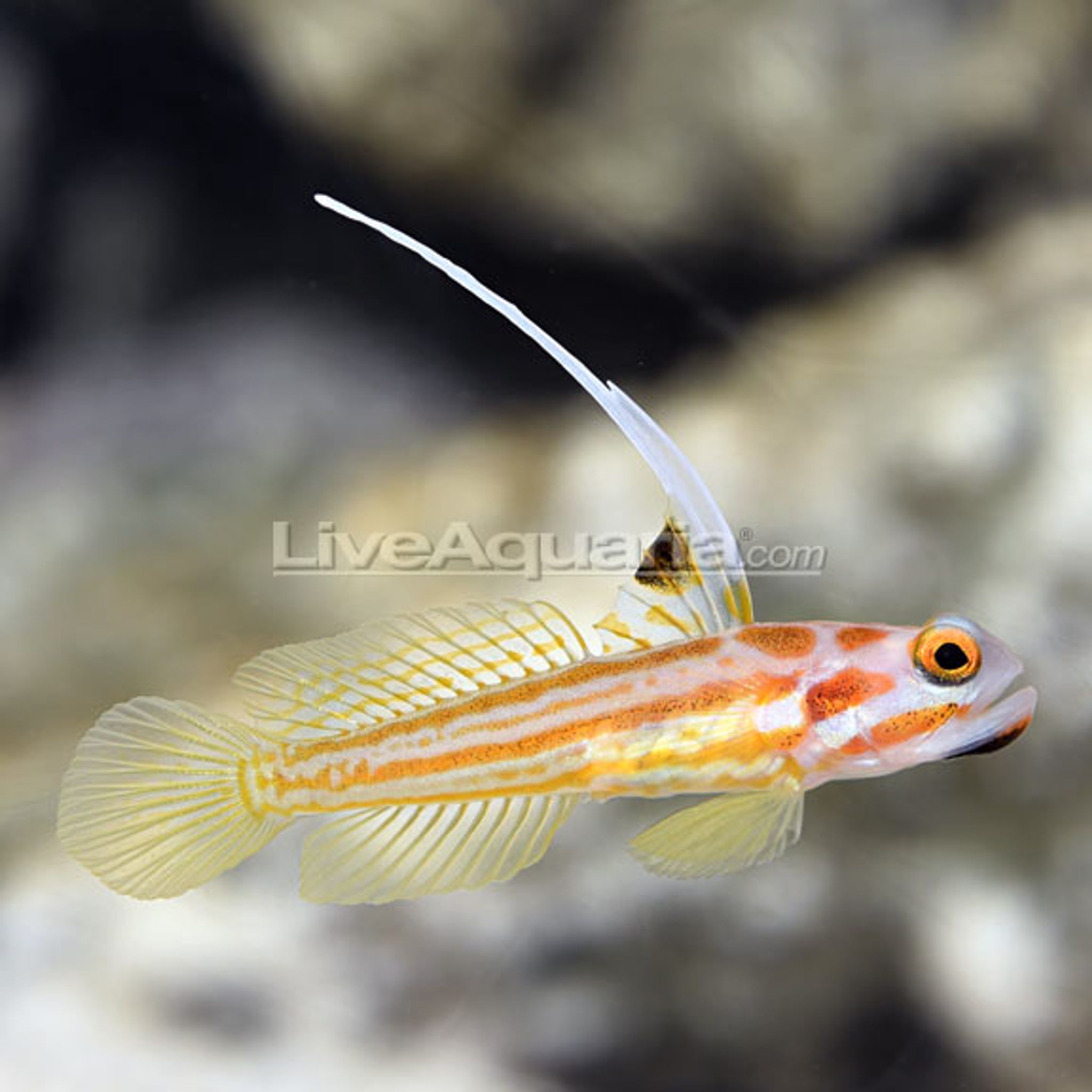
Diamond Goby Care Guide: Tank Size, Diet, Compatibility and Reef Safety
The diamond goby (Valenciennea puellaris) is a popular sand-sifting cleanup fish for reef and fish-only saltwater tanks, but it is also one of the most commonly starved fish in the hobby. This guide covers the tank size, sand bed, feeding routine, and compatibility rules that actually keep one alive long term, plus where its reef-safe reputation needs a few caveats.
Species Snapshot
The diamond goby goes by several common names — diamond watchman goby, orange-spotted sleeper goby, and pearly goby — all referring to the same species, Valenciennea puellaris. It is native to Indo-Pacific reef flats and lagoons, where it spends daylight hours mouthing sand in a continuous search for food.
Key facts at a glance:
| Trait | Detail |
|---|---|
| Adult size | 5–7 in (13–18 cm) |
| Minimum tank size | 30 gal absolute floor; 40–50+ gal recommended |
| Tank shape | Long, low footprint (more sand floor area) over tall |
| Diet | Carnivorous; obligate sand-fauna feeder plus mandatory supplemental feeding |
| Temperament | Peaceful, shy, burrowing |
| Reef compatibility | Safe with corals/inverts; digging can disturb aquascape |
| Lifespan | Several years with consistent feeding |
Tank Size and Setup
Sources disagree on the minimum, ranging anywhere from 30 to 55 gallons. The sensible read: 30 gallons is the absolute floor for a single fish in a mature, well-established system, but 40–50+ gallons is the safer, more commonly recommended target. A larger footprint means more sand-bed surface area, which translates to more naturally occurring food and a lower starvation risk — this matters more for this species than raw water volume.
Footprint beats height. A long, low tank gives the goby more sand to work across than a tall tank with the same gallon count, so favor floor area when choosing between two similarly sized setups.
Sand Bed Requirements
The sand bed is the single most important piece of equipment for this fish:
- Substrate type: fine, sugar-sized sand only. Never use crushed coral or coarse gravel — as the goby repeatedly takes mouthfuls of substrate and sifts it through its gills, coarse material damages gill filaments and can cause chronic irritation.
- Depth: 3–4+ inches, giving room for burrowing and for infauna to establish.
- Maturity: ideally a mature or live sand bed with an established population of copepods, amphipods, and worms, built up over several weeks before the fish is added. A brand-new sand bed has little to no microfauna, which sets the fish up for starvation from day one.
A basic sand and substrate selection is available to browse in FishyHub's substrate and sand category when planning a bed months ahead of adding livestock.
Diet and Feeding
This is where most diamond gobies are lost. In the wild, they graze almost continuously on micro-invertebrates and organic matter in the sand. In a home aquarium, that natural food supply is exhausted within days to a couple of weeks — it is not a sustainable long-term food source on its own, no matter how large or mature the sand bed is.
Supplemental feeding is mandatory, not optional. A practical routine:
- Target-feed frozen/thawed mysis shrimp, brine shrimp, chopped krill, and quality marine pellets 2–3 times per day.
- Deliver food with a turkey baster or feeding tube, aimed directly near the fish's burrow or the substrate where it's actively foraging — diamond gobies are slow, deliberate feeders and will lose out to faster fish competing for free-floating food.
- A refugium producing live copepods is a strong ongoing supplement and helps offset gaps between feedings.
Reading Body Condition
Belly shape is the clearest health indicator you have:
- Rounded belly = well fed, healthy.
- Pinched or concave belly, or a hollow area just behind the head = starvation, which is the leading cause of death for this species in captivity — well ahead of water quality issues or disease.
Checking belly fullness before purchase is worth doing in person or asking about: a specimen that's visibly thin or that ignores food offered in-store is a poor candidate, however healthy it otherwise looks.
Reef Safety: What "Safe" Really Means
The diamond goby does not eat coral polyps or clean-up crew invertebrates, so it's broadly accurate to call it reef safe. But calling it unreservedly reef safe skips a real risk: the danger is entirely mechanical, not dietary.
Constant digging can:
- Bury small frags placed low in the sand-sifting path.
- Undermine rockwork that isn't secured, causing slow shifts or sudden collapses.
- Spray sand onto low-placed corals, irritating tissue or blocking light.
Practical fix: secure all rockwork with epoxy or rock-bonding putty, or rest structures directly on the tank bottom rather than balanced on top of sand, before adding the fish. Keep delicate, low-growing frags out of active digging zones. With those precautions in place, the fish is a genuinely good fit for most reef tanks.
Behavior and Tankmates
Diamond gobies are peaceful and shy, spending most of the day sifting sand and retreating into a burrow when startled. They often form a mutualistic bond with pistol shrimp, similar to the classic shrimp-goby pairing seen in other watchman goby species — the goby stands guard while the shrimp maintains their shared burrow. It's a less iconic pairing than true shrimp gobies form, but it does happen, and it's a fun combination for a tank with a suitable sand bed. Pistol shrimp are stocked in FishyHub's marine shrimp selection for hobbyists wanting to attempt the pairing.
Good tankmates: clownfish, wrasses, tangs, foxface, dwarf/pygmy angels, damsels, cleaner shrimp, cleaner wrasse.
Poor tankmates: other bottom-dwelling sand sifters competing for the same burrow and food niche — other Valenciennea species, jawfish, and similar sand sifters. These pairings usually end in territorial aggression and chronic stress. Keep a single diamond goby per tank, or a bonded, already-mated pair — never two unrelated individuals of the same or a similar species.
Browse compatible marine fish in FishyHub's gobies category alongside other sand-sifting and watchman species.
Jumping Risk
Diamond gobies are strong, capable jumpers, especially in the first weeks after being introduced to a new tank while they're still assessing their surroundings. A tight-fitting lid or mesh screen top is non-negotiable — an open top is the most common reason a seemingly healthy fish simply disappears.
True vs. False Sand Sifters
Not every fish marketed for "sand-sifting" duty actually processes substrate. True sifters — including the diamond goby and its Valenciennea relatives — take actual mouthfuls of sand, filter out edible material through their gills, and expel the cleaned sand. Other species often lumped into the same category merely hover or perch near the sand, picking at visible items on the surface without ever taking a mouthful. If cleanup of the sand bed itself is the goal, confirm a species is a genuine sifter rather than a surface picker before buying.
The Valenciennea Genus and Related Sifters
The diamond goby is one of several popular Valenciennea species, alongside other orange-spotted, maiden, and tiger-patterned watchman-type gobies that share broadly similar care requirements but differ in adult size and coloration. The wider Amblygobius genus contains additional sand-associated gobies with comparable sifting behavior. Across all of them, the core care rules are the same: fine sand, mandatory supplemental feeding, and a secure lid.
Goatfish are sometimes suggested as an alternative sand-working fish, but they grow much larger, need considerably more swimming space, and are generally a poorer fit for a typical reef tank than a Valenciennea goby.
A quick contrast worth knowing: unlike neon gobies, which are commonly bred in home aquaria, diamond gobies are not a species hobbyists typically breed in captivity — their pelagic larval stage makes home breeding impractical for nearly everyone.
Setting Up the Tank Before You Buy
Add a diamond goby only to an established, fully cycled tank with an already-mature sand bed — never to a brand-new setup. A new tank has no accumulated infauna to buffer the gap between feedings, and the fish will begin starving before it even settles in.
Target water parameters:
| Parameter | Range |
|---|---|
| Temperature | 72–78°F (22–26°C) |
| pH | 8.1–8.4 |
| Salinity | 1.023–1.025 SG |
| Nitrate/Phosphate | Low, as with any healthy reef system |
Live rock plays a supporting role too: it provides biological filtration and hiding spots, and as a rule of thumb most reef tanks use roughly 1–1.5 lb of live rock per gallon, adjusted for aquascaping style. Whatever amount you use, secure it against a burrowing goby's digging before stocking.
A Pre-Purchase Prep Checklist
- Sand bed established and matured for several weeks minimum, with visible micro-fauna activity.
- Rockwork bonded or resting on the glass bottom, not balanced on sand.
- Tight lid or mesh screen top installed and tested.
- A feeding plan in place — frozen foods on hand, plus a baster or feeding tube.
- Tank fully cycled with stable, established parameters (not just "cycled" on paper a day or two ago).
Quarantine Considerations
A bare quarantine tank has no sand fauna at all, which makes feeding harder during an already stressful period. A thin layer of sand in the QT tank, more frequent target feeding than usual, and a shorter quarantine window (when the fish otherwise looks healthy and is eating well) all help reduce starvation risk during this stage.
Common New-Hobbyist Mistakes
- Using crushed coral or coarse gravel instead of fine sand.
- Adding the fish to an uncycled or brand-new tank with no established sand fauna.
- Assuming sand-sifting alone provides sufficient nutrition.
- Skipping a lid — the most common cause of a fish suddenly "vanishing."
- Housing two unrelated sand sifters together.
- Placing prized frags directly in the digging path without securing rockwork.
- Underestimating adult size and territory needs when picking a tank footprint.
Frequently Asked Questions
Is the diamond goby reef safe?
Yes, for corals and invertebrates — it won't eat them. The real risk is mechanical: constant digging can disturb rockwork and bury low-placed corals, so secure your aquascape before adding one.
What do diamond gobies eat?
In the wild they graze on sand-dwelling micro-invertebrates. In captivity, feed frozen/thawed mysis shrimp, brine shrimp, chopped krill, and quality marine pellets, target-fed near the substrate 2–3 times daily.
How big of a tank does a diamond goby need?
A 30-gallon tank is the practical minimum for one fish in a mature system, but 40–50+ gallons with a long, low footprint and a deep, fine sand bed is the safer target.
Can you keep two diamond gobies together?
Only as a bonded, already-mated pair. Unrelated individuals will fight over burrow space and food.
Why do diamond gobies die so often in home aquariums?
Almost always starvation, caused by an immature sand bed and insufficient supplemental feeding — not poor water quality. A pinched belly is the early warning sign to watch for.
Will a diamond goby jump out of my tank?
Yes, they are strong jumpers, particularly during the first few weeks after introduction. A tight-fitting lid or mesh screen top is essential, not optional.
Do diamond gobies pair with pistol shrimp like other watchman gobies?
Yes, they can form the same mutualistic burrow-sharing relationship seen in classic shrimp gobies, though the pairing is less commonly highlighted in the hobby.
What's the difference between a diamond goby and other sand-sifting gobies?
Mostly size, coloration, and genus — diamond gobies belong to Valenciennea, while other sifters fall under related genera like Amblygobius. Core care requirements are broadly similar across all of them.
A diamond goby rewards a properly prepped tank with years of steady sand cleanup and quiet, interesting behavior. Once your sand bed, rockwork, and feeding routine are ready, browse available specimens in FishyHub's marine fish category to find a healthy addition for your reef.

