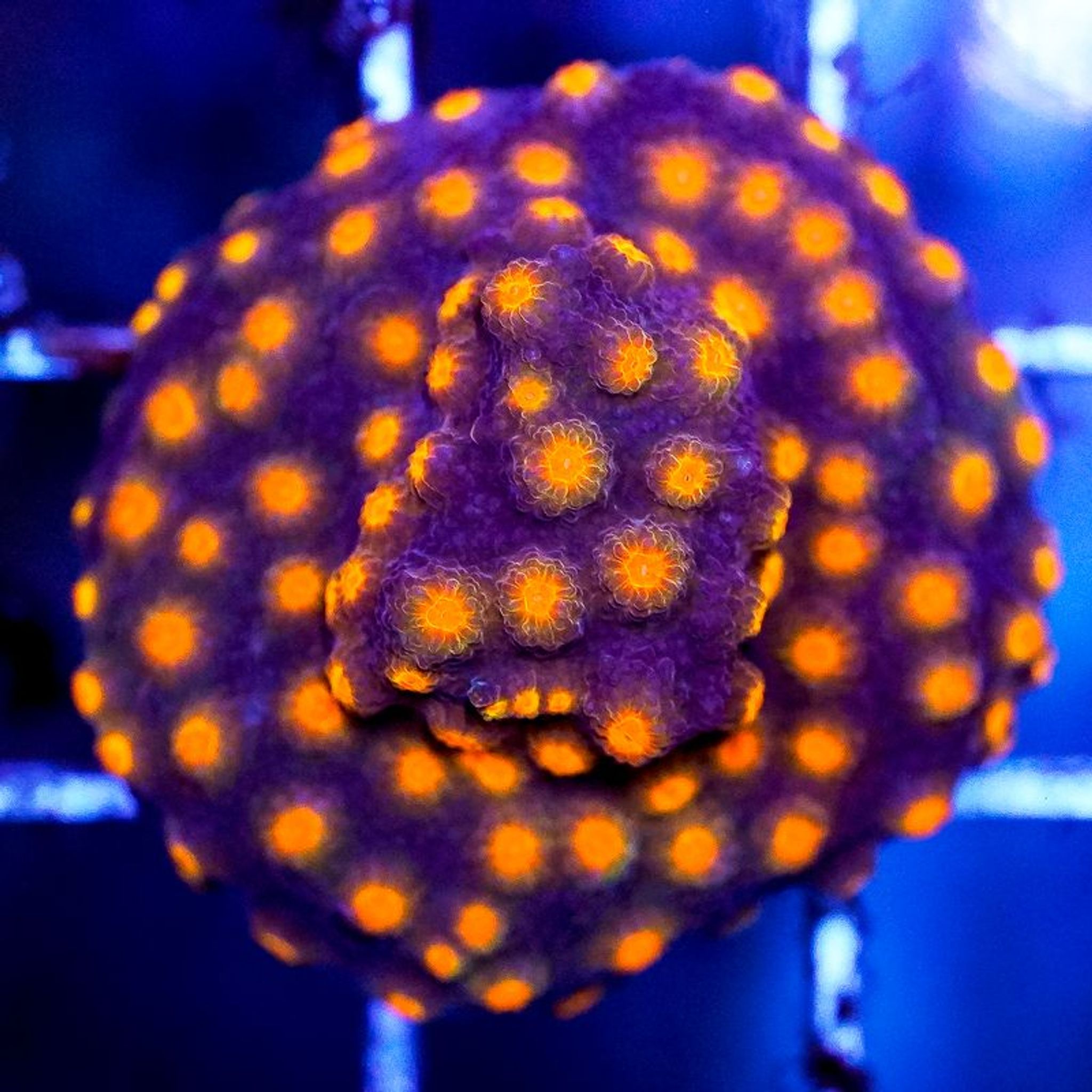
Cyphastrea Care Guide: Lighting, Flow, Feeding and Placement
Cyphastrea is one of the most forgiving encrusting corals a US reef keeper can add to a display, but most of the failures reported with it trace back to lighting shock or swinging chemistry rather than the coral being fussy. This guide covers exact lighting, flow, feeding and placement ranges in imperial reef units, plus the alkalinity and salt-mix habits that actually keep it colorful long-term.
What Is Cyphastrea?
Cyphastrea, sometimes called knob coral or brush coral, is a small-polyp stony coral that grows in an encrusting-to-knobby or branching form. Despite being lumped in with SPS ("small-polyp stony") corals in the trade, it actually belongs to the family Merulinidae, making it a closer genetic relative of Favia and Favites than of true Acropora-type SPS. This taxonomy matters for care: Cyphastrea's faviid-like biology is a big part of why it tolerates a much wider range of light and nutrient levels than demanding Acroporidae species, and why hobbyists consistently rate it as one of the easiest stony corals for a beginner reef tank.
Colonies are popular in the frag trade for their color range — lime green, blue, red/orange, purple and brown morphs are all common, and most morphs fluoresce strongly under blue or actinic lighting.
Lighting
Cyphastrea needs only low-to-moderate PAR, roughly 50–100 micromols, to thrive and color up well. It's one of the more shade-tolerant corals in the SPS-adjacent group, so there's no need to chase high-PAR placement to get good growth or color.
- New frags: start at 50–75 PAR, low in the tank.
- Established colonies: can be acclimated gradually into the 100–150 PAR range if desired, though pushing higher rarely improves color meaningfully.
- Acclimation rule: always ramp brightness slowly over several weeks. A sudden jump in intensity or photoperiod is the single most common cause of bleaching or paling in an otherwise healthy colony.
There's genuine disagreement in the hobby about the exact PAR ceiling — some keepers cap it near 100, others report success well into the 100–150 range once a colony is acclimated. Since Cyphastrea colors up fine under low-moderate light, there's little reason to force it into a high-PAR zone; treat any additional light as optional, not required.
Placement
Give Cyphastrea a spot in the lower-to-mid tank, on rock or a flat, sand-adjacent surface rather than a shelf blasted directly by overhead lighting. Because it's an encruster that spreads outward over time, plan for growth room from the start:
- Leave a genuine buffer zone — at least 2 inches (5 cm) of open rock — around a newly placed frag rather than packing it tight against neighbors.
- Avoid positioning it directly beneath long-tentacle corals like torches, hammers, or Galaxea, which can sting it if tentacles reach down.
- Avoid placing it where its own sweeper tentacles (extended at night) can reach delicate SPS branches nearby.
Planning this buffer into the initial aquascape saves a lot of later frag-cutting and colony relocation once encrusting neighbors start touching.
Flow
Cyphastrea prefers moderate, indirect or turbulent flow rather than a direct laminar blast from a single powerhead. The goal is enough movement to keep detritus and film algae from settling on its flat encrusting surface, without keeping the polyps retracted.
- Too little flow: detritus and film algae accumulate on the colony surface; a turkey-baster blast during routine maintenance helps clear this.
- Too much flow: polyps stay chronically retracted, which reduces both feeding response and visible growth.
Random, chaotic flow from two smaller sources aimed to intersect near the colony usually works better than one strong, focused nozzle.
Feeding
Cyphastrea is not obligate to feed — it gets substantial energy from photosynthesis — but target feeding measurably improves growth rate and color saturation. Good target-feeding food sizes include:
| Food type | Approximate size | Feeding frequency |
|---|---|---|
| Rotifers | ~0.5 mm | 2–3x weekly |
| Cyclops / copepods | ~1–2 mm | 2–3x weekly |
| Fine reef pellets or a gel food | Small crumb | 2–3x weekly |
| Amino acid supplement | Liquid/dosed | Optional, with feedings |
A few practical notes:
- Turn off flow briefly during target feeding. Cyphastrea polyps have weak grasping ability and short reach, so food drifts away before it can be captured if flow is running.
- Overfeeding is the bigger risk. Excess food fouls the local water column and can spike ammonia or nutrients right around the colony — underfeeding is rarely the problem people assume it is.
- Feeding is genuinely optional-but-beneficial: treat 2–3 light feedings a week as a growth and color booster, not a survival requirement.
Water Parameters
Cyphastrea tolerates more nutrient and chemistry variation than true SPS, but it still does best when parameters are held stable rather than chased toward a single "perfect" number.
| Parameter | Target range |
|---|---|
| Temperature | 74–78°F (23–26°C) |
| Salinity (SG) | 1.023–1.026 |
| pH | 8.0–8.3 |
| Alkalinity | 7–10 dKH (many keepers settle on 8–9 dKH) |
| Calcium | 380–450 ppm |
| Magnesium | 1250–1350 ppm |
| Nitrate | ~5–20 ppm |
| Phosphate | ~0.01–0.1 ppm |
Notice that Cyphastrea actually tolerates measurable nitrate and phosphate — it does not want an ultra-low-nutrient "sterile" tank. Running nutrients near zero in pursuit of pristine water is a common mistake that causes this genus to pale and slow its growth rather than thrive.
On alkalinity specifically, sources cite anywhere from 7 dKH (close to natural seawater) up to 12 dKH as acceptable. The practical takeaway: pick a stable point in the 7–10 dKH band and hold it there — consistency matters far more than which exact number you choose.
Understanding and Controlling Alkalinity Swings
Alkalinity is the parameter most likely to quietly drift in a reef tank, and unstable or swinging dKH — in either direction — stresses Cyphastrea and other stony corals more than being a point or two outside the "ideal" target.
Why alkalinity creeps upward
KH can rise gradually from a few common sources:
- Excess two-part dosing relative to actual coral consumption
- Evaporation and top-off water that isn't matched correctly to what's being lost
- New live rock or substrate leaching carbonate into the water column as it settles in
DIY alkalinity testing
Alkalinity is one of the easiest parameters to track at home using a basic acid-drop titration test kit — the same fundamental method used in commercial dKH kits. For trend-tracking to be meaningful, test at a consistent time of day and use the same kit and method each time; small procedural differences between tests can look like a real swing when they're actually just measurement noise.
Practical ways to control KH
- Two-part dosing (calcium and alkalinity additives) works well for small-to-medium tanks needing fine control.
- Calcium reactors suit larger or heavily stocked systems where manual dosing becomes a daily chore.
- A well-matched water-change salt mix alone is often enough for lightly stocked tanks — no dosing required if regular water changes keep pace with consumption.
Whichever method you use, make adjustments gradually. A sudden correction toward a "target" number can shock corals more than the original drift did.
Choosing a reef salt mix
Pick a mix whose out-of-the-box calcium, alkalinity and magnesium numbers already sit close to your target range — you can browse salt and reef supplement options on FishyHub's food and supplements category. Batch-to-batch consistency matters more than price; the cost-per-gallon difference between budget and premium mixes is usually small. Avoid switching brands frequently, and if you do switch, transition gradually across several consecutive water changes rather than all at once.
A simple weekly routine
For a beginner-friendly cadence: test alkalinity, calcium and magnesium weekly, do a water change with a matched salt mix every two weeks, and only add supplemental dosing if you're not keeping up with regular water changes. This keeps parameters stable without turning reefkeeping into a daily chemistry project.
Growth and Fragging
Cyphastrea grows fast relative to true SPS, encrusting over rock or frag plugs and building into knobby or branching mounds. Regular trimming on the frag rack is often needed to keep colonies from overtaking neighbors.
To frag a colony:
- Cut with a water-cooled bandsaw for larger mounds, or coral shears/nippers for smaller branches.
- Dip the cut frag in an iodine-based coral dip to guard against infection at the fresh cut.
- Let the frag heal undisturbed for 1–2 weeks — it typically reattaches and begins extending tissue within that window.
Aggression and Tankmate Spacing
Cyphastrea is mildly-to-moderately aggressive. At night, it extends sweeper tentacles to sting neighboring corals within reach, though its reach is short compared to long-tentacle LPS like Euphyllia or Galaxea. Give it at least 2 inches (5 cm) of clearance from other corals when placing it, and re-check spacing periodically as the colony encrusts outward — what was a safe gap at placement can close within months.
If you're stocking a broader reef community around it, FishyHub's LPS hard corals category and marine invertebrates category are worth browsing for compatible tankmates that won't compete aggressively for space.
Cyphastrea vs. Leptastrea: A Related Look-Alike
Leptastrea is a close cousin readers may already own without realizing it — it shares Cyphastrea's encrusting growth habit and similar low-moderate light needs, around 100 PAR. Two practical differences:
- Feeding response: Leptastrea responds more strongly to direct target feeding and tolerates/benefits from moderate nutrient levels even more than Cyphastrea does.
- Aggression: Leptastrea tends to be somewhat more aggressive toward neighboring corals, so give it slightly more buffer space than you would Cyphastrea.
Care overlaps enough that most of this guide's lighting, flow and chemistry guidance applies to both.
Identifying Cyphastrea vs. Similar Genera
New keepers frequently misidentify Cyphastrea against a handful of similar-looking encrusting genera:
- Leptastrea: very similar corallite size, but a flatter, smoother overall colony texture.
- Juvenile Favia/Favites: larger, more rounded individual corallites that are easier to distinguish once the colony matures.
- Stylophora: typically more clearly branching with a bumpy surface texture, versus Cyphastrea's smaller, tighter knob-like corallites.
If you need help identifying a coral, a clear, well-lit close-up photo plus the colony's approximate size and your lighting setup will get you a far more accurate ID than a description alone — corallite size and colony texture are the two most diagnostic features.
Quarantine Before Adding to Your Display
Because Cyphastrea is such a common mail-order frag, it's worth treating quarantine and dipping as standard practice rather than optional. Dip new frags in a coral dip and observe them in a quarantine or isolation container for one to two weeks before placing them in the display — this catches pests and gives the coral time to acclimate to your tank's specific lighting and flow before it's competing for space with established colonies.
Common Mistakes and Troubleshooting
| Mistake | Result | Fix |
|---|---|---|
| Ramping lighting too fast on a new frag | Bleaching, paling | Acclimate over weeks, not days |
| Placing near long-tentacle LPS | Coral gets stung by neighbor | Keep 2+ inches of clearance |
| Direct high-flow blast | Chronic polyp retraction | Switch to indirect, turbulent flow |
| Low flow / poor direction | Detritus and film algae buildup | Turkey-baster blast during maintenance |
| Nutrients kept near zero | Paling, slowed growth | Allow measurable nitrate/phosphate |
| Swinging or inconsistent alkalinity | Tissue recession, slowed growth | Stabilize dosing and salt-mix consistency |
| Overfeeding target feeds | Local water fouling, nutrient spikes | Feed small amounts 2–3x weekly, flow off |
Frequently Asked Questions
Is Cyphastrea coral good for beginners?
Yes. It tolerates a wide range of light, flow and nutrient levels and is generally forgiving of minor swings, making it one of the hardier stony corals available for a first reef tank.
What PAR does Cyphastrea need?
Roughly 50–100 PAR is sufficient for good growth and color. Start new frags at the lower end and acclimate slowly if you want to push toward brighter placement.
Does Cyphastrea need to be fed?
No, it isn't strictly required, since it gets significant energy from photosynthesis. Occasional small-zooplankton or amino-acid feeding 2–3 times a week noticeably improves growth and color.
Why is my Cyphastrea turning brown or pale?
The most common causes are a too-fast lighting increase, nutrient extremes at either end (too high or too low), or unstable water chemistry. Review any recent changes to your lighting schedule, dosing routine, or water-change frequency first.
Is Cyphastrea aggressive to other corals?
Mildly. It extends short-reach sweeper tentacles at night that can sting nearby corals, so give it at least 2 inches of buffer space and re-check that spacing as it grows.
What's the difference between Cyphastrea and Leptastrea?
They're close cousins with very similar care requirements and appearance. Leptastrea responds more strongly to direct target feeding and tends to be slightly more aggressive toward its neighbors.
How do you frag Cyphastrea?
Cut it with a water-cooled bandsaw for larger pieces or coral nippers for smaller branches, dip the cut frag in an iodine-based coral dip, and let it heal undisturbed for 1–2 weeks before handling it again.
What alkalinity should I run for LPS/encrusting corals like Cyphastrea?
Any stable point between about 7 and 10 dKH works well. Consistency over time matters far more than which exact number you pick.
Ready to add a Cyphastrea frag or find compatible tankmates for your reef? Browse current stock in FishyHub's corals category to see available colonies and colors.

