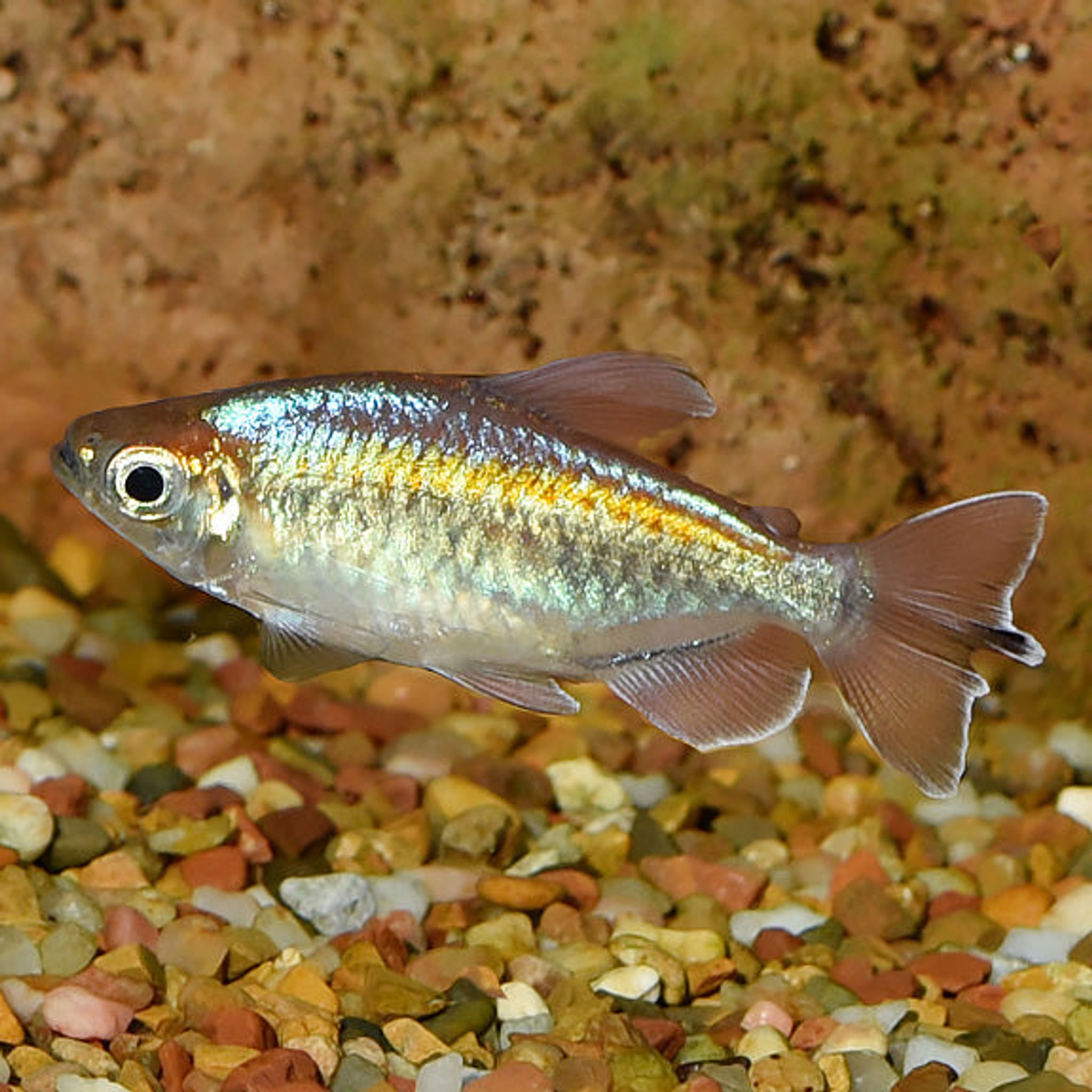
Congo Tetra Care Guide: Tank Size, Diet, Water Parameters and Temperament
Congo tetras need a group of at least 6 in a mature tank of 30 gallons (114 L) or more, ideally a 40 breeder or 55, kept at 73–82°F (23–28°C) with a pH of about 6.5–7.5 and clean water. They are peaceful but shy, eat a varied meaty-omnivore diet, and suit keepers who already have a stable tank running. Think of them as the step up after neons.
Congo Tetra at a Glance
| Trait | Details |
|---|---|
| Scientific name | Phenacogrammus interruptus |
| Family | Alestidae (African tetras) |
| Adult size | Males 3–3.5 in (7.5–9 cm); females 2.5–2.75 in (6.5–7 cm) |
| Lifespan | 3–5 years, sometimes longer |
| Minimum tank | 30 gal (114 L); 40–55 gal (151–208 L) recommended |
| Group size | 6 minimum, 8–12+ better |
| Temperature | 73–82°F (23–28°C), target about 76°F (24–25°C) |
| pH / hardness | 6.5–7.5 stable; 3–18 dGH, softer preferred |
| Temperament | Peaceful, skittish, mid-to-upper swimmer |
| Difficulty | Intermediate |
Identification and Taxonomy
The Congo tetra is Phenacogrammus interruptus. You will still see the older name Micralestes interruptus on some labels. It belongs to Alestidae, the African characin family, which means it is only a distant relative of the South American tetras that fill most community tanks.
In the wild it lives in the lower Congo River basin, including the Stanley Pool (Malebo) area, in slow, murky, tea-stained water. It was collected in the mid-20th century but only became common in stores once commercial breeding took off in the 1970s.
It is one of the largest tetras regularly sold. The body is tall and flattened, and the scales flash blue, gold, green, orange and violet as the light angle changes. Mature males grow a long dorsal fin and a feathery extension in the middle of the tail. Wild fish can reach about 4 in (10 cm) or more.
Telling Males from Females
- Males: larger, more colorful, long dorsal fin and trailing tail filaments.
- Females: smaller, plainer, rounder bellies and short fins.
Most Congos you find in the US are farm-raised in Asia or Florida and sold young, before their fins develop. Full finnage can take around a year, and color develops at 6–12 months, so a tank of dull juveniles is normal at first. Wild-type fish are rarer and tend to be bigger.
Tank Size and Setup
Recommendations range from 15–20 gallons all the way to 55. Treat 30 gallons (114 L) as the absolute floor for a small group, with a 40 breeder or 55 gallon (151–208 L) as the real target for 6–8 fish and a 75 gallon (284 L) or larger for a big school. Congos are fast mid-water swimmers, so length matters more than height. Cramped tanks lead to stress, glass-bashing and torn fins.
Setup Checklist
- Substrate: dark sand or fine gravel.
- Lighting: dim or diffused. Floating plants soften it.
- Layout: dense planting along the back and sides, open swimming room in the middle, plus driftwood and rock for cover.
- Tannins: leaf litter or tea-stained water suits the biotope and deepens color.
- Lid: tight-fitting and essential. New fish dart, crash into glass and can jump, especially in the first weeks.
Plants They Will Not Destroy
Some keepers call Congos plant-safe; others report leaf-nipping. Expect some nibbling of soft-leaved plants and choose tough ones: anubias, java fern, cryptocorynes, vallisneria and Amazon swords.
Building an African River Biotope
For a true Congo-basin display, use sand, twisted wood and a layer of leaf litter, then plant anubias and crinum. Add African tank mates such as a pair of kribensis and a peaceful synodontis catfish. The low light and tannins make the Congos' iridescence stand out.
Water Parameters
Sources disagree on the edges of these ranges, but the working targets are clear.
- Temperature: 73–82°F (23–28°C), aiming for 75–78°F (24–26°C). Water in the low 70s and below is linked to ich.
- pH: some say up to 8.0, one says 6.0–6.5 is ideal. A stable 6.5–7.5 is the practical choice. Stability beats chasing a number.
- Hardness: about 3–18 dGH, softer is better. Once acclimated, most do fine in average US tap water.
- Ammonia and nitrite: 0 ppm.
- Nitrate: ideally under 20 ppm.
Change 25–30% of the water weekly. The first signs of slipping water quality are faded color and ragged fins, so test when you see either.
Diet and Feeding
Congos are omnivores that lean toward meaty foods.
- Staple: a quality flake or small pellet.
- Several times a week: frozen or live bloodworms, brine shrimp, daphnia and mysis.
- Plant matter: spirulina-based foods or blanched vegetables.
Feed small portions 2–3 times a day, only what they finish in about 2 minutes. Carotenoid-rich foods help color. You can browse flake, pellet and freeze-dried options in Food & Supplements on FishyHub.
Temperament and Behavior
Congo tetras are peaceful but shy and easily spooked. They hold the middle and upper water column. Males display at each other with spread fins, but real fights are rare. A group of at least 6, better 8–12 or more, at about 2 females per male reduces sparring and fin damage and brings out better color and display. Like most fish, they may eat fry or very tiny tank mates.
Tank Mates
Good choices:
- Rainbowfish and rasboras
- Larger peaceful tetras: bleeding heart, diamond, black skirt (with caution)
- Peaceful barbs such as rosy and cherry
- Corydoras, bristlenose plecos and loaches
- Gouramis and dwarf cichlids such as kribensis and rams
- African options: kribs and synodontis
- Adult shrimp and snails
Avoid:
- Fin-nippers: tiger barbs, serpaes and some Colombian tetras
- Aggressive or large cichlids
- Bettas (their fins and the Congo's clash in both directions)
- Nano fish small enough to swallow
Deep-bodied tetras, Congos included, can share a 55 gallon or larger with angelfish.
Sample Stocking Plans
| Tank | Stocking example |
|---|---|
| 40 breeder (40 gal / 151 L) | 6–8 Congos + 6 corydoras + a few nerite snails |
| 55 gal (208 L) | 8 Congos + 6 corydoras + a pair of kribensis |
| 75 gal (284 L) | 12 Congos + a school of rainbowfish + bristlenose pleco + loaches |
A group of corydoras covers the bottom while the Congos own the middle.
Related Fish Worth Knowing
Congo Tetra vs Emperor Tetra
The emperor tetra, Nematobrycon palmeri, is often confused with the Congo because males of both have a trident-like tail. They come from different continents and are very different in size. The black or blue emperor is a color form of the same species.
| Congo tetra | Emperor tetra | |
|---|---|---|
| Scientific name | Phenacogrammus interruptus | Nematobrycon palmeri |
| Origin | Congo basin, Africa | Colombia, South America |
| Adult size | 2.5–3.5 in (6.5–9 cm) | 1.5–2 in (4–5 cm) |
| Minimum tank | 30 gal (114 L) | 20 gal (76 L) |
| Temperature | 73–82°F (23–28°C) | 73–81°F (23–27°C) |
| Temperament | Peaceful, skittish | Peaceful, sometimes territorial |
Emperor tetra care is simpler: a 20 gallon or larger planted tank, a small group and the same clean-water routine.
Breeding Imperial Tetras
Imperial or "Kerri"-type emperor fish (the true Kerri tetra is a separate species) scatter eggs among fine-leaved plants or spawning mops over several days, laying small batches daily. Remove the adults afterward and feed the fry infusoria.
African Long-Fin Tetras
Brycinus (also listed as Bryconalestes) longipinnis is a West African relative, usually sold wild-caught. It grows to about 5 in (13 cm), is more boisterous, and needs a large tank. Recent genetic work suggests it is several look-alike species, so keep fish from the same source together. Other Phenacogrammus species, such as the yellow Congo (P. aurantiacus), are further options for African enthusiasts.
Larger Tetras for the Community Tank
Congos are the centerpiece pick. Alternatives include bleeding heart, black skirt, diamond, rosy, Buenos Aires (a plant-eater that can be nippy) and Colombian tetras.
Colombian Tetra Care
Hyphessobrycon columbianus reaches about 2.5–3 in (6.5–7.5 cm), is hardy, and shows a blue body with red fins. Keep 6 or more in 30 gallons (114 L) or larger. It is semi-aggressive and may nip long fins, so it is a poor match for male Congos.
Breeding Congo Tetras
- Condition the group on live and frozen foods.
- Set up a separate 20 gallon (76 L) with soft, acidic water (peat filtration works), 77–79°F (25–26°C), dim light, and spawning mops or java moss over a mesh grid.
- Watch for morning spawning, often triggered by first light.
- Remove the adults once eggs are laid.
- Pull white, unfertilized eggs to prevent fungus.
- Expect hatching in about 5–7 days, which is long for a tetra.
- Feed infusoria, then baby brine shrimp as the fry grow.
Starting Out: Tank Prep, Acclimation and Quarantine
Congos are a poor first fish for a new setup. Before buying:
- Run a fishless cycle for 4–6 weeks, then let the tank mature to 2 months or more.
- Have a test kit, heater, filter and lid in place.
- Add fish gradually, with the Congos last.
- Acclimate slowly and, where possible, quarantine new fish in a separate tank before adding them. A steady tank matters more than hitting exact numbers.
Common Mistakes and Troubleshooting
- Stocking a new tank: often ends in ich and losses. Wait for full maturity.
- Keeping 2–3 fish: they stay pale and skittish. Buy 6 or more.
- No lid: jumping losses, especially early on.
- Bright light and a bare tank: fish hide, fade and hit the glass. Dim the lights and add cover.
- Ragged fins: nippy tank mates are a common cause, but test ammonia and nitrate too.
- Faded color: check water quality, lighting, diet and group size.
- Ich after a temperature drop: raise the temperature slowly to about 80–82°F (27–28°C), treat, and check the heater.
Frequently Asked Questions
Can Congo tetras live in a 20 gallon tank?
Not long-term. A 20 gallon is too short for a group of fast, 3-inch fish and leads to stress and fin damage. Plan on 30 gallons minimum, and a 40 breeder is better.
How many Congo tetras should I keep?
At least 6, with 8–12 or more being ideal. Aim for about 2 females per male to spread out male displays and keep fins intact.
Are Congo tetras aggressive or fin-nippers?
They are mostly peaceful. Males spar and display, but serious fights are rare. They may eat very small fish or fry.
Can Congo tetras live with angelfish or bettas?
Angelfish are a reasonable match in a 55 gallon or larger tank. Bettas are not advised, since long betta fins and long Congo fins invite nipping in both directions.
Why do my Congo tetras look dull?
Check water quality, lighting, diet and group size first, since stress fades color quickly. Young fish and females are naturally plainer, and full color usually arrives at 6–12 months.
Are Congo tetras good for beginners?
They are better as a second-tank fish. They are easy to feed but do not forgive new-tank mistakes, unstable water or small groups.
Ready for Your Congo School?
A mature 40 to 55 gallon tank, a lid, soft light and a group of 8 or more is the recipe for Congos that shimmer instead of hide. When your tank is ready, browse the tetra selection on FishyHub to plan your school and its tank mates.

