Common Hammer Coral Problems: Tissue Loss, Fading, Pests and Recovery
A hammer coral that suddenly looks pale, retracted, or gooey can send any reefer into a panic, but most issues trace back to a handful of causes: shifting water parameters, light or flow placement, pests, or physical injury. This guide walks through how to identify what's actually happening, what to do in the first hour, and how to prevent it from coming back.
What a Healthy Hammer Coral Looks Like
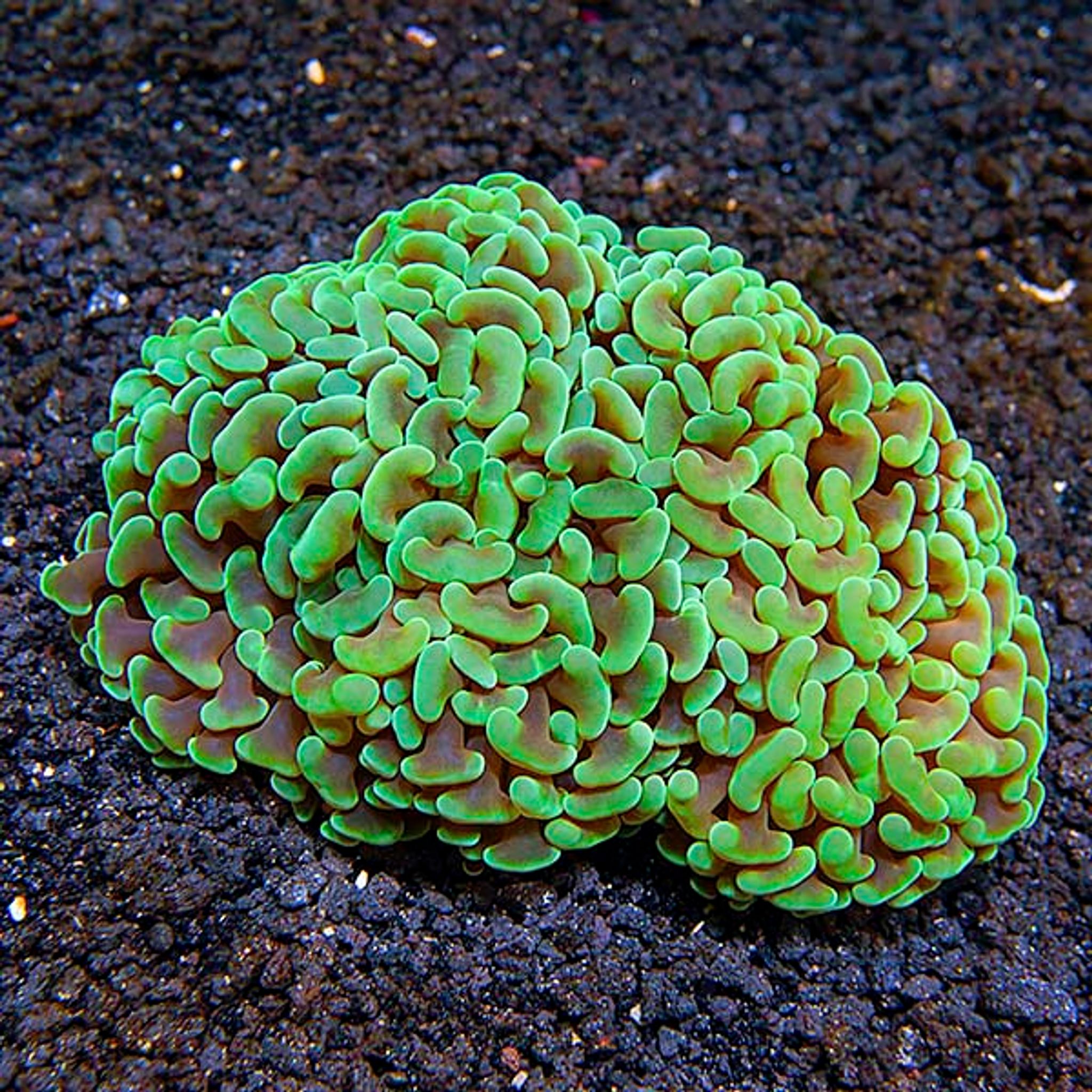
Before troubleshooting, know the baseline. A healthy Euphyllia hammer coral shows:
- Full, plump tentacle extension for most of the day
- A visible, thick tissue "collar" of flesh completely covering the skeleton edge
- Consistent, even coloration across all heads
- Quick retraction when touched or when the lights go out, followed by re-extension within an hour or two
Deviation from this baseline is your signal — but not every deviation is an emergency.
Symptom-to-Cause Triage Table
Use this table to get a fast read on urgency before diving into details.
| Symptom | Likely Cause | Urgency |
|---|---|---|
| Closed/shriveled only at night or after feeding | Normal light-cycle or feeding response | Monitor only |
| Skeleton edge visibly exposed, even with polyps out | True tissue recession | Same-day action |
| Individual polyps detached, floating in tank | Polyp bailout | Emergency — act immediately |
| Pale, washed-out color, tentacles stretched long and thin | Insufficient light or too-low nutrients | Adjust within days |
| Tan/brown worms at polyp base, bite-mark bare patches | Euphyllia-eating flatworms (EEFW) | Same-week treatment |
| Brown, gooey, gel-like tissue spreading from a wound | Brown Jelly Disease (BJD) | Emergency — hours matter |
| Localized tissue damage near a neighboring coral or fish | Sting, sweeper tentacle contact, or nipping | Reposition promptly |
Tissue Loss and Recession
Recession is when flesh pulls back off the skeleton, exposing bare white skeleton underneath. It's rarely a "mystery disease" — it's almost always traceable to an environmental cause.
Water quality instability is the most common driver. Recession problems commonly start once nitrate climbs into the 30–40+ ppm range, while many LPS keepers target roughly 5–10 ppm instead. Phosphate swings, and sudden shifts in pH, alkalinity, or salinity from large or inconsistent water changes, can trigger the same response.
Physical and chemical burns are the other major cause: a frag placed too close to a powerhead, direct high-intensity light with no acclimation period, or contact and stinging from a neighboring coral or pest.
How to Fix Recession
- Test nitrate, phosphate, alkalinity, calcium, magnesium, and salinity to find what actually moved.
- Stabilize with small, frequent water changes rather than one large correction — a big "fix-it" water change is a second stress spike stacked on the first.
- Move the coral away from flow or light extremes.
- Increase target feeding to support tissue rebuilding once the parameter issue is corrected.
Recovery isn't instant. Once the underlying issue is fixed, expect the exposed skeletal edge to take several weeks to re-cover with new tissue, with visible progress typically showing within the first 2–3 weeks and fuller recovery over 4–8 weeks depending on how much tissue was lost.
Polyp Bailout: A Last-Resort Survival Response
Polyp bailout is a severe stress reaction unique to Euphyllia in which individual polyps detach entirely from the skeleton and drift free in the tank. It's a programmed shedding of connective tissue — essentially the coral abandoning its skeleton to try to survive elsewhere.
Common triggers include a sudden temperature swing, a dosing accident, prolonged poor flow or light, or acute shipping stress.
What to do: collect any detached polyps and place them in a calm, stable, low-flow area of the tank or a quarantine container. Some polyps re-attach and slowly regrow a skeleton over weeks to months, but survival is not guaranteed. Treat a bailout event as an urgent signal to audit every tank parameter immediately — it is not a normal or cyclical shedding process.
Fading and Color Loss
Pale or bleached-looking hammer corals get mistaken for "dying" often, when the real issue is usually one of two overlapping causes:
- Insufficient light — often from a fixture that's aged or was recently changed — causes the coral to lose pigment while stretching thinner tentacles to reach toward available light.
- Nutrient deficiency — very low nitrate or phosphate, common in ultra-low-nutrient systems — starves the coral's zooxanthellae of the nutrients they need to keep the coral pigmented and fed.
Long, thin, stretched-out tentacles reaching toward the light are a strong tell for insufficient light and/or insufficient feeding rather than an active disease process.
Light and Flow Targets
Sources vary somewhat on exact PAR numbers for hammers, which is worth acknowledging rather than picking one number and treating it as gospel:
- Some sources cite an ideal range as low as 30–150 PAR; others recommend 100–150, with tolerance up to roughly 150–250 PAR once fully acclimated.
- The more useful approach: start at 75–125 PAR and let tentacle extension and color be your real feedback signal, rather than chasing one exact number.
- Any light increase should happen gradually, over 1–2 weeks — jumping intensity suddenly risks bleaching.
- Flow should be moderate: enough to gently sway the polyp without battering it flat.
Fixing Fade
- Raise light gradually if the coral is stretching or thin — never all at once.
- Test nitrate and phosphate; if either reads at or near zero, that's a likely contributor.
- Add target feeding — mysis, a coral pellet, or amino acids — 2–3 times per week.
On the nitrate question specifically, sources disagree: strict low-nutrient reefers chase near-zero readings, while more LPS-specific guidance warns that pushing nitrate and phosphate too low causes fading and stress in corals like hammers. A sensible middle ground for an LPS-dominant tank is keeping nitrate in a measurable 5–10 ppm range rather than driving it toward undetectable.
Pests That Damage Hammer Coral Tissue
Euphyllia-Eating Flatworms (EEFW)
These small tan or brown flatworms live at the base of polyps, feeding on tissue and leaving bite-mark-like bare or missing patches. They multiply quickly and can spread across a colony or an entire tank if left unchecked.
Treatment protocol:
- Remove affected frags to a quarantine or dip container — never treat in the display.
- Dip and physically dislodge worms using a coral-safe iodine dip or a dedicated dip product.
- Manually remove visible eggs — dipping alone often fails to kill eggs, so this step matters.
- Repeat the process over 1–2 weeks to catch newly hatched worms.
- A brief freshwater dip/shock can also flush worms off, letting tank-side predators (certain wrasses, some gobies) pick them off if done outside the display.
Other Pests and Look-Alikes
- Nudibranchs specific to Euphyllia feed directly on coral tissue and are easy to miss against similar coloring.
- Hitchhiking snails or crabs on new frags can physically damage tissue, mimicking a disease process.
- Tankmates matter too — butterflyfish, some angelfish, and peppermint or other shrimp species nipping at flesh can produce bite-pattern damage that looks exactly like a pest or disease issue, but is really predation. Rule out tankmates before assuming pathogen or pest.
Inspect every new frag closely before it goes anywhere near the display, and quarantine and dip every new coral for 2–4 weeks to catch pests before they establish.
Products for coral-safe dips, target feeding, and treatment are worth having on hand before you need them — you can browse LPS hard corals and coral-safe treatment and medication options on FishyHub.
Brown Jelly Disease (BJD)
Brown Jelly Disease is one of the fastest-moving problems a hammer keeper can face, so it gets its own protocol.
What it looks like: a brown or dark, gooey, gel-like mass sloughing off the coral, almost always starting at a wound site — a fragging cut, a sting, or other physical damage — where protozoans and bacteria invade tissue before it has a chance to heal. Left unaddressed, it can spread polyp-to-polyp and head-to-head across an entire colony within a day or two.
Distinguishing BJD from Normal Mucus
A light, temporary mucus coating after feeding or minor stress is normal and clears within hours. BJD is a spreading, gooey brown or dark mass that visibly increases in volume over hours, not a thin film that comes and goes.
Immediate Action
- Isolate and cut. Using clean cutters, frag out the affected head well into visibly healthy tissue — cutting too conservatively is a common mistake that lets the infection restart from tissue that was already compromised.
- Remove from the display. Move the coral (or affected piece) to a quarantine container immediately to stop the jelly cloud from spreading to neighboring corals or even fish.
- Siphon debris. Remove any visible jelly or debris left in the display promptly.
Direct Treatment
Apply an iodine-based dip (such as a Lugol's-type solution) or a coral-safe treatment dip directly to the wound, plus a short dip of the whole piece. Some keepers report success gently brushing or rinsing jelly off the tissue before dipping.
Preventing BJD
- Minimize physical trauma during fragging or moving corals — clean cuts heal faster and give bacteria less opportunity.
- Quarantine every new arrival before it touches the display.
- Keep tentacles clear of aggressive tankmates that could cause a wound in the first place.
Sting and Aggression
Hammers extend sweeper tentacles loaded with concentrated stinging cells (nematocysts) that can injure neighboring corals — and aggressive neighbors can return the favor. Leave several inches to a foot of clear space around a hammer, and increase that buffer as the colony grows and polyps expand. The white tips visible on hammer tentacles are simply these sweeper tips — completely normal, not a sign of illness, but a reminder to respect spacing.
Stable Parameter Targets
Stability matters more than hitting an exact number, but these are the consensus ranges worth aiming for:
| Parameter | Target Range |
|---|---|
| Temperature | 76–80°F (24–27°C) |
| Specific gravity | 1.025–1.026 |
| Alkalinity | 8–9 dKH (up to ~11 depending on system) |
| Calcium | 420–450 ppm |
| Magnesium | 1,300–1,350 ppm |
| Nitrate | Roughly 5–10 ppm |
| Phosphate | Low, but not zero |
Common Mistakes to Avoid
- Overreacting to nighttime closure. Hammers commonly retract when lights go off or during a feeding response — that's normal. True recession means the skeleton stays visibly exposed even when polyps are extended.
- One large "corrective" water change. This often creates a second stress spike on top of the first. Small, frequent adjustments are safer.
- Placing hammers too close to powerheads or other corals. Physical abrasion from flow or contact is frequently mistaken for disease.
- Skipping quarantine on new frags. This is how EEFW and nudibranchs get introduced to an entire system.
- Under-cutting during a BJD outbreak. Cutting too conservatively lets the infection restart from adjacent compromised tissue.
- Assuming any pale coral is dying. Fading is frequently light- or nutrient-related and fully recoverable with adjustment.
Recovery Timeline Expectations
Recovery speed varies with cause and severity, but as a rough guide:
- Minor recession (parameter-related): first signs of tissue creeping back over skeleton within 1–2 weeks of stabilization; fuller coverage by 4–6 weeks.
- Fading/light or nutrient related: color improvement often visible within 2–3 weeks of correcting light or feeding.
- Polyp bailout survivors: skeleton regrowth, if it happens at all, plays out over weeks to months — patience and stable conditions are the only lever.
- Post-BJD frags: healing at the cut site should show within days; watch closely for another week for any recurrence of jelly at the wound margin.
If there's no improvement at all after 3–4 weeks of stable, corrected conditions, re-test every parameter and re-examine for pests before assuming the coral simply won't recover.
Frequently Asked Questions
Why does my hammer coral look shriveled or deflated during the day?
This is usually normal light-cycle or feeding-response retraction, or the coral adjusting to a recent flow or light change. It's only a concern if it stays retracted for several days with the skeleton visibly exposed underneath.
Is receding tissue on a hammer always fatal?
No. If caught early and the underlying parameter or placement issue is corrected, tissue can regrow, though the exposed skeletal area may take several weeks to fully re-cover.
Can I save a hammer coral that's undergoing polyp bailout?
Sometimes. Collect the loose polyps into a calm, stable, low-flow area — survival depends on how much stress caused the bailout and how quickly the underlying tank conditions are corrected.
How do I tell brown jelly disease from normal coral waste or mucus?
BJD is a spreading, gooey brown or dark mass, typically starting at a wound site, that visibly increases in volume over hours. A normal mucus coating after feeding or stress is thin, temporary, and clears on its own.
What's the fastest way to stop brown jelly from spreading to the rest of my tank?
Remove the coral, or just the affected head, to a separate quarantine container immediately, and siphon out any visible debris left behind in the display.
Why is my hammer coral losing its color even though parameters look fine?
Check light intensity and the age of your bulbs, and check whether nitrate or phosphate have dropped too low — both are common, easy-to-miss causes of fading that a basic parameter check can overlook.
Are the white tips on hammer tentacles a problem?
No. Those are sweeper tentacle tips loaded with stinging cells, used for defense and territory. It's normal — just keep neighboring corals a safe distance away.
How often should I dip a new hammer coral frag and with what?
Dip once the coral has settled after a few days of stable acclimation, using a coral-safe iodine-based or similar dip in a quarantine container — not the display. Repeat after about a week if pests are confirmed.
Getting ahead of these issues starts with sourcing healthy frags and having the right supplies on hand before trouble shows up. Browse LPS hard corals on FishyHub to find your next hammer, along with quarantine and treatment supplies to keep your whole system stable.

