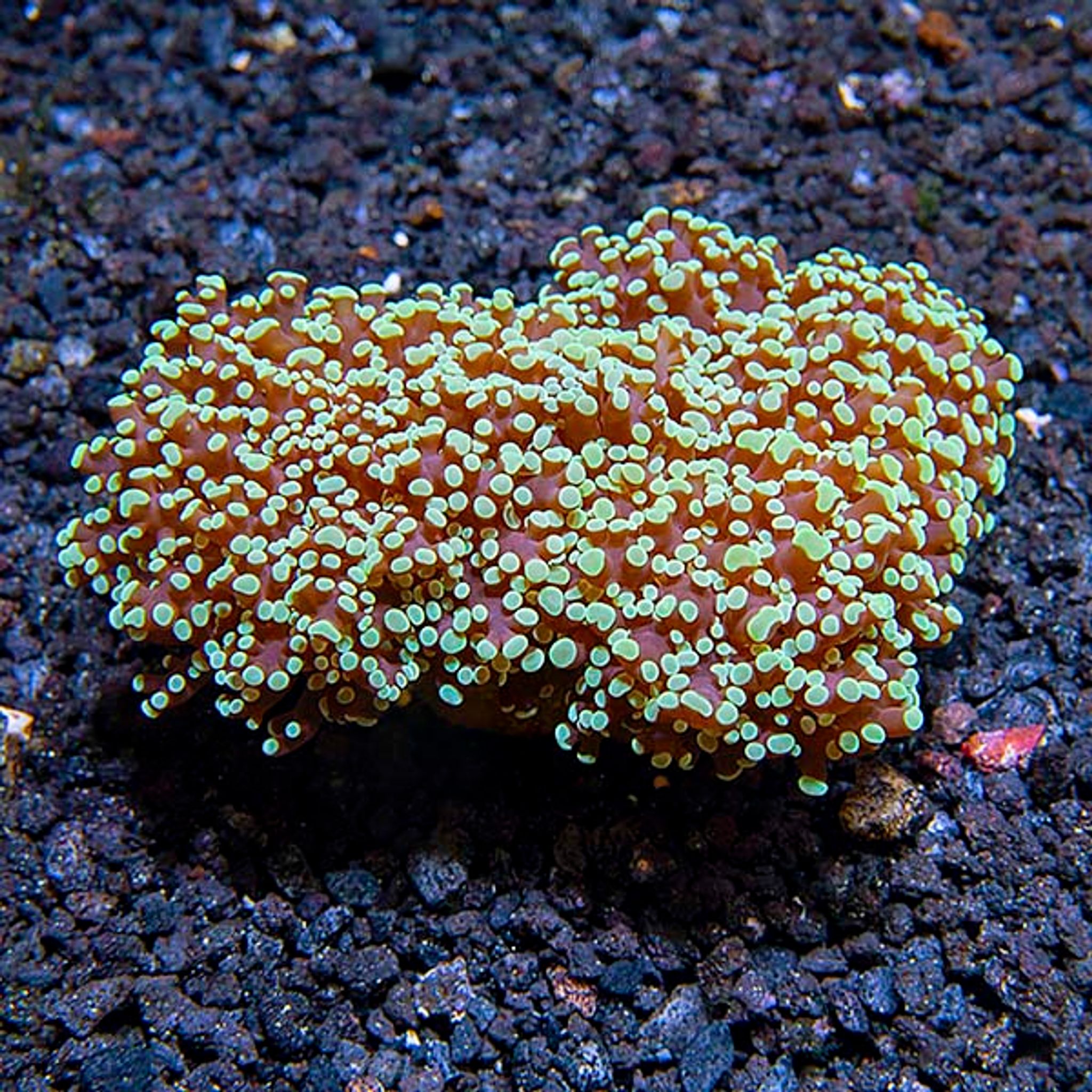
Common Frogspawn Coral Problems: Tissue Loss, Fading, Pests and Recovery
A frogspawn coral (Euphyllia divisa or Euphyllia paradivisa) that suddenly looks receded, washed-out, or covered in slime can send any reef keeper into panic mode. This guide walks through what's actually normal versus an emergency, and gives a clear order of checks so you fix the real cause instead of guessing.
Why Frogspawn Is Sensitive — and What It Actually Needs
Frogspawn belongs to the Euphyllia family alongside hammer and torch corals, prized for its grape-like branch tips and long, swaying sweeper tentacles. Like its relatives, it cares more about stability than hitting a "perfect" number on any single parameter — a tank holding slightly imperfect water steady for weeks outperforms one that swings between ideal numbers day to day.
Target ranges for a healthy frogspawn:
| Parameter | Target range | Note |
|---|---|---|
| Temperature | 76–80°F (24–27°C) | Swings matter more than the exact number |
| Salinity | 1.024–1.026 SG | Drip acclimate any change |
| Alkalinity | 8–11 dKH | Keep it stable; large swings stress tissue fast |
| Calcium | 380–450 ppm | Balance with alkalinity and magnesium |
| Magnesium | 1250–1350 ppm | Low magnesium destabilizes alkalinity/calcium |
| Nitrate | ~2–20 ppm | Near-zero can trigger paling in LPS |
| Phosphate | ~0.03–0.1 ppm | Ultra-low is not automatically "cleaner" |
| pH | 7.8–8.4 | — |
| Light (PAR) | Roughly 50–150 PAR | Start low, raise gradually |
| Flow | Medium, indirect/turbulent | Enough to clean tissue folds, not blast them |
On nutrients: some hobbyists chase near-zero nitrate and phosphate for a "showcase" reef look. For Euphyllia-heavy tanks, that trend is an under-discussed cause of fading and pest vulnerability. Keeping nutrients low but detectable is generally safer for LPS than running them to zero.
On light: recommendations vary — some sources suggest 50–100 PAR, others up to 200. Since tank depth, fixture spectrum, and placement all differ, start low and increase slowly over 1–2 weeks while watching for bleaching (too much) or excessive browning (too little).
Symptom-First Triage: What to Check, in Order
Rather than treating tissue loss, fading, and pests as separate problems, run through this sequence whenever a frogspawn looks off:
- Is the coral actually retracted, or has it lost tissue? Retraction is temporary and reversible; tissue loss exposes white skeleton that doesn't come back on its own.
- How fast is it progressing? Hours-to-a-day changes point to rapid tissue necrosis (RTN) or brown jelly — treat as an emergency. Days-to-weeks changes point to slow tissue necrosis (STN) or chronic stress — you have time to investigate.
- Check flow and placement. Is the coral touching or getting stung by a neighbor, blasted by a powerhead, or sitting in dead flow where detritus collects?
- Test alkalinity, calcium, and magnesium for a recent swing, not just whether the numbers are "in range."
- Check temperature history — a heater or chiller malfunction in the last 24–48 hours is a common, overlooked trigger.
- Inspect closely with a flashlight at night for flatworms, egg strings, or bite marks.
- Review recent changes: new lighting, a moved fixture, a new frag added without quarantine, or a new dip/dose.
Tissue Loss: STN vs. RTN
Slow tissue necrosis (STN) recedes gradually over days to weeks, usually starting at the base or a stressed branch tip. Triggers include alkalinity or calcium swings, low flow with trapped detritus, an unstable frag plug that chronically irritates the base, or lingering shipping stress.
Rapid tissue necrosis (RTN) strips tissue to bare skeleton within hours, most often triggered by a sharp temperature spike, a major parameter crash, physical injury, or a secondary infection on already-damaged tissue.
How to tell normal recession from real trouble: nighttime retraction and mild shrinkage after feeding or during acclimation are normal and typically resolve within 48–72 hours. Watch the trend over that window rather than reacting instantly, unless recession is visibly advancing hour to hour — then treat it as an emergency.
Brown Jelly Infection
Brown jelly disease is a secondary bacterial or protozoan infection that often follows physical damage or existing tissue death. It appears as a reddish-brown, slimy film sitting on top of tissue and can consume an entire colony within a day if ignored.
Treat any brown jelly as an emergency: siphon it out directly without letting it drift onto neighboring corals, cut away visibly affected tissue with a clean blade leaving a margin of healthy flesh, and isolate the coral in a separate flow area or quarantine tank until the cut surface heals. Ignoring even a small patch overnight is one of the most common ways hobbyists lose an entire Euphyllia colony.
Fading and Bleaching
A healthy frogspawn shows tan, green, or gold coloring with tentacles that extend readily. A pale, washed-out branch or a stark white skeleton edge means the coral has lost zooxanthellae (bleached), from light shock, heat stress, chronic low nutrients, or new-tank acclimation stress.
If a coral is fading, resist the instinct to add more light "to help it" — that almost always worsens bleaching. Instead, dim or move the fixture further away, re-acclimate gradually, and confirm nitrate and phosphate aren't running near zero.
Pests That Target Frogspawn
Euphyllia face a narrower set of pests than most soft corals, but the ones that do attack can be serious:
- Euphyllia-eating flatworms — small, flat, brown or tan, hiding in tentacle folds; cause pinpoint tissue loss and chronic retraction.
- A predatory nudibranch species specific to Euphyllia — look for visible egg strings and patches of tissue disappearing.
- Bristleworms and amphipods — mostly opportunistic scavengers on already-dead tissue, not primary attackers.
- Nearby vermetid snails or aiptasia aren't direct predators but can sting and stress a frogspawn indirectly through competition for space.
Inspect new arrivals and existing colonies at night with a flashlight, since these pests are most active and visible after lights-out.
Recovery and Rescue Protocol
When tissue loss, jelly, or a pest infestation is confirmed, work through this sequence:
- Cut away dead or infected tissue if brown jelly or fast necrosis is spreading, using a clean blade or bone cutters, leaving a stable base of healthy tissue.
- Isolate the coral in a quarantine or hospital tank, or at minimum a flow-isolated area, to stop spread to tankmates.
- Improve flow around the base to prevent detritus buildup in the tissue folds.
- Test and stabilize alkalinity, calcium, and magnesium — correct slowly rather than dosing aggressively to hit a number.
- Confirm temperature stability and check the heater and any chiller for malfunction.
- Reduce light intensity temporarily and re-acclimate gradually once the coral stabilizes.
- Manually remove visible pests with tweezers, or use a single coral-safe dip method, following the label's contact time.
Realistic timelines: a coral that stops losing tissue and shows polyp extension again within a few days to a week is on the mend; full color and growth recovery can take weeks to months. If loss is still progressing after 3–4 days of stable conditions, re-check for an overlooked trigger — a stinging neighbor, an unstable frag plug, or a temperature control issue.
Fragging a Stressed Colony
If disease or damage is isolated to specific branches, fragging can save the rest of the colony. Use a clean cutting tool dedicated to coral work, and cut through solid skeleton well clear of any affected tissue. Dip the frag per the product's label before returning healthy pieces to the display or a recovery area. Expect several days to a couple of weeks before cut frags show normal polyp extension again.
Placement, Tankmate Spacing, and Feeding
Frogspawn is one of the more aggressive stingers among LPS corals because of its long, mobile sweeper tentacles, which extend well beyond the base at night. Give it several inches to a foot of clearance from any neighbor, especially other Euphyllia like hammers and torches, which frogspawn readily stings in territorial disputes. Place new colonies mid or lower in the tank, away from direct light and turbulent flow, until they've settled in.
Frogspawn survives on light and photosynthesis alone, but occasional target feeding of meaty foods or a coral pellet noticeably improves growth rate and coloration over time. Feed sparingly, aiming food directly at extended tentacles rather than broadcasting it across the tank.
Buying and Quarantine Tips
Before adding a new frag to your display, inspect it at the point of sale for retracted tissue, brown jelly, or visible flatworms in the folds. Quarantine new corals for a couple of weeks and dip them before introduction — the single biggest step for keeping flatworms and nudibranchs from spreading to an existing Euphyllia collection. Also choose a stable frag plug or rubble base; one that rocks in flow chronically stresses base tissue and is an overlooked cause of ongoing recession.
If you're building or expanding a Euphyllia collection, FishyHub's LPS hard corals selection is worth browsing for healthy frogspawn frags and colonies.
Normal vs. Abnormal Behavior
| Normal | Abnormal |
|---|---|
| Tentacles retract fully at night or extend as sweepers | Tissue recession that continues day over day |
| Reduced extension after feeding or a water change | Reddish-brown jelly film on tissue |
| Skeleton showing at the base as the coral grows | Pinpoint bite marks or visible flatworms/egg strings |
| Rare polyp bail-out under extreme stress | Sudden, hours-long tissue loss exposing skeleton |
Common Mistakes to Avoid
- Overreacting to normal nightly retraction by dosing chemicals or moving the coral unnecessarily.
- Placing frogspawn too close to a powerhead (tissue tearing) or too close to other corals (stinging wars).
- Chasing "perfect" parameters with large swings instead of prioritizing stability.
- Ignoring a small patch of brown jelly overnight, only to lose the whole colony by morning.
- Skipping quarantine and dipping on new frags, letting pests spread to the rest of the collection.
- Adding more light to a fading coral to "help," which worsens bleaching.
Frequently Asked Questions
Why is my frogspawn coral shrinking or receding?
Usually parameter swings, poor flow, stinging from a neighboring coral, or an early infection. Watch the trend over a couple of days and address the most likely trigger rather than changing several things at once.
Is it normal for frogspawn to not extend fully every day?
Yes. Extension varies with feeding schedule, light cycle, and time of day. Only worry if the base tissue itself appears to be thinning or receding.
What does brown jelly disease look like and how urgent is it?
A reddish-brown, slimy film over the tissue. It's an emergency — isolate the coral and physically remove the affected tissue the same day, since it can spread within hours.
How close can I place frogspawn to other corals?
Give it several inches or more of clearance, because of its long sweeper tentacles and its tendency to sting aggressively, including other Euphyllia like hammers and torches.
Why did my frogspawn turn white or pale?
This is bleaching, usually from light shock, heat stress, or chronically low nutrients. Dim the lighting, re-acclimate slowly, and check that nitrate and phosphate aren't sitting near zero.
Can a frogspawn recover after losing tissue down to the skeleton?
Yes, provided healthy tissue remains somewhere on the colony and the underlying cause is fixed. Frag away the dead sections to protect the surviving branches.
What pests specifically attack frogspawn or other Euphyllia?
Euphyllia-eating flatworms and a specific predatory nudibranch species are the main threats. Inspect at night with a flashlight, since both are more visible after lights-out.
Do I need to feed my frogspawn coral?
No, it isn't required since it photosynthesizes, but occasional target feeding of meaty foods supports better growth and color over time.
Keeping alkalinity and temperature stable is easier with the right test kits and heaters on hand — browse FishyHub's treatment and water conditioning supplies to help stabilize parameters before they swing.

