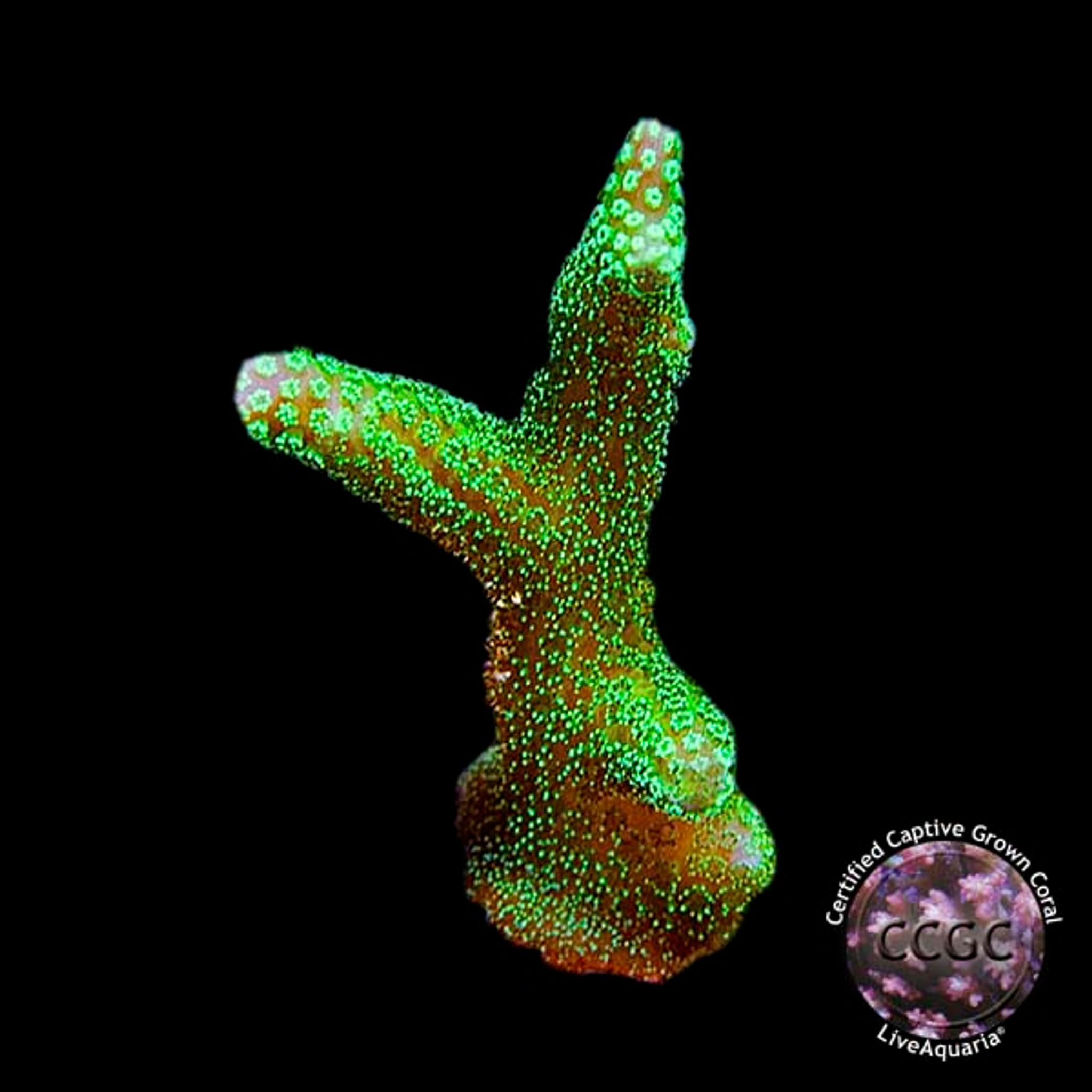
Common Birdsnest Coral Problems: Tissue Loss, Fading, Pests and Recovery
Birdsnest coral (Seriatopora spp.) grows fast and colors up beautifully, but its thin branches make it one of the more accident-prone SPS corals in a home reef. This guide walks through how to tell tissue loss apart from bleaching, normal growth-tip color, and pest damage, then gives a clear action plan for stopping the damage and preventing it from coming back.
Why Birdsnest Coral Is Touchier Than It Looks
Seriatopora hystrix and Seriatopora caliendrum are branching stony corals valued for quick growth and vivid pink, purple, or green coloration. In the wild, fast-growing branching SPS like this are some of the primary reef-builders on a shallow reef flat — laying down skeleton quickly to outcompete neighbors for light and space. That same growth strategy makes captive colonies fragile: thin branches snap easily, and rapid calcification means the coral is unusually sensitive to swings in water chemistry.
Birdsnest is often marketed as a "beginner SPS," but that label only holds once a tank is already stable. In a system still working out alkalinity swings or inconsistent flow, it's frequently the first SPS to show stress.
Ideal Parameters for Birdsnest Coral
Stability matters more than hitting an exact number, but staying within these ranges gives the coral a fair chance:
| Parameter | Target Range |
|---|---|
| Temperature | 76–80°F (24–27°C) |
| Salinity | 1.025–1.026 SG |
| pH | 8.1–8.4 |
| Alkalinity | 8–11 dKH |
| Calcium | 380–450 ppm |
| Magnesium | 1,250–1,350 ppm |
| Nitrate | 5–10 ppm |
| Phosphate | 0.05–0.1 ppm |
Note the nitrate and phosphate ranges sit toward the higher end of typical SPS advice. Some hobbyist guidance pushes for near-zero nutrients for "showcase" coloration, but birdsnest specifically tends to fade and grow slowly when nutrients are stripped too low. Keeping nitrate and phosphate at the levels above, rather than chasing zero, usually produces better color and growth.
Diagnosing Tissue Loss: RTN, STN, and Brown Jelly
The single biggest diagnostic mistake is treating all tissue loss as the same problem. Speed and pattern tell you which one you're dealing with.
Rapid Tissue Necrosis (RTN)
Sudden, fast-moving tissue loss that exposes bare white skeleton within hours to a single day. RTN is usually triggered by acute stress: shipping, a sharp temperature spike, physical damage, or a sudden parameter crash. It can strip an entire colony if not addressed within hours, not days.
Slow Tissue Necrosis (STN)
Gradual recession that creeps back over days or weeks. STN is typically chronic — unstable alkalinity or calcium, poor flow, allelopathy from a neighboring coral crowding it, or old, undosed water are common culprits.
Brown Jelly Disease
A gelatinous brown film covering dying tissue. This is almost always secondary — a bacterial or protozoan bloom feeding on tissue that was already injured or necrotic. Left alone, it spreads readily to healthy branches or neighboring frags.
| Symptom | Speed | Likely Cause | Spreads to Neighbors? |
|---|---|---|---|
| Skeleton suddenly exposed | Hours to 1 day | Acute stress (shipping, temp spike, physical damage) | Rarely directly, but stress source may affect others |
| Tissue recedes slowly | Days to weeks | Chronic alkalinity/calcium instability, poor flow, allelopathy | No |
| Brown gelatinous film | Hours to days | Secondary infection on injured/dying tissue | Yes, if not removed |
| Pale white branch tips only | N/A, ongoing | Normal new growth | No |
What About Pale Tips That Aren't Necrosis?
New growth tips are naturally lighter than mature tissue further down the branch — this is normal and not disease. The distinction: if the skeleton itself is showing through (bare white, no tissue), that's necrosis. If tissue is present but just pale or white, it's either a healthy growth tip or bleaching. Only treat it as a problem if the paling spreads backward into older, previously colored tissue, or coincides with actual recession.
Emergency Response to Tissue Loss
Once you see active recession, act within hours, not days. By the time loss is obviously RTN, adjacent "healthy" tissue may already be compromised.
- Frag well behind the recession line into clearly healthy tissue and move the frag to a quarantine or frag tank.
- Blast away brown jelly or necrotic tissue with a turkey baster, aimed away from healthy polyps.
- Test alkalinity, calcium, magnesium, and salinity immediately and correct anything out of range.
- Check ammonia and nitrite if the tank is newer or recently disrupted — a mini-cycle can trigger tissue loss on its own.
- Increase flow if the affected area was in a low-flow or stagnant spot.
A colony with any living tissue remaining can often be saved by cutting behind the damage; a colony with no living tissue left cannot be reversed.
Fading, Bleaching, and Browning Out
Fading and Paling
- Photo-shock: light increased too quickly (new fixture, moved higher in the tank) can bleach tissue.
- Nutrient starvation: near-zero nitrate/phosphate starves the coral's zooxanthellae, producing an overall pale, washed-out look rather than isolated white tips.
- Natural acclimation: some temporary paling while adjusting to brighter light is normal and typically resolves within a couple of weeks.
Browning Out
The opposite problem — a colony looking dull, brown, and less vivid — usually means excess nutrients paired with too little light. The coral compacts more zooxanthellae into its tissue to compensate, muting color.
Common Pests and How to Deal With Them
Birdsnest's dense branch structure hides pests well, so weekly inspection with a flashlight and a magnifier is worth the few minutes it takes.
- Red bugs (Tegastes acroporanus): tiny red dots scattered across the flesh.
- Acropora-eating flatworms (AEFW): semi-translucent and well camouflaged; look for tissue loss trailing just behind where a flatworm has been feeding.
- Montipora-eating nudibranchs: less common on birdsnest specifically, but crossover pests do occur.
- Coral-eating snails and worms: direct tissue predation, often overlooked among the branches.
- Bristleworms: mostly opportunistic scavengers on already-dead tissue, not usually a primary cause of damage.
- Vermetid snails: clog flow through the branches and sting tissue with mucus strands.
Pest Treatment Steps
- Dip every new coral before it touches the display — an iodine-based or coral-specific dip, dosed per the label, usually with 5–15 minutes of contact time and gentle agitation.
- Manually remove visible pests with tweezers, or dislodge them with a turkey baster.
- For AEFW specifically, some hobbyists use a freshwater dip or an imidacloprid-based dip as a last resort — this is debated because of toxicity risk to fish if any residue reaches the display, so do this dipping in a separate container only, never dosed directly into the display tank, and remove any fish or inverts from that dip water before disposing of it.
- Quarantine all new corals for 2–4 weeks minimum before adding them to the display, giving pests time to show themselves.
Coral-specific dips and quarantine supplies can be found in FishyHub's medication category, and healthy frags for restocking after a loss are available under SPS corals.
Flow, Placement, and Lighting
Birdsnest wants moderate-to-high, turbulent (non-laminar) flow to keep detritus from settling between the branches — stagnant spots at the branch base are a common trigger for localized necrosis. Place colonies mid-to-upper in the tank under moderate-to-high light, roughly PAR 150–300, and acclimate slowly over 2–4 weeks any time light intensity increases.
Nutrient Control Methods and How They Affect Birdsnest
Carbon and GFO Reactors
A reactor is a canister that flows tank water through activated carbon and/or granular ferric oxide (GFO) media. Carbon polishes water and removes dissolved organics and toxins; GFO binds phosphate. Run flow low and gentle so water tumbles through the media rather than channeling straight past it. Typical replacement is every 2–4 weeks for carbon and every 4–6 weeks (or per test results) for GFO.
Organic Filtration
Activated carbon and protein skimming remove dissolved organics that cause water yellowing and added coral stress — distinct from mechanical filtration (floss or filter socks) and biological filtration (the nitrifying bacteria that process ammonia and nitrite).
Carbon Dosing for Nitrate and Phosphate
Feeding a carbon source — vinegar, vodka, sugar, or a commercial all-in-one carbon-dosing product — fuels bacteria that consume excess nitrate and phosphate as they multiply, then export them via skimming. Start with small doses and increase gradually over several weeks while monitoring nutrients. Crashing nitrate and phosphate too fast stresses corals, birdsnest included, and can trigger the same fading discussed above.
Where Phosphate Comes From
Feeding and tap water are the two main sources. RO/DI water, GFO, a macroalgae refugium, and regular skimming keep it in check — reduce it gradually, not abruptly.
Nitrate in Context
Nitrate is the end product of the nitrogen cycle. Low-to-moderate levels are fine and even help coral growth; chronic excess mainly feeds nuisance algae. Manage it with water changes, a refugium, biopellets or carbon dosing, and by not overfeeding.
Dosing for Stability: 3-Part, pH, and Trace Elements
3-part dosing (calcium, alkalinity, magnesium) replaces what corals consume as they build skeleton. For an SPS like birdsnest, daily consistency matters more than hitting an exact target number — alkalinity swings are the single most common cause of SPS tissue stress. Test 2–3 times weekly while dialing in a new dosing routine, and weekly once the tank is stable.
A dosing pump automates daily 2-part or 3-part and trace element additions, cutting down the swings that stress delicate branches — worth adding once a tank has outgrown manual dosing by hand.
Trace elements like iodine, iron, manganese, and strontium support coloration in small amounts, but over-dosing them can be as harmful as a deficiency. Follow test-kit-guided dosing rather than adding "a little extra" on a routine schedule.
Common Mistakes That Cause Birdsnest Problems
- Adding a new frag straight into full light and flow without acclimating gradually — a frequent cause of bleaching or RTN.
- Skipping quarantine or a dip on new frags, which lets AEFW or red bugs spread to the entire SPS collection.
- Letting alkalinity swing while dosing manually — the most common cause of chronic tissue recession in SPS.
- Placing birdsnest in a low-flow dead spot where detritus collects inside the branch structure.
- Crashing nitrate and phosphate to zero too fast to fight algae, which starves and pales the coral instead.
- Ignoring small tissue loss for days instead of checking corals every day or two — by the time it's obviously RTN, more tissue may already be compromised.
- Mistaking normal white growth-tip color for disease and fragging a perfectly healthy coral.
Frequently Asked Questions
Why is my birdsnest coral turning white or losing color?
It's usually one of three things: bleaching from too much light or heat stress, active tissue necrosis (RTN or STN), or — if only the branch tips are affected — normal new growth. Check whether bare skeleton is showing (necrosis) versus tissue that's simply pale (bleaching or light stress).
Can a birdsnest coral recover from tissue loss?
Yes, if caught early. Fragging behind the necrosis and stabilizing water parameters often saves the rest of the colony. Full-colony RTN with no living tissue remaining cannot be reversed.
What causes brown jelly on coral?
A secondary bacterial or protozoan bloom feeding on tissue that's already dying or injured. Remove the jelly and dying tissue promptly with a turkey baster to keep it from spreading to healthy branches or neighboring corals.
How do I get rid of Acropora-eating flatworms or red bugs?
Dip the coral in a coral-specific or iodine-based dip in a separate container outside the display, manually remove any visible pests, and quarantine new corals for 2–4 weeks before adding them to the main tank.
What flow and light does birdsnest coral need?
Moderate-to-high, turbulent flow and moderate-to-high light, roughly PAR 150–300, acclimated gradually over 2–4 weeks whenever intensity increases.
Is low nitrate and phosphate bad for birdsnest coral?
Yes, if it's too low. This species tends to fade and grow slowly when nutrients are stripped to near zero. Aim for nitrate around 5–10 ppm and phosphate around 0.05–0.1 ppm rather than chasing showcase-tank zeros.
How often should I dose calcium, alkalinity, and magnesium?
Daily once a tank carries coral biomass, guided by regular test-kit results rather than a fixed guess. An automated dosing pump helps keep this consistent, and consistency matters more than hitting an exact target number.
Do I need a carbon or GFO reactor for a birdsnest tank?
It's not mandatory, but it helps keep phosphate low and water polished, especially in tanks prone to algae or discoloration. Introduce new media gradually and keep monitoring nutrients so they don't crash too fast.
Browse healthy, quarantine-ready frags and other branching SPS in FishyHub's coral category to restock or expand a stable birdsnest colony.

