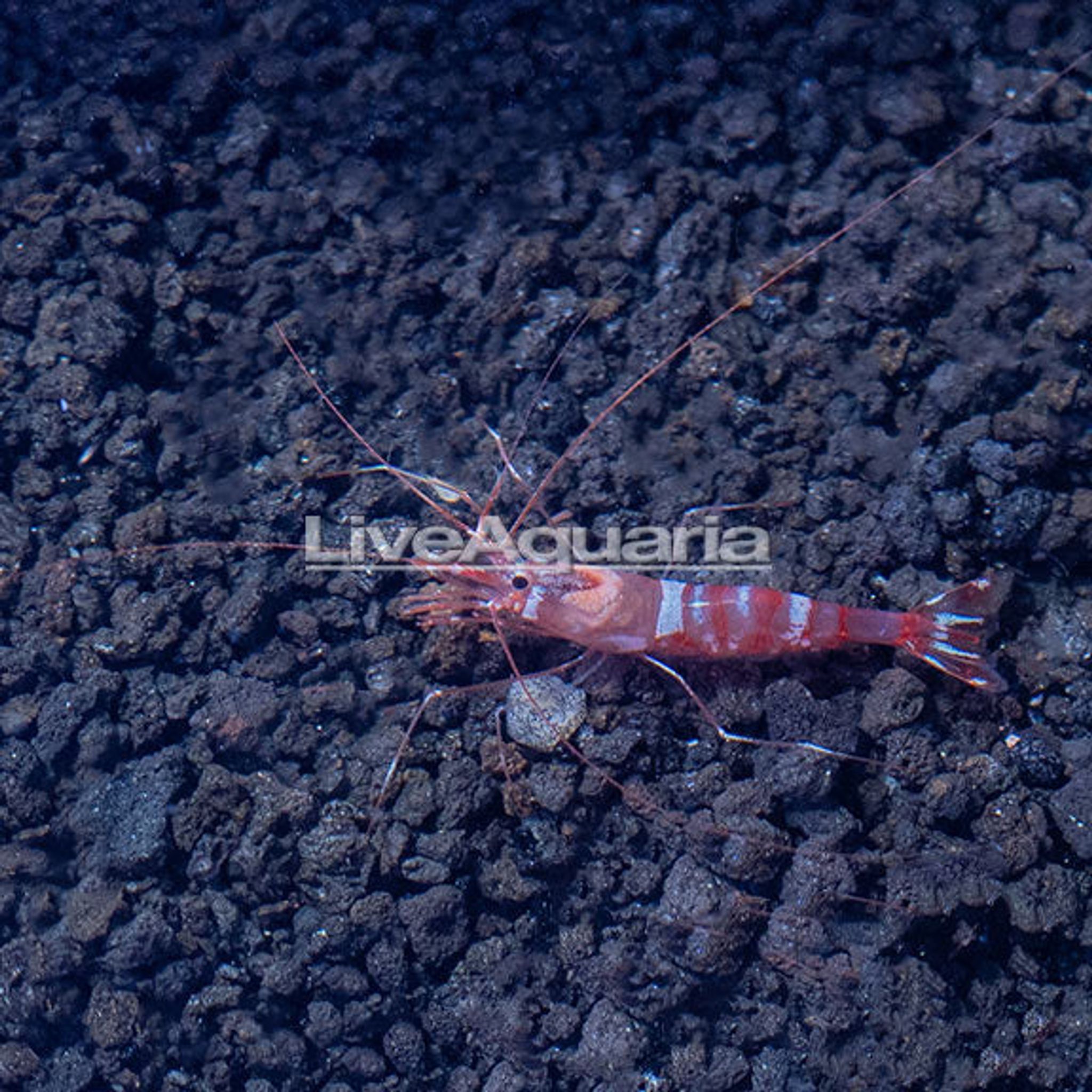
Cleaner Shrimp Care Guide: Tank Requirements, Feeding and Compatibility
The skunk or scarlet cleaner shrimp (Lysmata amboinensis) is one of the easiest marine invertebrates to keep, but it has a short list of things that will kill it fast if you get them wrong. This guide covers tank size, water parameters, acclimation, feeding, molting, and which tankmates are safe, so you can decide whether your setup is ready before you buy one.
Species Snapshot
Cleaner shrimp are Indo-Pacific reef natives, easily identified by a red body with a white stripe running down the back, edged in yellow, and long white antennae. They're often confused with other "cleaner" or similarly named shrimp, so it's worth being precise about the species before you shop.
| Trait | Detail |
|---|---|
| Common names | Skunk cleaner shrimp, scarlet cleaner shrimp |
| Scientific name | Lysmata amboinensis |
| Adult size | About 2–2.4 in (5–6 cm) |
| Lifespan | Roughly 2–3 years with good care |
| Habitat | Marine/reef only — not related to freshwater "cleaner" shrimp like Amano or cherry shrimp |
| Reef safety | Reef-safe; won't eat healthy coral |
That last point matters because searches for "cleaner shrimp" sometimes turn up freshwater algae-eating shrimp by mistake. This is strictly a saltwater species and needs full marine parameters, not a freshwater or brackish setup.
Tank Requirements
Minimum Tank Size
Sources disagree here. Some list 10 gallons (38 L) as workable for a single shrimp; others insist on 20 gallons (76 L) minimum. In practice, 10 gallons can work if the tank is mature, extremely stable, and holds only the one shrimp — but 20 gallons is the safer general recommendation because it buffers parameter swings better and leaves room for a proper cleaning station plus a few tankmates.
Water Parameters
Stability matters more than hitting an exact number. Wild swings in any of these, even within the "safe" range, stress cleaner shrimp more than they would a typical reef fish.
| Parameter | Target range |
|---|---|
| Temperature | 75–82°F (24–28°C) |
| Specific gravity | 1.023–1.025 |
| pH | 8.0–8.4 |
| Alkalinity (KH) | 8–12 dKH |
| Calcium | 350–450 ppm |
| Magnesium | 1200–1350 ppm |
| Nitrate | Under 20 ppm, ideally much lower long term |
The One Absolute Rule: No Copper
Copper-based medications are lethal to shrimp and every other invertebrate at any dose. Never dose copper in a display tank that houses shrimp, and never let copper-treated water reach a shrimp tank through a shared sump or return line. If you've ever medicated a system with copper, quarantine any new fish separately before adding them to a shrimp tank — residual copper in gravel, rock, or equipment can linger.
A related myth is worth flagging directly: hyposalinity (lowering salinity to treat fish disease) is not safe for invertebrates either. It's sometimes assumed to be a copper-free, invert-friendly treatment, but shrimp and other inverts can't tolerate the salinity drop. Treat sick fish in a separate quarantine tank, not the display.
Aquascaping and the Cleaning Station
Cleaner shrimp need live rock arranged with caves, ledges, and overhangs for shelter, but they also need at least one open, elevated perch — a rock outcropping or ledge in moderate flow where fish can approach easily. This becomes the "cleaning station." A few practical tips:
- Place the perch in a spot with visible sightlines, not buried in a cave, so fish can see and approach it.
- Moderate to good flow near the station helps carry scent cues that attract fish, without blasting the shrimp off its perch.
- Keep at least one shaded crevice nearby for the shrimp to retreat to, especially right after molting.
Once established, you'll see fish pause at the station while the shrimp picks over their fins, gills, and mouth — this is normal symbiotic behavior, not aggression from either side.
Acclimation: Get This Step Right
Rushed acclimation is one of the top causes of new-shrimp deaths, since sudden salinity or pH swings hit invertebrates harder than fish. Drip acclimate every new shrimp for at least 45–60 minutes:
- Float the sealed bag to match temperature, then open it gently.
- Set up a drip line into a separate container and run it at roughly 1–2 drips per second.
- Let the water volume increase until the original transport water has been diluted by about 4–5 times.
- Move the shrimp into the tank by hand or net — never pour bag water into the display.
If you're stocking your invertebrate clean-up crew, browse Marine Invertebrates for compatible species that follow the same acclimation approach.
Is Your Tank Ready? A Quick Checklist
Run through this before buying:
- Tank is fully cycled with zero ammonia and nitrite
- Nitrate is under 20 ppm and parameters have been stable for at least a few weeks
- No copper has ever been dosed in this system (or connected sump/QT)
- Tank is 10 gallons minimum, 20+ gallons preferred
- Live rock offers both a sheltered crevice and an open perch
- No known invertebrate-eating predators in the tank
Feeding
Cleaner shrimp are omnivores. Picking parasites, mucus, and dead tissue off fish is a real and useful behavior, but it is not enough food on its own — a shrimp relying only on cleaning activity in a lightly stocked tank will slowly starve or start picking at coral and other invertebrates out of hunger.
Feed the shrimp directly:
- Meaty foods: mysis, brine shrimp, or chopped seafood
- Prepared foods: flake, pellets, or algae wafers that sink to where the shrimp forages
Frequency depends on how much cleaning the shrimp is already doing. A middle-ground schedule that fits most tanks: feed directly 3–4 times a week in a tank with a healthy fish population visiting the station, or daily in a tank with few fish and little cleaning activity. A varied diet supports healthy color and steady growth, and you can find suitable foods under Food & Supplements.
Molting and Growth
Like all crustaceans, cleaner shrimp molt their exoskeleton regularly to grow. A fresh shed looks alarmingly like a dead shrimp curled on the substrate — leave it alone. The shrimp will return to eat its old shell to reclaim calcium and trace minerals. Supplementing calcium and trace minerals, either through reef dosing or a varied diet, supports healthy, complete molts.
Right after molting, the shrimp's new shell is soft and it's vulnerable to injury or attack. Expect it to hide for a day or two — this is normal, not illness.
Reproduction (A Fun Fact, Not a Project)
L. amboinensis is a protandric simultaneous hermaphrodite: it starts life as a male and later develops the ability to function as both sexes. Keeping two shrimp together often results in egg-carrying females, which is a fun milestone to observe. Raising the larvae to adulthood in a home aquarium, however, is extremely difficult — the larvae need 100-plus days across multiple developmental stages, well beyond what typical home equipment supports. Treat egg-bearing as an interesting sign of a healthy pair, not a breeding project to pursue.
Social Behavior: Solo, Pair, or Group?
Cleaner shrimp can be kept singly or as a mated pair, and pairing is often preferable since it can lead to natural breeding behavior described above. Avoid crowding several cleaner shrimp into a small tank — competition for cleaning stations and shelter can trigger aggression, and this risk spikes right after a molt when one shrimp is soft-shelled and defenseless. As a rule of thumb: keep singles or pairs in smaller tanks, and reserve small groups for larger, high-flow systems with abundant separate hiding spots.
Compatibility
Good Tankmates
Cleaner shrimp do well with peaceful reef fish, most reef-safe invertebrates, and corals. They're considered reef-safe overall — they won't eat healthy coral, though a hungry individual may occasionally pick at large-polyp species out of curiosity, which is another reason to feed them directly.
Fish and Invertebrates to Avoid
- Invertebrate-eating predators: lionfish, larger hawkfish, triggerfish, groupers, puffers, and some larger wrasses will eat a cleaner shrimp given the chance.
- Aggressive shrimp species: coral banded shrimp (Stenopus hispidus) are highly territorial and will attack other shrimp species; only combine the two in tanks of 40+ gallons with plenty of separate territory.
Cleaner Shrimp in Context: Other Marine Shrimp
Cleaner shrimp are one of several "clean-up crew" invertebrates hobbyists add alongside hermit crabs, emerald crabs, and sand-sifting stars. What sets them apart is direct interaction with fish rather than just grazing surfaces or sifting substrate. Compared to other marine shrimp, they're also one of the hardiest, most beginner-friendly entry points into shrimp-keeping. A few related species you might encounter:
- Pederson shrimp (Periclimenes yucatanicus): a smaller, nano-friendly anemone shrimp suited to 10–30 gallon tanks. It naturally partners with host anemones like corkscrew or curlique anemones but adapts fine to a live rock or coral perch without one. Feed 2–3 times weekly. Pederson shrimp will move between host anemones, while true cleaner shrimp don't need an anemone at all.
- Coral banded shrimp (Stenopus hispidus): a larger, boldly red-and-white banded species often confused with true cleaner shrimp. It needs 20+ gallons, is highly territorial toward its own kind and other shrimp, and typically retails for roughly $10–30. Lifespan is similar at 2–3 years, but it's kept mainly for looks and pest control rather than fish-cleaning behavior.
- Harlequin shrimp: a specialist predator that eats only starfish (commonly fed inexpensive chocolate chip stars). Its narrow, demanding diet makes it a poor fit for beginners, in sharp contrast to the cleaner shrimp's flexible omnivorous diet.
- Crinoid and saron shrimp: niche, host-specific or nocturnal species. Crinoid shrimp live camouflaged on feather stars, while saron shrimp are colorful, mostly nocturnal reef shrimp with many look-alike species. Neither is core to cleaner shrimp care, but you may encounter them while browsing marine invertebrates.
Sourcing: Captive-Bred vs. Wild-Caught
Cleaner shrimp are increasingly available as captive-bred stock, which tends to be hardier and reduces pressure on wild reef populations. When shopping, favor captive-bred individuals where they're available. You can compare available marine shrimp, including cleaner shrimp, under Marine Shrimp.
Frequently Asked Questions
Will a cleaner shrimp really clean my fish?
Yes — this is natural symbiotic behavior. The shrimp sets up a cleaning station, and fish visit voluntarily to have parasites, mucus, and dead tissue removed. It's a genuine benefit, but it shouldn't replace direct feeding of the shrimp.
Are cleaner shrimp reef safe?
Generally yes. They don't eat healthy coral and are considered safe additions to reef tanks, though a poorly fed individual may occasionally pick at large-polyp species out of curiosity.
Can I keep two cleaner shrimp together?
Yes, and it's often better than keeping just one, since their hermaphroditic biology can lead to a naturally paired, egg-bearing female. Give the pair enough space and separate hiding spots to reduce the risk of conflict right after a molt.
What fish will eat my cleaner shrimp?
Lionfish, larger hawkfish, triggerfish, puffers, groupers, and other invertebrate-eating predators pose a real risk and should be avoided in a shrimp tank.
Why does my shrimp look dead — is molting normal?
Molting is normal and frequent. Right after shedding, the shrimp may hide for a day or two and the discarded shell can look like a dead shrimp — leave it, since the shrimp will eat it. True death shows no movement or response over an extended period, and the shrimp won't return to reclaim its shell.
Can cleaner shrimp live with a coral banded shrimp?
Only in larger tanks of 40 gallons or more with abundant separate territory. Coral banded shrimp are aggressive toward other shrimp species and need plenty of distance to avoid conflict.
What's the difference between a cleaner shrimp and a coral banded shrimp?
They're entirely different species. Cleaner shrimp (Lysmata amboinensis) are smaller, docile, cleaning-station specialists, while coral banded shrimp (Stenopus hispidus) are larger, territorial, and mainly kept for their appearance and pest control rather than fish-cleaning behavior.
Do cleaner shrimp need a host anemone?
No. Unlike Pederson or Yucatan anemone shrimp, true cleaner shrimp don't require an anemone and are perfectly content perching on live rock or a coral ledge.
Ready to add one to your system? Check current availability under Marine Invertebrates and pick a healthy, active specimen with intact antennae and full-colored striping.

