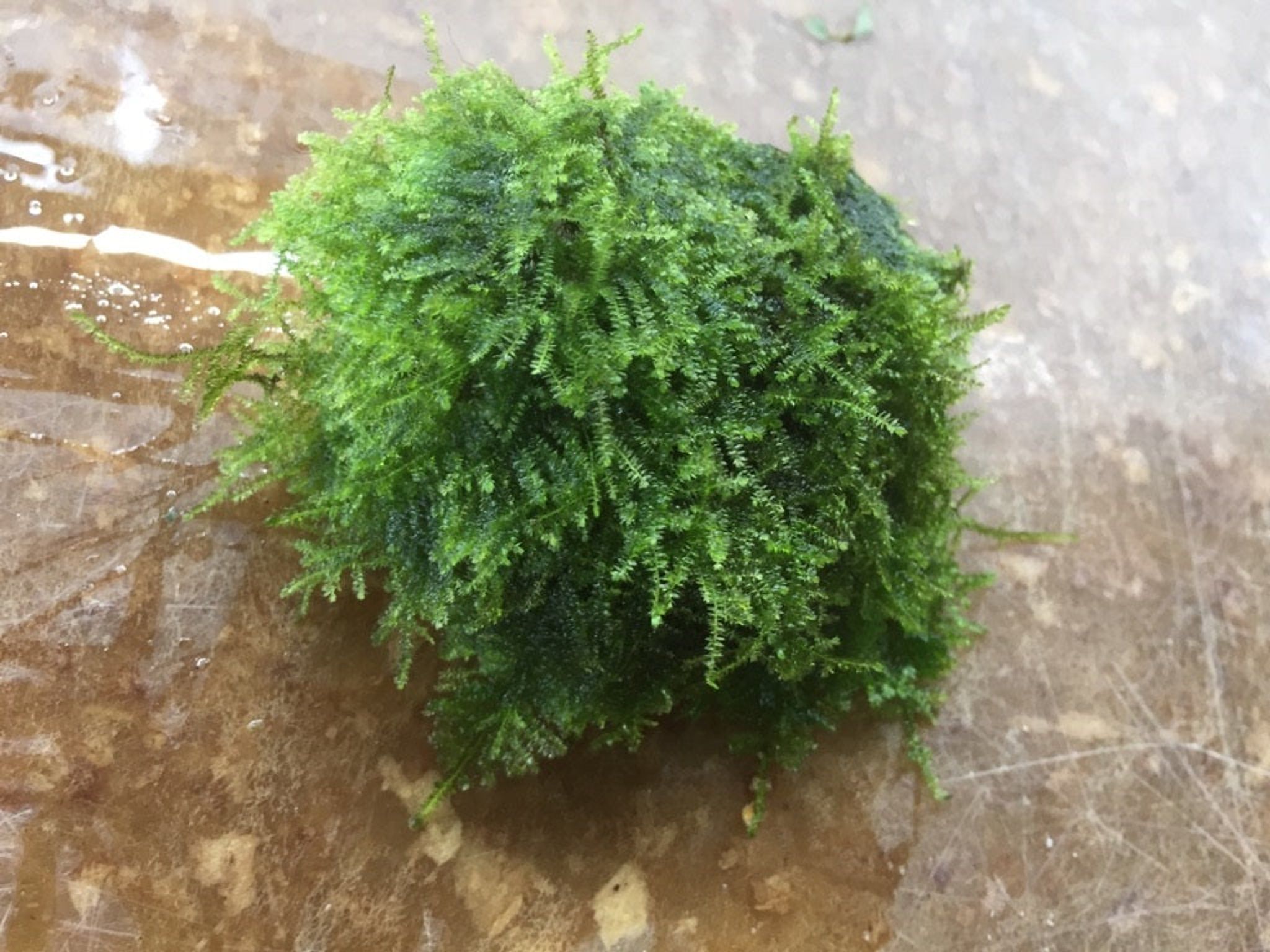
Christmas Moss Care Guide: Light, CO2, Substrate and Growth Tips
Christmas moss is one of the most forgiving aquarium plants you can buy, but a few small adjustments make the difference between a loose, straggly patch and a dense, tree-like carpet or wall. This guide breaks down exactly what light, CO2, substrate, water parameters and attachment method to use, plus how to fix the most common growing problems.
What Is Christmas Moss?
Christmas moss is the common trade name for a carpet-and-wall moss botanically linked to Vesicularia montagnei (sometimes still labeled under the older name V. dubyana). It earns its name from its growth pattern: small, triangular, overlapping branches that fan out like miniature fir-tree branches, especially when trimmed and allowed to grow densely.
Like all mosses used in the aquarium hobby, Christmas moss is an epiphyte. It does not root into substrate the way stem or rosette plants do. Instead, it anchors itself to hard surfaces using fine rhizoids, drawing nutrients mostly from the water column rather than from anything below it.
Does Christmas Moss Need Substrate?
No. Because it's an epiphyte, Christmas moss will attach to and grow on:
- Driftwood
- Rocks and lava stone
- Stainless steel mesh
- Plastic or ceramic decor
A hardscape-only tank with no substrate at all works perfectly well for growing Christmas moss. That said, a nutrient-rich planted substrate isn't wasted effort — it benefits the broader tank by supporting root-feeding plants and improving overall water quality through steady mulm breakdown, which indirectly helps moss growth too. Think of substrate as optional infrastructure for your tank as a whole, not a requirement for the moss itself. If you're setting up a mixed planted tank, a proper aquarium substrate is still worth choosing carefully for your other plants.
Light Requirements
This is where Christmas moss is often misunderstood. It survives fine under low light, but it doesn't necessarily thrive there in the way most hobbyists picture when they imagine a dense moss wall.
| Light level | Growth form | Speed | Best for |
|---|---|---|---|
| Low (basic LED, low PAR) | Leggy, looser, uneven | Slowest | Background filler, low-tech tanks |
| Medium | More compact, fuller | Moderate | General planted tanks |
| Medium-high | Tight, dense, tree-like | Fastest | Show-quality carpets and moss walls |
If your goal is simply green cover in the background, a basic light is fine. If you want the classic, tightly-branched "Christmas tree" look people search for, you'll need moderate-to-high light intensity. Just watch for algae: pushing light higher without balancing nutrients and CO2 is the single biggest cause of algae overtaking moss (more on that below).
For readers chasing carpet-quality density, upgrading from a basic beginner fixture to a stronger full-spectrum LED with published PAR values is the natural next step — PAR output and beam spread matter far more than raw wattage when comparing fixtures. You can compare options in FishyHub's LED lighting category.
Photoperiod
Most sources skip this detail, but it matters: run 6–8 hours per day for a low-tech setup with no CO2, and you can extend to 8 hours in a higher-light, CO2-supplemented tank without inviting excess algae. Longer photoperiods don't grow moss faster — they mostly just raise algae risk.
Does Christmas Moss Need CO2?
No. Christmas moss grows without supplemental CO2, which is exactly why it's a staple in low-tech and beginner tanks. However, added CO2 (or at minimum a liquid carbon supplement) noticeably speeds up growth and thickens the moss — the effect is most visible when paired with medium-to-high light. Low light with no CO2 gives you the slowest, but easiest and most foolproof, setup.
Fertilization
Because Christmas moss pulls the bulk of its nutrients from the water column rather than the substrate, root tabs do little for it directly. A liquid fertilizer dosed regularly is optional but helpful, especially in tanks with light bioload or infrequent water changes. It's not a requirement — moss in a lightly stocked, low-tech tank often does fine on fish waste alone.
Water Parameters
| Parameter | Range | Notes |
|---|---|---|
| Temperature | 65–82°F (18–28°C) | Sweet spot roughly 68–76°F (20–24°C); sustained heat above ~80°F (27°C) can slow or stall growth |
| pH | 5.0–7.5 | Soft, slightly acidic to neutral water is preferred |
| GH/KH | Soft to moderately hard | Most US municipal tap water falls in an acceptable range; extremely hard tap water benefits from a partial RO/DI blend |
| Flow | Gentle to moderate | Near a filter outflow works well; avoid dead, stagnant corners |
| Water quality | Low ammonia/nitrite | Clean water is essential — moss stalls and collects debris/algae in dirty water |
Christmas moss tolerates a wide pH swing, but consistency matters more than hitting an exact number. Sudden parameter shifts are a common trigger for browning, discussed further down.
Growth Rate: What to Expect
Christmas moss grows at a slow-to-moderate pace — noticeably slower than Java moss, but faster than Fissidens. Realistic timelines:
- A moss wall or carpet typically takes 2–3 months to fill in under good conditions.
- The dry-start method (growing moss emersed on damp substrate before flooding) can produce a denser carpet in as little as 8 weeks.
- Under low light with no CO2, expect the slow end of that range or longer.
Patience is the most underrated "care tip" here — expecting fast results is the number one reason beginners think something's wrong when nothing actually is.
How to Attach Christmas Moss
Cyanoacrylate (Superglue Gel)
An aquarium-safe cyanoacrylate gel is the fastest and cleanest method. Dab a small amount onto your hardscape, press a thin layer of moss against it, and hold for a few seconds. It cures underwater within seconds to minutes and becomes completely invisible once the moss grows over it.
Thread or Fishing Line
Tie thin layers of moss to driftwood, rock, or stainless mesh using cotton thread or fine fishing line. A few practical notes:
- Cotton thread breaks down naturally over several weeks, which is convenient since you don't need to remove it.
- Fishing line does not decompose — trim or remove it once rhizoids have anchored the moss (usually a few weeks), so it doesn't girdle new growth as the moss thickens.
- Spread moss in a thin, even layer. Tying it in a thick clump blocks light and flow to the center, causing die-off and detritus buildup at the base.
Moss Walls and Carpets
- Mesh + suction cups: sandwich a thin moss layer between two pieces of fine plastic or stainless mesh, then suction-cup the panel to the glass or a background surface for a moss wall.
- Slurry method: blend moss with a small amount of tank water into a rough paste, then "paint" it onto rocks or hardscape for even coverage across an irregular surface.
- Dry-start method: press moss onto damp substrate or hardscape in an unflooded tank, mist regularly, and keep humidity high for several weeks before flooding — this often produces the densest, most even carpet.
Trimming and Propagation
Once established, Christmas moss is low-maintenance. Periodic trimming with sharp scissors:
- Keeps growth compact and encourages a bushier, fuller form.
- Prevents the base from trapping debris and going anoxic underneath.
- Produces clippings you can reuse — any fragment with rhizoids attached can be tied or glued elsewhere to start a brand-new patch. This is essentially free propagation by division.
Common Mistakes and Troubleshooting
| Problem | Likely cause | Fix |
|---|---|---|
| Die-off in the center of a clump | Tied too thick, blocking light/flow | Re-tie in thinner layers |
| New growth strangled by line | Fishing line left on too long | Trim/remove line once anchored |
| Slow or no visible progress | Normal growth rate, not enough time | Wait — expect 2–3 months for a full carpet |
| Algae overtaking the moss | Light too high for available CO2/nutrients | Reduce photoperiod/intensity or add CO2; add shrimp or an algae-eating crew |
| Browning or melting sections | Transport/acclimation stress or sudden parameter swings | Trim dead parts, stabilize parameters, wait for regrowth |
| Detritus trapped in the moss | Poor flow | Improve circulation; gently rinse/agitate moss during water changes |
| Bleached or stressed patches | Sudden move into intense light | Acclimate gradually to brighter fixtures |
A Note on "Melting" After Purchase
Christmas moss is frequently sold in tissue-culture cups. Moss grown emersed in these cups often browns or thins somewhat after being submerged in your tank — this is typically transport and acclimation shock, not a sign of poor long-term health. Trim off the affected portions, keep parameters stable, and give it a few weeks; fresh, healthy growth usually follows.
Christmas Moss vs. Similar Mosses
Buyers often confuse Christmas moss with other carpeting mosses. Here's a quick comparison:
| Moss | Growth speed | Growth pattern | Best use |
|---|---|---|---|
| Christmas moss | Slow-moderate | Triangular, tree-like branching | Carpets, walls, dense hardscape cover |
| Java moss | Fast | Irregular, tangled | Fast cover, breeding tanks, easiest option |
| Weeping moss | Slow | Long, drooping branches | Hanging/cascading effects off wood |
| Flame moss | Slow-moderate | Upright, flame-shaped spikes | Vertical accents on rock or wood |
Tankmates and Special Uses
Christmas moss pairs especially well with:
- Shrimp (cherry, Amano and similar dwarf species) graze biofilm and algae off the fine branches without damaging them.
- Fry use dense moss as cover and a grazing ground for microfauna.
- Snails are safe around it.
- Some algae-eating fish, like Siamese algae eaters or flying fox, may nibble at or dislodge small sections, so weigh that against your goals if you're building a dedicated moss wall.
Two uses that don't get enough attention: Christmas moss is a popular spawning medium for egg-scattering fish, since its fine structure hides and protects eggs, and it adds meaningful biofilter surface area in shrimp and fry tanks by hosting biofilm and microfauna.
If you're building a shrimp-focused tank around your moss, browse shrimp for sale to pair the right species with your setup, or check algae-eating cleanup crew options if algae becomes an issue.
Best Beginner Plants to Pair With Christmas Moss
If you're building a low-tech planted tank around Christmas moss, these species share its tolerance for low light and no CO2:
- Java fern – attaches to hardscape just like moss; extremely low-maintenance.
- Anubias – slow-growing, low-light, epiphytic like moss.
- Amazon sword – a rooted background plant that adds contrast and height.
Matching Plants to Tank Role
Think in terms of layers when choosing plants:
- Carpet/bottom layer: Christmas moss, Java moss, dwarf hairgrass.
- Midground/background: Amazon sword, Java fern, Anubias, cryptocoryne species.
Match each plant's light and CO2 demand to your actual setup before buying — a low-tech tank with a basic fixture will struggle with high-demand carpeting plants but will grow moss, ferns, and anubias without issue.
Low-Light Options Beyond Moss
Anubias, Java fern, and cryptocoryne let beginners get the real benefits of live plants — nitrate uptake, oxygenation, a more natural look — without a steep lighting or CO2 learning curve. One common pitfall: cryptocorynes can experience "crypt melt," where leaves suddenly die back after being moved or after a parameter shift. This looks alarming but is usually not fatal; new leaves typically regrow once the plant settles.
Frequently Asked Questions
Does Christmas moss need CO2?
No. It grows without supplemental CO2, but adding CO2 or a liquid carbon supplement speeds up growth and increases density, especially when combined with higher light.
Does Christmas moss need special substrate?
No. It's an epiphyte that attaches to hardscape rather than rooting in substrate, so any standard substrate — or no substrate at all in a hardscape-only tank — works fine.
How do I attach Christmas moss to driftwood or rock?
Use an aquarium-safe cyanoacrylate gel for instant, nearly invisible attachment, or tie it on with cotton thread or fine fishing line until rhizoids anchor it naturally, which usually takes a few weeks.
How fast does Christmas moss grow?
It grows at a slow-to-moderate pace, slower than Java moss. Expect roughly 2–3 months for a full carpet or wall to fill in, or about 8 weeks using the dry-start method.
Why is my Christmas moss turning brown or melting?
This is usually acclimation stress from shipping or tissue-culture cups, a sudden parameter swing, or sustained high heat. Trim off the affected sections and keep conditions stable — new growth typically returns within a few weeks.
Can Christmas moss grow in low light?
Yes. It survives fine in low light but grows more slowly and looser. Medium-to-high light produces the classic dense, tree-like form most hobbyists want.
Is Christmas moss good for shrimp tanks?
Yes. It's a favorite among shrimp keepers because it offers grazing surface for biofilm and microfauna, plus cover for fry and molting shrimp, without any risk to the animals.
How do I trim and propagate Christmas moss?
Trim with sharp scissors to keep growth compact and bushy. Any cut fragment with rhizoids attached can be tied or glued to a new surface to start another patch — a simple form of propagation by division.
Ready to start your own moss wall or carpet? Browse aquarium-safe substrate, lighting, and hardscape essentials in FishyHub's substrate category to put together everything your Christmas moss setup needs.

