Cherry Shrimp Care Guide: Setup, Feeding, Water Parameters and Breeding
Cherry shrimp are the most forgiving dwarf shrimp for a first colony, tolerating a wide range of conditions while still breeding readily once the tank settles in. This guide covers the exact setup, water parameters, feeding routine, and breeding process, plus the handful of mistakes that actually wipe out colonies.
What Exactly Is a Cherry Shrimp?
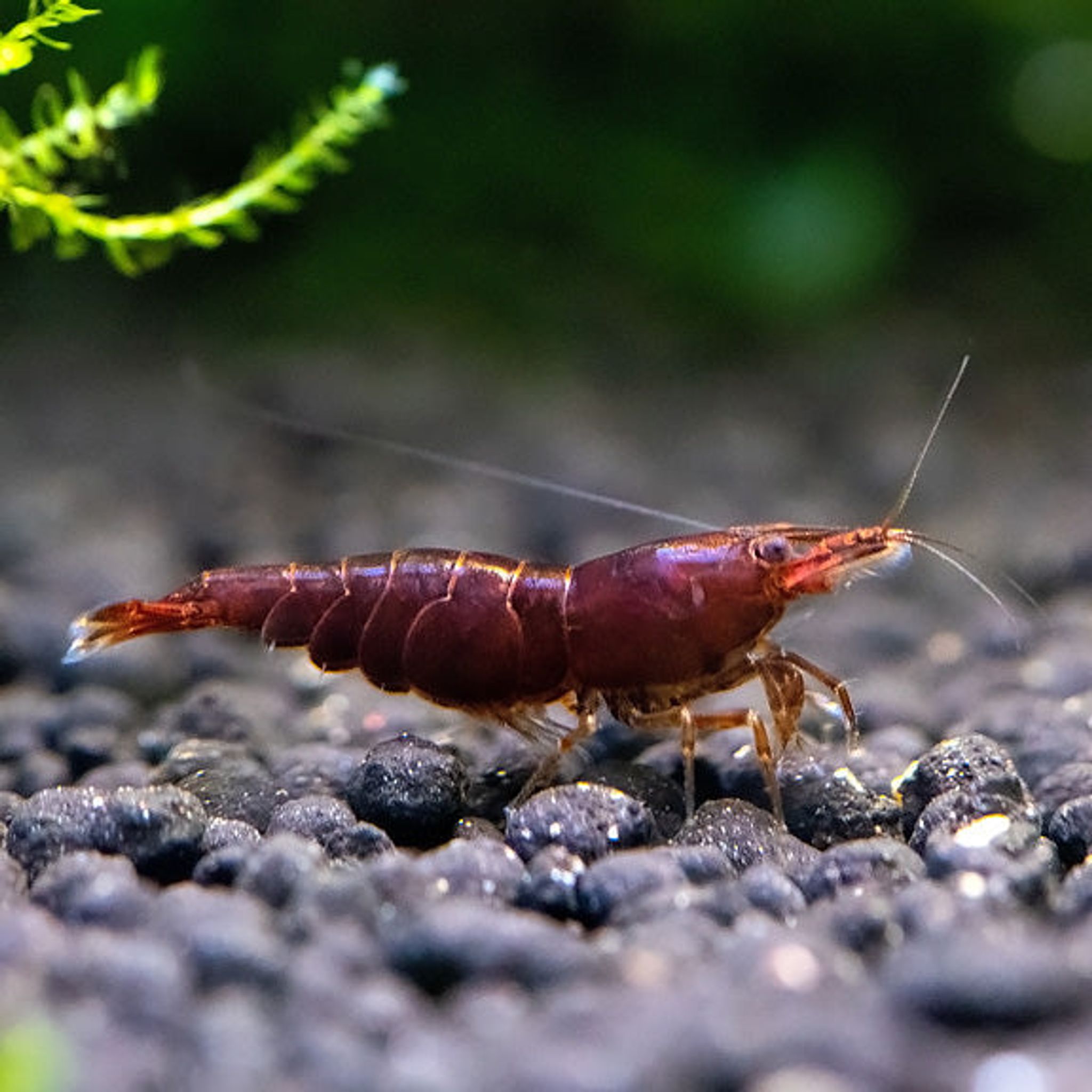
Cherry shrimp are a selectively bred color line of Neocaridina davidi, a small freshwater shrimp native to Taiwan that in the wild is a plain brown or olive color. "Cherry shrimp" technically refers to the red color morph, but blue, yellow, orange, and black lines sold under other names are the same species. This matters for breeding: every Neocaridina color variety can interbreed with every other one.
Adults reach roughly 1–1.5 inches (2.5–4 cm), with females noticeably larger, rounder-bodied, and more solidly colored than males. Lifespan runs about 1–2 years. They're an easy entry point into shrimp keeping because they're hardy, inexpensive, and tolerate more parameter drift than the more delicate Caridina species (crystal or bee shrimp), which need narrower, more acidic water and are considerably less forgiving of beginner mistakes.
Tank Setup
A 5-gallon (19 L) tank is a workable minimum for a small group, but 10 gallons (38 L) is the commonly recommended starting size for a stable colony that will actually breed well — more water volume buffers against the sudden swings that stress shrimp.
Key setup elements:
- Filtration: a sponge filter, or a fine pre-filter sponge fitted over a power filter's intake, is strongly preferred. It prevents shrimplets from being pulled in and keeps flow gentle.
- Substrate: inert or shrimp-safe substrate; dark colors intensify shrimp coloration.
- Plants: dense live plants such as Java moss, Java fern, and other mosses give shrimplets cover and constant grazing surface.
- Hardscape: driftwood adds biofilm-growing surface area and cover.
- Leaf litter: Indian almond (catappa) leaves are the most commonly used botanical; mulberry and guava leaves work the same way. All three leach tannins, mildly soften and acidify water, and grow a biofilm coating that shrimp graze as the leaves decompose. Rotate or replace leaves every couple of weeks.
The tank must be fully nitrogen-cycled before any shrimp go in. Shrimp are more sensitive to ammonia and nitrite spikes than most fish, so skipping the cycle is one of the fastest ways to lose an entire order.
Shrimp thrive in heavily planted freshwater setups generally — plants supply grazing biofilm, cover from stress, and help buffer water quality, while the shrimp return the favor by grazing algae and detritus off leaves and substrate.
Water Parameters at a Glance
Sources scatter these numbers across paragraphs; here they are in one table.
| Parameter | Workable range | Recommended target |
|---|---|---|
| Temperature | 65–85°F (18–29°C) | 72–78°F (22–26°C) everyday; 78–82°F (26–28°C) to encourage breeding |
| pH | 6.2–8.0 | Stable 6.5–7.5, near neutral for breeders |
| GH (general hardness) | 4–14 dGH | 4–8 dGH safe zone; up to 10–14 dGH for best coloration/molt success |
| KH (carbonate hardness) | 2+ dKH | 2–3 dKH minimum for pH stability |
| TDS | 100–300 ppm | ~150–250 ppm as an all-in-one check |
| Ammonia / Nitrite | 0 ppm | 0 ppm always |
| Nitrate | Under 20 ppm | As low as practical |
Stability matters more than hitting an exact number. A tank holding steady at pH 7.2 will outperform one bouncing between 6.8 and 7.6. Sources disagree on the ideal GH floor — some say 4 dGH is enough, others push 6–14 dGH — so treat 4–8 dGH as the safe working zone and push toward the higher end if you're chasing intense color or breeding volume.
TDS as a Quick Health Check
A TDS (total dissolved solids) meter gives a single number that reflects GH, KH, and general mineral content combined — useful for anyone without separate GH/KH test kits. If TDS sits in the 150–250 ppm band and ammonia/nitrite read zero, the water is very likely in a livable range for cherry shrimp. TDS alone doesn't tell you the GH/KH split, so it's a screening tool, not a replacement for full test kits when something looks off.
Very soft tap or RO/DI water needs remineralizing with a product formulated for shrimp specifically (rather than a general fish remineralizer), since shrimp need measurable GH for healthy molting in a way many fish don't.
Acclimation and Stocking
Shrimp are sensitive to sudden shifts in pH and hardness, so drip acclimation is the recommended method over a quick float-and-dump:
- Float the sealed bag in the tank for 15–20 minutes to match temperature.
- Open the bag and set it in a container, keeping shrimp in their original water.
- Run airline tubing from the tank to the container, tie a loose knot or use a valve to control flow, and let tank water drip in slowly — aim for 30–60+ minutes total.
- Once the volume has roughly doubled, net the shrimp out and into the tank. Discard the mixed water rather than pouring it in.
For stocking, start with 10 or more shrimp to guarantee both sexes are represented and the colony can establish itself. Once established, a general guideline of 2–5 shrimp per gallon is commonly cited for a mature colony. A starter group of 10–15 shrimp in a stable 10-gallon tank can realistically grow into several dozen over 6–12 months as breeding compounds.
Feeding
Cherry shrimp are omnivorous scavengers. Biofilm and algae growing naturally on plants, wood, and leaf litter form their base diet — it's worth seeding a tank with algae/biofilm (via ambient light, mature décor, or leaf litter) before adding shrimp so they have food waiting from day one, rather than relying entirely on prepared foods.
Supplement with:
- Shrimp-specific pellets or wafers containing calcium for molt support
- Blanched vegetables — zucchini, cucumber, spinach
- Occasional protein — blanched shrimp or fish flake
- Botanicals like catappa or mulberry leaves, which double as food as they break down
Feed sparingly, every 1–3 days for an established, lightly stocked tank with decent biofilm coverage — daily feeding is unnecessary and often counterproductive. Remove any uneaten food within a couple of hours to protect water quality. Overfeeding is one of the leading causes of ammonia spikes and sudden colony losses, frequently mistaken for a disease outbreak.
Shrimp will also pick at fish waste and general detritus as part of normal scavenging, which helps with tank cleanup — but this shouldn't be relied on as their primary food source or as full cleanup-crew duty on its own.
Breeding: What Actually Happens
Breeding requires no special intervention in a tank that's stable, mature, and adequately fed — it happens on its own. Some keepers nudge temperature up to the high 70s or low 80s°F and add more protein to speed things along, but neither is required.
Sexing
- Females: larger, more solidly and vividly colored, with a rounder underbelly to carry eggs
- Males: smaller, slimmer, more translucent
The Breeding Cycle
- A receptive female develops a visible yellow or orange "saddle" — developing eggs seen through her back — before mating.
- After mating, she carries 20–30+ fertilized eggs under her tail, known as being "berried."
- Eggs are carried for roughly 3–4 weeks (about 30 days) until hatching.
- Fry hatch as fully-formed miniature copies of adults — there's no larval stage — and begin grazing biofilm immediately, fully independent from birth.
- Shrimp reach sexual maturity around 3–6 months, restarting the cycle.
Filtration During Breeding
A sponge filter with fine pre-filter is adequate for most home setups and protects both eggs and shrimplets from intake suction. For very small tanks or high-value color lines, some breeders remove filtration entirely during active breeding and rely on an air stone for circulation instead — but this is a specialist step, not a general requirement.
Molting and the "White Ring of Death"
Shrimp molt regularly to grow, shedding their exoskeleton throughout life. A healthy molt leaves behind an empty, near-intact, translucent shell, often split near the head — easily mistaken for a dead shrimp. A genuinely dead shrimp looks opaque, curled, and will smell foul within a day.
Adequate GH and calcium are essential for a shrimp to complete a molt cleanly. When hardness is insufficient, shrimp can get stuck exiting the old shell, developing a visible stress ring near the head/thorax — commonly called the "white ring of death" — which is fatal. This is the direct, practical reason GH targets in the table above matter more than most beginner guides explain.
Tank Mates
Species-only tanks maximize breeding yield and shrimplet survival, since even "peaceful" fish will pick off newly hatched shrimplets over time. If mixing tank mates is important:
| Choose | Avoid |
|---|---|
| Small nano fish | Bettas |
| Small corydoras, otocinclus | Larger or aggressive tetras |
| Peaceful snails | Crayfish |
| — | Aggressive cichlids |
Cherry shrimp also pair well as part of a broader easy-invertebrate stocking plan alongside nerite and mystery snails, which offer similar low-maintenance algae control.
Grading and Color Enhancement
Cherry shrimp are informally graded by depth and opacity of red coloration, from low-grade (translucent body with red spots) up to high-grade "fire red" or "painted fire red" (solid, opaque, deep red). Higher grades cost more and tend to be more inbred and more sensitive to parameter swings.
Three levers influence color intensity:
- Genetics/grading — the starting stock sets the ceiling
- Diet — color-enhancing foods containing astaxanthin and other carotenoids
- Environment — dark substrate/background, low stress, and stable water parameters
Never mix different Neocaridina color lines in one tank. All color morphs are the same species and will interbreed freely; over a few generations, offspring trend toward a muddy brown as color genes dilute. Keep one color line per tank if color purity matters to you.
Common Mistakes and Troubleshooting
- Adding shrimp to an uncycled tank, or dosing medications containing copper — copper is lethal to shrimp and invertebrates generally, so check ingredients before treating a shared tank.
- Sudden water changes or top-offs with mismatched temperature or parameters, causing stress deaths or failed molts.
- Overfeeding, causing ammonia spikes that get mistaken for disease.
- Insufficient GH/calcium, causing the white ring of death during molting.
- Mixing color varieties, producing dull, brown offspring over generations.
- Adding shrimp before biofilm has developed, leaving them with no natural food source.
- Unshielded filter intakes pulling in shrimplets — always use a sponge or pre-filter guard.
- Introducing fish that snack on shrimplets over time, slowly crashing an otherwise healthy population.
- Mistaking a molt for a dead shrimp — a clear, intact shell is a molt; a curled, opaque, smelly shrimp is dead.
Frequently Asked Questions
How many cherry shrimp should I start with?
Start with 10 or more to ensure a mixed-sex, self-sustaining colony. Fewer shrimp risk an unbalanced sex ratio and a slower start to breeding.
Do cherry shrimp need a heater?
Not strictly, if room temperature stays reliably within their comfortable range. A heater is still worth using because it keeps temperature stable, which matters more to shrimp health than hitting an exact number.
Will my cherry shrimp breed without me doing anything?
Yes. In a stable, mature, well-fed tank, breeding happens naturally with no pairing or special intervention required.
Can cherry shrimp live with fish?
Yes, with small, peaceful nano fish, but expect fewer shrimplets to survive to adulthood since even gentle fish will eat some. Species-only tanks maximize population growth.
Why did my shrimp turn pale or die suddenly overnight?
This is usually a parameter swing, an ammonia spike, copper exposure, or a failed molt from low GH. Check water parameters first before assuming disease.
How long are cherry shrimp "pregnant," and how long until eggs hatch?
Females carry fertilized eggs under their tail for roughly 3–4 weeks (about a month) before shrimplets hatch fully formed and independent.
What's the difference between cherry shrimp grades like fire red versus sakura?
It's the same species graded by depth and opacity of red coloration. Higher grades are more solid and opaque, and typically cost more due to selective breeding.
Do I need a sponge filter, or will a regular filter work?
A regular power filter works fine as long as the intake is covered with a fine pre-filter sponge; otherwise shrimplets get pulled in and killed.
Ready to start a colony? Browse available stock in Shrimps on FishyHub.

