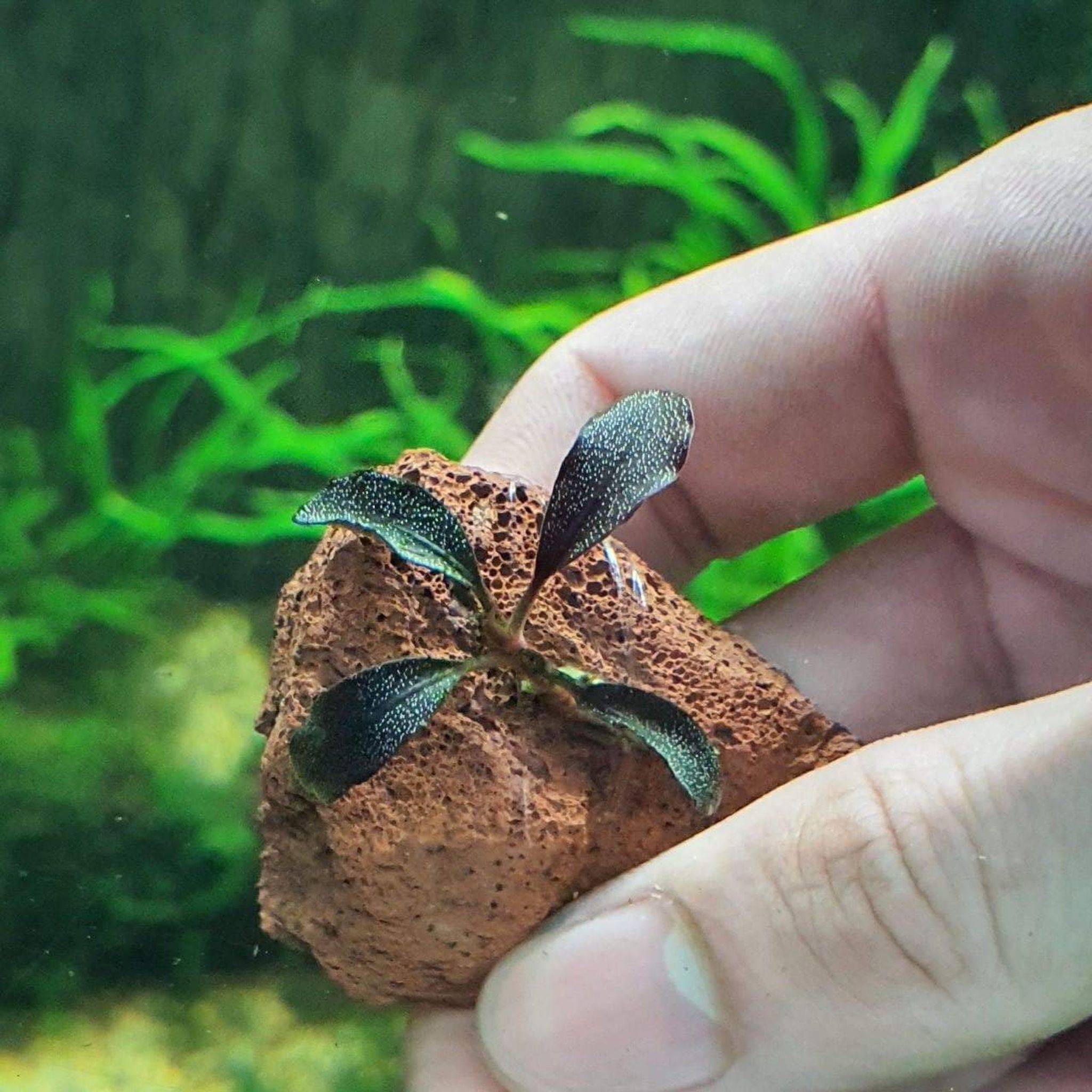
Bucephalandra Care Guide: Light, CO2, Substrate and Growth Tips
Bucephalandra, or "buce," is one of the most forgiving epiphyte plants you can put in a freshwater tank, but its slow growth and premium per-rhizome pricing make first-time buyers nervous about doing something wrong. This guide covers the light, CO2, substrate, and attachment basics so you know exactly what buce needs and what it can safely skip, plus what to expect (including normal leaf melt) after your plant arrives.
What Is Bucephalandra?
Bucephalandra is a genus of rheophyte and epiphyte plants native to Borneo, Indonesia, where it grows attached to rocks and driftwood along fast-flowing streams rather than rooted in riverbed soil. More than 30 species have been formally described, and hundreds of trade names and cultivars circulate in the hobby — Green Wavy, Brownie, Black Pearl, and Kedagang are just a few examples.
Its thick, leathery leaves often carry a blue, purple, or metallic iridescent sheen that shifts depending on lighting angle. Because it grows so slowly and asks so little of the aquarist, buce is frequently kept as a low-maintenance alternative or companion to anubias and java fern.
Lighting: Low to Medium Is the Safe Target
Buce tolerates low light and will survive — and even slowly grow — in shaded corners of a tank. Pushing light higher speeds growth and deepens coloration, but going too far invites algae, because a slow-growing plant simply can't use extra light fast enough to outcompete algae for the surplus energy.
| Light band | Approximate PAR (µmol) | Effect |
|---|---|---|
| Low | ~15-30 | Plant survives, grows very slowly, muted color |
| Medium | ~30-50 | Faster growth, noticeably better color intensity |
| High | 55+ | Fastest possible growth, but high algae risk unless CO2 and nutrients scale up too |
For most tanks, low-to-medium light is the safest long-term target. Color intensification is the main reason to push toward the higher end of that range — it isn't necessary for the plant's health, and jumping straight to high light without also raising CO2 and fertilizer dosing is one of the most common ways buce ends up coated in algae.
Photoperiod matters too. PAR intensity alone doesn't capture total light exposure — a moderate PAR value run for 10+ hours a day can still overload the plant. Keeping the photoperiod to roughly 6-8 hours daily is a simple way to manage total light energy without needing to constantly adjust fixture intensity.
If you don't own a PAR meter, a rough hand test works as a stand-in: if you can comfortably hold your hand at the substrate level under the light without squinting from glare, you're probably in the low-to-medium range. Placing buce farther from the light source (lower on hardscape, or in a taller tank) is also an easy way to dial down intensity without buying new equipment. Browse LED lighting options that offer adjustable intensity if you want finer control.
Does Bucephalandra Need CO2?
No. Buce is a solid low-tech, no-CO2 plant and will grow acceptably without supplementation. Adding pressurized CO2 — paired with more light and regular liquid fertilizing — modestly speeds growth and deepens coloration, but it's an optional upgrade rather than a requirement.
Hobbyists who want a small boost without running a pressurized CO2 system can use a liquid carbon product instead. It won't match the effect of pressurized CO2, but it's a reasonable middle ground for a low-tech setup.
Substrate: Buce Doesn't Need One
Bucephalandra is an epiphyte, meaning it draws most of its nutrients from the water column rather than from a substrate. Its roots exist to anchor the plant to a surface, not to feed it.
This means buce can be kept in a bare-bottom tank, on rock, or on driftwood with no substrate at all. If you do plant it in substrate, the rhizome itself — the thick horizontal stem the leaves and roots grow from — must stay exposed above the substrate line. Burying it causes rot and will kill the plant. This is the same rule that applies to anubias, and it's the single most common mistake new buce owners make.
If you're building a full aquascape and want substrate anyway for other plants or aesthetics, you can find suitable options in the substrate category — just keep buce itself mounted on hardscape rather than tucked into it.
Fertilization
Because buce feeds from the water column, a liquid all-in-one or micronutrient fertilizer dosed regularly does more good than root tabs, which are designed for substrate-rooted plants and offer little benefit here.
How to Attach Bucephalandra to Hardscape
Tie or glue the rhizome directly to rock or driftwood using one of these methods:
- Cotton thread or fishing line — biodegrades or can be removed later; wrap gently, don't crush the rhizome.
- Rubber bands — quick and reusable, though less discreet visually.
- Aquarium-safe cyanoacrylate ("super") gel glue — bonds almost instantly and is popular for precise placement on rockwork.
Whichever method you use, secure the rhizome firmly. Roots will grip the surface naturally within a few weeks, after which any ties or bands can be removed. Poor attachment — leaving the rhizome loosely tied — lets current dislodge the plant before the roots have a chance to take hold, undoing weeks of establishment.
Water Parameters
| Parameter | Recommended range | Notes |
|---|---|---|
| Temperature | 72-82°F (22-28°C) | Buce handles the warm end of this range fine; some sources stretch the ceiling to 84°F (28°C) |
| pH | 6.0-7.5 | Sweet spot for most cultivars; the plant tolerates a wider 5.0-8.0 range as long as conditions stay stable |
| Hardness | Soft to moderately hard | Adaptable; stability matters more than hitting an exact number |
| Flow | Moderate to good | Mimics its native stream habitat and helps keep leaves free of algae and biofilm |
Buce is genuinely flexible on hardness and pH — it's more sensitive to fluctuation than to any specific number. If your tap water or RO-remineralized setup runs on the harder side, that's generally fine as long as swings are gradual rather than sudden.
On flow: stream-origin habitat means moderate-to-good current across the leaves is beneficial, but it isn't mandatory. A normal filter outflow reaching the plant is enough for most home setups — you don't need to aim a powerhead directly at it.
Filtration Notes
Any filter that provides adequate turnover without blasting delicate leaves works well. Canister and hang-on-back filters are common choices for planted tanks because they combine good flow with enough media capacity for solid biological filtration — useful since buce benefits from gentle, consistent current rather than stagnant water or a direct jet.
Growth Rate and Propagation
Buce is a slow grower — often just one new leaf every 2-4 weeks under standard low-tech conditions. More vigorous cultivars with added light and CO2 can push out a couple of leaves per week, but even that is modest compared to fast-growing stem plants. Treat buce as a "set and forget" showpiece rather than a quick-filling carpet plant, and don't expect it to recover quickly from damage or heavy melt.
Propagating by Rhizome Division
- Wait until a section of the rhizome has several leaves and its own roots.
- Cut cleanly at a natural node using sterilized scissors or a blade.
- Aim for a cutting at least 1.5 in (4 cm) long — shorter sections transplant poorly.
- Reattach the cutting to new hardscape using the same tie-or-glue method as the parent plant.
Placement in the Aquascape
Buce works well mid-ground to foreground on rockwork or wood in low-tech tanks, or tucked into shaded, lower areas of higher-light setups. Leave spacing between separate clumps — dense mats trap detritus and force slow-growing leaves to compete for light, which invites algae and biofilm buildup. A quick periodic cleaning around established clumps helps prevent this.
Compatibility
Buce is safe with shrimp, snails, and most peaceful community fish, and its small footprint and slow spread make it a favorite for nano and shrimp tanks. Avoid pairing it with tankmates that dig, uproot, or shred plants — large cichlids, goldfish, and crayfish are the usual culprits. If you're stocking a shrimp-focused setup, check the shrimp category for compatible tankmates that will leave your buce alone.
Popular Varieties and Naming Confusion
Trade names for buce mostly describe leaf color and pattern — metallic sheen, marbling, pale "platinum" tones versus more solid or heavily veined leaves. The catch is that cultivar naming in the hobby isn't standardized: two sellers can list similar pale or white-toned cultivars under different names, or the same name under two visually different specimens.
Because of this, judge buce by photos of the actual specimen you're buying rather than relying on the trade name alone. A name is a starting point for expectations, not a guarantee of what arrives.
Tissue Culture vs. Potted/Wild-Collected Buce
| Format | Pros | Cons |
|---|---|---|
| Tissue culture (in-vitro cup) | Pest- and algae-free, cheaper per plant, lab-grown | Grown emersed in high humidity; expect melt of original leaves during submersion acclimation |
| Potted/hardscape-attached | Already grown submersed, adapts faster, lets you see exact coloration before buying | Costs more; small risk of hitchhiking pests or algae |
Tissue culture is generally the better value pick and the cleanest option health-wise, while a mounted, submersed-grown specimen gives instant aquascape impact and lets you verify coloration on sight. Neither is wrong — it comes down to budget and how much patience you have for the acclimation period.
Acclimating Tissue-Culture Buce
- Remove the plant from the gel/cup and rinse off all growth medium under lukewarm water.
- Separate individual rhizome sections if the culture is dense.
- Float or place the plant in a shallow container with tank water for 15-20 minutes to begin humidity adjustment before full submersion.
- Mount to hardscape and submerge fully; expect the original emersed-grown leaves to melt over the following 1-3 weeks.
- Keep parameters stable and wait — new, fully aquatic leaves will emerge from the rhizome even as old growth dies back.
A Quick Note on Quarantine
New buce, especially wild-collected or budget-priced specimens, can carry pest snails, hydra, or algae spores. A short quarantine period, or a diluted dip treatment before introducing the plant to your display tank, is cheap insurance against an unwanted hitchhiker outbreak.
Wild Collection and Conservation
Bucephalandra populations in Borneo have faced pressure from unsustainable wild harvesting, with collectors stripping entire riverbank colonies to meet hobby demand. Choosing tissue-cultured or nursery/farm-raised plants over wild-collected stock reduces pressure on native populations and supports the genus staying available to the hobby long term. It's a straightforward way to buy responsibly without sacrificing plant quality.
Common Mistakes to Avoid
- Burying the rhizome in substrate — always keep it exposed on top of hardscape or substrate.
- Panicking over melt right after purchase — this is a normal part of the emersed-to-submersed transition, especially for tissue culture; wait for new growth instead of discarding the plant.
- Jumping to high light or CO2 too fast — increase gradually, since buce can't outcompete algae if light outpaces what the plant can use.
- Expecting fast growth — comparing buce to stem plants sets you up for disappointment; think of it as a slow, low-effort showpiece.
- Poor attachment — secure ties or glue firmly and leave them in place for several weeks until roots take hold.
- Ignoring flow and detritus buildup — tightly packed clumps in low-flow spots trap debris and encourage algae; leave spacing and clean periodically.
Other Easy Low-Tech Plants to Pair With Buce
If you like the low-maintenance, no-CO2-required profile of buce, several other epiphytes fit the same niche: java fern, anubias, marimo moss balls, and java moss are all commonly recommended alongside buce for beginner-friendly, low-tech tanks. Mixing a few of these gives visual variety without adding care complexity.
Frequently Asked Questions
Does bucephalandra need CO2?
No. It grows fine without CO2 and is considered a reliable low-tech plant. CO2 is entirely optional and mainly serves to speed up growth and intensify leaf color.
Can bucephalandra grow in substrate?
It can be planted in substrate, but the rhizome must stay above the substrate surface or it will rot. Most hobbyists instead attach it directly to rock or driftwood.
Why is my new bucephalandra losing leaves?
Leaf melt after purchase or shipping is a normal transition response, especially from tissue culture moving from an emersed to a submersed environment. Keep water parameters stable and wait for new growth to emerge from the rhizome rather than discarding the plant.
How fast does bucephalandra grow?
Very slowly — typically just one new leaf every 2-4 weeks under standard non-CO2 conditions. More vigorous cultivars under added light and CO2 can grow somewhat faster.
What is the best way to attach bucephalandra to driftwood or rock?
Tie it with cotton thread or fishing line, or use aquarium-safe cyanoacrylate gel glue, and leave the attachment in place for a few weeks until the roots grip the surface on their own.
Is bucephalandra safe for shrimp and snails?
Yes, it's a popular choice for nano and shrimp tanks. Just avoid tankmates that dig or shred plants, such as large cichlids, goldfish, or crayfish.
What lighting is best for bucephalandra?
Low to medium light (roughly 15-50 PAR) is the safest target for most tanks. Higher light intensifies leaf color but raises the risk of algae on this slow-growing plant.
How do you propagate bucephalandra?
Cut a rhizome section that already has several leaves and its own roots, using a sterilized blade at a natural node, then tie or glue the cutting to new hardscape the same way you'd mount the parent plant.
Ready to add bucephalandra to your setup? Browse hardscape-ready aquarium plants and supplies in FishyHub's substrate and lighting categories to get your tank dialed in before your plants arrive.

