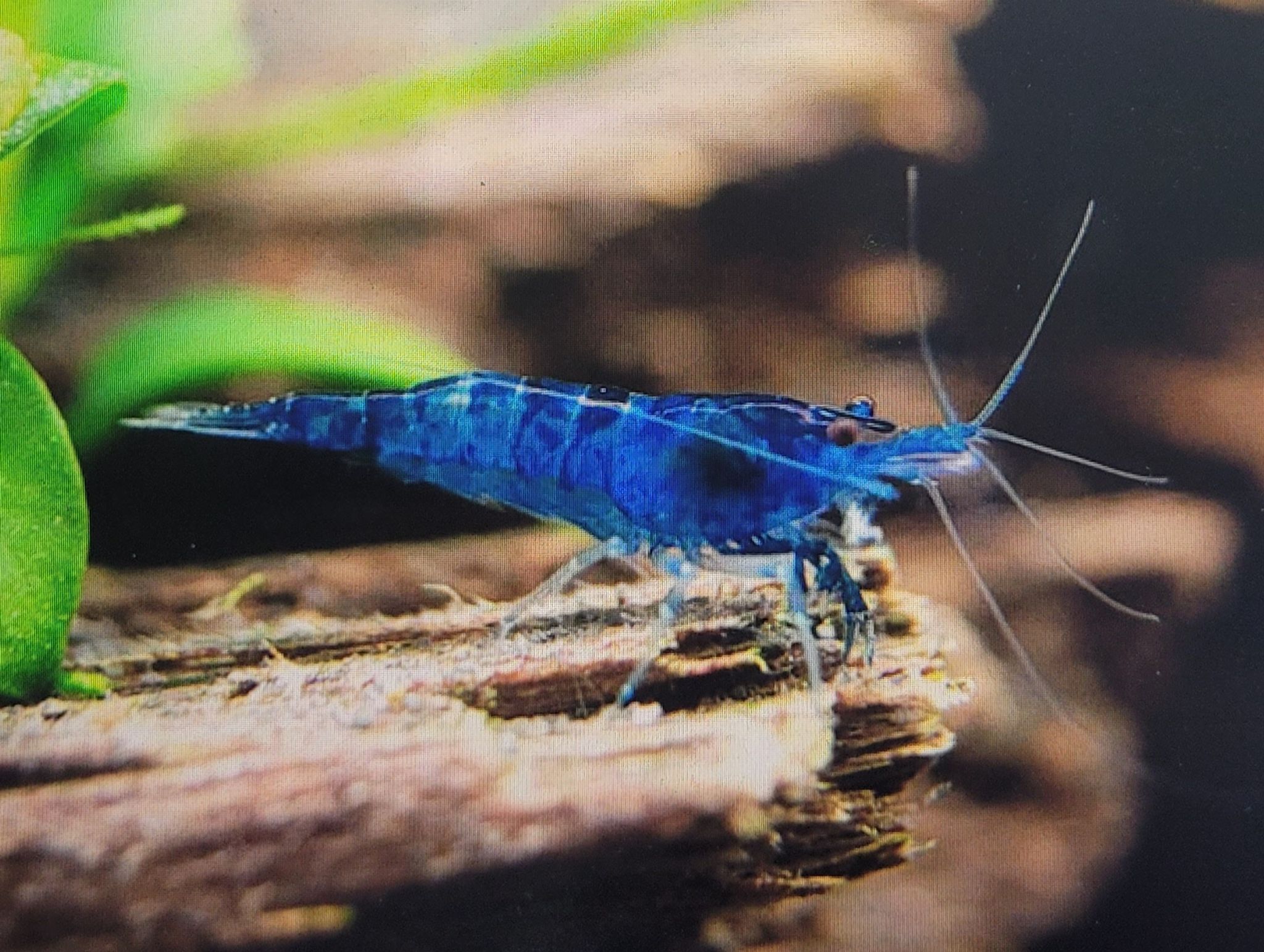
Blue Dream Shrimp Care Guide: Setup, Feeding, Water Parameters and Breeding
Blue Dream shrimp are one of the easiest freshwater invertebrates to keep and breed, making them a favorite for planted nano tanks and beginner shrimp keepers alike. This guide covers exact water parameters, tank setup, feeding routines, and breeding steps so you can build a stable, self-sustaining colony rather than just a handful of shrimp that fade out after a few months.
What Is a Blue Dream Shrimp?
Blue Dream Shrimp is a selectively bred color strain of Neocaridina davidi, the same species behind Cherry Shrimp, Blue Velvet Shrimp, Orange Pumpkin Shrimp, and Rili Shrimp. Because they're all one species, the husbandry is essentially identical across every color morph — only the pigmentation differs. Adults reach about 1–1.5 inches, and a well-kept individual typically lives 1–2 years.
Shrimp in the Home Aquarium
Freshwater shrimp have become a staple of the planted-tank hobby because they graze algae and biofilm off leaves and hardscape, add strong color contrast to a nano setup, carry a very light bioload compared to fish, and breed readily without any special intervention. Neocaridina species like Blue Dream sit at the easy end of that spectrum — they tolerate a wider parameter range than sensitive Caridina shrimp (such as Crystal Red or Bee shrimp), which makes them a reasonable starting point for anyone new to invertebrate keeping.
Blue Velvet and Orange Pumpkin: How Blue Dream Compares
Since these are color variants of the same species, care requirements overlap almost completely:
- Blue Velvet Shrimp — same 65–80°F, pH 6–8, 4–10 dGH range as Blue Dream; the main difference is a darker, more saturated blue rather than the lighter, dreamier tone Blue Dream is bred for.
- Orange Pumpkin Shrimp — another Neocaridina morph with identical husbandry, sold as an interchangeable-care alternative for shoppers who want a warm color instead of blue.
If you're comparing color strains for a display tank, husbandry decisions (tank size, filtration, feeding) don't need to change based on which one you pick — color preference alone can drive that choice. You can browse current stock of Blue Dream and other Neocaridina color morphs in FishyHub's shrimp category.
Tank Setup
Tank Size and Filtration
A 5-gallon tank is the absolute minimum, but 10 gallons is recommended for a stable, forgiving colony — larger water volume buffers against the sudden swings that stress or kill shrimp. Use a sponge filter, or a standard filter fitted with a foam pre-filter or intake guard, so baby shrimp and shed exoskeletons don't get pulled into the impeller. You can find sponge and foam-guarded options in FishyHub's filters category.
Substrate, Decor, and Planting
Choose an inert substrate or a shrimp-specific buffering substrate, and browse general gravel, sand, or soil options in the substrate category. Add driftwood and rocks for grazing surface and dense planting — Java moss, Christmas moss, Anubias, and floating plants all provide biofilm, hiding spots during molts, and cover for newly hatched shrimplets.
Lighting and Color
A moderate photoperiod of roughly 8–10 hours balances algae and biofilm growth (a food source) against the stress of prolonged bright light. Very long photoperiods increase molting frequency and can raise mortality, while giving shrimp some darkness or shaded refuge improves survival. For color intensity, a dark substrate paired with moderate, blue-leaning lighting is widely reported to deepen and saturate the blue coloration Blue Dream shrimp are bred for; consistent, calcium- and pigment-supporting nutrition supports this over time as well.
Water Parameters
Blue Dream shrimp tolerate a fairly wide range, but a narrower "sweet spot" produces steadier breeding and better color.
| Parameter | Workable Range | Sweet Spot |
|---|---|---|
| Temperature | 65–80°F (18–27°C) | 72–78°F (22–26°C), kept stable |
| pH | 6.5–8.0 | 7.0–7.5 |
| GH (general hardness) | 4–8 dGH | 6–8 dGH |
| KH (carbonate hardness) | 0–6 dKH | Low-to-moderate, for pH stability |
| TDS | — | ~150–250 ppm |
| Ammonia/Nitrite | 0 (non-negotiable) | 0 |
Sources vary somewhat on the exact "ideal" numbers — some list as wide as 4–10 dGH and pH 6–8 as fully workable, while others narrow the target to 6–8 dGH and pH 7–7.5 for the most consistent breeding. The wider range is safe for survival; the narrower one is worth aiming for if breeding output and color are the priority.
GH matters more than most beginners realize. It reflects dissolved calcium and magnesium, which shrimp use to rebuild their exoskeleton after every molt. Too-low GH is a leading cause of molting death. To raise GH, use a GH booster, crushed coral, or mineral rocks; to lower it, blend RO or RO/DI water with tap water. Stability matters as much as the exact number — sudden swings in temperature or hardness are more dangerous to shrimp than being a degree or two outside the ideal range.
The tank must be fully nitrogen-cycled before adding any shrimp — ammonia and nitrite must read zero. Shrimp are markedly more sensitive to ammonia and nitrite spikes than most fish, so skipping the cycle is one of the fastest ways to lose an entire order.
Copper Is Lethal
Copper is toxic to shrimp even in trace amounts. Check tap water reports, plant fertilizers, and any medication for copper or copper sulfate before adding them to a shrimp tank — this is an easy, under-recognized way to wipe out a colony.
CO2 and Planted Tanks
If you're running an injected-CO2 planted setup, be aware that CO2 systems can crash pH faster than a non-CO2 tank, especially around a solenoid failure or a missed timer. Because Blue Dream shrimp are sensitive to sudden pH and hardness shifts, monitor CO2-injected displays more closely and keep a drop checker or reliable pH tracking in place.
Feeding
Blue Dream shrimp are omnivorous scavengers and grazers that live mainly off biofilm and algae in an established tank. Supplement this base diet 2–4 times per week with:
- Sinking shrimp pellets
- Blanched vegetables (zucchini, spinach, carrot)
- Calcium-supplement foods such as cuttlebone or mineral rocks, which support molting
Feed small amounts and remove anything uneaten within 1–3 hours to protect water quality. Overfeeding is one of the most common beginner mistakes — leftover food fouls the water and can crash parameters. It's also fine to skip a feeding day periodically, since an established tank's biofilm and algae supply ongoing food between supplemental feedings.
Acclimation
Always drip-acclimate new shrimp over an hour or more rather than just floating and dumping the bag. Shrimp are highly sensitive to sudden shifts in temperature and water chemistry, and fast acclimation is a common cause of shock and death within hours or days of arrival. Match the drip rate to bring your tank's parameters to the shrimp gradually rather than all at once.
Quarantine for New Stock
Before adding new shrimp to an established colony, consider a brief quarantine period to watch for external parasites such as Vorticella or Scutariella — both are visible as small growths or fuzz on the shrimp's body and are far easier to deal with in an isolated tank than after they spread through a colony.
Breeding
Sexing and Maturity
Sexes are easy to tell apart once shrimp reach maturity around 3–5 months. Females are larger, with a more rounded, deeper belly, and develop a visible yellow or olive "saddle" behind the head that marks developing eggs.
The Breeding Process
After mating, a female becomes "berried," carrying 20–30 or more eggs under her abdomen and swimmerets for roughly 3–4 weeks until they hatch. Unlike Amano shrimp, Blue Dream shrimp (and Neocaridina generally) skip any larval or planktonic stage — babies hatch as fully formed miniature shrimp that immediately graze biofilm and algae just like adults.
Breeding Conditions
No separate breeding tank is required. Breeding happens readily in any stable, mature, well-fed tank — a common misconception is that a berried female needs to be isolated, but the real risk to babies is predation or filter intake, not the mother. Stable GH and pH combined with good nutrition drive breeding frequency and survival far more than any single "trigger." In a healthy setup, mature females can berry again every few weeks once established.
Molting
Shrimp molt regularly to grow, and a shed exoskeleton left in the tank is a normal, safe calcium source — no need to remove it. Watch instead for frequent failed or incomplete molts, or a "white ring of death" around the neck, both of which point to unstable GH or insufficient calcium rather than disease. A shrimp that looks pale, sits still, or has a translucent shell for a day is often just pre- or post-molt, not sick — don't assume the worst before ruling out molting.
Color Grading
Hobbyists maintaining deep, consistent Blue Dream coloration over generations typically cull or rehome the palest, most washed-out offspring and breed forward from the deepest-colored individuals. This isn't required to keep shrimp successfully, but it's the mechanism behind maintaining strain quality generation over generation.
Keeping One Color Per Tank
Because Blue Dream, Blue Velvet, Orange Pumpkin, and Cherry Shrimp are all the same species, mixed colonies will interbreed freely. Offspring from crossed colors often revert toward wild-type coloration rather than staying true to either parent strain. If preserving a specific color is a goal, keep only one Neocaridina color per tank.
Tankmates
Blue Dream shrimp do best in a species-only tank if maximizing breeding population is the goal, since even many small and medium community fish will eat shrimplets. If you do want tankmates, stick to peaceful, small, non-predatory species and avoid anything known to hunt shrimp or shrimplets — betta fish, larger tetras, and cichlids are common offenders that can suppress population growth even when adult shrimp survive.
Common Mistakes to Avoid
- Adding shrimp to an uncycled tank — confirm 0 ammonia, 0 nitrite, and low nitrate before stocking.
- Rushing acclimation — always slow-drip over 60+ minutes.
- Using conditioners, fertilizers, or medications with copper — check labels every time.
- Overfeeding — feed only what clears in 1–3 hours.
- Large water changes with mismatched source water — this destabilizes GH/KH and causes molting problems; smaller, more frequent changes with parameter-matched water are safer.
- Mixing with predatory or semi-aggressive fish — this suppresses colony growth even if adults survive.
- Assuming berried females need a separate tank — they don't; protect babies from predation and filter intake instead.
- Misreading a molt for illness — give a pale, still shrimp a day before assuming disease.
Aquarium Salt and Medication: What to Avoid
General fish-disease guides often recommend aquarium salt for treating certain fish ailments or for species like some livebearers and goldfish. Shrimp-specific guidance is different: avoid aquarium salt in a shrimp tank entirely. Invertebrates lack the osmoregulatory tolerance many fish have, and salt causes them significant osmotic stress. If a tankmate fish needs salt treatment, move it to a separate tank rather than dosing the shared display.
The same caution applies to medications. Copper-based treatments are lethal to shrimp, and even products labeled "invertebrate-safe" vary by formulation, so always read the label carefully. When treating ich (visible as white, grain-like spots, along with flicking or rubbing against décor and clamped fins), the standard fish protocol is a gradual temperature increase (only in a shrimp-free tank) combined with a malachite-green/formalin combination product dosed per label instructions, with water changes between doses. Fungal infections in fish — cottony white patches, usually secondary to injury or poor water quality — are treated with antifungal medication plus improved water quality, and again mainly concern tankmate fish rather than the shrimp themselves. In both cases, the safest approach is to remove shrimp to a separate tank before medicating, rather than trust a "shrimp-safe" claim on a fish-focused product. FishyHub's medication category is a good place to compare invertebrate-safety labeling across products before treating a mixed tank.
How to Start a Blue Dream Shrimp Tank: A Beginner Checklist
- Run a fishless cycle to completion — confirm 0 ammonia and 0 nitrite before adding any shrimp.
- Choose an inert or shrimp-safe substrate and add live plants (moss, Anubias, floating plants).
- Install a sponge filter or a filter fitted with a foam pre-filter/intake guard.
- Test your tank's parameters and adjust source water gradually to bring GH, KH, and pH into range.
- Drip-acclimate new shrimp over 60+ minutes.
- Start with 10–20 shrimp rather than a single pair — a larger starting group establishes a self-sustaining colony faster and buffers against the occasional individual loss.
Frequently Asked Questions
How many Blue Dream shrimp should I start with?
Start with 10–20 shrimp to establish a self-sustaining colony faster than starting from a handful of pairs. A 5–10 gallon planted tank comfortably supports a growing group of that size.
Can Blue Dream shrimp live with fish?
Yes, as long as the fish are small and peaceful — small rasboras, otocinclus, and snails are common safe choices. Avoid any species known to eat shrimp or shrimplets, since even occasional predation can suppress colony growth.
Why did my shrimp turn white/pale or die after a water change?
This is usually a GH, pH, or temperature mismatch between the new water and the tank, or molting stress sometimes called "white ring of death." Match new water closely to your existing parameters and favor smaller, more frequent changes over large infrequent ones.
Do Blue Dream shrimp need a heater?
Not strictly, if room temperature stays within roughly 65–80°F. A small heater still helps hold a stable temperature, and stability matters more for shrimp health than hitting an exact number.
How often do Blue Dream shrimp breed?
In a stable, well-fed, mature tank, females can berry repeatedly every few weeks once the colony is established, provided GH, calcium, and food supply stay consistent.
What do baby shrimp eat, and are they at risk?
Shrimplets hatch fully formed and immediately graze biofilm and algae alongside adults — there's no special food requirement. Their main risks are filter intake and predation from larger tankmates, not a lack of appropriately sized food.
Is aquarium salt safe for a shrimp tank?
Generally no. Invertebrates don't tolerate the osmotic stress that salt causes the way many fish do, so it's best to treat sick fish separately rather than add salt to a shrimp community tank.
Can Blue Dream shrimp interbreed with other Neocaridina colors?
Yes. Because Blue Dream, Cherry, Blue Velvet, and Orange Pumpkin shrimp are all the same species, mixed colonies will crossbreed, and offspring often revert toward wild-type coloration. Keep only one Neocaridina color per tank if preserving a specific strain matters to you.
Ready to start or expand a colony? Browse available Blue Dream and other Neocaridina color morphs in FishyHub's Shrimps category.

