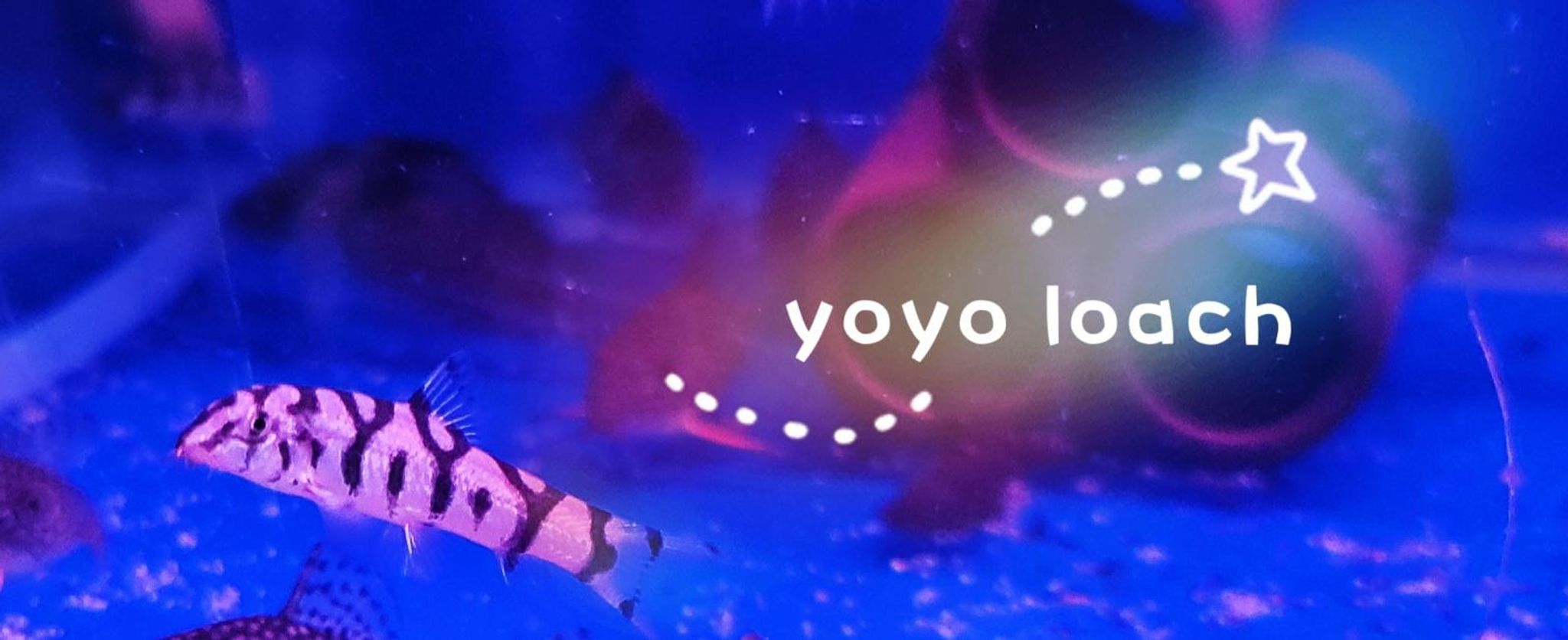
Best Tank Mates for Yoyo Loach: Compatible Fish and Species to Avoid
The best tank mates for yoyo loaches are sturdy, warm-water fish that live in the middle and upper water: Congo tetras, danios, larger rasboras, rainbowfish, peaceful barbs, bristlenose plecos, mollies, platies, gouramis and angelfish. Avoid big predatory cichlids, bottom-territorial sharks, bettas, tiny shy fish, goldfish, and every snail and dwarf shrimp. The rest of this guide explains why, with a quick-scan table and sample stocking lists for common US tank sizes.
Know the Yoyo Loach Before Picking Tank Mates
Tank mates should suit the way a yoyo actually behaves, so start with the fish itself.
- Names: The yoyo loach is Botia almorhae. It was long sold as Botia lohachata, and some stores still use the trade name "Pakistani loach." All three labels usually mean the same fish.
- Adult size: Most reach 2.5–4 inches (6–10 cm) in home aquariums, but they can grow to about 6 inches (15 cm). Plan your stocking around 5-inch (13 cm) adults.
- Lifespan: 5–8 years is typical, and well-kept fish can pass 15 years. Anything you add is a long-term roommate.
- Temperament: Peaceful toward other species in general, but busy, pushy and noisy. Yoyos make audible clicks, and they are rough with each other while they sort out a pecking order.
- Diet: Yoyos are snail hunters and will eat shrimp. Many people buy them for snail control, which tells you what happens to invertebrates in their tank.
Group Size and Tank Size
Keep at least 5–6 yoyos. In a group, the chasing and squabbling spreads across many fish. A single yoyo or a pair tends to hide all the time or turn its energy on other bottom dwellers.
Sources disagree on tank size. Some suggest 40 gallons for one fish plus 10–15 gallons for each extra loach, which would push a group of five past 100 gallons. Others say 30–40 gallons is enough. A practical middle ground: 55 gallons (208 L) for a group of 5–6 in a normal community, with a 40-gallon breeder (151 L) as the absolute floor. A 75-gallon (284 L) or larger tank is better still. Pick a long footprint over a tall one, because bottom area is what loaches use.
Water Parameters to Match
| Parameter | Yoyo loach range | Sweet spot |
|---|---|---|
| Temperature | 75–86°F (24–30°C) | 77–82°F (25–28°C) |
| pH | 6.0–8.0 | 6.5–7.5 |
| Hardness | about 3–12 dGH | soft to moderately hard |
| Nitrate | under 20 ppm | as low as practical |
| Flow | moderate | with good oxygenation |
The tank should be fully cycled before loaches go in. Check every candidate tank mate's temperature range against the yoyo's. Many generic compatibility lists skip this step. Fish that prefer water below about 74°F (23°C) will stress in a yoyo tank, and turning the heater down to suit them stresses the loaches.
Yoyo Loach Compatibility Chart
| Species | Rating | Why |
|---|---|---|
| Congo tetra | Great | Fast mid-water schooler, big enough to ignore loach traffic |
| Zebra and giant danios | Great | Active, hardy, stay near the surface |
| Harlequin and scissortail rasboras | Great | Peaceful mid-water schoolers of a sensible size |
| Rainbowfish | Great | Robust, active and upper-level; check temperature per species |
| Cherry and rosy barbs | Great | Peaceful barbs that handle a busy tank |
| Black skirt and lemon tetras | Great | Larger tetras that hold their own |
| Bristlenose pleco | Great | Armored and mostly active at night |
| Mollies and platies | Great | Hardy livebearers that use the upper water |
| Pearl and blue gouramis | Great | Calm centerpiece fish; watch for fin nipping |
| Angelfish | Great | Usually fine; watch long ventral fins in cramped tanks |
| Zebra loach, kubotai loach | Great | Botiids mix well when each species has its own group |
| Clown loach | Caution | Compatible, but grows to 8–12 in and needs 125 gal+ |
| Bronze and peppered corydoras | Caution | Fine in a large footprint with plenty of sinking food |
| Serpae tetra | Caution | Can be nippy; keep in a proper group |
| Tiger barbs | Caution | Only big groups of both, in a large tank |
| Rams | Caution | Only where temperature needs overlap |
| Glass catfish | Caution | Sensitive; needs its own school and calm conditions |
| Oscars, Jack Dempseys, large Central American cichlids | Avoid | Predatory or highly territorial; can eat or batter loaches |
| Red-tail and rainbow sharks | Avoid | Fight loaches for bottom territory |
| Bettas | Avoid | Long fins and slow swimming invite harassment |
| Ember tetras, tiny nano rasboras, pygmy corys | Avoid | Outcompeted at feeding and stressed by the traffic |
| Goldfish | Avoid | Barely overlapping temperatures and a heavy waste load |
| Snails and dwarf shrimp | Avoid | They are food |
The Best Tank Mates in Detail
Mid-Water and Top-Water Schoolers
These fish fill the space the loaches don't use. Congo tetras are a standout: they are large, fast and handsome, and they tolerate warm water. Black skirt and lemon tetras, zebra and giant danios, harlequin and scissortail rasboras, rainbowfish and cherry or rosy barbs also work. Keep each species in a proper school so it feels secure and stays out of the loaches' way. Serpae tetras earn a caution because they can nip. You can browse tetras on FishyHub to compare sizes before choosing.
Other Botiids and Loaches
Yoyos mix well with relatives, provided each species has its own group. The zebra loach and kubotai (polka dot) loach are good matches in size. The clown loach is compatible in temperament, but it reaches 8–12 inches (20–30 cm) and eventually needs a 125-gallon (473 L) or larger tank. Don't add clowns to a 55-gallon and hope for the best.
Catfish and Plecos
A bristlenose pleco or another mid-size pleco is a strong choice. It is armored, it grazes at night, and it doesn't compete much with loaches for space. Glass catfish can work, but they are sensitive and need a school of their own.
Corydoras are debated. Some keepers call them ideal, and others worry that yoyos hog the bottom and the food. The workable answer: keep robust species such as bronze or peppered corys, give them a long footprint, and add enough sinking food for everyone. Skip pygmy corys.
Livebearers
Mollies and platies are hardy, they spend their time higher in the water column, and they handle the yoyo's temperature range well. They are an easy way to add color.
Peaceful and Mid-Size Cichlids
Sources split on cichlids. One view says yoyos are fine with both African and New World cichlids, while another says to avoid cichlids entirely. The sensible line: peaceful or mid-size cichlids are acceptable, including angelfish and some calm Central and South American species. Rams work only where their temperature needs overlap with the tank. Pearl and blue gouramis are not cichlids, but they fill the same calm-centerpiece role. Avoid anything large, highly territorial or big enough to swallow a loach.
Fish and Invertebrates to Avoid
- Large aggressive or predatory cichlids. Oscars, Jack Dempseys and big Central Americans will bully loaches or eat them. The same goes for any predator that can swallow a 2–3 inch (5–8 cm) loach.
- Red-tail and rainbow sharks. They claim bottom territory and will fight yoyos over caves.
- Bettas. Their long fins and slow swimming make them targets for busy loaches.
- Very small or shy fish. Ember tetras, tiny nano rasboras and pygmy corys lose out at feeding time and live under constant stress.
- Coldwater fish, including goldfish. At least one source lists goldfish as tank mates, but the temperature ranges barely overlap and goldfish add a heavy waste load. Keep them apart.
- Snails of every kind and dwarf shrimp. Cherry shrimp and similar species are food. Adult Amano shrimp are sometimes spared, but don't count on it.
The Tiger Barb Debate
Some lists put tiger barbs under "avoid." Many keepers find that a large group of tiger barbs holds its own against yoyos without much trouble. Treat them as a caution: they can work, but only with big groups of both species in a large tank, so neither side focuses its energy on a few targets.
Yoyos Can Nip Too
Compatibility runs both ways. Yoyos can nip long-finned fish, especially in cramped tanks. Watch angelfish ventral fins and gourami feelers, and be ready to add space or decor if damage appears.
Setting Up a Tank That Makes Mixing Work
- Substrate: Soft sand or smooth fine gravel. Yoyos dig, and coarse, sharp gravel wears down their barbels.
- Hiding places: Caves, pipes and driftwood. Aim for more hiding spots than loaches, which cuts down on chasing.
- Line-of-sight breaks: Rocks, wood and plants that split the tank into zones.
- A tight lid: Yoyos are escape artists.
Introducing New Fish
Either let the yoyo group settle before adding tank mates or add the loaches last so they don't claim the whole bottom first. Quarantine every new fish for 2–4 weeks. Botiids are prone to ich, and they are sensitive to medication. If you have to treat, use half doses or a careful heat-and-salt approach rather than full-strength products.
Feeding a Mixed Tank
Fast schoolers can grab most of the food before it sinks. Offer sinking pellets and wafers plus frozen bloodworms and brine shrimp, and feed enough that some reaches the bottom. A second feeding after lights-out helps loaches, corys and plecos eat without competition.
Sample Stocking Lists for US Tank Sizes
55 gallons (208 L), 48 inches (122 cm) long:
- 6 yoyo loaches
- 10 Congo tetras
- 1 bristlenose pleco
- 1 pair of pearl gouramis
75 gallons (284 L), mixed-botiid setup:
- 6 yoyo loaches
- 5–6 zebra loaches
- A school of zebra or giant danios for the top
- A school of harlequin or scissortail rasboras for mid-water
- 1 bristlenose pleco
Both lists use fish that are easy to find in US stores and that share the yoyo's warm range. Add fish gradually and watch nitrates, keeping them under 20 ppm.
Zebra Loach Tank Mates
The zebra loach (Botia striata) is a smaller cousin that reaches 3–4 inches (8–10 cm) and is generally calmer. It needs:
- A tank of 30 gallons (114 L) or more
- 73–79°F (23–26°C), pH 6.5–7.5, 5–12 dGH
- A group of 5–6 or more
Good zebra loach tank mates are much the same as for yoyos: tetras, rasboras, danios, corys, kuhli loaches, platies and mollies. Avoid big cichlids, oscars and other predators, along with snails and shrimp. Zebras can share a tank with yoyos when each species has its own group and the tank is 55 gallons or larger. Keep the temperature in the overlap, around 77–79°F (25–26°C).
Common Mistakes and Troubleshooting
- Buying one or two yoyos. They either hide or bully. Build the group up to 5–6.
- Adding pet snails or shrimp, then suspecting disease when they vanish. The loaches ate them.
- Constant chasing. Add caves and line-of-sight breaks, increase the group size, and rearrange the decor to reset territories.
- A loach lying on its side or "playing dead." This is often normal resting. Check breathing, gills and appetite before assuming the worst.
- Ich after adding new fish. Quarantine new arrivals. Loaches have very small scales and react badly to strong medications, so treat carefully.
- Coarse, sharp gravel. It damages barbels. Switch to sand or smooth fine gravel.
- Tank mates that want water below 74°F (23°C). Both species end up stressed.
Frequently Asked Questions
Can yoyo loaches live with bettas?
Generally no. Busy yoyos harass slow, long-finned fish, and a betta has no good way to escape them. It works only rarely, in large tanks, and it isn't worth the risk.
Will yoyo loaches eat shrimp and snails?
Yes. They kill both pest snails and ornamental snails, and dwarf shrimp are treated as food. Adult Amano shrimp sometimes survive, but don't keep invertebrates you care about with yoyos.
Can yoyo loaches live with clown loaches?
Yes, and the two species mix well when each is kept in its own group. The catch is size: clown loaches reach 8–12 inches (20–30 cm) and eventually need a tank of 125 gallons (473 L) or more.
How many yoyo loaches should be kept together?
Keep 5–6 or more. Some sources say 4–5 is enough, but a larger group spreads out the pecking-order chasing and keeps the loaches from fixating on other bottom fish.
Are yoyo loaches aggressive?
Mostly toward their own kind. With other species they are peaceful but pushy, busy and occasionally nippy toward long fins. Keeping a proper group and plenty of caves keeps that energy contained.
Can yoyo loaches share a tank with angelfish, corydoras or goldfish?
Angelfish usually do fine, though you should watch their long ventral fins in cramped tanks. Corydoras work in a large footprint with enough sinking food, preferably robust species. Goldfish are not recommended because their temperature needs barely overlap with the yoyo's.
Build Your Yoyo Loach Community
A good yoyo loach tank starts with a proper group of loaches, a long tank with soft substrate and plenty of caves, and warm-water tank mates that keep to the middle and upper levels. When you're ready to stock, browse loaches and other plecos, corys and bottom dwellers on FishyHub.

