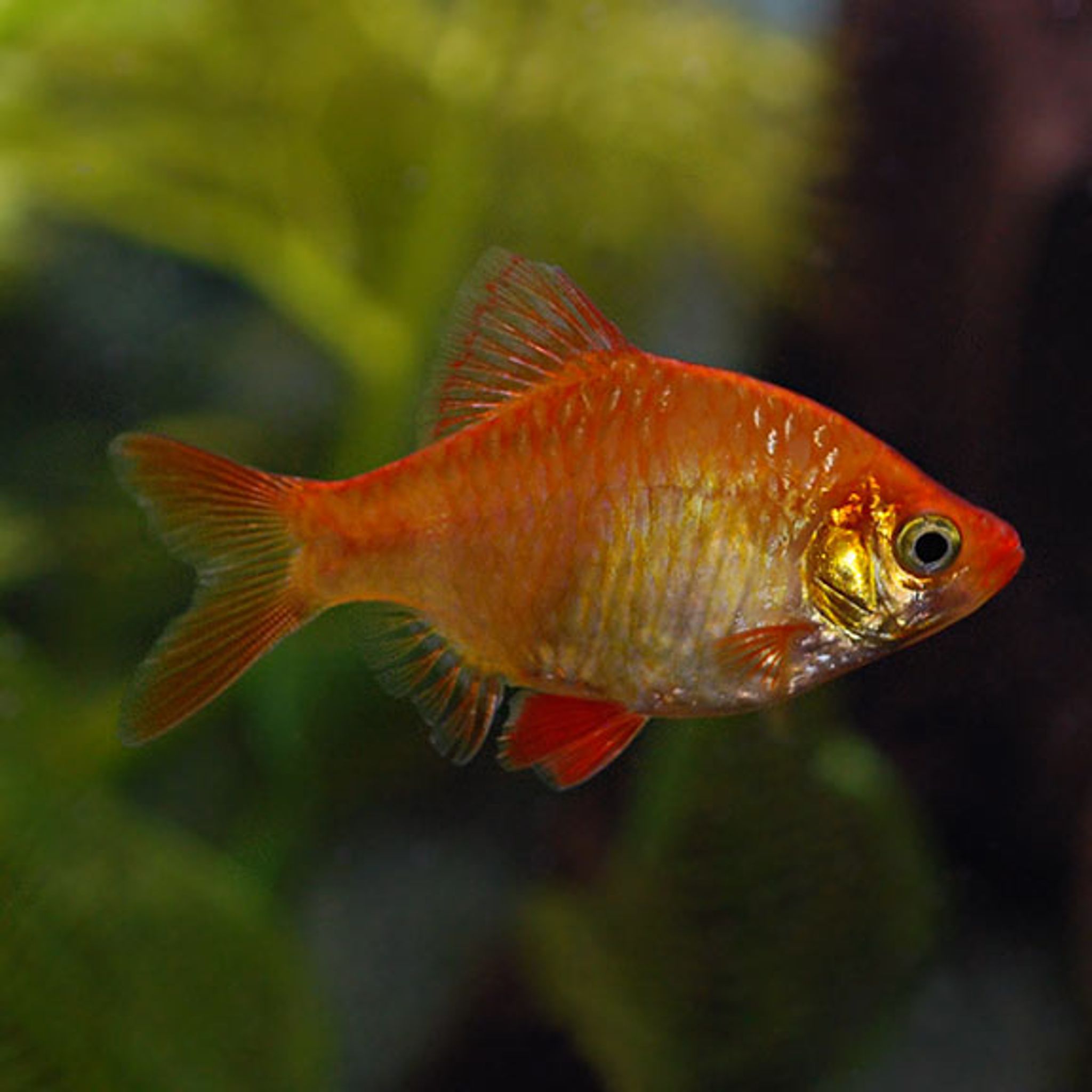
Best Tank Mates for Tiger Barb: Compatible Fish and Species to Avoid
The best tank mates for tiger barb are fast, short-finned, sturdy fish that are the same size as a barb or bigger: other barbs, zebra danios, robust tetras, rainbowfish, Corydoras, bristlenose plecos and loaches. Skip bettas, angelfish, guppies, gouramis, goldfish and anything with trailing fins. Just as important, keep a big school of barbs. That does more to stop fin nipping than anything else you can do.
Understanding Tiger Barb Temperament
Tiger barbs (Puntigrus tetrazona) are semi-aggressive, very active schooling fish. Their bad reputation comes from fin nipping, and that nipping follows a pattern. It lands mostly on slow, long-finned or timid fish. Much of what looks like aggression is surplus energy, and in a healthy tank that energy stays inside the barb group as chasing and sparring.
This gives you one rule for picking companions:
- Short fins. Nothing that trails or flows.
- Fast swimmer. A fish that can easily outpace a barb.
- Confident, robust body. Not a fish that hides.
- Adult size equal to or larger than a barb, which grows to about 3 inches (7.5 cm).
- Overlapping temperature and pH.
- Ideally a different water zone, such as bottom dwellers under a mid-water barb school.
Group Size Is Your Biggest Lever
Sources give minimum school sizes from 5 to 8. Treat 6 as the absolute minimum, and plan on 10 to 12 or more in a community tank. A larger school spreads the squabbles among the barbs themselves and cuts nipping of other species noticeably. If a small group is causing trouble, the fix is usually to add more barbs, not remove them.
Sex ratio matters too. Breeding behavior can bring on seasonal spikes in chasing, and a larger, mixed group dilutes that pressure so no single fish takes all of it.
Tank Size and Water Parameters
| Parameter | Recommended range |
|---|---|
| Barb-only group | 30 gallons (114 L) minimum |
| Community tank | 55 gallons (208 L), 48 in (122 cm) long |
| Clown loaches or larger companions | 75 gallons (284 L) and up; some need 125 gallons (473 L)+ |
| Temperature | 72–82°F (22–28°C), ideal about 75–79°F (24–26°C) |
| pH | 6.0–8.0, ideal 6.5–7.5 |
| Hardness | About 5–19 dGH |
| Ammonia / nitrite | 0 ppm |
| Nitrate | Under 40 ppm, under 20 ppm is better |
Some keepers say 40 to 50 gallons is enough for a community. We recommend the standard 55 gallon because its 48-inch length gives an active school real room to run, and running room directly lowers aggression.
Best Tank Mates by Water Zone
Mid and Upper Water: Schooling Companions
- Other barbs: cherry, rosy, Odessa, black ruby, gold and Denison (see the barb section below).
- Zebra danios: fast, tough and very active, which makes them one of the safest picks.
- White cloud minnows: fine at the cooler end of the barb range.
- Robust tetras: black skirt, serpae, Buenos Aires and rummy nose tetras. Keep each in its own school.
- Boesemani rainbowfish: fast, deep-bodied and bigger than a barb.
Bottom Dwellers
- Corydoras: peaceful, armored and busy in a zone barbs rarely patrol.
- Bristlenose and clown plecos: hardy and mostly left alone.
- Kuhli loaches: nocturnal, so they avoid the barbs almost entirely. Give them soft substrate and hiding spots.
- Skunk loach and hoplo catfish: sturdy bottom fish that can hold their ground.
- Hillstream loach: needs strong flow and cooler water, so match it to a cool-end setup.
- Clown loaches: large tanks only (see below).
You can browse plecos, Corydoras and other bottom dwellers on FishyHub to fill the lower level.
Sturdy Livebearers and Others
- Platies: stocky and short-finned.
- Mollies and sailfin mollies: they prefer harder water, so check your hardness first.
- Swordtails, females only: the male's long "sword" gets nipped.
- Siamese algae eater: active and fast.
- Red-tailed shark: one per tank, 55 gallons or more, with no other sharks and plenty of caves. Opinions on it are split because it can fight over bottom territory.
Larger Tanks Only
- Silver dollars and tinfoil barbs: good temperaments but big bodies. Silver dollars also eat plants.
- Severums: a calm, larger cichlid for big tanks.
- Dwarf cichlids such as Apistogramma: possible only with heavy cover and caves.
The Size Trap: "Compatible" Fish That Outgrow Your Tank
Clown loaches, tinfoil barbs and silver dollars often appear on tiger barb compatibility lists, and their temperaments do match. Adults reach roughly 6 to 14 inches (15 to 36 cm), though, so treat them as 75 to 125 gallon+ options only. Buying them for a 30 gallon "for now" is a common mistake. They outgrow it quickly, and a cramped tank makes every fish in it more aggressive.
Fish to Avoid With Tiger Barbs
| Species | Why it fails |
|---|---|
| Bettas | Long fins and slow swimming make them a prime target |
| Angelfish | Trailing fins and a slow, stately swimming style |
| Guppies and Endlers | Small bodies, flowing tails, easily stressed |
| Fancy-tail varieties of any fish | Long fins attract nipping |
| Gouramis | Long ventral feelers get nipped |
| Discus | Slow, shy, and need different water |
| Goldfish | Cold-water fish, slow, often with trailing fins |
| Tiny, timid nano fish | Too small and shy to cope with the activity |
| Large predatory or highly aggressive cichlids | Can bully or eat barbs |
Don't trust a "community fish" label on a store tank. That label assumes a peaceful tank, and a tiger barb school isn't one.
The Neon and Ember Tetra Debate
Some keepers call neon and ember tetras off-limits, while others say they work with large schools and dense planting. Their short fins help, but their small size and shyness make them targets. Our recommendation is not for beginners. Try it only in a big, heavily planted tank with 10 or more of each species.
Long-Finned Tiger Barbs
Long-finned tiger barb varieties can become victims in their own school. Keep them with other long-finned barbs, or skip them in a mixed community. Color is a separate matter: albino, green and fluorescent-dyed or genetically modified tiger barbs behave exactly like the standard form, so color variety doesn't change which tank mates are compatible.
Looking for Compatible Tank Mates? Try Other Barbs
Barb-with-barb communities work well because the species have similar energy. Useful notes by species:
- Cherry barbs: one of the calmer choices.
- Black ruby barbs: also calmer; they like softer, cooler water.
- Odessa and rosy barbs: hardy and forgiving.
- Gold barbs: a sturdy match in size and pace.
- Denison barbs: need a large tank with cooler, flowing water.
Keep each barb species in its own group of 6 or more. A single fish or a pair of a different species can end up bullied by the tiger barb school. FishyHub carries a range of barbs if you want to build a mixed-barb setup.
Shrimp and Snails
- Nerite and mystery snails usually do fine, since barbs can't get past their shells.
- Dwarf shrimp such as cherry shrimp, along with shrimplets of any kind, are likely to be eaten.
- Amano shrimp are bigger and have a better chance, especially with dense cover.
Sample Stocking Plans by Tank Size
These plans assume good filtration, regular water changes and a planted layout. Add fish gradually and watch your nitrate readings, since bioload builds up with each addition.
| Tank | Tiger barbs | Suggested companions | Bioload notes |
|---|---|---|---|
| 30 gal (114 L) | 6–8 | None, or a small group of Corydoras plus a few nerite snails | Keep it mostly barb-only; don't add large species |
| 55 gal (208 L), 48 in | 10–12 | 6–8 zebra danios or black skirt tetras, 6 Corydoras, 1 bristlenose pleco | A comfortable true community at moderate stocking |
| 75 gal+ (284 L+) | 12+ | 6 Boesemani rainbowfish or a second barb species (6+), a kuhli loach group, 1 red-tailed shark with caves | Room for more zones; clown loaches only in the largest tanks |
Aquascaping to Reduce Aggression
- Dense plants, driftwood and rock break line of sight so chased fish can escape.
- An open swimming lane along the front or middle lets the school burn off energy.
- Strong filtration and moderate flow handle the bioload of active fish. A bare, overcrowded tank reliably raises aggression.
Introducing and Feeding Tiger Barbs
Add the Barbs Last
Stock the community first so the residents already hold territory, then add tiger barbs last. Quarantine all new fish for 2 to 4 weeks in a separate tank. Nipped fins can lead to secondary infections, and ich can spread through a whole community.
Feeding
Offer several small feedings a day and spread food across the surface so the whole school gets some without a feeding frenzy. Add sinking wafers or pellets so Corydoras, loaches and plecos aren't outcompeted.
Troubleshooting: Signs of Nipping and How to Respond
Watch for:
- Frayed, split or torn fins and tails
- Fish hiding constantly
- Clamped fins
Respond in this order:
- Add cover: more plants and wood.
- Enlarge the barb school if it's under 10.
- Rehome the victim. Move it to a quarantine tank or a calmer community tank if the nipping continues.
- Keep the water very clean so torn fins heal and don't develop fin rot.
If a tiger barb seems to chase everything, the cause is usually too few barbs, a cramped tank or too little cover.
Frequently Asked Questions
Can tiger barbs live with bettas?
No. A betta's long fins and slow swimming make it an easy target, and the stress and fin damage can lead to infection. Keep bettas in their own tank.
Can tiger barbs live with angelfish?
It isn't advisable. The best case is large, fully adult angelfish in a very large tank, and even then their long fins are at risk. Most keepers are better off choosing one species or the other.
How many tiger barbs should I keep?
Keep at least 6, and aim for 10 to 12 or more in a community tank. A bigger school turns most of the chasing inward and leaves other species alone.
Can tiger barbs live with neon tetras?
It's risky. Neons have short fins, but their small size and shy nature make them targets. Only try it in a big, heavily planted tank with 10 or more of each species.
Will tiger barbs eat shrimp?
Likely, yes. Cherry shrimp and baby shrimp are usually eaten. Larger Amano shrimp have a better chance if there is plenty of cover.
Can tiger barbs live with goldfish?
No. Goldfish need cooler water, and their slow swimming and often flowing fins make them targets. Their temperature needs don't overlap well with tropical barbs.
Build Your Tiger Barb Community
A peaceful tiger barb tank comes down to a big school, a well-planted tank of the right size, and companions that are fast, short-finned and sturdy. When you're ready to stock yours, browse small community fishes and the wider freshwater livestock range on FishyHub.

