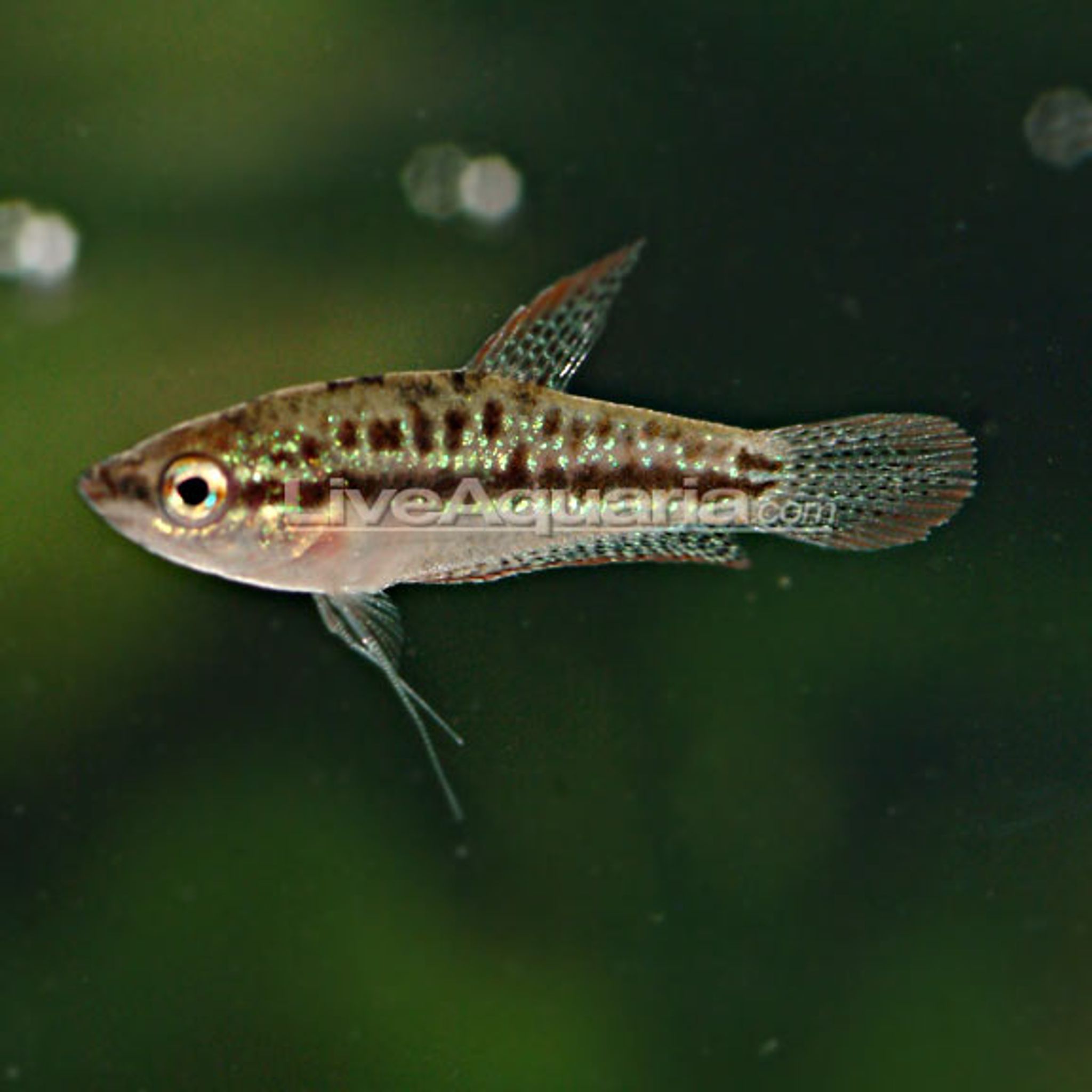
Best Tank Mates for Sparkling Gourami: Compatible Fish and Species to Avoid
The best tank mates for sparkling gourami are small, calm fish that like warm, soft, slow-moving planted water: ember tetras, chili rasboras, harlequin rasboras, pygmy corydoras, otocinclus and adult shrimp top the list. Skip fin-nippers like tiger barbs, anything big enough to swallow a 1.5-inch fish, and in most cases a betta. Below are the rules, the shortlists and stocking plans for standard US 10, 20 long and 29 gallon tanks.
Sparkling Gourami Basics That Shape Every Choice
The sparkling or pygmy gourami (Trichopsis pumila) comes from Southeast Asia, mainly the Mekong basin and nearby lowlands. In the wild it lives in shallow, slow, heavily vegetated water such as peat swamps, ditches, floodplains and rice paddies. Adults reach about 1.5 inches (4 cm) and rarely approach 2 inches (5 cm). Expect a lifespan of around 4–5 years.
Three traits matter most when you pick companions:
- Labyrinth breathing. Sparklers gulp air at the surface. Leave a gap between the waterline and the lid, and don't let fast surface swimmers dominate the top layer.
- They jump. A tight lid with no open corners is essential.
- Shy temperament. They are peaceful and won't fight back against bullies. A rough tank mate doesn't just stress them; it keeps them hidden and underfed.
Water Parameters Tank Mates Must Share
| Parameter | Recommended | Tolerated range |
|---|---|---|
| Temperature | 76–79°F (24–26°C) | 72–81°F (22–27°C) |
| pH | 6.0–7.5, kept stable | roughly 5–8 |
| Hardness | soft to moderate | about 5–18 dGH |
| Ammonia / nitrite | 0 ppm | 0 ppm |
| Nitrate | under 20 ppm | keep low |
| Flow | low | low |
Published minimums vary. You'll see low ends anywhere from 70 to 77°F and highs from 80 to 82.5°F, and pH ranges from 5.0–7.5 to 6–8. Aim for the middle of the overlap, 76–79°F and pH 6.0–7.5, and put stability ahead of chasing an exact number.
Tank Size
Advice on minimum size runs from 10 gallons for a pair to 15 gallons plus extra space per fish. A practical approach:
- 10 gallons (38 L): a pair or trio with nano mates only.
- 20 gallon long (76 L): the comfortable size for a real community with dither fish.
- 29 gallons (110 L): room for a larger group and a few "caveat" species.
Long, shallow footprints beat tall tanks, since these fish live in the upper and middle layers and travel to the surface to breathe.
How to Judge a Sparkling Gourami Tank Mate
Run any candidate through this checklist:
- Adult size under about 2.5 inches (6 cm), and a mouth too small to swallow a 1.5-inch fish.
- Calm, not a hyperactive surface racer.
- Not a fin-nipper.
- Happy with low flow, warm water and dense plants.
- Not a greedy feeder that clears food before the gouramis get any. If it is, plan to target-feed (covered below).
Top-Tier Tank Mates
These species fit the size, temperament and water profile with few compromises. Most of them are available among FishyHub's small community fishes.
| Tank mate | Adult size | Min. tank | Notes |
|---|---|---|---|
| Ember tetra | ~0.8 in (2 cm) | 10 gal | Peaceful, likes the same warm, soft water |
| Chili rasbora and other Boraras | under 1 in (2.5 cm) | 10 gal | Ideal nano match |
| Celestial pearl danio | ~1 in (2.5 cm) | 10 gal | Shy, stays in plants |
| Pygmy, habrosus or panda corydoras | 1–2 in (2.5–5 cm) | 10–20 gal | Keep a group on sand; pandas need 20 gal |
| Otocinclus | ~1.5 in (4 cm) | 20 gal | Needs a mature tank with algae or supplemental food |
| Harlequin / lambchop rasbora | ~2 in (5 cm) | 20 gal | Calm midwater school |
| Neon, cardinal, black neon tetra | 1.5–2 in (4–5 cm) | 20 gal | Fast eaters; target-feed the gouramis |
| Glowlight tetra | ~1.5 in (4 cm) | 20 gal | Gentle and slow |
| Kuhli loach | 3–4 in (8–10 cm), eel-thin | 20 gal | Bottom-dwelling, no threat despite length |
| Cherry barb | ~2 in (5 cm) | 20 gal | One of the calmest barbs |
| Endler's livebearer | ~1 in (2.5 cm) | 10 gal | Small, peaceful; will breed |
| Threadfin rainbowfish | ~1.5 in (4 cm) | 20 gal | Delicate, slow swimmer |
| Scarlet badis | ~1 in (2.5 cm) | 10–20 gal | Peaceful but needs live or frozen food; watch feeding |
Workable With Caveats
These can succeed, usually in bigger tanks and with closer watching:
- Guppies: fine in moderate numbers. Flashy males can draw interest, so a larger tank helps. Match the temperature and keep flow low.
- Platies and mollies: they prefer harder water and bring more bustle. Better in 20+ gallons with moderate hardness.
- Zebra and pearl danios, rosy barbs: some keepers list them, others say avoid high-energy fish. Treat them as a larger-tank-only option where the gouramis have plenty of quiet cover.
- White cloud mountain minnows: fast and prefer cooler water, so you'd have to run the tank at the low end of the range. Never drop to their preferred 68°F.
- Rummy-nose tetra: active schoolers; fine in 20 long or bigger.
- Bristlenose pleco: peaceful, but needs 20+ gallons.
- Honey gourami: workable in 20+ gallons with plenty of cover.
- Dwarf or pearl gourami: only in 30+ gallons with lots of cover. Dwarf gouramis can be territorial, and related labyrinth fish compete for surface space.
Invertebrates
- Snails: nerite, mystery and ramshorn snails are safe.
- Amano and ghost shrimp: adults are generally fine.
- Cherry and other neocaridina shrimp: adults are usually OK in a planted tank, but shrimplets are food. Some keepers report sparklers picking at small shrimp while others call shrimp ideal mates; both are true depending on size. If you want a breeding colony, add a thick carpet of moss so babies can hide. Browse freshwater shrimp if you're adding a cleanup crew.
Species to Avoid
- Fin-nippers: tiger barbs, black skirt tetras, serpae tetras and similar "community" nippers cause torn fins and constant hiding.
- Cichlids: including many "dwarf" cichlids in small tanks, plus angelfish.
- Larger gouramis: three-spot, blue and kissing gouramis.
- Rainbow sharks and red-tail sharks: territorial and pushy.
- Goldfish: they need much cooler water.
- Pea puffers: sometimes suggested, but they're nippy. Avoid them.
- Anything big enough to eat a 1.5-inch fish.
Stocking Plans by US Tank Size
| Tank | Sparkling gouramis | Companions | Cleanup crew |
|---|---|---|---|
| 10 gal (38 L) | 3 (1 male, 2 females) | 6 chili rasboras | 1 nerite snail, a few adult shrimp |
| 20 gal long (76 L) | 4–5 | 8–10 embers or harlequins, 6 pygmy cories | 2–3 otocinclus |
| 29 gal (110 L) | 5–6 | 10–12 cardinal or neon tetras plus 6 habrosus or panda cories | 2–3 otos, snails, adult Amanos |
Add fish gradually and let the filter catch up between batches.
Setup That Makes Tank Mates Work
- Dense planting: stem plants, crypts and java fern create line-of-sight breaks.
- Floating plants: frogbit, salvinia or red root floaters dim the light, which brings out the gouramis' color and confidence.
- Leaf litter and driftwood: extra cover and a natural, slightly tannin-stained look.
- Gentle filtration: an air-driven sponge filter, or a hang-on filter with a baffled outflow.
- A tight lid with a small air gap above the water.
Males, Females and Group Size
Keep 3–6 sparklers, ideally 1 male to 2–3 females. Males spar by flaring and "croaking." If you keep several males, give them dense plants and plenty of visual barriers.
Sexing: males are more colorful, with longer, pointed dorsal and anal fins. Hold a light behind a female and you can often see her ovary as a visible egg spot.
The croak is a clicking sound made with the pectoral fins during displays and courtship. It's normal, and it's one of the best reasons to keep a group rather than a single fish.
Introducing Tank Mates
- Quarantine new fish for 2–4 weeks in a separate tank.
- Add sparklers only after the tank is cycled and settled.
- Let the shy gouramis claim territory first, then add bolder species.
- Watch the first several feedings to confirm the slow sparklers are eating.
Feeding Around Fast Tank Mates
Sparklers are micro-predators. Offer small flakes and micro pellets plus frozen or live baby brine shrimp, daphnia and cyclops. Tetras and rasboras eat faster, so:
- Feed the fast schoolers at one end, then drop food for the gouramis near plants or at the surface at the other end.
- Use frozen foods that sink slowly through plant cover where sparklers hunt.
- Check body condition weekly. A sunken belly means they're losing the race.
Maintenance
Change 20–25% of the water weekly. Keep ammonia and nitrite at 0 and nitrate under 20 ppm. Stable conditions are the main defense against the stress-related diseases covered below.
Signs a Tank Mate Isn't Working (and Your Exit Plan)
Watch for clamped fins, gouramis that hide all day, torn fins, or fish that stop showing up at feeding time. If you see these:
- Move the problem fish to a quarantine or spare tank right away.
- Add cover and floaters while you decide.
- Rehome the aggressor or upsize the tank; the problem rarely fixes itself.
Common Mistakes and Troubleshooting
- Adding tiger barbs or other nippers: torn fins and constant hiding. Remove the nippers.
- Several males in a small tank: nonstop sparring. Rehome some, add cover, or upsize.
- Bare, brightly lit tank: sparklers hide and never color up. Add plants and floaters.
- Strong current: fish get pinned or stressed. Baffle the outflow or switch to a sponge filter.
- Fast mates eating everything: gouramis get thin. Target-feed and use frozen foods.
- Gaps in the lid: jumpers end up on the floor. Seal every opening.
- Temperature set for cool-water mates: running at 68°F for white clouds is too cold for sparklers.
Sparkling Gourami and Betta: The Honest Verdict
Both are small labyrinth fish sold side by side in US stores, so the question comes up constantly. The answer is usually no. A male betta may treat a similar-looking labyrinth fish as a rival.
It's possible only in a 20+ gallon, heavily planted tank with monitoring and a backup tank ready. Never try it in 1–5 gallon betta kits or small waterfall-style betta setups; those are too small for any community. If you're shopping for a betta, plan on it living alone or in a separate tank.
Decor That Suits Both Species
Soft live plants, leaf hammocks near the surface and floating cover suit bettas and sparklers alike. Avoid sharp plastic decor, which tears long fins.
Betta Varieties and Temperament
- Halfmoon: the long fins make it a slow swimmer and a target for nippers.
- Pink and pastel types: color doesn't change temperament; they behave like any other betta.
- Origins: domestic bettas descend from a hybrid-rich Betta splendens complex, bred first for fighting and later for looks. Aggression varies from fish to fish.
Why Bettas and Sparklers Need the Same Things
Both come from shallow, slow, warm Southeast Asian waters in Thailand, Cambodia, Laos, Vietnam and Malaysia. That shared origin explains the overlapping needs: low flow, surface air access and lots of plants. It also explains the rivalry, since they compete for the same surface space.
DIY Tank Divider
If you do house a betta with sparklers, a divider is the safest backup. Frame plastic craft mesh or egg-crate light diffuser, fit it snugly to the glass, and run it all the way to the lid with no gaps. The mesh lets water flow through. Remember that sparklers jump too, so a divider that stops short of the lid won't work.
Disease: Fungus, Columnaris and Sudden Deaths
Fluffy white patches can be either a true fungus or columnaris ("cotton wool"), a bacterial disease.
- Columnaris moves fast, often shows up as a mouth or saddle-shaped lesion, and needs antibacterial treatment.
- Fungus is usually secondary to an injury or poor water.
The most common triggers are stress from bad tank mates and poor water quality, and both can lead to sudden deaths. When fish get sick, test the water first, then move affected fish to quarantine and treat. Quarantining every new arrival is the best prevention.
Frequently Asked Questions
Can sparkling gouramis live with a betta?
Rarely, and it isn't the recommended plan. It can work only in a 20+ gallon, heavily planted tank with close monitoring and a backup tank or divider ready. Small betta kits are never suitable.
How many sparkling gouramis should I keep?
Keep 3–6, ideally one male to two or three females. That ratio limits sparring and lets you see natural behavior like croaking and displays.
Will sparkling gouramis eat shrimp?
They'll eat shrimplets, but adult cherry shrimp and Amano shrimp are usually safe. Add dense moss if you want a shrimp colony to keep breeding.
Can they live with honey or dwarf gouramis?
Honey gouramis are workable in 20+ gallons with good cover. Dwarf gouramis should only be tried in large tanks, around 30 gallons or more, because they can be territorial and compete for the surface.
Are guppies OK with sparkling gouramis?
Yes, in moderate numbers. Keep the temperature in the shared range and the flow low, and give flashy male guppies enough room in a larger tank.
Why is my sparkling gourami croaking?
The croak is a normal sound produced with the pectoral fins during displays and courtship. It's a sign of healthy social behavior, not a problem.
The best sparkling gourami communities start with small, gentle species and plenty of plants. Browse FishyHub's small community fishes to find embers, rasboras and other nano companions for your tank.

