Best Tank Mates for Serpae Tetra: Compatible Fish and Species to Avoid
The best serpae tetra tank mates are fast, sturdy, short-finned fish close to their size: robust tetras, danios, Corydoras, bristlenose plecos, harlequin rasboras, cherry barbs, platies and swordtails. Skip anything with long, flowing fins or a slow swimming style, including bettas, fancy guppies and angelfish. Keep the serpaes themselves in a group of at least 6, ideally 8–12, and most nipping problems never start.
Serpae Tetra Basics: What You're Stocking Around
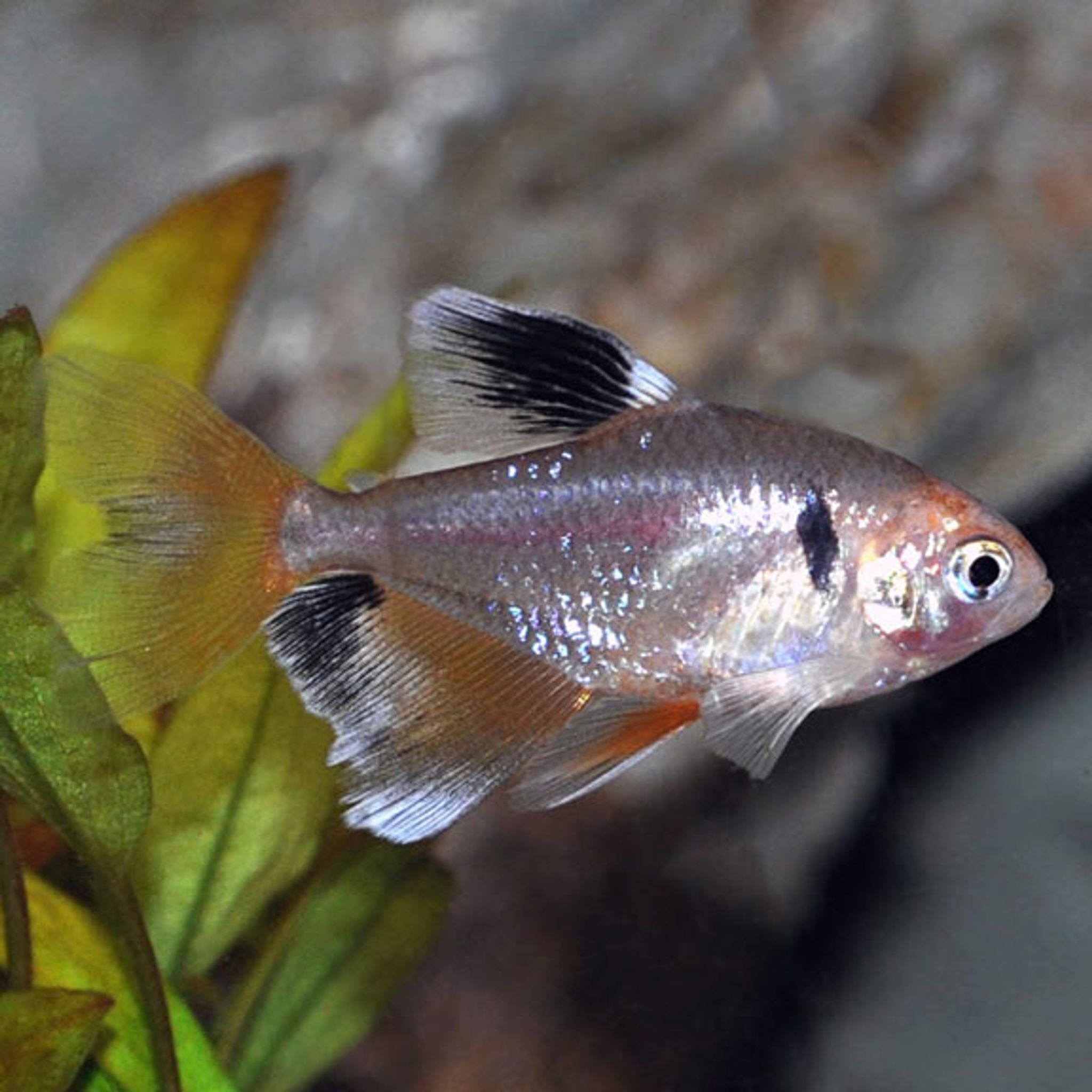
The serpae tetra (Hyphessobrycon eques), also sold as the jewel or callistus tetra, comes from the Amazon and Paraguay basins of South America. It's a cheap, blood-red, beginner-hardy fish with a reputation to match its color.
- Adult size: about 1.75 in (4.5 cm), rarely 2 in (5 cm)
- Lifespan: roughly 5–7 years
- Temperature: 72–79°F (22–26°C)
- pH: about 6.0–7.5 (tolerates roughly 5.0–7.8)
- Hardness: soft to moderate, about 5–15 dGH (tolerates up to ~25)
- Diet: omnivore; quality flake or micro-pellets plus frozen bloodworms, brine shrimp and daphnia
- Minimum tank: 20 gallons (76 L); a 29 gal or long 30 gal is better for a real school plus companions
A 10-gallon tank is sometimes called viable for serpaes, but it isn't adequate for a community. There's no room for a proper school, let alone tank mates that can escape attention.
Are Serpae Tetras Aggressive?
They're semi-aggressive fin nippers, not killers. Toward fish their own size and speed, serpaes are mostly peaceful. The trouble is long, trailing fins, especially on slow swimmers. Serpaes are jerky, restless fish that constantly sort out a pecking order among themselves.
Why nipping happens:
- Dominance spillover. Pecking-order squabbles inside the school spill onto other fish.
- Small school. With only 3–5 fish, that energy goes outward at tank mates. In a group of 10, they spend it on each other.
- Hunger. Underfed serpaes nip more. Feed two small meals a day rather than one big one.
- Individual variation. Some lines and individual fish are simply nippier than others, so watch your own group rather than trusting a label.
How to Choose Serpae Tetra Tank Mates
Use these selection rules for any fish you're considering:
- Similar size or slightly larger. Nothing tiny enough to bully, nothing big enough to swallow a 1.75 in (4.5 cm) fish.
- Fast or robust. Fish that can outswim or shrug off a nip.
- Short fins. No veils, trailing tails or long ventral fins.
- Overlapping water parameters. Their temperature and pH window must match the serpae's.
- Different zone of the tank if possible. Bottom dwellers and surface fish rarely cross paths with midwater serpaes.
Best Tank Mates for Serpae Tetra
| Tank mate | Tank zone | Group size | Why it works | Notes |
|---|---|---|---|---|
| Black skirt tetra | Middle | 6+ | Tough, same attitude | Classic "tough tetra" partner |
| Bloodfin tetra | Top/middle | 6+ | Fast, short fins | Handles cooler end of range |
| Lemon, silver tip tetra | Middle | 6–10+ | Robust, similar size | Silver tips nip too |
| Rummy-nose tetra | Middle | 8+ | Fast, tight schooler | Needs a bigger school and tank |
| Zebra and other danios | Top | 6+ | Too fast to catch | Great surface-layer filler |
| Harlequin rasbora | Middle | 8+ | Larger rasbora, quick | Avoid tiny rasboras |
| Cherry or rosy barb | Middle | 6+ (groups) | Robust, not nippy themselves | Rosy barbs need more space |
| Platy, swordtail | Middle/top | 3+ | Sturdy livebearers | Moderate hardness suits them |
| Corydoras | Bottom | 6+ | Armored, out of the way | Keep 76–78°F for mixed tanks |
| Bristlenose pleco | Bottom | 1 | Armored, nocturnal | Grazes algae and leftovers |
| Kuhli loach | Bottom | 6+ | Hides in substrate | Needs sand or smooth gravel |
| Bolivian ram | Bottom/middle | Pair | Hardy dwarf cichlid | Much hardier than German blue |
| Amano shrimp | Bottom | 3+ | Too big for serpaes to eat | Best shrimp choice |
You can browse robust options in FishyHub's tetra section, and bottom crews like Corydoras that pair especially well with a busy serpae school.
Conditional Tank Mates
These can work, but only with the right setup:
- Pictus catfish. Some keepers recommend it; others call it a bully. It needs 55+ gallons (208 L) and may eat small fish at night. Big tanks only.
- German blue ram. Wants 80°F (27°C) or warmer and soft water, above the serpae's comfort zone. The Bolivian ram is the better pick because it tolerates the same 76–78°F (24–26°C) range as serpaes and corys.
- Honey gourami. Short fins make it workable in a large, planted tank with a big serpae school. Not in a 20-gallon.
- Mollies. Fine if your water sits at moderate hardness; they prefer harder water than serpaes, so don't push to extremes for them.
- Snails. Adult nerite and mystery snails are mostly fine, though serpaes may pick at antennae. Watch for it.
- Neon tetras. Often OK in large schools and planted tanks, but neons are small and a bit slower. Cardinals or larger tetras are safer bets.
Fish to Avoid With Serpae Tetras
| Species | Main problem |
|---|---|
| Betta | Long fins get shredded; the betta is chronically stressed |
| Fancy or long-finned guppies | Flowing tails are prime targets |
| Angelfish | Fins get nipped now; adult angels may eat small tetras later |
| Long-finned or veiltail varieties | Same fin problem, any species |
| Fancy goldfish | Long fins plus a coldwater temperature mismatch |
| Pearl, dwarf and slow gouramis (small tanks) | Slow, trailing ventral fins |
| Tiger barbs | Two nippers escalate into a constant nip-fest |
| Large cichlids (oscar, Jack Dempsey, convict, green terror, red devil) | Will eat or terrorize serpaes |
| Nano fish (chili rasbora, ember tetra) | Bullied, harassed or eaten |
| Small shrimp and shrimp fry | Eaten |
| White Cloud minnows and other coldwater fish | Temperature mismatch |
Myths Worth Correcting
Some tank mate lists include guppies and angelfish as safe picks. Fin length is what decides it. Short-finned guppies and Endlers can hold their own; fancy-tailed guppies get shredded. Angelfish fail both ways: their long fins draw nips while young, and a grown angel can fit a small tetra in its mouth. The same fin-length logic applies to gouramis. Short-finned honey gouramis can work in big tanks; long-finned and slow gouramis shouldn't be added.
Stocking Plans by Tank Size
These plans assume good filtration, regular water changes and a planted layout.
| Tank | Serpae school | Suggested mates |
|---|---|---|
| 20 gal (76 L) | 8 serpaes | 6 Corydoras + a few Amano shrimp |
| 29 gal (110 L) | 10 serpaes | 6 Corydoras + 1 bristlenose pleco |
| 40 gal breeder (151 L) | 10–12 serpaes | 6 zebra danios + 6 Corydoras + 1 bristlenose, or a Buenos Aires tetra school |
| 55 gal (208 L) | 12 serpaes | 8 black skirt tetras + 8 Corydoras + a group of kuhli loaches + a Bolivian ram pair |
In a mixed tank with rams and corys, run the heater at the 76–78°F (24–26°C) compromise zone, which suits everyone listed.
Related Tough-Tetra Companions
Buenos Aires Tetra Tank Mates
The Buenos Aires tetra is a similar semi-aggressive tetra but larger, about 2.75 in (7 cm). It works with serpaes in 40+ gallon tanks. Because both species nip, they share the same "robust mates only" list above. Buenos Aires tetras also eat plants, so choose tough species like Java fern. Whether guppies or dwarf gouramis work with them depends on fin length, the same as with serpaes.
Silver Tip Tetra
Silver tips are about 1.2–2 in (3–5 cm), close to serpae size, and also nippy. They need groups of 6–10+ and tolerate a wider temperature range, about 64–82°F (18–28°C). They fit well in a fast "tough tetra" community with serpaes, as long as both species are kept in large schools.
Serpaes and Other Freshwater Bullies
Serpaes appear on aquarium bully lists despite their "peaceful" label. Their peers there include tiger barbs, male bettas, dwarf gouramis, red-tail and rainbow sharks, and large cichlids. The controls are the same for all of them:
- A bigger tank
- Decor that breaks sightlines
- Adequate, regular feeding
- Avoiding tank mates with look-alike body shapes that trigger rivalry
Community Compatibility: Which Fish Live Together
The same rules apply to any community tank, not only serpaes:
- Size, speed, special needs. Match fish on all three.
- Water chemistry and temperature must overlap, not just come close.
- Stock by layer. Mix top, middle and bottom fish so no zone is crowded.
- Schooling fish need 6–10 of their own kind.
- Mouth-size rule. Anything that fits in a fish's mouth will eventually be eaten.
Setup That Reduces Nipping
- Dense planting. Java fern, Amazon swords and floating plants break sightlines and give victims cover.
- Driftwood and rock to split the tank into visual zones.
- A long tank rather than a tall one, with an open swimming lane for the school.
How to Introduce Tank Mates
- Quarantine all new fish for 2–4 weeks.
- Add peaceful bottom dwellers first, then the serpaes, so the tetras don't claim the tank.
- Add the serpae school all at once rather than a few at a time.
- Rearrange decor whenever you add fish to reset territories.
- Watch fins closely for the first 2 weeks.
Common Mistakes and Troubleshooting
- Buying only 3 serpaes. Nipping spikes. Grow the school to 8 or more.
- Pairing with a betta, angel or fancy guppy. Expect shredded fins and fin rot. Rehome the victim.
- Bare tank with open sightlines. More chasing. Add plants and wood.
- Underfeeding or one daily feeding. More aggression. Switch to two small meals.
- Adding serpaes before calmer fish. They become territorial. Add them last.
- Mixing with coldwater species. One side is always outside its temperature range.
Signs of Trouble and a Rescue Plan
Watch for ragged or split fins, hiding, clamped fins, and fish hovering at the top or in corners. Act within days, before infection sets in:
- Separate the nipped fish into a hospital tank or rehome it.
- Repair water quality with clean water changes and stable temperatures.
- Monitor for fin rot as the fins regrow, and address the cause (school size, feeding, incompatible mates) before returning anything.
Frequently Asked Questions
Can serpae tetras live with bettas?
No. A betta's long fins are exactly what serpaes target, and even without visible damage the betta stays stressed. Keep bettas in their own tank.
Can serpae tetras live with angelfish?
It isn't recommended. Serpaes nip angelfish fins, and once the angels grow, they may eat small tetras. The pairing fails from both directions.
Can serpae tetras live with guppies or neon tetras?
Only short-finned guppies or Endlers; fancy tails get shredded. Neons often work in large schools and planted tanks, but because they're small and slower, cardinals or larger tetras are safer choices.
How many serpae tetras do I need to stop fin nipping?
Keep 8–12 and never fewer than 6. In community tanks, 10 or more is ideal. A larger school turns its nipping inward instead of at tank mates.
Can serpae tetras live with shrimp?
Amano shrimp are a good match because they're too large to eat. Adult cherry shrimp may survive with heavy plant cover, but their babies will be eaten.
What's the minimum tank size for serpae tetras with tank mates?
20 gallons (76 L) is the minimum, and 29 gallons (110 L) or larger is better. A 10-gallon tank is too small for a school plus companions.
Build Your Serpae Community
Serpaes do well with neighbors that are quick, sturdy and short-finned, in a planted tank with a big school of their own. When you're ready to pick companions, browse FishyHub's small community fishes for tetras, danios, rasboras and livebearers that can keep up.

