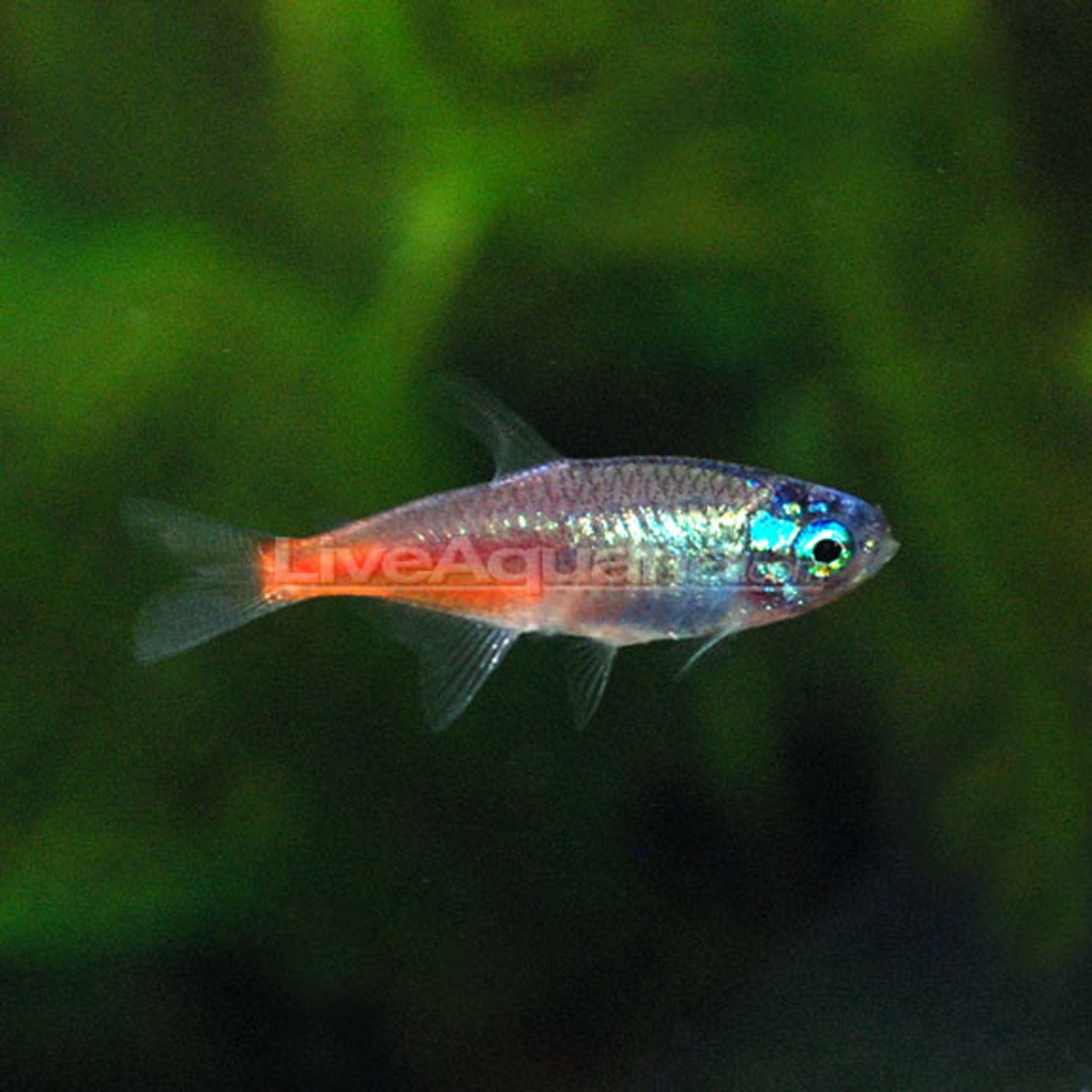
Best Tank Mates for Neon Tetra: Compatible Fish and Species to Avoid
The best tank mates for neon tetras are small, peaceful fish that like the same soft, slightly acidic water: cardinal and ember tetras, harlequin rasboras, small corydoras, otocinclus, kuhli loaches, honey gouramis and cherry barbs. Avoid anything big enough to swallow a neon, any fin-nipper, and any fish that needs very warm or cold water. Below you'll find the four rules behind every pick, tiered lists, sample stocking plans for 10, 20 long and 29 gallon tanks, and fixes for common problems.
Neon Tetra Basics That Shape Compatibility
The neon tetra (Paracheirodon innesi) comes from blackwater and clearwater tributaries of the upper Amazon in Peru, Colombia and Brazil. That origin explains its needs: soft, acidic, shaded water with gentle flow.
- Adult size: about 1.25–1.5 in (3–4 cm)
- Lifespan: roughly 5–8 years with good care
- Behavior: peaceful mid-water shoaler
- Temperature: 72–78°F (22–26°C); some keepers stretch it to 68–80°F (20–27°C). 74–76°F (23–24°C) is the sweet spot.
- pH: 6.0–7.0, tolerating up to about 7.5 once acclimated
- Hardness: soft to moderately soft, under about 10 dGH
- Flow: low to moderate
Most neons sold in the US are farm-raised in Asia or Florida rather than wild-caught. Farmed fish are often fragile after shipping, so buy from store tanks with no dead or dying fish and drip-acclimate slowly.
How Many Neons Should You Keep?
Estimates run from 5 to 20. Treat 6 as the floor and 10 or more as the goal. Small groups fade in color, hide constantly, and are more likely to nip. As a rough guide, keep about 8–10 neons in a 10 gallon (38 L) tank, or 15–20 in a 20 gallon (76 L) tank with few other fish.
What Tank Size Do You Need?
- 10 gallons (38 L): a neon-only group, or neons plus a few tiny extras
- 20 gallon long (76 L) or larger: a proper community tank
- 29 gallons (110 L) or larger: needed if you add mid-size fish such as gouramis or a ram
The Four Compatibility Rules
- The mouth rule. Any fish that can fit a neon in its mouth will eventually eat one. In practice, skip fish that grow past about 3–4 in (8–10 cm) unless their mouths are small, as with bristlenose plecos.
- The water rule. Companions should be comfortable in the same temperature and pH window. A fish that needs 82°F (28°C) or hard, alkaline water forces one species to live under stress.
- The temperament rule. No fin-nippers and no chasers. Constant harassment makes neons stop eating and get sick, even if none is ever eaten.
- The level rule. Mix swimming zones so the tank feels spacious:
- Bottom: corydoras, kuhli loaches, otocinclus
- Middle: neons, other small tetras, rasboras
- Top: hatchetfish, some livebearers
Top-Tier Tank Mates
These species are small, peaceful and share the neon's water preferences. You can browse many of them among small community fishes on FishyHub.
- Cardinal tetras: the closest match, and a better choice than neons for warmer tanks
- Black neon, green neon, ember and rummy-nose tetras
- Harlequin and other small rasboras
- Celestial pearl danios
- Small corydoras: pygmy, panda and habrosus are ideal; bronze and peppered corys are fine in larger tanks
- Otocinclus for soft algae grazing
- Kuhli loaches for the substrate
- Honey and sparkling gouramis
- Cherry barbs (and gold barbs), which are peaceful, unlike tiger barbs
- Hatchetfish for the surface
- Bristlenose plecos, the right pleco for a neon tank
For the bottom layer, pygmy or panda corys and kuhli loaches are the standout choices; see the corydoras selection for options.
Good Tank Mates With Caveats
| Species | Main caveat | How to make it work |
|---|---|---|
| Guppies, platies, mollies, swordtails | Prefer harder, alkaline water | Meet in the middle at pH about 7 and 74–78°F (23–26°C) |
| Zebra danios | Fast, boisterous, dominate feeding | 20 gal long (76 L) or larger; keep both species in groups |
| White cloud minnows | Prefer cooler water | Overlap at about 72°F (22°C) |
| Dwarf gourami | Males can be pushy; disease risk in the species | One male, 20+ gal, quarantine carefully |
| Bolivian or German blue ram, small Apistogramma | Territorial; rams like warm water | 29+ gal (110 L) with territory space; run at the top of the neon range |
| Betta | Long fins, variable temperament, likes 78–80°F (26–27°C) | Conditional only (see below) |
| Nerite and mystery snails, adult amano shrimp | None significant | Safe |
| Cherry and ghost shrimp | Shrimplets get eaten | Adults usually fine; add moss for babies |
Temperature Overlap at a Glance
| Fish | Preferred range | Overlap with neons |
|---|---|---|
| Neon tetra | 72–78°F (22–26°C) | — |
| Cardinal tetra, rasboras, corys | Mid-70s °F | Excellent |
| White cloud minnow | Cooler water | Only near 72°F (22°C) |
| Betta, rams | Upper 70s to 80°F | At the neon's upper limit |
| Discus | 82–86°F (28–30°C) | None long term |
| Goldfish | Cold water | None |
Middle-Ground Parameters for Livebearers
Livebearers and neons can share a tank, but neither gets its ideal water. Aim for pH around 7.0, moderate hardness, and 74–78°F (23–26°C), and keep it stable. Don't chase numbers with chemicals; a steady compromise beats a perfect value that swings. Remember that neons will eat newborn guppy fry. Fry survive only with floating plants or moss cover, in a breeder box, or in a separate tank.
Where Opinions Split
- Bettas: a conditional maybe. A calm male or a single female can work in a 20+ gallon (76 L) planted tank, with a backup plan if the betta chases or small neon groups nip its fins. Bettas prefer 78–80°F, the top of the neon range.
- Angelfish: avoid them for most tanks. Adult angels eat neons. Growing juvenile angels alongside adult neons in 55+ gallons (208 L) is an experienced-keeper exception, and many who try it still switch to cardinals or larger tetras.
- Discus: they need 82–86°F (28–30°C), too warm for neons long term. Cardinals are the better dither fish for discus.
- Barbs: name the species. Cherry and gold barbs are peaceful; tiger barbs and similar species are not.
- Plecos: common plecos grow past 12 in (30 cm). Choose bristlenose or clown plecos only.
Fish to Avoid With Neon Tetras
- Most cichlids: oscars, Jack Dempseys, convicts, African mbuna
- Large catfish and arowanas
- Aquarium "sharks": red-tail, bala and rainbow sharks
- Fin-nippers: tiger barbs and serpae tetras
- Large tetras: black skirt and buenos aires tetras can harass
- Goldfish: they need cold water and will eat small fish
- Large angelfish and discus (see above)
Store Size vs. Adult Size
Many impulse-buy mistakes start with a cute juvenile. A 2 in (5 cm) angelfish, a finger-length bala shark or a small common pleco all outgrow the neon's safety margin. Check the adult size before you buy, not the size in the store tank.
Sample Stocking Plans
These assume a cycled, planted tank and regular maintenance. Pick one option per line, not all of them.
| Tank | Neons | Companions |
|---|---|---|
| 10 gal (38 L) | 8–10 | 1–2 nerite snails, or a few adult amano shrimp; optionally 2–3 otocinclus in a mature tank |
| 20 gal long (76 L) | 10–12 | 6 pygmy or panda corys, or 5–6 kuhli loaches; 6 harlequin rasboras or ember tetras; 1 honey gourami; snails |
| 29 gal (110 L) | 12–15 | 6–8 panda or bronze corys; 8 cardinal or rummy-nose tetras; 1 German blue or Bolivian ram, or a pair of honey gouramis; 1 bristlenose pleco |
Stocking Order and Quarantine
- Cycle the tank fully first. Neons do badly in immature tanks and shouldn't be the first fish in.
- Add the neon school early, before any semi-aggressive or larger mates, so it settles in.
- Quarantine new arrivals for 2–4 weeks. This matters because of neon tetra disease, a microsporidian infection with no cure. Quarantine is the best protection for a whole school.
- Drip-acclimate shipped or store-bought neons to avoid a pH or temperature shock.
Setting Up the Tank for Peace
The environment decides how well compatible fish actually get along:
- Dense planting and floating plants for cover and shade
- Subdued lighting and a dark substrate, which bring out neon color
- Hiding spots such as driftwood and leaf litter
- Regular partial water changes and no overstocking
- Low to moderate flow. An air pump isn't required if the filter keeps the surface moving; gentle aeration is fine, but avoid strong currents.
Feeding a Mixed Tank
A crowd of fast eaters such as danios or livebearers can leave neons hungry. Offer small foods (micro pellets, crushed flake, frozen daphnia or cyclops, baby brine shrimp) and watch that everyone gets a share. Feed small portions to avoid ammonia spikes.
Common Questions About Neon Behavior
Are Neon Tetras Peaceful? Do They Kill Other Fish?
Neons are very peaceful. Deaths blamed on them usually trace back to disease, poor water quality, or neons picking at a fish that had already died. Small groups may nip long-finned fish like bettas and fancy guppies.
Neons and Shrimp
Adult shrimp usually coexist with neons. Neons will eat shrimplets and occasionally gang up on a molting adult. Java moss and dense plants improve shrimplet survival. Larger tetras such as black skirts and phantoms are genuine shrimp predators. You can browse freshwater shrimp on FishyHub if you plan a mixed setup.
Will Neons School With Other Tetras?
Mixed tetras may shoal loosely under stress, but each species needs its own group of 6 or more. Three neons plus three cardinals isn't a school; it's two stressed trios.
Black Neon Tetra and Its Tank Mates
The black neon (Hyphessobrycon herbertaxelrodi) is a different genus with a black-and-white stripe instead of iridescent blue. It is stockier, slightly hardier, swims a little higher in the water, and tolerates about 72–80°F (22–27°C) and a pH of roughly 5–8. It shares the same peaceful mates, mixes well with neons, and may pick at shrimplets.
Purple Emperor Tetra
This small, peaceful characin from Brazilian blackwater suits a planted neon community. Males are striking in groups, though they spar mildly with one another.
Troubleshooting
- Neons stay pale and hide: test parameters, add cover, grow the group, and remove any bully.
- One neon swims apart, shows white patches or a bent spine: suspect neon tetra disease and isolate it right away.
- Fish disappear overnight: suspect a large tank mate, or a fish that died and was eaten. Count your fish daily.
- Neons keep dying: the usual causes are an uncycled tank, pH or temperature swings, stressful acclimation, bullying mates, overfeeding and ammonia, or neon tetra disease.
- Classic setup mistakes: a brand-new tank, too few neons, a bright bare tank, fin-nipping mates, and hard-water livebearers without a pH compromise.
Frequently Asked Questions
Can neon tetras live with bettas?
Sometimes. A calm male or a single female betta can work in a 20+ gallon planted tank kept around 76–78°F. Have a backup tank ready in case the betta chases neons or the neons nip its fins.
Can neon and cardinal tetras live together?
Yes, they're the best match for each other. Give each species its own group of at least 6 so both school properly, and keep the temperature in the mid-70s °F.
Can neon tetras live with guppies?
Yes, at a pH around 7 and 74–78°F (23–26°C). Expect the neons to eat guppy fry unless you provide heavy plant cover or a breeder box.
Will neon tetras eat my cherry shrimp?
Usually not the adults, but they will eat baby shrimp. Java moss and dense plants give shrimplets a much better chance.
Can neon tetras live with goldfish?
No. Goldfish need cold water that's outside the neon's range, and they will eat small fish.
What is the best bottom-dweller for neon tetras?
Pygmy or panda corydoras and kuhli loaches are the top picks. They're small, peaceful and happy in the same soft, slightly acidic water.
Ready to build the school itself? Browse the tetra collection on FishyHub for neons, cardinals and other peaceful tetras that fit this community.

