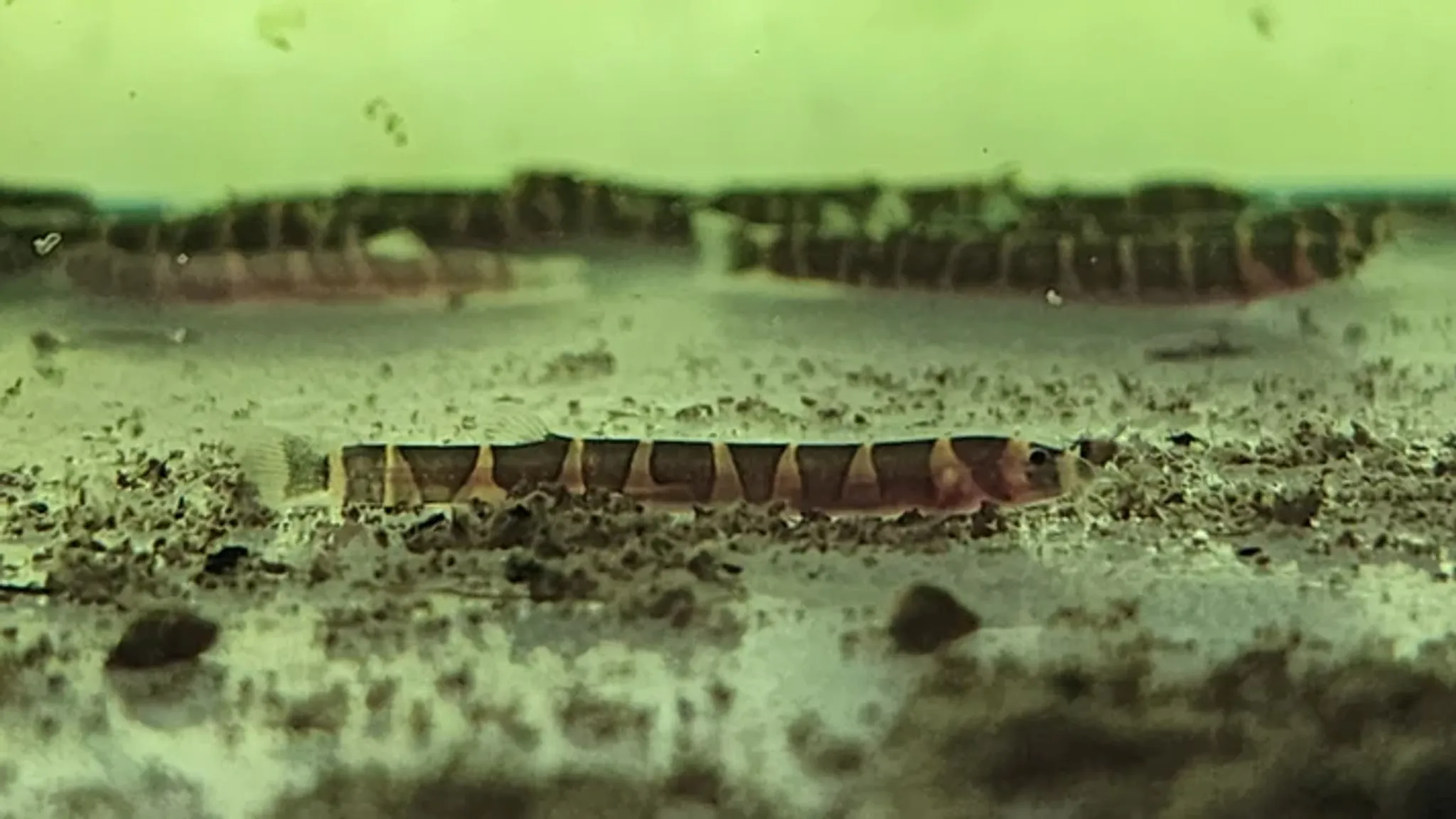
Best Tank Mates for Kuhli Loach: Compatible Fish and Species to Avoid
The best tank mates for kuhli loach are small, peaceful fish that swim in the middle and top of the tank and like warm, soft-leaning water: rasboras, small tetras, pencilfish, hatchetfish, corydoras and otocinclus. Skip anything big enough to swallow an eel-shaped fish, anything aggressive or nippy, and bottom dwellers that hog caves and food. Below you'll find a tiered list, a parameter table, and stocking plans for 20, 29 and 40 gallon tanks.
Kuhli Loach Basics That Shape Compatibility
Before picking tank mates, it helps to know what a kuhli actually needs.
- Body and behavior: an eel-shaped, nocturnal, peaceful bottom dweller that reaches about 3–4 inches (7.5–10 cm) and can live 10+ years with good care. It doesn't nip fins or claim territory, so it's no threat to other fish.
- Group size: keep at least 5–6. A bigger group hides less and comes out more. A lone kuhli is almost never seen.
- Tank size: a 20 gallon long (76 L) is the practical baseline for a small group, adding roughly 3–4 gallons (11–15 L) per extra loach. Floor area matters more than height. Estimates run from 15 gallons (57 L) for a single fish up to 30 gallons (114 L) once shrimp are added.
- Water: 74–82°F (23–28°C) is the practical range (they tolerate roughly 73–86°F / 23–30°C), pH 5.5–7.0, and soft to moderate hardness (0–10 dGH). Every tank mate needs to be comfortable in that warm, soft-leaning tropical water.
- Substrate: fine sand or smooth, rounded gravel. Sharp gravel damages their barbels and skin, which also means any other bottom dweller should be a sand-lover.
A Note on Pangio Species
"Kuhli loach" often covers several Pangio species, including the black kuhli and the banded forms. They look different but share the same size, temperament and water needs, so everything in this guide applies to all of them. They can also be mixed in one group.
Why Eel-Shaped Fish Are Easy to Swallow
A 3–4 inch kuhli seems too big for most predators, but body shape matters as much as length. A long, thin fish can be swallowed head-first by a fish whose mouth could never take a deep-bodied tetra of the same length. That's why a medium angelfish or a mid-sized catfish that ignores your rasboras may still eat a kuhli. When judging a predator, compare its mouth to the kuhli's body width, not its length.
Tier 1: Best Tank Mates
These species share the water, stay out of the kuhlis' way, and occupy a different part of the tank.
Mid- and Top-Water Schoolers
- Harlequin rasboras and other small rasboras
- Neon, cardinal, ember and rummy-nose tetras
- Pencilfish and hatchetfish (hatchetfish need a tight lid; they jump)
- Small peaceful danios
Schoolers fill the open water and add daytime activity, which balances out kuhlis you mostly see at night. Many of these can be browsed in FishyHub's small community fishes section.
Peaceful Bottom and Algae Crew
- Corydoras: the classic sand-bottom partner. Both forage peacefully together. Browse corydoras if you want a shoal.
- Otocinclus: small grazers that stay on glass and leaves.
- Bristlenose pleco: stays compact and is generally peaceful, but it eats a lot, so watch feeding (see below).
Tier 2: Good With Caveats
- Dwarf, pearl and honey gouramis: peaceful mid-water fish. Keep one male dwarf gourami per tank.
- Rams and apistogrammas: fine most of the time, but they get territorial when spawning. Provide plenty of caves and cover so kuhlis have somewhere to go.
- Platies and guppies: peaceful, but they prefer harder water, so the pH/GH overlap is marginal. Aim for the middle ground (around pH 7.0, moderate hardness).
- Swordtails and mollies: rated anywhere from fine to borderline because of their hard-water preference and larger size. Treat them as a caveat pairing, not a first choice.
- Boesemani and other rainbowfish: active and peaceful, but they grow large and need bigger tanks.
- Bettas: sources split here. Usually fine in a 10–20 gallon (38–76 L) tank because the betta stays near the surface, but individual bettas vary. Watch for harassment.
Advanced or Large-Tank Only
Some lists include these three. They can work, but only in the right setup:
- Clown loaches: get large and need 75+ gallons (284+ L).
- Angelfish: big adults may try to eat small kuhlis.
- Discus: need 82–86°F (28–30°C), which is at the very top of the kuhli's tolerance.
Tier 3: Species to Avoid
- Large or predatory fish: oscars, arowanas, big catfish, and in some cases large angelfish. Any of them can swallow a kuhli.
- Aggressive or territorial cichlids: they'll dig up and defend the bottom kuhlis live on.
- Fin nippers and bullies: tiger barbs and some larger barbs harass slow, peaceful fish.
- Pushy bottom dwellers: red-tail sharks, rainbow sharks, and larger botia loaches in small tanks. They take over caves and food.
- Goldfish: they need cooler water (65–75°F / 18–24°C) and produce a heavy bioload.
Parameter Overlap by Tank Mate
Use this as a quick check. Ranges shown are general hobby ranges for each group; the kuhli row is from the section above.
| Species | Temp (°F / °C) | pH | Hardness | Overlap with kuhlis |
|---|---|---|---|---|
| Kuhli loach | 74–82 / 23–28 | 5.5–7.0 | 0–10 dGH | — |
| Rasboras, small tetras, pencilfish | Warm tropical | Soft to neutral | Soft | Excellent |
| Corydoras, otocinclus | Warm tropical | Soft to neutral | Soft to moderate | Excellent (confirm the species' temperature) |
| Dwarf, pearl, honey gourami | Warm tropical | Soft to neutral | Soft to moderate | Good |
| Rams, apistogrammas | Warm end of range | Soft, acidic | Soft | Good; watch spawning pairs |
| Platies, guppies, mollies, swordtails | Tropical | Neutral to alkaline | Moderate to hard | Marginal |
| Discus | 82–86 / 28–30 | Soft, acidic | Soft | Top of kuhli range only |
| Goldfish | 65–75 / 18–24 | — | — | Poor: too cool |
Can Kuhlis Live With Shrimp and Snails?
Do Kuhli Loaches Eat Shrimp?
Adult cherry, amano, ghost and bamboo shrimp are generally safe. Kuhlis will eat shrimplets and eggs, though, so a tank meant for breeding shrimp should either skip kuhlis or use heavy moss cover so enough babies survive. Larger shrimp such as amanos are the safest choice, and well-fed kuhlis rarely hunt. You can browse freshwater shrimp on FishyHub.
Snails
Views differ: some keepers say kuhlis eat snails, while others point out that, unlike many loaches, kuhlis don't hunt them. In practice, adult nerite and mystery snails are safe. Kuhlis may pick at tiny pest snails or eggs, but they won't control a snail population.
Feeding a Community That Includes Kuhlis
Kuhlis are slow and eat at night, so fast corydoras or a hungry bristlenose can clear the food before they find it.
- Add sinking pellets, wafers, frozen bloodworms or blackworms, or a gel food after the lights go out.
- Spread food across several spots, including near caves and leaf litter.
- Check body shape: a thin kuhli is a sign that tank mates are outcompeting it.
Watching Them at Night
Dim blue or "moonlight" lighting lets you watch feeding and activity after dark without disturbing the tank. It's the easiest way to count heads and confirm everyone is eating.
Aquascape and Equipment
- Cover: caves, driftwood, leaf litter and dense plants. Kuhlis are plant-safe and won't eat or uproot plants the way larger loaches can.
- Lid: use a tight one. Kuhlis squeeze through surprisingly small gaps.
- Filter intakes: fit a sponge prefilter so kuhlis can't slip inside.
Sample Stocking Plans
| Tank | Kuhlis | Schoolers | Other |
|---|---|---|---|
| 20 gal long (76 L) | 6 | 8 harlequin rasboras | 5 otocinclus |
| 29 gal (110 L) | 6 | 10 cardinal tetras | 1 honey or dwarf gourami, 6 pygmy corys |
| 40 gal breeder (151 L) | 8 | 12 rummy-nose tetras | 1 pair of apistogrammas, amano shrimp |
Add fish gradually and let the filter catch up between additions.
Adding New Tank Mates Safely
Quarantine new fish for 2–4 weeks before they join the display tank. Kuhlis have tiny, scaleless-looking skin and are prone to ich and sensitive to medications.
If you have to treat a community tank that includes kuhlis:
- Use half doses of most treatments.
- Avoid copper where possible.
- Watch the loaches closely during treatment; they tend to react before the other fish do.
Common Mistakes and How to Fix Them
- Buying one or two and never seeing them: add more to reach 5–6+ and give them more cover.
- Red or damaged barbels: rough gravel is the usual cause. Switch to sand.
- Kuhlis getting thin: corys or plecos are eating everything. Feed after dark and target-feed.
- Kuhlis "vanishing": check filter intakes, lid gaps and the substrate. They burrow and often turn up alive later.
- Stressed, always-hiding kuhlis: fast fish kept in cold or hard water leave kuhlis out of their comfort zone. Match the parameters.
- Losing kuhlis during treatment: full-strength medication for the whole tank. Dose conservatively.
Frequently Asked Questions
Can kuhli loaches live with bettas?
Usually, yes. In a 10+ gallon (38+ L) tank with plenty of cover, the betta stays near the surface and the kuhlis stay near the bottom. Temperament varies from betta to betta, so watch for any chasing and separate them if it happens.
Can kuhli loaches live with corydoras?
Yes. It's one of the best-known sand-bottom pairings. The main risk is food: corys eat quickly during the day, so feed the kuhlis again after lights out.
Will kuhlis eat my cherry shrimp?
Adult cherry shrimp are generally safe. Shrimplets and eggs are at risk, so if you want the colony to grow, add dense moss or keep the kuhlis in a different tank.
How many kuhli loaches can go in a 20-gallon tank?
About 5–6 kuhlis alongside a small schooling group works well in a 20 gallon long. For example: 6 kuhlis, 8 harlequin rasboras and 5 otocinclus.
Can kuhli loaches live with other loaches?
Other kuhlis, including the black kuhli, and small peaceful loaches are fine. Larger botia species need big tanks and can be pushy, so they don't suit most kuhli setups.
Will kuhlis eat fish fry?
They may snack on eggs and very young fry. That makes them a poor fit for a breeding tank, though they won't bother fish that are already grown.
Build Your Kuhli Community
Start with a group of at least six kuhlis on soft sand, add a peaceful schooling fish, and grow the community slowly from there. When you're ready to stock, browse FishyHub's plecos, corys and bottom dwellers collection for loaches and sand-friendly companions.

