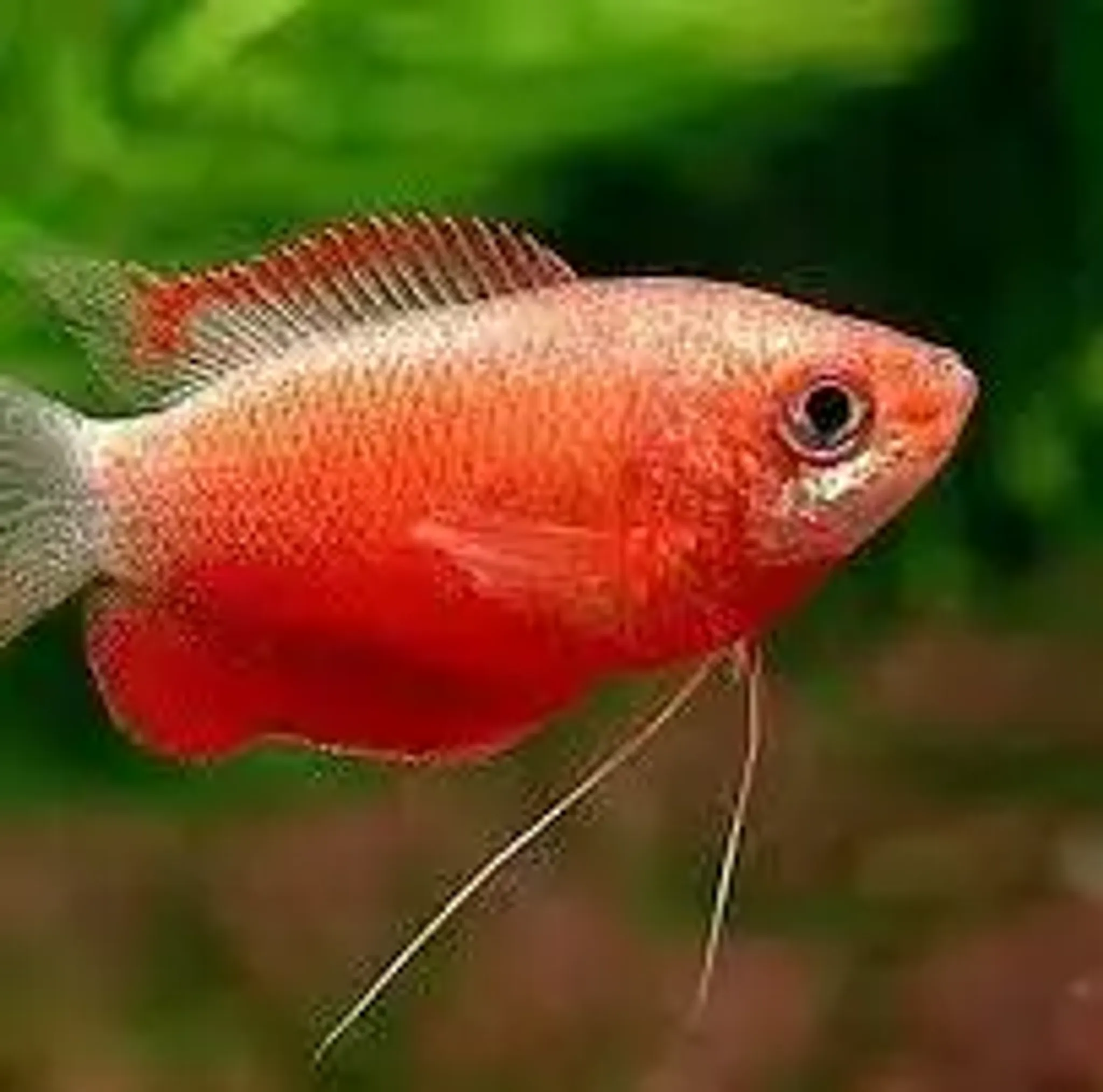
Best Tank Mates for Honey Gourami: Compatible Fish and Species to Avoid
The best tank mates for a honey gourami are small, calm fish that stay in the middle and bottom of the tank: ember or neon tetras, chili or harlequin rasboras, pygmy or panda corydoras, kuhli loaches, and peaceful snails. Avoid bettas, dwarf gouramis, fin nippers, cichlids and fast, greedy surface feeders. Below you'll find picks by tank level, ready-made stocking plans for common US tank sizes, and the reasons certain fish fail.
Know Your Honey Gourami First
The honey gourami (Trichogaster chuna) is sold under several names: wild-type honey, sunset, gold, flame and red honey. All are the same species.
- Adult size: about 2 inches (5 cm)
- Lifespan: roughly 4–8 years with good care
- Temperature: 72–82°F (22–28°C)
- pH: 6.0–7.5
- Hardness: soft to moderately hard, about 4–15 dGH
- Temperament: arguably the gentlest gourami; shy, slow and easily bullied
Honeys often look washed out in store tanks and only color up once settled. Wild-type fish are silvery-tan with a brown horizontal stripe; sunset/gold forms are solid yellow-orange; red forms push deeper orange-red.
How to Sex Honey Gouramis
Males are the ones that change most. A mature or displaying male turns bright honey-orange with a dark blue-black throat and belly, and the front of the dorsal fin often shows yellow. Females stay paler, with a brown lateral stripe and a slightly rounder body. In the gold and red color forms the difference is subtler, so watch for the male's darker throat during display.
The Rules That Decide Compatibility
A good honey gourami tank mate passes four tests:
- Temperament: calm, not territorial, not a fin nipper.
- Size: roughly the honey's size or smaller.
- Tank level: honeys live in the upper third and breathe surface air through a labyrinth organ. Mates that use mid-water and the bottom keep the surface uncrowded.
- Feeding speed: honeys eat slowly at the top. Fish that race to the surface and grab everything will starve them over time.
Keep the waterline calm and leave a small air gap under the lid so the gourami can breathe warm, humid air.
Compatible Tank Mates by Tank Level
Mid-Water Schoolers
Keep all of these in groups of 6–8 or more; bigger schools are calmer and more confident.
- Tetras: ember, neon, black neon, cardinal (tolerates warmer water) and rummy-nose.
- Rasboras: harlequin, lambchop, and the tiny kubotai and chili rasboras.
- Celestial pearl danios: small and peaceful, though they can be shy themselves.
- Mild barbs: cherry and gold barbs. These are the exceptions in a family known for nippers.
Bottom Dwellers
- Corydoras: panda, pygmy and bronze, in groups. Browse corydoras on FishyHub if you want a bottom crew.
- Kuhli loaches: nocturnal and harmless; keep several.
- Otocinclus: group fish that need a mature, planted tank with biofilm.
- Bristlenose pleco: only in 30 gallons (114 L) or larger.
Use soft sand for barbeled species like cories and kuhlis so they can sift without damaging barbels.
Livebearers
Platies and male-only guppies are straightforward. Mollies and swordtails grow larger and can be pushy at feeding time, so reserve them for 20–30 gallon tanks or bigger and make sure the gourami still eats. With mixed sexes, plan for fry, because livebearers multiply fast.
Other Small Labyrinth Fish
Sparkling gouramis are often listed as compatible and work in a planted 20 gallon (76 L) or larger tank. The pearl gourami is bigger and should only share a tank with honeys in 30 gallons (114 L) or more with plenty of cover. You can compare species in the gourami section on FishyHub, but read the "avoid" list below first.
Invertebrates
- Snails: nerite, mystery and ramshorn snails are safe.
- Shrimp: adult cherry and amano shrimp usually coexist with honeys in a heavily planted tank. Expect some losses of baby shrimp, and use dense moss to shelter them. Don't risk a prized shrimp colony.
Temperature Overlap Table
Honeys tolerate a wide band, but not every mate does. Pick species whose comfort range overlaps yours, then set the heater in the shared zone.
| Tank mate | Rough preference | Fit with honey gourami (72–82°F / 22–28°C) |
|---|---|---|
| Neon tetra | Cooler end of the range | Good at 72–77°F (22–25°C) |
| Corydoras (most) | Cooler end | Good at 72–77°F (22–25°C) |
| Cardinal tetra | Warmer end | Good at 77–82°F (25–28°C) |
| Ember tetra, chili rasbora | Mid-range | Good across most of the range |
| Harlequin rasbora | Mid-range | Good across most of the range |
| Kuhli loach | Mid to warm | Good |
| Cherry barb | Mid-range | Good |
| Platy, guppy | Mid-range | Good |
| Discus-style warm-water fish | Very warm | Poor overlap; skip |
A setting around 76–78°F (24–26°C) suits most honey communities. If you keep both neons and cardinals, stay near the middle.
Species to Avoid
| Avoid | Why it fails |
|---|---|
| Bettas (all color forms) | Share surface territory; anabantoid rivalry; the betta usually wins |
| Dwarf gourami | Documented chasing and deaths; iridovirus risk |
| Paradise fish and boisterous gouramis | Too aggressive for a shy honey |
| Tiger barbs, clown barbs, serpae tetras | Fin nippers |
| Most cichlids (convicts, oscars, larger South/Central Americans) | Territorial, too big, may eat the gourami |
| Silver dollars, pacu, large catfish | Size and appetite; can be predatory |
| Angelfish | Debatable; may harass or eat a small gourami as it grows |
| Fast, greedy surface feeders | Steal food before the honey gets any |
Zebra danios show up on some compatibility lists, but they are fast and pushy at feeding time. Keep them only in larger tanks and watch that the gourami is eating.
Why Not a Dwarf Gourami?
Honey and dwarf gouramis are sold side by side and look similar in size, so people buy them together. Dwarfs frequently harass honeys, and dwarf gouramis carry a well-known risk of dwarf gourami iridovirus, another reason not to mix gourami species casually. Keep the honey as the only gourami unless you're following the sparkling or pearl guidelines above.
Bettas and Honey Gouramis: Clearing Up the Confusion
Koi, Red, GloFish and Female Bettas
Koi, red and GloFish bettas are all color strains of Betta splendens, not separate species. Koi refers to a marbled pattern, red is a color morph, and GloFish bettas are a genetically modified fluorescent line. None suit a honey gourami tank, because both fish claim the surface and anabantoids compete with each other.
Female bettas are less showy but still territorial. Betta sororities need large, densely planted tanks and remain risky even then, so they're no workaround.
Common Betta Myths
- Bettas do not thrive in bowls or cold water. They need a heated (about 76–82°F / 24–28°C), filtered tank of at least 5 gallons (19 L).
- Bettas can live in some communities, but never with other bettas or gouramis.
- Honey gouramis are wrongly assumed to be "betta-safe" because both are peaceful labyrinth fish. They are not.
Bubble Nests and Breeding Behavior
Bettas spawn under a bubble nest, and the male guards the eggs. Honey gouramis breed the same way: the male builds a nest at the surface and guards the fry. A spawning male of either species becomes more territorial. If you plan to breed honeys, remove other surface fish first.
Grouping and Setup
One, a Pair, or a Trio?
Honeys are social but not true schoolers. A single fish does fine. A pair, or a group with one male and several females (a 1M:2F trio is a natural start), is the safest arrangement. Two males may squabble.
Tank Size
- 10 gallons (38 L): one honey gourami
- 20 gallons (76 L): a pair or small group
- Each extra gourami: add about 5 gallons (19 L)
- Community with schoolers: a 20 gallon long or bigger is recommended
Plants, Light and Flow
- Dense planting plus floating plants such as frogbit, salvinia or red root floaters give security and break sightlines.
- Gentle filtration: a sponge filter or a hang-on-back filter with a baffled outflow.
- A bright, bare, uncovered tank keeps the gourami hiding and pale.
Ready-Made Stocking Plans
These plans assume a cycled, planted tank with regular maintenance.
| Tank | Gouramis | Schoolers | Bottom / cleanup |
|---|---|---|---|
| 10 gal (38 L) | 1 honey | 6–8 ember tetras or chili rasboras | Snails, or a small group of pygmy corydoras |
| 20 gal long (76 L) | 1 male + 2 female honeys | 8–10 harlequin rasboras or neon tetras | 6 pygmy or panda corydoras, nerite snails, adult cherry shrimp |
| 29 gal (110 L) | 1 male + 2–3 female honeys | 8–10 cardinal or rummy-nose tetras, or 6–8 cherry barbs | 6 bronze or panda corydoras, 4–5 kuhli loaches, otocinclus |
Skip mixed-sex livebearers in a 10 gallon; the fry will overstock it quickly.
Feeding in a Mixed-Speed Community
Honeys pick at food slowly near the surface. To make sure they get enough:
- Feed small portions once or twice a day of micro pellets, flakes and frozen foods.
- Scatter a pinch at one end for the schoolers, then drop food for the gourami at the other end.
- Target-feed with a pipette or feeding tube if faster fish crowd them out.
- Use sinking foods for the bottom dwellers so they aren't competing at the top.
- Watch the gourami's belly; a thinning fish is a sign it's being outcompeted.
Order of Introduction and Quarantine
- Quarantine every newcomer for 2–4 weeks in a separate tank.
- The gentlest approach is to add the peaceful schoolers first, let them settle, then add the gourami.
- Alternatively, add everyone gently to a mature, cycled tank at once.
- Add bottom dwellers like otocinclus only once the tank has established biofilm.
Common Mistakes and Troubleshooting
- Buying a honey and a dwarf gourami together. Rehome one before the chasing starts.
- Adding a betta because both are "peaceful labyrinth fish." Keep them in separate tanks.
- Bright, open tank with no floaters. Add floating plants and cover; color usually improves.
- Mates outcompeting it at feeding. Target-feed and spread food out.
- Strong current. A gourami hanging by the glass is struggling; baffle the outflow or switch to a sponge filter.
- Fin damage or constant hiding. Look for a nipper and remove or rehome it.
- Two males sparring. Add cover and rebalance to one male.
- Overstocking a 10 gallon with livebearers. Choose schoolers instead.
Gourami or Betta Staying at the Top or by the Filter
Surface time is normal for air breathers. Constant gasping is not: it can signal low oxygen, high temperature, ammonia or nitrite, or swim bladder trouble. A fish hanging by the outflow may be stressed by current or seeking oxygen. Test the water, check the heater and thermometer, and reduce the flow.
Frequently Asked Questions
Can honey gouramis live with bettas?
No. Both are surface-dwelling anabantoids that compete for the same space, and the betta usually wins. This applies to every betta color form and to female bettas as well.
Can honey gouramis live with dwarf gouramis?
It's not recommended. Dwarf gouramis often harass honeys, and dwarfs also carry an iridovirus risk. Keep the honey as the only gourami, or follow the sparkling and pearl gourami guidelines above.
Are shrimp safe with honey gouramis?
Adult cherry and amano shrimp are mostly safe in a heavily planted tank. Baby shrimp will get eaten, so dense moss helps more of them survive. Don't add honeys to a valuable shrimp colony.
How many honey gouramis should I keep per tank?
One in a 10 gallon (38 L), and a pair or trio in a 20 gallon (76 L), adding about 5 gallons (19 L) per extra fish. One male per tank is preferred. They're social but not tight schoolers, so a single honey is fine.
Can honey gouramis live with guppies or neon tetras?
Yes. Male guppies and neon tetras are classic picks as long as temperatures overlap. Neons prefer the cooler end of the honey's range, so keep the tank around 72–77°F (22–25°C) for them.
Why is my honey gourami hiding or pale?
Common causes are a new tank, bullying by tank mates, too little cover, or poor water quality. Test the water, add floating plants, and watch for chasing or nipping. Many honeys only show full color after they settle.
Build Your Honey Gourami Community
A honey gourami tank works best when the surface belongs to the gourami, and calm schoolers and bottom dwellers fill the rest. Once you've picked your plan, browse small community fishes on FishyHub for tetras, rasboras and other peaceful tank mates.

