Best Tank Mates for Green Terror: Compatible Fish and Species to Avoid
The best green terror tank mates are robust fish of similar or larger adult size: medium New World cichlids such as Jack Dempseys and severums, fast schooling fish like silver dollars and tinfoil barbs, and armored bottom dwellers such as large plecos and Synodontis catfish. Small fish, shrimp, slow long-finned species and African rift lake cichlids should stay out. Tank size and setup matter as much as species choice, so plan on 125 gallons (473 L) or more for a true community.
Green Terror Basics: What You Are Planning Around
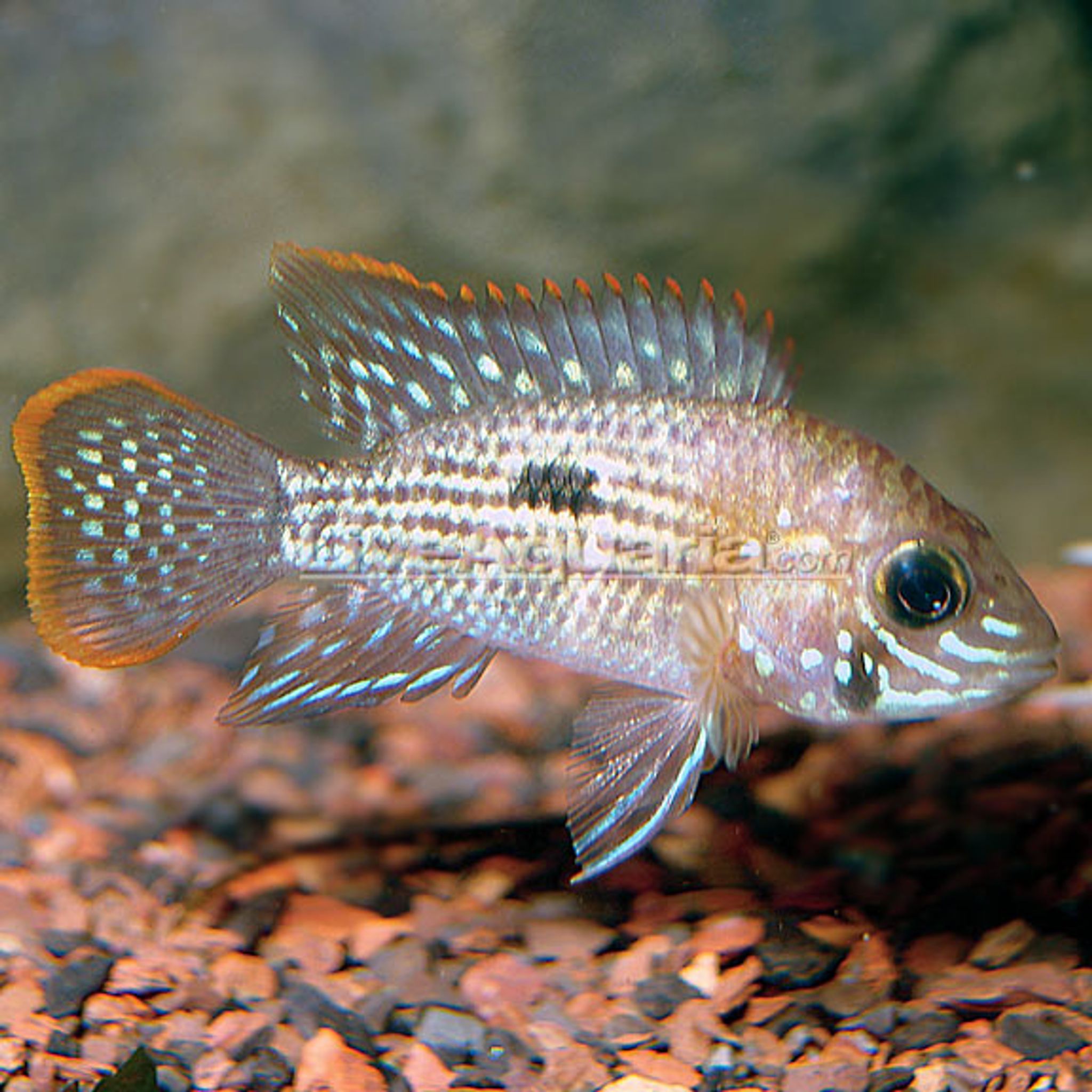
The green terror (Andinoacara rivulatus) is a South American cichlid from Pacific-slope rivers in Ecuador and Peru. Knowing its adult size and attitude is the foundation for every compatibility decision.
- Adult size: usually around 8 inches (20 cm) in aquariums, with large males reaching roughly 12 inches (30 cm).
- Sexing: mature males develop a forehead (nuchal) hump and longer, more trailing dorsal and anal fins.
- Lifespan: often 7–10 years or more, so tank mates need to be a long-term commitment too.
- Temperament: territorial, and it tends to get more aggressive with age. Spawning pairs can attack anything in the tank. Individual personality varies a lot; some fish stay tolerant for years while others turn on everything.
Water Parameters
Green terrors handle a wide range, which is why many South and Central American fish overlap well with them:
| Parameter | Acceptable range | Day-to-day target |
|---|---|---|
| Temperature | 72–80°F (22–27°C); tolerates about 68°F (20°C) | 74–78°F (23–26°C) |
| pH | 6.5–8.0 | Stable within that range |
| Hardness | 5–20 dGH | Moderate |
| Nitrate | — | Under about 20–40 ppm |
Published temperature ranges differ, with some citing 68–77°F and others 70–80°F. Holding 74–78°F keeps you comfortably inside both. The hard, alkaline water that African rift lake cichlids need is at the far edge of this range, which is one reason those fish do not fit well.
Tank Size: The Biggest Compatibility Factor
Advice on a single fish ranges from 30–35 gallons up to 50 gallons. Given an 8–12 inch adult, the smaller figures are hard to justify. A practical plan:
- One adult: 55 gallons (208 L) minimum; 75 gallons (284 L) is more comfortable.
- A pair: 75 gallons (284 L) minimum.
- A pair or single plus tank mates: 125 gallons (473 L) or more, ideally a 6-foot (183 cm) footprint. Floor space creates territories; height does not.
Filtration and Maintenance
Green terrors are messy, protein-hungry eaters. Run a large canister filter or a sump with roughly 8–10x turnover per hour and change 20–30% of the water weekly. Poor water quality raises stress and aggression and is linked to hole-in-the-head, so test nitrate regularly.
The Golden Rule for Choosing Tank Mates
Pick fish that are similar in adult size or bigger, have a sturdy body, and can hold their own, but are not so aggressive that they start a war. Too timid and they get bullied; too aggressive and you get a fight to the death. Fish that fit in a green terror's mouth will eventually end up there.
Green Terror Compatibility Table
| Species | Adult size | Temperament | Min. tank (with terror) | Verdict |
|---|---|---|---|---|
| Jack Dempsey | 8–10 in (20–25 cm) | Semi-aggressive | 125 gal | Good |
| Severum | 8 in (20 cm) | Semi-aggressive, sturdy | 125 gal | Good |
| Firemouth | 6 in (15 cm) | Semi-aggressive | 125 gal | Risky in smaller tanks |
| Oscar | 12+ in (30+ cm) | Semi-aggressive | 125 gal+ | Good if space allows |
| Managuense / jaguar cichlid | 14+ in (35+ cm) | Highly aggressive | Very large systems only | Risky |
| Silver dollar (group of 5+) | 6 in (15 cm) | Peaceful, fast | 125 gal | Good |
| Tinfoil barb | 12+ in (30+ cm) | Peaceful, fast | 125 gal+ | Good |
| Giant danio | 4 in (10 cm) | Peaceful, very fast | 125 gal | Good (dither fish) |
| Common or sailfin pleco | 12–18+ in (30–45+ cm) | Peaceful, armored | 125 gal+ | Good |
| Bristlenose pleco (large adult) | 5 in (13 cm) | Peaceful, armored | 75 gal+ | Good |
| Synodontis catfish | Varies by species | Peaceful to feisty | 125 gal | Good |
| Striped Raphael catfish | 8 in (20 cm) | Peaceful, armored | 125 gal | Good |
| Bichir | Varies by species | Predatory, tough | 125 gal+ | Good |
| Gar | Very large | Predatory | Huge tanks only | Risky |
| Pacu | Can exceed 2 ft (60 cm) | Peaceful but huge | Beyond most home tanks | Avoid |
| Flowerhorn | 12+ in (30+ cm) | Very aggressive | — | High risk |
| Corydoras | 2–3 in (5–8 cm) | Peaceful | — | Avoid |
| Angelfish, discus | Tall, slow | Gentle | — | Avoid |
| African rift lake cichlids | Varies | Aggressive | — | Avoid |
Adult sizes are approximate; check the specific species before buying.
Best Tank Mates in Detail
Medium and Large New World Cichlids
Jack Dempseys and severums share the green terror's water needs and are tough enough to push back without escalating. Firemouths work in large tanks but can be outmatched in smaller ones. An oscar is a reasonable pairing only at 125 gallons or more, ideally raised with the terror or added at the same time; watch for a big size mismatch as they grow. Big Central American predators such as managuense (jaguar) cichlids belong only in very large systems.
Fast Open-Water Fish and Dither Fish
Silver dollars in a group of five or more, tinfoil barbs and giant danios occupy the middle and upper water column and are too quick to catch. They also serve as dither fish: active, visible schools signal to the cichlid that the tank is safe, which reduces hiding and spreads its attention instead of letting it fixate on one target. Keep in mind that tinfoil barbs grow large. You can browse barbs on FishyHub and compare adult sizes before choosing.
Armored Bottom Dwellers
A common or sailfin pleco, a larger adult bristlenose, Synodontis catfish and the striped Raphael catfish all have armor or spines and spend their time out of the terror's main territory. Common plecos get very big, so size the tank for their adult length. See the selection of plecos available on FishyHub for sturdy options.
Oddballs
Bichirs are tough, armored and largely ignored by cichlids. Gars only make sense in huge tanks. Pacus are often sold as juveniles and suggested as mates, but they outgrow nearly all home aquariums; treat them as a no.
Species to Avoid
- Small community fish: tetras, rasboras, guppies and small barbs become food.
- Invertebrates: shrimp, snails and crabs are almost always eaten.
- Slow or long-finned fish: angelfish, discus, fancy goldfish and bettas are too gentle and too slow.
- African rift lake cichlids: they need harder, more alkaline water, and their aggression style clashes with the terror's.
- Very aggressive giants: flowerhorns and large Central American predators in undersized tanks. A few keepers suggest flowerhorns, but most consider the combination high risk.
- Corydoras: views differ, but they are snack-sized and their spines can lodge in a cichlid's mouth. Use plecos or Synodontis instead.
- A second green terror unless the two are a bonded pair.
Gold Saum vs. Standard Green Terror
"Gold saum" fish show an orange or gold edge on the dorsal and tail fins. This is a population or strain trait, not proof that a fish is male. Care, water needs and compatibility are identical to standard green terrors. To sex adults, look for the male's forehead hump and longer fins instead.
Keeping a Pair vs. a Single
A single green terror is the easier option in a community tank. If you want a pair, the most reliable route is to grow a small group of juveniles and let two fish pair off, then rehome the rest. A bonded pair stays close, shares a territory, cleans a flat rock together and displays to each other rather than chasing.
If one partner repeatedly chases the other into a corner or tears its fins, separate them with a divider and try again later, or keep them apart permanently. Pairs spawn on flat rocks and can lay hundreds of eggs (roughly 400–600), then guard the fry fiercely. Plan a divider or backup tank before the first spawn.
Introduction Protocol
- Quarantine every newcomer for 2–4 weeks in a separate tank.
- Add tank mates first or at the same time as the green terror whenever possible.
- If the terror is already established, rearrange all the decor right before adding new fish so everyone has to re-claim territory.
- Release new fish with the lights off to lower the first-day tension, and feed shortly after so attention goes to food.
- For a risky pairing, run a divider trial: let fish see each other for several days before sharing the space.
- Watch closely for the first week and have a divider or spare tank ready.
Aquascaping to Reduce Aggression
- Use rocks, driftwood and caves to break line of sight and create several territories.
- Set heavy decor directly on the bottom glass before adding substrate; green terrors dig and can topple rocks.
- A sand substrate suits their digging.
- Stick to tough or floating plants; delicate stems get uprooted.
Feeding for Peace
Offer a quality cichlid pellet as the staple, plus frozen or live foods such as krill, shrimp and bloodworms, and some vegetable matter. Feed adults once or twice daily and juveniles two or three times. Skip mammal-heart meats. Spread food across the tank so tank mates can eat without entering the terror's patch, which cuts down on food-driven fights.
Common Mistakes and Troubleshooting
- Buying a juvenile for a small-fish community. It grows and eats its tank mates.
- Adding fish without rearranging decor, leaving the terror in full control of the territory.
- Underestimating adult sizes of pacus, oscars and common plecos.
- Mixing with African cichlids because both are "cichlids."
- Keeping two unpaired terrors, or a pair with no backup tank for spawning.
- Letting water quality slide, which raises aggression and risks hole-in-the-head. Keep nitrate under about 20–40 ppm.
Signs of trouble include torn fins, fish hiding at the surface or in corners, and one fish refusing food. Respond quickly: install a divider, add more hardscape, or rehome either the bully or the victim.
Frequently Asked Questions
Can a green terror live with an oscar?
Yes, in 125 gallons (473 L) or more, ideally when the two are raised together or added at the same time. Watch for a size mismatch, since oscars often outgrow a green terror. Provide plenty of hardscape so each has its own space.
Can two green terrors live together?
Only as a bonded male-female pair. Two unpaired fish will usually fight, and even a bonded pair may turn on tank mates when it spawns. Keep a divider or spare tank ready.
Are green terrors good with plecos?
Generally yes. Choose large, armored species such as a common, sailfin or adult bristlenose pleco, and make sure the tank is big enough for the pleco's adult size.
Do green terrors eat shrimp and snails?
Almost always. Shrimp, snails and crabs are treated as food, so leave invertebrates out of a green terror tank.
Will a green terror kill tank mates?
It can, especially mature males and spawning pairs. Aggression varies by individual, so a large tank, good hardscape and a backup plan are essential. Remove any fish that is being persistently harassed.
Can green terrors be kept with African cichlids or angelfish?
Neither is recommended. African rift lake cichlids need different water chemistry and fight differently, while angelfish and discus are too slow and gentle to cope with a green terror.
Building Your Green Terror Community
Start with the tank, then choose tank mates that match the terror's size and toughness, and add them in a way that resets territories. When you are ready to shop, browse the American cichlids on FishyHub for green terrors and compatible New World companions.

