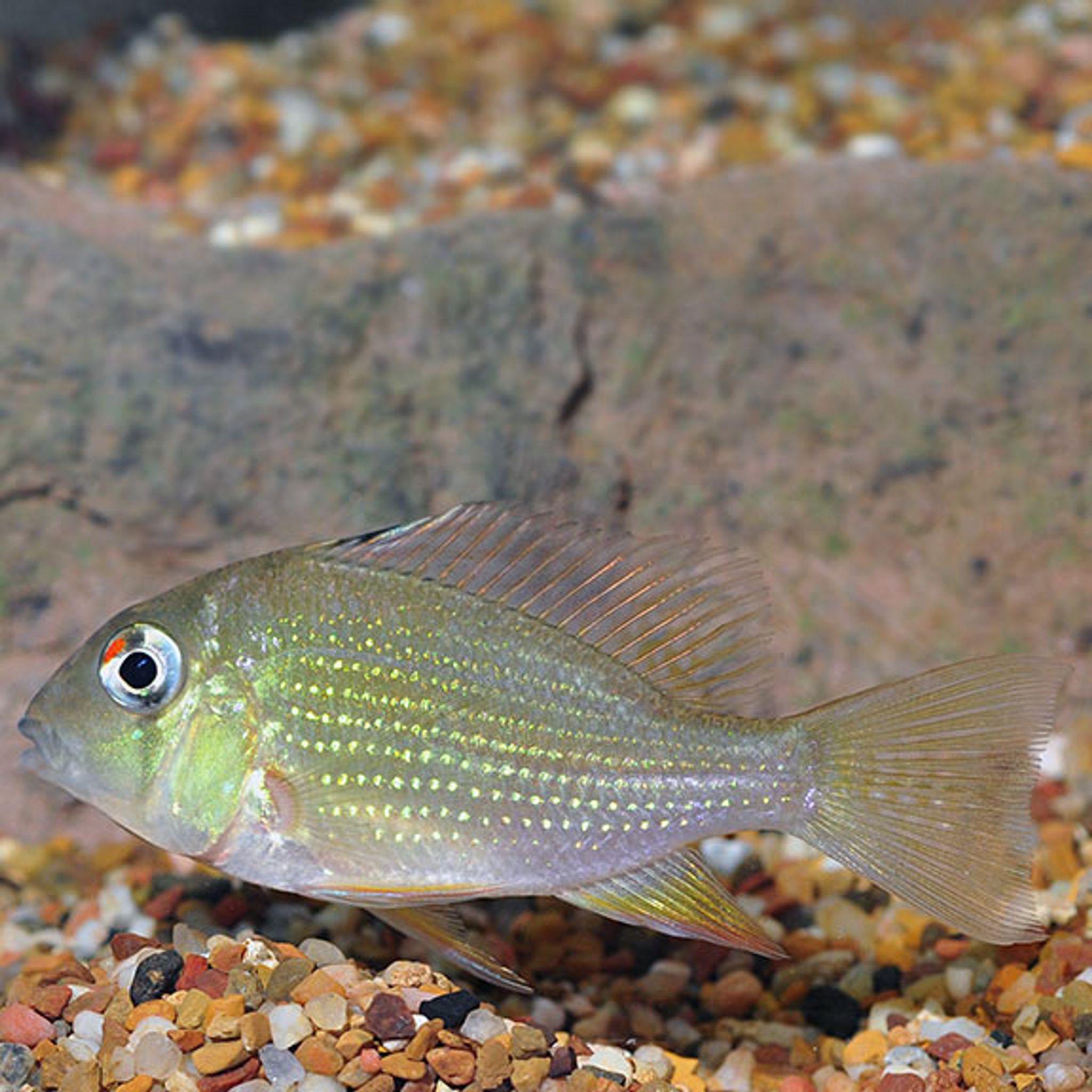
Best Tank Mates for Geophagus: Compatible Fish and Species to Avoid
The best tank mates for Geophagus are peaceful, warm-water fish that live in the upper and middle water: larger tetras, rainbowfish, giant danios, angelfish, severums and a few tough bottom dwellers such as bristlenose plecos or big Corydoras. Avoid aggressive Central American cichlids, mbuna, large predators, fin-nippers and anything small enough to fit in an adult eartheater's mouth. Below you'll find a layer-based way to stock the tank, sample lists for 75, 125 and 180 gallons, and the mistakes that cause the most trouble.
Identify Your Species First
"Geophagus" is sold loosely in the US trade. Fish labeled as eartheaters may be true Geophagus, red-hump types, Satanoperca, Gymnogeophagus, Biotodoma or Guianacara, and each group has different adult sizes, temperaments and temperatures. Confirm what you actually have before you choose companions.
| Group | Examples | Adult size | Temperament | Temperature |
|---|---|---|---|---|
| Gentle "true" Geophagus | G. altifrons, G. sp. "Tapajos orange head", G. sveni, G. surinamensis | about 8–12 in (20–30 cm) | Peaceful, social | 79–84°F (26–29°C) |
| Red-hump group | G. steindachneri and relatives | about 5 in (13 cm) and up | Touchier; one male with several females | Warm |
| Southern types | G. brasiliensis | up to 10–12 in (25–30 cm) | Moderate | Cooler, about 72–77°F (22–25°C) |
| Satanoperca | daemon group and others | up to about 10–12 in in some species | Daemon group is touchier and sensitive to nitrate | Warm |
| Gymnogeophagus | various | about 5 in (13 cm) | Moderate | Coldwater-leaning; don't mix with warm Amazon fish |
| Biotodoma, Guianacara | various | smaller to mid-size | Generally calm; Biotodoma is nitrate-sensitive | Warm |
That temperature split explains why published care sheets disagree (72–77°F versus 79–84°F). Neither is wrong; they describe different fish. Check your species and match every tank mate to it.
Why Geophagus Are Good Community Cichlids
Most true Geophagus are peaceful, social sifters. They spend the day scooping up mouthfuls of sand, filtering out food through their gills, and spitting the rest back out. They tolerate company well, but aggression rises when a pair spawns and among mature males. That is why you'll see ratings anywhere from "peaceful community" to "semi-aggressive, very aggressive when spawning." Species and life stage decide which is true: altifrons, sveni and tapajos sit at the gentle end, while red-humps, the Satanoperca daemon group and Acarichthys are touchier.
Plan around adult size
A 2 in (5 cm) juvenile in a store tank looks harmless next to neon tetras. That same fish can reach 10–12 in (25–30 cm). Pick tank mates for the adult, not the store size.
Keep them in groups
Keep 5–7 or more. A single Geophagus is skittish, and a lone pair gets tense. Red-humps are the exception: keep one male with several females.
Tank Setup That Makes Tank Mates Work
- Tank size: about 75 gallons (284 L) as a floor for a small group of smaller species; 125 gallons (473 L) or more for altifrons or tapajos groups; 180 gallons (681 L) or more for large groups or mixed big cichlids. Sources quote anything from 55 to 100+ gallons, but 55 gallons is too cramped for several males. Footprint matters more than height, and a 6 ft (183 cm) length is ideal.
- Water: 79–84°F (26–29°C) for most Amazon species, pH 6.0–7.5 (most tolerate up to about 8), soft to moderately hard. Keep ammonia and nitrite at zero and nitrate under 20 ppm with large weekly water changes.
- Substrate: fine, smooth sand is non-negotiable. Gravel damages gills and stops natural sifting.
What gill-sifting means for tank mates
Constant digging stirs up detritus and clouds the water. Every companion must tolerate turbid water and shifting sand, so run strong filtration with good mechanical capacity. Plants only survive if they're rooted in rock, grown as epiphytes (anubias, java fern), floated or kept in pots. Bottom dwellers that need a stable, clean substrate or their own dug-out territory are poor choices.
Stock the Tank in Layers
Geophagus own the sand and the bottom third. Stock around that:
- Top and middle: fast, peaceful schoolers in groups of 8–12 or more. These dither fish make shy eartheaters feel safe, bring out color and absorb some breeding-pair tension.
- Middle and upper: a few calm cichlids that use the upper water.
- Bottom: only a few, tough bottom fish, since the sand is already taken.
Dither and mid-water fish
- Larger tetras: black and red phantoms, bleeding heart, congo, emperor, lemon, silver-tipped and black skirt tetras
- Rummynose tetras, but only while the Geophagus are young; adults have been reported eating them
- Hatchetfish, with a tight lid because they jump
- Rainbowfish
- Giant danios, Denison barbs and other larger peaceful cyprinids
Sources disagree on small tetras. A safe rule: with adult Geophagus, choose tetras of 2 in (5 cm) or larger. You can browse sizable schooling species in the tetra section.
Compatible cichlids
- Angelfish, which use the upper water
- Festivums, severums, uaru and keyholes
- Acaras, including blue and electric blue acaras, and the rainbow cichlid
- Other eartheaters of similar size
- Discus, only with warm, soft, pristine water, calm Geophagus and an experienced keeper
Catfish and bottom fish
- Bristlenose and other mid-size plecos
- Larger Corydoras such as sterbai, in a big group on fine sand
- Synodontis
- Clown loaches, in big tanks only, since they reach 8–12 in (20–30 cm) and need groups
Browse suitable plecos, corys and bottom dwellers with that size and toughness filter in mind.
Large oddballs
Freshwater stingrays are a classic biotope pairing with eartheaters, but only in very large tanks of 180 gallons or more.
Sample Stocking Plans by Tank Size
These are starting points for a well-filtered tank with large weekly water changes. Scale down if your fish are the larger species.
| Tank | Bottom (eartheaters) | Middle/top | Other cichlids | Bottom mates |
|---|---|---|---|---|
| 75 gal (284 L) | 5–6 of a smaller species, or a red-hump male with several females | 10–12 lemon or black phantom tetras | None, or a single pair of blue acaras if space allows | 1 bristlenose pleco |
| 125 gal (473 L) | 6–7 altifrons or tapajos | 12+ congo or emperor tetras, or a group of rainbowfish | 3–4 angelfish or a pair of severums | 8–10 sterbai Corydoras, 1 bristlenose |
| 180 gal (681 L) | 7–10 of a large species, or groups of two similar-sized species | 12–15 giant danios or Denison barbs plus a tetra school | Uaru or festivums, or discus if you're experienced | Synodontis or a group of clown loaches; stingrays as the centerpiece in place of some bottom fish |
South American Cichlids: Who Fits and Who Doesn't
Geophagus are among the calmer mid-to-large South American cichlids. They pair best with other peaceful, soft-water species: angels, severums, uaru, acaras, Biotodoma, and Acarichthys in huge tanks. More room means less bullying and more breeding success. South American heavyweights such as oscars, pike cichlids and green terrors dominate eartheaters and are a poor match. If you're comparing options, the American cichlids category is a good place to see which species fit a peaceful plan.
Related genera and their quirks
- Satanoperca: large, sensitive to nitrate, prone to hole-in-the-head when water quality slips.
- Biotodoma: calm but also nitrate-sensitive; needs very clean water.
- Gymnogeophagus: smaller, cooler-water fish. Don't combine them with warm Amazon species.
- Guianacara: mid-size and generally peaceful, but check the species' needs before mixing.
Species to Avoid
- Aggressive Central American cichlids: convicts, Jack Dempseys, jaguars, red devils, flowerhorns
- African mbuna: wrong water chemistry and far too aggressive
- Predators big enough to swallow them: large pike cichlids, arowana with small juveniles, big catfish such as redtails
- Fin-nippers: tiger barbs, serpae tetras, and Buenos Aires tetras in some setups
- Tiny fish and shrimp: neons, ember tetras and dwarf shrimp become food once the Geophagus pass about 6 in (15 cm)
- Burrowing or territorial bottom competitors in smaller tanks
- Goldfish and other coldwater fish
Breeding Changes Compatibility
Many eartheaters are mouthbrooders. Some are ovophilic, meaning the parents take the eggs into their mouths soon after spawning. Others are larvophilic (delayed mouthbrooders), guarding eggs on a surface and picking up the wrigglers after hatching. Either way, a spawning pair claims space and chases tank mates, especially bottom dwellers. Plan for it:
- Add cover and line-of-sight breaks such as driftwood and rock piles
- Add more dithers to spread the attention
- Remove the fry or the pair if chasing doesn't settle
Feeding a Mixed Tank
Geophagus are slow, deliberate sifters, and fast dithers can grab most of the food before it reaches the sand. Offer sinking pellets, small frozen foods and vegetable matter. Feed the top-dwellers at one end first, then target-feed sinking food near the eartheaters and bottom mates so the Corydoras and plecos also get their share.
Adding Fish in the Right Order
- Cycle the tank fully.
- Add the dithers first.
- Add the Geophagus group.
- Add other cichlids last.
Quarantine every new fish for 2–4 weeks before it joins a multi-species South American tank.
Common Mistakes and Fixes
- Gravel substrate: it damages gills and blocks sifting. Switch to fine sand.
- Juveniles with neons: the neons vanish as the Geophagus grow. Start with 2 in+ tetras.
- One fish, or several males crowded in 55 gallons: keep a proper group in a bigger tank.
- Bulky Central American tank mates: Geophagus hide, stop eating and lose color. Rehome one side.
- Poor nitrate control: leads to hole-in-the-head and bloat, especially in Satanoperca and Biotodoma. Increase water changes.
- Spawning pair chasing everyone: add cover and more dithers, or separate the pair or fry.
- Mixing coldwater Gymnogeophagus with warm Amazon fish: keep them in temperature-matched tanks.
Frequently Asked Questions
Can Geophagus live with angelfish?
Usually, yes. Angels use the upper water while Geophagus work the sand, and both like warm, soft water. Make sure the Geophagus are big enough that the angelfish won't nip them.
Can Geophagus live with discus or Corydoras?
Discus can work in large, warm, pristine tanks with calm Geophagus, but it's not a beginner combination. Corydoras are fine if you choose larger species such as sterbai, keep a group on fine sand and make sure they get food.
Will Geophagus eat small fish?
Adults eat anything that fits in their mouths. Skip neon-size fish and dwarf shrimp, and pick tetras of 2 in (5 cm) or larger.
Can you mix Geophagus species?
Yes, in a large tank. Choose species of similar size and keep a group of each.
Can Geophagus go with oscars or Central American cichlids?
Generally no. Oscars and bulky Central Americans bully eartheaters, which then hide, stop eating and lose color.
How many Geophagus should I keep, and do plants survive?
Keep at least 5–7, or one male with several females for red-humps. Plants survive only when rooted in rock, grown as epiphytes like anubias and java fern, floated or potted.
Build Your Eartheater Community
Choose peaceful mid-water schoolers, add calm cichlids that suit your species, keep bottom mates few and tough, and give everyone fine sand and clean, warm water. When you're ready to stock, browse the full range of freshwater livestock on FishyHub to plan each layer of your tank.

